


Sleep Optimization: The Honest Guide To Better Rest

Here's a stat that deserves your attention: roughly one in three American adults don't get enough sleep, according to the CDC [1]. That's not some niche wellness concern. It's a public health crisis sitting right out in the open. And yet most of us treat sleep like filler between Netflix and the alarm clock.
So how does sleep optimization guide work, exactly? At its core, it's a framework. Not one weird trick. Not a $200 supplement stack. It's a structured approach that identifies the handful of variables actually controlling your sleep quality, then gives you a clear order of operations for fixing them. Think of it like troubleshooting a car that won't start. You don't randomly replace parts. You check the battery first, then the starter, then the fuel system.
I've spent a frankly embarrassing amount of time reading sleep research, testing gadgets, and arguing with friends about whether mouth taping is genius or insanity. What I've found is that the science is actually pretty clear on what works. The problem? Most advice either oversimplifies ("just put your phone down!") or overcomplicates things with 25-step biohacking protocols nobody maintains past day four.
This guide is the middle path. We'll cover the real science, the practical steps, and the honest truth about where your effort is best spent. Whether you're a terrible sleeper looking for a turnaround or a decent sleeper who wants to feel sharper, this is the framework that actually holds up.
Key Takeaways
What Is Sleep Optimization and Why Does Most Advice Fall Short?
Sleep optimization is the deliberate process of improving the quantity, quality, and consistency of your nightly recovery. Sounds clinical, right? Really it's just asking: what can I change so sleep actually does its job? Because sleep has a job. It consolidates memory, clears metabolic waste from the brain via the glymphatic system, repairs tissue, and regulates hormones like cortisol and growth hormone.
The reason most sleep advice fails is simple. It treats sleep like a single problem with a single solution. "Try melatonin." "Get a weighted blanket." "Avoid screens." These aren't wrong, but they're fragments. Dr. Matthew Walker, professor of neuroscience at UC Berkeley and author of Why We Sleep, puts it well: the mistake most people make is optimizing only one variable while ignoring the others [2]. It's like putting premium gas in a car with bald tires and a cracked windshield.
A real sleep optimization guide works because it addresses multiple variables at the same time and in the right priority order. Research from the National Institutes of Health confirms that multi-component sleep interventions consistently outperform single-strategy approaches for improving sleep quality and reducing sleep onset latency [3]. If you've tried one thing and it didn't stick, that's probably why.
For a broader look at how sleep fits into your overall health picture, check out The Essential Guide to Healthy Living, which ties together sleep, nutrition, movement, and stress management into one actionable system.
How Do the Four Stages of Sleep Actually Affect Your Health?
Before you can optimize something, you need to understand what's happening under the hood. Your brain cycles through four distinct stages of sleep roughly every 90 minutes, and each one serves a different biological purpose.
Stages 1 and 2 are lighter sleep. Stage 1 is the transitional phase, lasting just a few minutes as your body drifts off. Stage 2 is where you spend about half the night. Memory consolidation begins here, and body temperature drops. According to the NIH's National Institute of Neurological Disorders and Stroke, sleep spindles during Stage 2 play a key role in transferring short-term memories to long-term storage [3].
Stage 3 is the heavy hitter. Often called deep sleep or slow-wave sleep, this is when your body does its most significant physical repair work, releases the majority of its growth hormone, and the glymphatic system clears beta-amyloid proteins linked to Alzheimer's disease. Here's the thing: deep sleep is concentrated in the first half of the night. Going to bed late doesn't just shorten your sleep. It disproportionately robs you of the most restorative stage.
Quick Q&A
Q: Which sleep stage is most important for physical recovery?
A: Stage 3 (deep slow-wave sleep) is when the body releases the most growth hormone and performs critical tissue repair, making it the most physically restorative stage.
REM sleep, the fourth stage, dominates the second half of the night. This is dream sleep, and it's essential for emotional regulation, creativity, and complex problem solving. Harvard Medical School research has shown that people deprived of REM sleep perform measurably worse on creative tasks and emotional resilience tests [4]. The takeaway? You need all four stages, and the timing of your sleep matters just as much as the total hours.
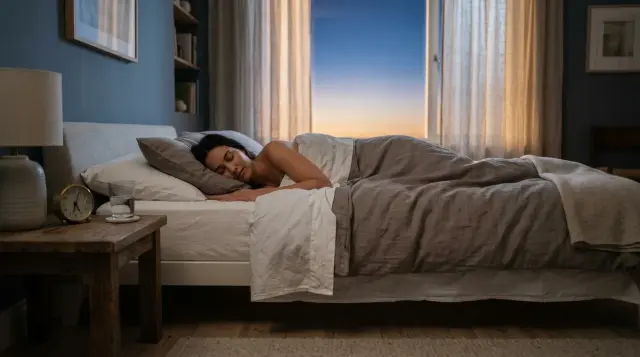
Does Circadian Rhythm Alignment Really Make That Big a Difference?
Yes. And honestly, if you only change one thing after reading this entire guide, make it this one. Circadian rhythm alignment is the single highest-return adjustment most people can make. It costs nothing.
Your circadian rhythm is a roughly 24-hour internal clock governed by the suprachiasmatic nucleus (SCN) in the hypothalamus. It tells your body when to release melatonin, when to spike cortisol for wakefulness, and when to drop core body temperature for sleep. The primary signal that sets this clock? Light. Specifically, sunlight hitting specialized photoreceptors in your retina called intrinsically photosensitive retinal ganglion cells (ipRGCs).
According to research from Stanford University's Dr. Andrew Huberman, getting bright light exposure (ideally direct sunlight) within 30 to 60 minutes of waking is the single most effective intervention for improving both sleep onset timing and sleep quality. Even 10 minutes of outdoor light on a cloudy day delivers roughly 10,000 lux, about 20 times brighter than typical indoor lighting. Your body needs that contrast to properly calibrate.
Here's a concrete example I found genuinely surprising. A 2017 study published in Current Biology by Dr. Kenneth Wright at the University of Colorado took participants camping for a weekend with no artificial light. After just two days, their melatonin onset shifted earlier by an average of 1.4 hours. Two days. No supplements, no gadgets, just natural light patterns. That's how powerful circadian alignment is for improving sleep quality naturally.
On the flip side, evening light exposure, especially the blue-enriched light from phones and laptops, actively suppresses melatonin production by up to 50%, according to a 2014 study from Harvard Medical School published in PNAS [4]. If you're struggling with this, our guide on How to Break Your Phone Addiction: Step by Step walks through practical ways to reduce screen time in the hours before bed.
Sleep optimization isn't about finding one magic fix. It's about stacking a handful of evidence-backed changes in the right order so each one makes the next more effective. Get the sequence right, and the compound effect is remarkable.
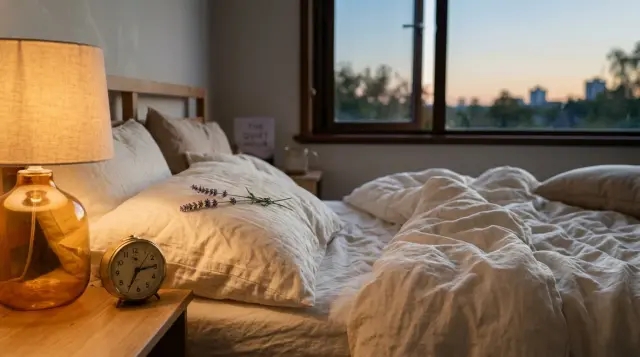
What Does an Optimized Sleep Environment Actually Look Like?
If circadian rhythm alignment is the software fix, your sleep environment is the hardware. And most people's hardware is working against them without realizing it.
Temperature is the first thing to address. The National Sleep Foundation recommends keeping your bedroom between 60 and 67°F (15.5 to 19.4°C) for optimal rest. Your body needs to drop its core temperature by about 2 to 3 degrees Fahrenheit to initiate and maintain sleep. A room that's too warm literally fights this process. Dr. Walker's research at UC Berkeley has shown that even a 1°C increase above the ideal range can reduce deep sleep by up to 20% [2].
Darkness matters more than most people think. Even small amounts of ambient light, like a charging indicator on a laptop or a streetlight seeping through curtains, can disrupt melatonin production. A 2022 study from Northwestern University's Dr. Phyllis Zee found that sleeping in a moderately lit room (100 lux, roughly the brightness of a dim hallway) increased insulin resistance and heart rate compared to sleeping in near-total darkness. Blackout curtains or a quality sleep mask aren't luxuries. They're functional tools.
Then there's the electromagnetic environment. Most sleep guides completely skip this one. EMF exposure from WiFi routers, smart devices, and charging phones near your bed can affect sleep architecture, though research is still evolving. If you're curious about the science behind EMF reduction, the EMF Health Benefits page breaks it down. Proteck'd's Faraday Health Collection offers silver-infused clothing designed to reduce your body's exposure to electromagnetic radiation, which some people find makes a noticeable difference in their nightly recovery quality.
Quick Q&A
Q: What is the ideal bedroom temperature for sleep?
A: The National Sleep Foundation recommends 60 to 67°F (15.5 to 19.4°C), which helps your body achieve the core temperature drop necessary to enter and sustain deep sleep.
Sound is the final piece. Consistent low-frequency noise (a fan, white noise machine) tends to help, while intermittent sounds (traffic, a partner's phone buzzing) tend to fragment sleep. A 2021 meta-analysis in Sleep Medicine Reviews found that continuous background sound reduced sleep onset latency by an average of 38% in noisy environments.
How Important Is a Consistent Sleep Schedule (and Can Weekend Sleep-Ins Undo Your Progress)?
Very important. And yes, they absolutely can. Let's unpack both.
A 2019 meta-analysis published in the Journal of Clinical Sleep Medicine found that people who maintained consistent sleep and wake times, even on weekends, fell asleep an average of 15 minutes faster and reported significantly better subjective sleep quality than those with variable schedules. Fifteen minutes might not sound dramatic, but compounded over weeks, it's the difference between someone who describes their sleep as "fine" and someone who says it's genuinely good.
Researchers call it "social jet lag." The term was coined by Dr. Till Roenneberg at Ludwig Maximilian University of Munich. It measures the difference between your weekend and weekday sleep midpoints. Say you go to bed at 11 PM and wake at 7 AM during the week, but shift to 1 AM to 10 AM on weekends. You've just given your circadian rhythm a 2-hour time zone shift. Every single week. A 2017 study in Sleep found that each hour of social jet lag was associated with an 11% increase in the likelihood of cardiovascular disease.
The practical advice isn't "never sleep in." It's to keep your variation within about 30 to 45 minutes. If you normally wake at 6:30 AM, sleeping until 7:15 on Saturday is fine. Sleeping until 10 is self-imposed jet lag. Your circadian patterns take days to readjust, and by the time they do, Monday has arrived.
For more immediate, tonight-level strategies, How to Sleep Better Tonight: What Makes the Biggest Difference offers a prioritized list you can start with right now.
What Pre-Sleep Habits Actually Work (and Which Ones Are Overhyped)?
The pre-sleep routine is where sleep hygiene tips live, and it's also where the internet throws a lot of noise at you. Let me sort the signal from the static.
What consistently works, according to peer-reviewed research: avoiding caffeine within 8 to 10 hours of bedtime (a 2013 study in the Journal of Clinical Sleep Medicine by Dr. Christopher Drake at Henry Ford Hospital found that caffeine consumed even 6 hours before bed reduced total sleep time by over an hour), limiting alcohol (which fragments REM sleep even in moderate amounts), and eating your last large meal at least 2 to 3 hours before bed to allow for gastric emptying.
Something that also works but gets way less attention: a warm bath or shower 1 to 2 hours before bed. A 2019 systematic review at the University of Texas found that a 10-minute warm water exposure at 104 to 108°F improved sleep onset latency and sleep quality. The mechanism is counterintuitive. The warm water dilates blood vessels in your hands and feet, which accelerates core body temperature drop after you get out. It's not about warming up. It's about cooling down faster.
What's overhyped? Supplements, mostly. Melatonin can be useful for jet lag or shift work but is overused and often taken at doses 10 to 20 times higher than what the body produces naturally (about 0.3 mg). Magnesium glycinate shows some promise for people who are actually deficient, but the evidence for universal sleep benefits is mixed. L-theanine is mild and generally safe but unlikely to fix a fundamentally broken sleep pattern. No supplement replaces the fundamentals.
Mindfulness is the sleeper hit (pun intended). A 2019 randomized trial from the University of Southern California published in JAMA Internal Medicine found that mindful awareness practices improved sleep quality comparably to structured sleep hygiene education. If you want to build that habit, How to Make Mindfulness Stick: The Practical Guide is a solid starting point.
Can Managing Your Mental State Before Bed Really Improve Sleep Quality?
If you've ever lain in bed with your brain running through tomorrow's to-do list at 11:47 PM, you already know the answer. Mental arousal is one of the most underrated barriers to falling asleep, and no amount of blackout curtains or cool temperatures can fully compensate for it.
The clinical term is "cognitive hyperarousal." Dr. Allison Harvey at UC Berkeley has published extensively on how pre-sleep worry activates the sympathetic nervous system, raising heart rate and cortisol levels at exactly the time your body should be shifting toward parasympathetic dominance. One of her studies found that simply writing down a to-do list for the next day before bed reduced sleep onset time by 9 minutes compared to journaling about completed tasks. The act of offloading unfinished thoughts appears to quiet the monitoring system in the brain.
This is also where your evening environment plays a dual role. The electromagnetic signals from devices don't just emit blue light. They keep you psychologically tethered to work emails, social media, and news cycles. Reducing that exposure in the last hour before bed serves both a light-reduction and a mental-calm purpose. Proteck'd's Women's Wellness Collection includes EMF-shielding garments that some users wear during their evening wind-down routine as a tangible signal to their brain that the "on" part of the day is over.
The practical version: pick one calming ritual and make it non-negotiable. Reading a physical book. Stretching for 10 minutes. Journaling three things that went well. The specific activity matters less than the consistency of doing it every night. Your brain learns patterns, and a consistent pre-sleep ritual becomes a Pavlovian cue for drowsiness over time.
How Does a Sleep Optimization Guide Work When You Put It All Together?
Understanding how does sleep optimization guide work in practice means understanding priority order. You don't try to fix everything at once. That's a recipe for overwhelm and quitting by Thursday.
Week one: focus on circadian alignment. Get outside within 30 minutes of waking. Dim your lights after sunset. Set a consistent wake time, even on weekends. This single change anchors everything else. According to Dr. Satchin Panda at the Salk Institute, whose research on time-restricted living has been widely cited, consistent light and dark exposure patterns are the foundation upon which all other sleep improvements build.
Week two: address your environment. Drop your thermostat to 65°F or so. Get blackout curtains or a sleep mask. Move your phone charger out of the bedroom, or at minimum across the room. Consider reducing your EMF exposure with Proteck'd's Faraday Health Collection, especially if you sleep near multiple wireless devices.
Week three: layer in pre-sleep habits. Set a caffeine cutoff time (noon is a common choice for people sensitive to it). Add a 10-minute warm shower. Start a brief wind-down ritual. Cut alcohol on weeknights if you're serious about improving deep sleep stages.
Week four: fine-tune. Address cognitive arousal if it's still a problem. Try the to-do list journaling technique. Experiment with timing your exercise (morning works best for most people, but not everyone). Track your progress subjectively by rating your mornings on a 1 to 10 scale, which research from the University of Pittsburgh's Dr. Daniel Buysse has shown correlates well with objective sleep quality measures.
The whole system works because each variable supports the others. Good circadian alignment makes your pre-sleep routine more effective. A cool, dark room reinforces melatonin timing. A consistent schedule lets your body anticipate sleep, which reduces the cognitive effort of falling asleep. That's how does sleep optimization guide work in the real world: not as a checklist, but as an interconnected system where each piece amplifies the rest.
Frequently Asked Questions
Q: How does a sleep optimization guide actually work?
It identifies the key variables that control sleep quality, then gives you a structured priority order for improving them. Instead of random tips, you address circadian rhythm alignment first, then environment, schedule, pre-sleep habits, and mental state. This framework approach outperforms single fixes because the variables reinforce each other.
Q: What is the single most important thing I can do to improve sleep quality?
Get bright light exposure, ideally direct sunlight, within 30 to 60 minutes of waking up. This resets your circadian clock more effectively than any supplement or gadget. Even 10 minutes of outdoor light on a cloudy day delivers about 10,000 lux, far more than indoor lighting provides.
Q: Does sleeping in on weekends actually hurt my sleep?
It can, if the shift is more than about 45 minutes from your weekday schedule. Researchers call this "social jet lag." A 2017 study found that each hour of difference between weekend and weekday sleep midpoints was associated with an 11% increase in cardiovascular disease risk. Keeping your variation small protects your circadian alignment.
Q: What temperature should my bedroom be for optimal sleep?
The National Sleep Foundation recommends 60 to 67°F (15.5 to 19.4°C). Your body needs to drop its core temperature by 2 to 3 degrees Fahrenheit to fall asleep. A room that's too warm actively fights this process and can reduce deep sleep by up to 20%.
Q: Is melatonin a good sleep supplement?
It can be useful for specific situations like jet lag or shift work, but it's overprescribed for general insomnia. Most over-the-counter doses (3 to 10 mg) are far higher than what the body naturally produces, which is about 0.3 mg. For most people, fixing light exposure and schedule consistency will do more than melatonin ever will.
Q: How long before bed should I stop drinking caffeine?
At least 8 to 10 hours before bedtime for most people. A study by Dr. Christopher Drake at Henry Ford Hospital found that caffeine consumed 6 hours before bed still reduced total sleep time by over an hour. If you go to bed at 10 PM, a noon cutoff is a safe bet.
Q: Can EMF exposure from devices affect my sleep?
There's growing interest in how electromagnetic radiation from WiFi routers, phones, and smart devices may affect sleep architecture. While the research is still developing, reducing EMF exposure in the bedroom is a low-risk change that many people report benefits from. EMF-shielding clothing from Proteck'd's Faraday collection is one option people use during sleep.
Q: What are the four stages of sleep and why do they matter?
Stage 1 is light transitional sleep. Stage 2 involves memory consolidation and lasts about half the night. Stage 3 is deep slow-wave sleep, where physical repair and growth hormone release occur. REM (Stage 4) handles emotional regulation and creativity. You need all four, and disrupting any one of them has distinct consequences for health and performance.
Q: Does a warm shower before bed actually help you fall asleep?
Yes, and the science is counterintuitive. A warm shower 1 to 2 hours before bed dilates blood vessels in your extremities, which speeds up core body temperature drop afterward. A 2019 University of Texas review found that 10 minutes at 104 to 108°F meaningfully improved both the time it took to fall asleep and overall sleep quality.
Q: How long does it take for sleep optimization changes to show results?
Most people notice they fall asleep faster within the first week of circadian alignment changes. Deeper improvements in sleep quality and morning alertness typically take 2 to 4 weeks of consistent effort. The key is layering changes gradually rather than trying to overhaul everything at once.
References
- Centers for Disease Control and Prevention – 1 in 3 U.S. adults regularly gets less than the recommended 7 hours of sleep per night
- National Institutes of Health (NIH) - Sleep Deprivation and Deficiency – Sleep deprivation affects cognitive function, immune health, and hormone regulation; multi-component interventions outperform single strategies
- National Institute of Neurological Disorders and Stroke (NINDS) – Adults cycle through four sleep stages approximately every 90 minutes, with sleep spindles in Stage 2 supporting memory consolidation
- Harvard Medical School - Division of Sleep Medicine – Blue-enriched evening light from screens suppresses melatonin production, and REM sleep deprivation impairs emotional regulation and creativity
About the Author
Proteck'd EMF Apparel
Health & EMF Specialists
The Proteck'd team covers EMF protection, silver-fiber apparel, and practical ways to reduce everyday radiation exposure. Every piece Proteck'd ships is designed, tested, and worn by the people who build it.
Get the Free EMF Home Audit Checklist
A room-by-room PDF that walks you through the biggest EMF sources in your house and what to do about each one. No cost, no fluff.
Download the Checklist →


Leave a comment