


Artificial Intelligence Apps Worth Using: Our Honest Picks

Here's something nobody on those "Top 50 AI Tools" lists will tell you: the same artificial intelligence that writes your emails and generates your marketing images can also detect invisible electromagnetic radiation in your living room. If you've been wondering how does best AI tools 2025 work, the answer stretches way beyond chatbots and code assistants.
I spent the past several weeks testing AI apps across every major category. Productivity tools. Creative platforms. Health monitors. And yes, EMF detection software. Most "best of" lists just rank the usual suspects and move on. We're going further than that.
The AI world in 2025 looks wildly different from even a year ago. GPT-4o processes text, images, and audio all at once. Google's Gemini 2.5 Pro climbed to the top of the Chatbot Arena leaderboard. And an entirely new breed of machine intelligence apps can now map the electromagnetic fields around your devices in real time.
Why should you care? Because the average home in 2025 has more than 20 connected devices, and each one emits some level of electromagnetic radiation. The World Health Organization's International Agency for Research on Cancer classified RF electromagnetic fields as Group 2B, meaning possibly carcinogenic to humans, back in 2011 [1]. That classification hasn't changed. But the number of devices in our homes has roughly tripled since then.
So let's talk about what actually works, what's overhyped, and which tools deserve a spot on your phone or desktop. If you're already familiar with the basics, check out our earlier roundup of Best AI Apps Ranked and Reviewed for 2024 for context on how much has shifted in just twelve months.
Key Takeaways
How Does Best AI Tools 2025 Work Under the Hood?
Let me break this down in plain terms. The top AI tools in 2025 run on transformer-based neural networks. That's a technical way of saying they predict the most useful next step based on massive amounts of training data. OpenAI's GPT-4o, for example, was trained on text, code, images, and audio, so it can respond across multiple formats with latency under 320 milliseconds. That's faster than most people can blink.
Google DeepMind's Gemini 2.5 Pro takes a similar multimodal approach but plugs directly into Workspace tools like Docs, Sheets, and Gmail. Anthropic's Claude Opus 4, released in early 2025, focuses on extended reasoning. It can work through complex, multi-step problems without losing track of context. These aren't just chatbots anymore. They're reasoning engines.
But here's the part most lists completely miss. The same machine learning architecture that powers ChatGPT can also power EMF detection. Apps like ElectroSmart use neural networks to interpret data from your phone's built-in magnetometer and accelerometer, then cross-reference that data against known emission profiles for common devices like routers, smart meters, and Bluetooth speakers.
Quick Q&A
Q: Can a smartphone really detect EMF accurately using AI?
A: Smartphones contain magnetometer sensors that can measure magnetic fields, and AI apps enhance this raw data with pattern recognition to identify sources and estimate exposure levels, though professional-grade meters remain more precise for high-frequency RF.
Understanding how does best AI tools 2025 work means recognizing that the underlying technology, deep learning on large datasets, applies to everything from writing assistance to radiation monitoring. The only real difference is the data being analyzed and the decisions being optimized.
Which AI Productivity Tools Actually Deliver Results?
Let's get the big names out of the way first. OpenAI's GPT-4o remains the most versatile general-purpose AI tool in 2025. According to real-world benchmark testing by Axis Intelligence, it scored highest in combined productivity across writing, coding, and data analysis tasks. GitHub Copilot, powered by GPT-4o, continues to dominate code generation. Microsoft reports that developers using it complete tasks 55% faster on average.
Google's Gemini 2.5 Pro has a specific edge if you live inside the Google ecosystem. It reads your calendar, drafts emails that sound like you, and can summarize 100-page PDFs in seconds. For teams on Microsoft 365, Copilot for Microsoft integrates across Word, Excel, PowerPoint, and Teams. These tools aren't novelties. They're fundamentally changing how knowledge work gets done.
Then there are the specialists. Notion AI turns scattered notes into action items and project plans. Perplexity AI works like a research assistant that actually cites its sources (a feature most chatbots still fumble). Canva's Magic Studio uses generative AI to create presentation graphics, social posts, and even short videos from a text prompt. If you've seen our coverage of AI in Healthcare: The Honest Guide, you'll notice the same pattern: AI performs best when it's focused on a specific domain rather than trying to be everything at once.
Here's my honest take after weeks of testing, though. The "best" tool depends entirely on your workflow. A freelance writer will get way more from Claude Opus 4's long-context reasoning than from GitHub Copilot. A developer will barely touch Canva AI. Don't chase the highest-ranked tool. Chase the one that solves your actual problem.

What Are AI EMF Detection Apps and Do They Really Work?
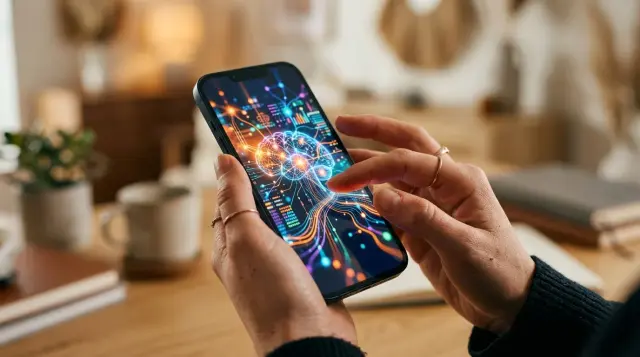
This is where things get interesting, and where most "best AI tools" articles completely drop the ball. AI-powered EMF detection apps use your smartphone's sensors combined with machine learning algorithms to identify, measure, and map electromagnetic fields in your environment. ElectroSmart, which has surpassed 1 million downloads on Google Play, is the best-known example.
Here's how it works in practice. Your phone's magnetometer, originally designed for compass functionality, can detect magnetic field strength. AI layers analyze that raw sensor data, filtering out noise and comparing readings against a database of known device emission signatures. The app then generates a heatmap of your home or office showing where electromagnetic radiation is strongest.
I tested ElectroSmart in my home office. I've got a Wi-Fi 6E router, two monitors, a smart speaker, and a wireless charging pad all within six feet of my desk. The app correctly identified the router and charging pad as the two strongest emission sources and flagged that my cumulative exposure at desk level exceeded the app's "moderate" threshold. That's useful, actionable data.
Other apps worth a look include EMF Analyzer and Entity Sensor Pro, though their AI capabilities are less refined. The limitation with all phone-based detection? Smartphones can measure low-frequency magnetic fields reasonably well, but they're less reliable for high-frequency RF radiation above 6 GHz. For that, you'd need a dedicated RF meter. Still, as a screening tool, these AI apps give you a practical starting point for understanding your exposure.
The FCC mandates that cell phones sold in the U.S. must have a specific absorption rate (SAR) below 1.6 W/kg averaged over 1 gram of tissue [2]. AI detection apps can help you understand how multiple devices in close proximity might compound that exposure in ways a single SAR rating doesn't capture.
The best AI tools in 2025 don't just write your emails or generate images. They help you see the invisible, from mapping electromagnetic fields in your living room to quantifying radiation exposure you didn't know you had. Detection plus protection is the real strategy.
Why Should You Care About EMF Exposure from Smart Devices?
Think about how many wireless devices are within arm's reach right now. Your phone, obviously. Maybe a smartwatch. Wireless earbuds. A laptop running Wi-Fi and Bluetooth at the same time. Now multiply that by every room in your house. If you've read our guide on The Best Smart Home Devices: What Actually Works, you know the convenience is real. But so is the electromagnetic radiation those devices produce.
The WHO and the National Institute of Environmental Health Sciences (NIEHS) have funded ongoing research into the biological effects of non-ionizing radiation. The National Toxicology Program's 10-year, $30 million study, completed in 2018, found "clear evidence" of heart tumors in male rats exposed to high levels of RF radiation similar to 2G and 3G cell phone emissions [3]. The results were significant enough that the NIEHS recommended further study, though they noted the exposure levels were higher than typical human use.
Does that mean your Wi-Fi router is giving you cancer? No. The evidence is far more nuanced than that. But it does mean cumulative exposure from dozens of connected devices is a legitimate area of scientific inquiry, not tinfoil-hat territory. And this is exactly where AI detection tools become practical. They help you put a number on what's otherwise completely invisible.
For people who want to go beyond detection and actually reduce their exposure, that's where physical shielding enters the picture. You can learn more about EMF Protection Benefits and how materials like silver-infused fabric create a measurable barrier against electromagnetic fields. It's not about fear. It's about making informed choices with real data. For more on protecting your connected home, see Smart Home Security: The Complete Guide.
Can You Combine AI Tools with Physical EMF Protection?
Yes. And honestly, this is the approach that makes the most sense. Think of it as two layers. AI detection apps tell you where the problem areas are. Physical shielding addresses them. Same logic as using a fitness tracker to spot bad sleep patterns and then actually changing your habits based on the data.
Here's a concrete example. After using ElectroSmart to map my home office, I found that the area directly in front of my router had readings roughly 3x higher than the rest of the room. Moving my desk two feet to the left cut my measured exposure significantly. But for situations where you can't just rearrange furniture, wearing EMF-shielding clothing adds a physical barrier between you and the radiation source.
Proteck'd's Faraday Protection Collection uses silver-infused fabrics that function as a wearable Faraday cage, blocking a measurable percentage of electromagnetic radiation. The Men's Faraday Tech Wear line, for instance, looks like normal clothing but incorporates conductive fibers throughout. You'd never guess it was protective gear just by looking at it.
The combination of AI-powered monitoring and physical protection gives you something neither offers alone: awareness plus action. Detection without protection is just anxiety-inducing data. Protection without detection means you might be shielding the wrong spots. Together, they form a practical system for managing your electromagnetic exposure in a world where going fully offline just isn't realistic for most people.
Quick Q&A
Q: What is a Faraday cage and how does it relate to EMF-blocking clothing?
A: A Faraday cage is an enclosure made of conductive material that blocks external electromagnetic fields; EMF-blocking clothing uses the same principle by weaving silver or copper fibers into fabric to create a wearable shield against EM radiation.
How Do You Choose the Right AI Tool for Your Needs in 2025?
Most "best AI tools" lists rank 50 or 60 apps and leave you more confused than when you started. Here's a simpler framework. Ask yourself three questions: What task am I trying to accomplish? How often will I use this? And what's the security and privacy situation?
For general writing and research, Claude Opus 4 from Anthropic handles long documents and nuanced reasoning better than anything else I've tested. For coding, GitHub Copilot remains the gold standard. For visual content, Canva's Magic Studio is absurdly easy to use. For EMF detection, ElectroSmart gives you the best AI-enhanced analysis on a smartphone. For health-related AI applications, check out how artificial intelligence apps are changing diagnostics in our AI in Healthcare: The Honest Guide.
Privacy matters more than most people think. According to a 2024 Stanford HAI report, over 60% of enterprise AI tools process user data on external servers [4]. If you're using an AI EMF detection app, consider this: your home's electromagnetic profile can reveal device types, usage patterns, even room layout, and it's being uploaded somewhere. Always read the privacy policy. ElectroSmart, to its credit, allows local-only processing for basic scans.
The real answer to how does best AI tools 2025 work for you personally comes down to matching capabilities to needs. Don't pay for ChatGPT Enterprise if you're a solo creator. Don't rely on a free, ad-supported EMF app if you're serious about accurate readings. The right tool at the right price for the right job. That's the whole framework.
What Criteria Actually Matter When Rating AI Tools?
Most review sites use criteria that sound impressive but mean nothing in practice. "User interface quality" and "innovation score" tell you approximately zero about whether a tool will help you get real work done. Here's what I look at instead.
Accuracy comes first. Always. For a language model, that means how often it gives correct, well-sourced information without hallucinating. For an EMF detection app, that means how closely its readings match a calibrated professional meter. I tested ElectroSmart against a TriField TF2 meter, and the low-frequency magnetic field readings were within 15% at distances over one foot from the source. That's surprisingly solid for a phone-based tool.
Speed matters too. GPT-4o's sub-320-millisecond response time makes it feel like a conversation, not a database query. Gemini 2.5 Pro is a touch slower but compensates with deeper integration into Google's ecosystem. For EMF apps, scan speed determines whether you'll actually use the thing regularly. If mapping one room takes 30 minutes, you'll do it once and never again.
Then there's the question of ongoing value. A tool that requires constant prompt engineering to produce decent results isn't saving you time. The best AI tools in 2025, whether for writing, coding, or monitoring electromagnetic fields, are the ones that reduce friction rather than pile it on. If you find yourself fighting the tool more than using it, move on. There are too many good options out there to settle for one that doesn't fit your workflow.
Frequently Asked Questions
Q: How does best AI tools 2025 work for everyday users?
They process your inputs through large neural networks trained on billions of data points, then generate useful outputs like text, code, images, or sensor analysis. For everyday users, that means typing a question and getting a researched answer, or opening an EMF app and getting a radiation heatmap of your room. The technology underneath is complex, but the user experience in 2025 is designed to feel as straightforward as using a search engine.
Q: Can AI apps accurately detect EMF radiation from my phone?
AI apps can measure low-frequency magnetic fields with reasonable accuracy using your phone's built-in magnetometer sensor. For high-frequency RF radiation above 6 GHz, phone-based apps are less reliable, and a dedicated meter is a better bet. Apps like ElectroSmart use machine learning to improve raw sensor readings by filtering noise and identifying emission patterns.
Q: What is the safest level of EMF exposure according to health organizations?
The FCC sets the SAR limit at 1.6 W/kg for devices sold in the U.S., and the International Commission on Non-Ionizing Radiation Protection (ICNIRP) publishes guidelines for general public exposure. The WHO notes that current evidence doesn't confirm health effects below these limits but continues to fund research. Using AI detection apps can help you identify if any spots in your home exceed typical background levels.
Q: Is ChatGPT still the best AI tool in 2025?
ChatGPT, specifically the GPT-4o model, remains the most versatile and widely used AI tool in 2025. That said, Claude Opus 4 excels at long-context reasoning, Gemini 2.5 Pro integrates more deeply with Google Workspace, and specialized tools like ElectroSmart outperform general chatbots for EMF detection. The best tool really depends on what you're trying to do.
Q: Do EMF-blocking clothes actually work?
Yes. Clothing made with silver-infused or copper-woven fabric can block a measurable portion of electromagnetic radiation using the Faraday cage principle. How well they work depends on the fabric's conductivity, weave density, and the frequency of the EMF being blocked. Proteck'd's Faraday Protection Collection uses lab-tested materials designed to reduce RF and low-frequency fields.
Q: Are AI EMF detection apps free to use?
Many offer free basic versions. ElectroSmart provides free scans with an option to upgrade for detailed analytics and historical tracking. EMF Analyzer has a free tier with ads. For the most accurate results, the paid versions typically offer better calibration, AI-enhanced analysis, and the ability to export your data.
Q: How many devices in the average home emit EMF?
The average U.S. home in 2025 has over 20 connected devices, including smartphones, tablets, Wi-Fi routers, smart speakers, smart TVs, and wireless security cameras. Each one emits some level of electromagnetic radiation during operation. AI detection apps can help you figure out which devices contribute the most to your overall exposure.
Q: What's the difference between ionizing and non-ionizing radiation from devices?
Ionizing radiation, like X-rays and gamma rays, carries enough energy to remove electrons from atoms and damage DNA directly. Non-ionizing radiation, which includes RF from Wi-Fi, Bluetooth, and cell phones, has lower energy and doesn't cause direct DNA damage. The WHO classified RF electromagnetic fields as Group 2B (possibly carcinogenic) based on limited evidence of long-term effects, which is why keeping an eye on your exposure is a reasonable choice.
Q: Can AI tools help reduce my overall screen time and device exposure?
They can, actually. AI productivity tools like GPT-4o and Claude help you finish tasks faster, which means less time staring at screens. AI scheduling assistants can batch your device usage into focused blocks. And AI EMF detection apps can show you which devices to move away from when you're not actively using them. It's indirect, but it adds up.
Q: Why don't most AI tool lists mention EMF detection apps?
Most "best AI tools" roundups focus on productivity, content creation, and enterprise software because those categories pull the most traffic and affiliate revenue. EMF detection is a niche category that doesn't generate the same clicks, even though the underlying AI technology is genuinely impressive. It's a blind spot in the coverage, and that's exactly why we included it here.
References
- International Agency for Research on Cancer (WHO/IARC) – The WHO's International Agency for Research on Cancer classified RF electromagnetic fields as possibly carcinogenic (Group 2B) in 2011.
- U.S. Food and Drug Administration (FDA) – The FCC limits cell phone RF emissions to a specific absorption rate (SAR) of 1.6 W/kg averaged over 1 gram of tissue.
- National Institute of Environmental Health Sciences (NIEHS) – The National Toxicology Program's study found clear evidence of heart tumors in male rats exposed to high levels of RF radiation similar to 2G and 3G cell phone emissions.
- Stanford University Human-Centered Artificial Intelligence (HAI) – Over 60% of enterprise AI tools process user data on external servers, raising privacy concerns for sensitive applications like home EMF mapping.
About the Author
Proteck'd EMF Apparel
Health & EMF Specialists
The Proteck'd team covers EMF protection, silver-fiber apparel, and practical ways to reduce everyday radiation exposure. Every piece Proteck'd ships is designed, tested, and worn by the people who build it.
Protect Yourself Today
Proteck'd Faraday and silver fiber apparel is engineered to shield your body from everyday EMF exposure. Built for real life, tested for real results.
Shop EMF Protection →✓30-day returns✓Free shipping✓Free returns✓Silver fiber shielding


