


How Accurate Are Health Wearables?: What the Research Shows

Your smartwatch just told you that you slept 7 hours and 14 minutes, burned 2,300 calories, and took 9,847 steps. Feels precise. But how much of that data would actually hold up in a doctor's office? The answer is messier than most wearable companies would like you to think.
If you've ever wondered how does wearable technology health monitoring work, good. That's the right question. Because understanding what's happening between your skin and your screen is the only way to figure out which numbers deserve your trust and which ones deserve a raised eyebrow.
The global wearable health market hit $61 billion in 2023, according to Grand View Research. Millions of people are making real health decisions based on the data these devices spit out. Some of those decisions are well informed. Others? Not so much.
I spent weeks reading through actual peer-reviewed research on wearable accuracy. Not press releases. Not marketing claims. The studies themselves. What I found is that these devices are genuinely impressive for some metrics, mediocre for others, and borderline unreliable for a few things they confidently display on your wrist. Let's break it all down.
Key Takeaways
How Does Wearable Technology Health Monitoring Actually Work?
Start with the basics. Every health wearable, whether it's an Apple Watch, a Fitbit, a WHOOP band, or an Oura ring, relies on a similar chain of events. Tiny biosensors sit against your skin and pick up raw physiological signals. Those signals get processed by a chip inside the device, sent wirelessly to your phone or the cloud, and then interpreted by software algorithms that turn them into the numbers on your screen [1].
The most common sensor is a photoplethysmography (PPG) sensor. It shines green LED light into your skin and measures how much bounces back. Blood absorbs green light, so the sensor can detect changes in blood volume with each heartbeat and give you a pulse reading. Same basic principle as the pulse oximeter your doctor clips on your finger, just miniaturized and strapped to your wrist.
Accelerometers and gyroscopes handle movement tracking. They detect acceleration and rotation in three dimensions, which is how your watch knows whether you're walking, running, or tossing around at night. More advanced devices add electrodermal activity sensors for stress, skin temperature sensors, and even tiny electrodes for electrocardiogram (ECG) readings.
Quick Q&A
Q: What type of sensor do most wearables use to track heart rate?
A: Most consumer wearables use photoplethysmography (PPG), which shines LED light into the skin and measures reflected light changes caused by blood flow with each heartbeat.
Here's where it gets interesting. The raw signal from any of these sensors is noisy. Your wrist moves. You sweat. The device shifts position. So the real magic, and the real source of error, lives in the algorithm layer. Machine learning models trained on thousands of users try to filter out the noise and deliver clean data. If you want to understand more about how these AI systems actually think through data, check out How AI Thinks: A Clear Guide.
How Accurate Is Heart Rate Tracking on Smartwatches?
Heart rate is the metric wearables do best. It's not even close. Multiple studies have shown that optical heart rate sensors on popular consumer devices land within about 3 to 5 percent of a clinical-grade chest-strap ECG during rest and moderate activity. A 2019 study published in the Journal of the American Heart Association found the Apple Watch measured heart rate within approximately 6 bpm of a reference ECG during various activities [2].
Accuracy drops during high-intensity exercise, though. When you're sprinting or hammering through burpees, your wrist is moving fast and blood is redistributing to your muscles. That PPG sensor has a much harder time getting a clean signal. Darker skin tones can also affect readings because melanin absorbs more light, reducing the signal-to-noise ratio. Researchers at Duke University documented this disparity in pulse oximetry readings as early as 2020.
The Apple Watch Series 4, which received FDA 510(k) clearance for its ECG feature in September 2018, was a real milestone. It could detect atrial fibrillation with a sensitivity of about 98.3% in the Apple Heart Study conducted with Stanford Medicine. That's genuinely useful for catching irregular rhythms that people might not notice on their own.
Still, there's a big difference between detecting a rhythm irregularity and diagnosing a heart condition. Cardiologists use 12-lead ECGs. Your watch uses a single lead. It's a screening tool, not a diagnostic one. That distinction matters a lot when you're deciding how to respond to an alert at 2 a.m.
Can Wearables Accurately Track Sleep?
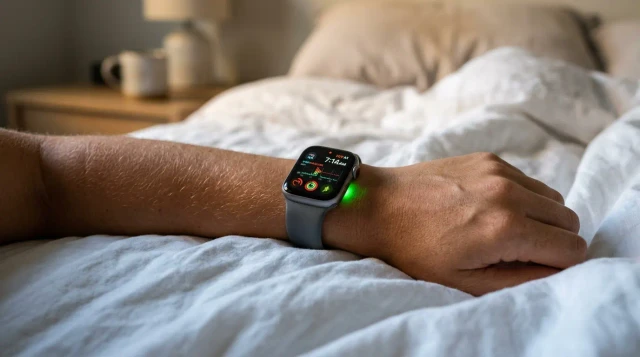
Sleep is where wearable accuracy starts to wobble. Most devices use accelerometer data and heart rate variability to estimate when you're asleep, when you're awake, and which sleep stage you're in. The gold standard for sleep measurement is polysomnography (PSG), a full overnight study in a sleep lab with electrodes stuck to your scalp, face, and chest. Your Fitbit is obviously not doing that.
A 2019 systematic review in the journal Sleep Medicine Reviews found that consumer wearables were reasonably good at detecting total sleep time, usually within about 10 to 30 minutes of PSG. They were also decent at figuring out when you were asleep versus awake. Where they struggled? Sleep staging. Telling light sleep from deep sleep from REM sleep is incredibly difficult with just a wrist sensor.
Oura Ring, which uses skin temperature, heart rate, and HRV from your finger, has performed somewhat better than wrist-based devices in independent tests. A 2020 validation study published by researchers at SRI International found it correctly classified sleep stages about 65% of the time. That's better than chance (which would be around 33% for three stages), but it's far from the 85 to 90% agreement that researchers generally want from a validated tool.
So what should you do with your sleep data? Treat it as a trend tracker, not a nightly report card. If your wearable shows your sleep quality declining over weeks, that's useful information. Obsessing over whether last night was 23% deep sleep vs. 19%? That level of precision just isn't there yet. For a closer look at how the AI behind these estimates actually processes your data, How AI Works: Without the Jargon is a great primer.
The biggest value of wearable health tracking isn't in any single number. It's in pattern recognition over weeks and months. A rising resting heart rate or declining HRV trend is a signal worth investigating, even when any single reading might be off.
Why Are Calorie Burn Estimates So Unreliable?
This is the big one. If you've ever used your watch's calorie count to justify a second slice of pizza, I have some bad news. A landmark 2017 study from Stanford University tested seven popular wearables, including the Apple Watch, Fitbit Surge, and Samsung Gear S2, and found that even the most accurate device was off by an average of 27% for energy expenditure. The least accurate? Off by 93% [3].
Let that sink in. A 93% error rate. If you actually burned 400 calories, your device might tell you 772.
The problem is fundamental. Wearables estimate calories using algorithms that factor in heart rate, movement, and sometimes user-entered data like weight and height. But actual energy expenditure depends on muscle mass, metabolic rate, hormonal fluctuations, the thermic effect of food, and dozens of other variables that a wrist sensor simply cannot measure. The algorithms are trained on population averages. If you don't match the average, the errors compound fast.
Garmin, Polar, and Apple have all improved their models since 2017, and newer devices are somewhat better. But no consumer wearable has cracked this problem. Even the most advanced devices still rely on indirect estimates rather than direct measurement of oxygen consumption and CO2 output, which is what lab-grade metabolic testing uses.
What About Blood Oxygen and Blood Pressure Monitoring?
SpO2, or blood oxygen saturation, became a standard feature after the pandemic put pulse oximeters in the spotlight. Most wearables use red and infrared LEDs to estimate SpO2, and under controlled, resting conditions, they can get within 2 to 3 percentage points of a medical-grade finger pulse oximeter. That's fine for general awareness.
The problem shows up during movement or when readings come from the wrist rather than the fingertip. The wrist has less arterial perfusion than the finger, which means weaker signals and more noise. According to the FDA, most consumer SpO2 features are not cleared as medical devices, and the agency explicitly states they should not be used for medical diagnosis or treatment decisions.
Quick Q&A
Q: Are wearable blood pressure monitors accurate enough to replace a cuff?
A: No. Current cuffless blood pressure estimates from wearables lack the accuracy and clinical validation needed to replace traditional sphygmomanometer readings, according to a 2023 review in Hypertension by the American Heart Association.
Blood pressure is the holy grail that wearable companies are chasing. Samsung's Galaxy Watch has experimented with tonometry-based blood pressure estimates, but it requires regular calibration against a traditional cuff. A 2023 scientific statement from the American Heart Association, published in the journal Hypertension, concluded that cuffless blood pressure devices have not yet demonstrated sufficient accuracy for clinical use. We're years away from this being reliably solved at the consumer level.
How Are Wearable Sensors Used in Clinical Research and Rehabilitation?
Consumer accuracy has its limits. But wearables are proving genuinely valuable in clinical and research settings. A 2023 systematic review published in JMIR mHealth and uHealth by Gu, Kim, Kim, and Yoo found that inertial measurement units (IMUs) and multisensor wearable systems showed strong validity for gait analysis, fall risk detection, and post-surgical rehabilitation monitoring [1].
Here's a compelling example. Researchers at the Mayo Clinic used Apple Watch data to identify patients with low ejection fraction, a sign of weakened heart function, using AI trained on ECG waveforms. The watch flagged it before symptoms appeared. That's not a gimmick. That's a real clinical win.
Continuous glucose monitors (CGMs) like the Dexterity G7 and Abbott FreeStyle Libre represent another tier of wearable health monitoring entirely. These devices use a tiny filament inserted under the skin to measure interstitial glucose levels every few minutes. According to a review in Sensors and Actuators B: Chemical, modern CGMs achieve mean absolute relative differences (MARD) of around 9 to 11%, which the FDA considers acceptable for making insulin dosing decisions [4].
The takeaway here is that how does wearable technology health monitoring work in a clinical context looks very different from consumer wellness tracking. Clinical-grade wearables are designed with tighter tolerances, validated against reference standards, and used under medical supervision. They represent the future that consumer devices are slowly moving toward.
Do Wearable Devices Emit Enough EMF to Worry About?
Here's something most wearable reviews skip over entirely. Every wireless wearable on your body is a radio transmitter. Bluetooth, Wi-Fi, and cellular signals are all forms of electromagnetic radiation. When a device sits on your skin around the clock, the cumulative exposure question is a fair one to ask.
The specific absorption rate (SAR) for wearables is generally well below FCC limits. The Apple Watch, for instance, has a reported SAR of around 0.17 W/kg, compared to the FCC limit of 1.6 W/kg. But SAR testing is done under standardized lab conditions that may not reflect how people actually wear these things, especially during sleep and exercise.
If you're someone who wears health trackers constantly and also lives surrounded by smart home devices (here's Smart Home: The Complete Guide if you want the full picture), the total RF exposure from all sources adds up. For those who want to be proactive about reducing exposure, understanding EMF Protection Benefits is a smart starting point.
Proteck'd has developed a whole line of Faraday Protection Collection clothing that uses silver-infused fabric to shield against RF and EMF. Their Men's Faraday Tech Wear looks like regular clothing but provides a layer of protection between your body and the constant wireless signals bouncing around your daily environment. For anyone who tracks their health data closely, it makes sense to also think about what those wireless signals are doing to you in the process. And if your home is packed with connected devices, The Connected Home: The Complete Guide walks through how all those signals interact.
What Should You Actually Trust on Your Wearable?
After going through the research, here's my honest take on what you can and can't rely on. Heart rate at rest? Pretty solid. Step count? Close enough for general activity goals. Trends over time for sleep quality, recovery, and activity levels? Genuinely valuable for building healthier habits.
Calorie burn? Treat it as a rough ballpark. Never as gospel. Sleep stage breakdowns? Interesting but not precise enough to act on specific percentages. Blood pressure from a cuffless wearable? Not ready yet.
The biggest value of wearable health tracking isn't in any single number. It's in pattern recognition over weeks and months. If your resting heart rate has been climbing steadily for three weeks, that's a signal worth looking into. If your HRV is tanking during a stressful period, that data can motivate real lifestyle changes. To understand how the AI algorithms behind these patterns work, How AI Works: A Clear Guide breaks it down clearly.
The research makes one thing clear: understanding how wearable technology health monitoring works is what separates a savvy user from someone who blindly trusts every number on their screen. Know what your device measures. Know where its weaknesses are. Use the data as one input among many, not as a substitute for professional medical care.
Frequently Asked Questions
Q: How does wearable technology health monitoring work?
Wearable health monitoring works through a chain of biosensors, signal processing, and AI interpretation. Sensors like PPG (optical heart rate), accelerometers (motion), and temperature sensors collect raw physiological data from your body. Onboard processors clean up the signal, transmit it wirelessly to an app, and algorithms translate it into metrics like heart rate, steps, or sleep stages.
Q: Are fitness tracker heart rate readings accurate?
For resting heart rate, most modern fitness trackers are accurate within about 3 to 5 percent of a clinical ECG. Accuracy drops during high-intensity exercise, when wrist movement and blood redistribution create more signal noise. Chest-worn devices tend to be more accurate than wrist-based trackers during workouts.
Q: How accurate are smartwatch calorie burn estimates?
Not very. A 2017 Stanford study found that even the best wearable tested was off by 27% for calorie expenditure, and the worst was off by 93%. The algorithms estimate calories based on heart rate and movement but can't account for individual metabolic rate, muscle mass, or hormonal factors.
Q: Can a smartwatch detect atrial fibrillation?
Yes, certain smartwatches can screen for atrial fibrillation. The Apple Watch ECG feature received FDA 510(k) clearance in 2018 and showed 98.3% sensitivity for AFib detection in the Stanford Apple Heart Study. That said, it's a screening tool, not a diagnostic replacement for a clinical 12-lead ECG.
Q: Are wearable sleep trackers reliable?
They're reliable for estimating total sleep time, typically within 10 to 30 minutes of a lab polysomnography study. Sleep staging is another story. Independent tests show wearables correctly classify sleep stages about 65% of the time at best, which isn't precise enough for clinical use.
Q: Is the blood oxygen (SpO2) reading on my watch medically accurate?
Under resting conditions, wearable SpO2 readings are usually within 2 to 3 percentage points of a medical finger pulse oximeter. But the FDA does not clear most consumer SpO2 features for medical use, and accuracy drops with movement or poor sensor contact. Don't use it to make medical decisions without talking to a doctor.
Q: Do wearable health devices emit EMF radiation?
Yes. All wireless wearables emit radiofrequency electromagnetic radiation through Bluetooth, Wi-Fi, or cellular signals. SAR levels are generally well below FCC limits, but since these devices sit against your skin around the clock, cumulative exposure is something some users choose to manage with EMF-shielding clothing.
Q: What's the difference between a consumer wearable and a medical-grade wearable?
Medical-grade wearables go through rigorous clinical validation and receive FDA clearance for specific diagnostic functions. Consumer wearables are typically classified as general wellness devices with no requirement for clinical accuracy. Medical devices like continuous glucose monitors must demonstrate accuracy within defined thresholds before they can be approved.
Q: Can wearable blood pressure monitors replace a traditional cuff?
Not yet. A 2023 scientific statement from the American Heart Association concluded that cuffless blood pressure wearables haven't demonstrated sufficient accuracy for clinical use. Current devices need frequent calibration against a traditional cuff and aren't reliable enough to guide treatment decisions.
Q: Should I make health decisions based on my wearable data?
Use wearable data as one input among many, not your sole guide. Long-term trends in heart rate, HRV, and activity levels are genuinely useful for spotting changes worth discussing with your doctor. But don't self-diagnose based on a single reading, especially for metrics like blood oxygen or irregular rhythm alerts.
References
- JMIR mHealth and uHealth (Gu et al., 2023) – Wearable sensors including IMUs and multisensor systems show strong validity for gait analysis, fall risk detection, and clinical rehabilitation monitoring
- Journal of the American Heart Association – Apple Watch heart rate measurements are accurate within approximately 6 bpm of a reference ECG during various activities
- Stanford University School of Medicine (Shcherbina et al., 2017) – Seven popular wearable devices showed calorie burn estimation errors ranging from 27% to 93% compared to indirect calorimetry
- National Institutes of Health (Sensors for Health Monitoring) – Continuous glucose monitors achieve mean absolute relative differences of approximately 9 to 11 percent, considered acceptable by the FDA for insulin dosing decisions
About the Author
Proteck'd EMF Apparel
Health & EMF Specialists
The Proteck'd team covers EMF protection, silver-fiber apparel, and practical ways to reduce everyday radiation exposure. Every piece Proteck'd ships is designed, tested, and worn by the people who build it.
Protect Yourself Today
Proteck'd Faraday and silver fiber apparel is engineered to shield your body from everyday EMF exposure. Built for real life, tested for real results.
Shop EMF Protection →✓30-day returns✓Free shipping✓Free returns✓Silver fiber shielding


