


AI in Healthcare: Everything You Need to Know

Here's a number that stopped me mid-scroll: AI systems can now detect certain cancers in medical images with accuracy rates above 94%, sometimes outperforming experienced radiologists. That's not science fiction. That's happening right now, in hospitals you could drive to this afternoon.
So what does artificial intelligence health tools mean, really? Once you strip away the hype, it comes down to software that learns from enormous amounts of medical data, spots patterns humans might miss, and helps clinicians make faster, better decisions. Think of it as a tireless second opinion that has read every relevant study ever published.
But this technology doesn't exist in a vacuum. It raises real questions about privacy, bias, regulation, and the ever-growing web of wireless devices surrounding our bodies. The more health tech we adopt, the more electromagnetic radiation we're exposed to. That's a conversation worth having alongside all the excitement.
I spent weeks pulling apart the latest research, regulatory frameworks, and real-world case studies to put this together. Whether you're a tech enthusiast, a patient trying to understand your options, or just someone who wants to know what's coming next, this guide covers it all.
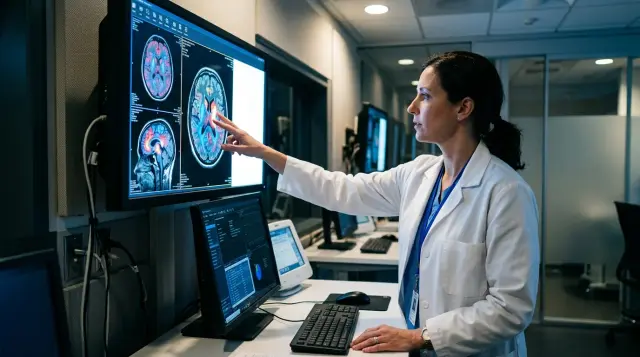
AI health tools don't replace doctors. They give clinicians a tireless second opinion trained on millions of data points. The real challenge isn't building smarter algorithms. It's building trust, fairness, and safety into every system that touches patient care.
What Does AI in Healthcare Actually Do?
At its core, AI-powered diagnostics and machine learning in medicine rely on algorithms trained on enormous datasets. We're talking millions of medical images, patient records, genomic sequences, and clinical trial results. The system learns to recognize patterns the same way a medical student does. Only faster. And without getting tired after a 12-hour shift.
Take Google DeepMind's AlphaFold as a concrete example. By 2023, it had predicted the 3D structures of over 200 million proteins, a task that used to take researchers years per single protein [1]. That breakthrough alone is accelerating drug discovery in ways nobody could have imagined a decade ago.
These tools fall into several broad categories. Diagnostic AI analyzes images like X-rays, MRIs, and pathology slides. Predictive health analytics flag patients who are likely to deteriorate before obvious symptoms show up. Natural language processing systems read clinical notes and extract the relevant bits. And robotic process automation handles the mountain of administrative paperwork that bogs down healthcare workers every single day.
Quick Q&A
Q: Does AI replace doctors in making medical decisions?
A: No. AI health tools support clinical decision-making by providing data-driven insights, but a licensed physician still makes the final call on diagnosis and treatment.
What ties all of this together? None of it replaces human judgment. According to the European Commission's public health framework, artificial intelligence in the healthcare sector refers to computer systems that perform tasks typically requiring human intelligence, including learning, problem-solving, and decision-making [2]. The key word there is "assist." The doctor is still in the room.
How Is Machine Learning Improving Diagnostics and Treatment?
Let's get specific, because vague promises about AI "transforming medicine" don't help anyone. At Harvard T.H. Chan School of Public Health, researcher Nikhil Vytla has been building AI software focused on improving diagnoses for traumatic injuries. His work emphasizes something that often gets overlooked: making AI more trustworthy, not just more accurate [3].
That distinction matters. A lot. An algorithm can flag a potential tumor on a scan, but if the radiologist doesn't trust the system's reasoning, they'll ignore it. Vytla's approach builds transparency into the model so clinicians can see why the AI reached a particular conclusion. It's the difference between a tool that says "cancer detected" and one that says "here's the specific pattern I found, and here's how confident I am."
In drug discovery, the impact is equally concrete. Traditional drug development takes 10 to 15 years and costs over $2.6 billion on average, according to estimates from the Tufts Center for the Study of Drug Development. AI systems from companies like Insilico Medicine have compressed early-stage discovery timelines dramatically. Their AI-designed drug ISM001-055 reached Phase II clinical trials in under 30 months from target identification. That process typically takes four to six years.
Predictive analytics is another area where machine intelligence really proves its worth. Hospitals like Johns Hopkins have deployed systems that predict sepsis up to 12 hours before clinical recognition, giving doctors a meaningful head start. When you consider that sepsis kills roughly 270,000 Americans annually according to the CDC, that early warning system isn't an incremental improvement. It's a lifeline.
Personalized treatment is advancing too. AI algorithms analyze a patient's genetic profile, lifestyle data, and medical history to recommend therapies tailored specifically to them. If you've explored The Best Health Wearables: What's Actually Worth Buying, you've already seen how consumer devices feed into this data ecosystem. Wearables generate continuous health data streams that, when combined with clinical records, give AI models a much richer picture of individual health.
What Are the Biggest Risks of AI Health Tools?
For all the promise, there are real risks that don't get enough airtime. Algorithmic bias sits near the top of the list. If an AI system is trained primarily on data from one demographic group, it can perform poorly on patients who don't fit that profile. A 2019 study published in Science found that a widely used healthcare algorithm exhibited significant racial bias, systematically underestimating the health needs of Black patients [4].
Data privacy is another massive concern. Healthcare automation technology requires access to deeply personal information: your diagnoses, your genetic markers, your daily health metrics from wearables and smart home devices. Every connected device adds another node in your digital health footprint. If you're curious about how connected homes factor in, our guides on The Best Smart Home Devices: What Actually Works and Smart Home Security: The Complete Guide cover the security side of that equation.
Then there's accountability. When an AI system contributes to a misdiagnosis, who's responsible? The developer? The hospital? The physician who relied on the recommendation? The EU's new Product Liability Directive is attempting to address exactly this, but the legal frameworks are still catching up to the technology.
The electromagnetic reality also deserves attention here. As AI health tools multiply, so does the wireless infrastructure supporting them. More connected devices in hospitals, homes, and on our bodies means more EMF exposure. It's why understanding EMF Protection Benefits is becoming increasingly relevant. You don't have to be anti-technology to think critically about your exposure as these systems become part of everyday life.
How Are Governments Regulating Artificial Intelligence in Medicine?
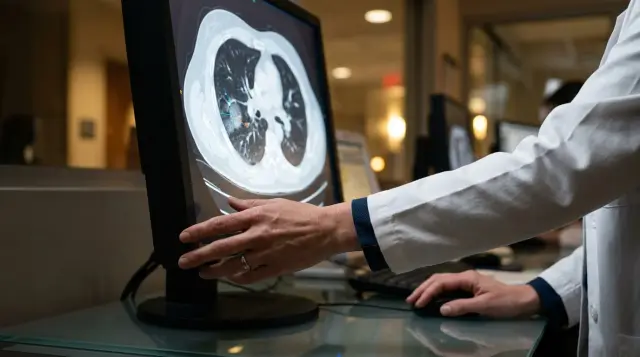
Regulation is where the rubber meets the road. And honestly, the picture varies wildly depending on where you live. The European Union has taken the most aggressive stance with the EU AI Act, which classifies most medical AI systems as "high-risk." That designation means these tools must undergo rigorous conformity assessments, maintain detailed documentation, and ensure human oversight before they can be deployed in clinical settings [2].
The EU has also introduced the European Health Data Space Regulation (EHDS), which creates a framework for sharing health data across member states while protecting patient privacy. It's ambitious. Whether it works as intended remains to be seen, but at least the guardrails are going up.
On the global stage, the World Health Organization published detailed ethics and governance guidance for large multimodal AI models in health in January 2024 [1]. WHO's approach centers on three pillars: governing AI responsibly, ensuring equitable access, and protecting patient safety. During the 77th World Health Assembly, delegates specifically debated the opportunities, risks, and governance challenges of artificial intelligence for health.
In the United States, the FDA has approved or cleared over 700 AI-enabled medical devices as of early 2024, mostly in radiology and cardiology. But critics argue the approval process doesn't adequately test for long-term performance drift, where algorithms degrade over time as patient populations and clinical practices shift.
The takeaway? Regulation is necessary but imperfect. Understanding what does artificial intelligence health tools mean also means understanding who's watching the watchers. Stay informed about the regulatory environment, because it directly affects the safety and effectiveness of the tools your doctor might use on you tomorrow.
Can AI Health Tech and Personal EMF Safety Coexist?
This is the question I find most interesting on a personal level. We're adopting more digital health tools than ever. Smart watches track our heart rate. AI-powered apps monitor our sleep. Connected devices in our homes adjust our environments for better wellness. And every single one of them emits electromagnetic radiation.
I'm not suggesting you throw your smartwatch in a drawer. The benefits of these tools are real, and I've written before about how Home Automation Essentials: What Works can genuinely improve daily life. But here's a fair question: as we surround ourselves with more wireless health technology, shouldn't we also think about reducing unnecessary exposure?
Quick Q&A
Q: Do AI health wearables increase my daily EMF exposure?
A: Yes. Any Bluetooth or WiFi-enabled wearable adds to your cumulative electromagnetic radiation exposure, though individual device emissions are typically low.
That's where products like those in the Faraday Protection Collection come in. Proteck'd designs apparel with built-in EMF shielding fabric, so you can use your tech without absorbing all the RF energy it puts out. Their Men's Faraday Tech Wear line, for example, looks like normal clothing but contains silver-infused fabric that blocks a significant percentage of electromagnetic frequencies.
The idea isn't fear. It's balance. You wouldn't skip sunscreen just because you enjoy being outside. Similarly, enjoying AI health tools while taking practical steps to manage EMF exposure just makes sense. The technology is moving fast. Being thoughtful about how we interact with it is simply smart living.
What Does the Future of AI Health Tools Look Like?
If you think the current generation of AI health tools is impressive, buckle up. The convergence of machine intelligence, wearable sensors, and genomic data is heading toward truly personalized medicine, where treatments are designed specifically for your biology, lifestyle, and environment.
Large language models are already being tested for clinical decision support. Google's Med-PaLM 2, for instance, achieved expert-level performance on U.S. medical licensing exam questions. Microsoft and Epic Systems announced a collaboration in 2023 to integrate generative AI directly into electronic health records used by hospitals serving over 250 million patients. These aren't pilot programs anymore. This is infrastructure-level change.
Remote patient monitoring is another frontier worth watching. AI systems that analyze data from home-based sensors can detect early signs of heart failure exacerbation, diabetic crises, or cognitive decline without the patient ever visiting a clinic. For aging populations in rural areas with limited hospital access, this could be genuinely life-changing.
But here's what I keep coming back to. Understanding what does artificial intelligence health tools mean isn't just about knowing the technology. It's about understanding your relationship with it. How much of your health data are you comfortable sharing? How much wireless exposure are you accumulating? What regulations protect you?
The answers to those questions will shape your experience with AI in medicine just as much as any algorithm will. Stay curious. Stay informed. And don't be afraid to ask your doctor how AI factors into the care you're receiving. This is your health. You deserve to know what's under the hood.
- AI health tools use machine learning to assist in diagnostics, drug discovery, predictive analytics, and personalized treatment, but they augment doctors rather than replace them.
- Algorithmic bias and data privacy are significant risks that require ongoing vigilance from regulators, developers, and patients alike.
- The EU AI Act and WHO's 2024 guidance represent the most comprehensive regulatory efforts to govern AI in medicine to date.
- The proliferation of connected health devices increases cumulative EMF exposure, making personal shielding solutions increasingly relevant.
- Understanding what AI health tools mean for you personally, including your data, your exposure, and your rights, is just as important as understanding the technology itself.
Frequently Asked Questions
It means software that learns from medical data to help with things like reading scans, predicting disease risk, and personalizing treatments. These tools analyze patterns across massive datasets far faster than any human could. They don't make decisions on their own but provide data-driven recommendations that doctors use alongside their own clinical expertise.
Yes. The FDA has cleared over 700 AI-enabled medical devices, with the majority focused on radiology and cardiology. Hospitals like Johns Hopkins and the Mayo Clinic use AI for everything from sepsis prediction to pathology analysis. It's not some future concept. It's standard practice in many advanced medical centers today.
In specific, narrow tasks, yes. AI systems have matched or outperformed radiologists in detecting certain cancers in medical images. But medicine involves far more than reading scans. Clinical judgment, patient communication, and ethical reasoning are still uniquely human. AI is best understood as a tool that makes good doctors better, not a replacement for them.
The top concerns are algorithmic bias, data privacy, and accountability gaps. A 2019 study in Science revealed significant racial bias in a widely used healthcare algorithm. Data breaches can expose deeply sensitive medical information. And when AI contributes to a wrong diagnosis, legal responsibility is still murky in many places.
The EU AI Act classifies most medical AI as high-risk, requiring rigorous testing, documentation, and human oversight before deployment. The European Health Data Space Regulation adds a framework for cross-border health data sharing with privacy protections. Together, these represent the world's most comprehensive approach to governing AI in medicine.
Yes, any Bluetooth or WiFi-enabled device adds to your cumulative electromagnetic radiation exposure. Individual devices typically emit low levels, but the combined effect of multiple wearables, smart home devices, and connected health tools adds up across a full day. EMF-shielding clothing can help reduce that cumulative load without requiring you to give up your devices.
The World Health Organization published comprehensive ethics and governance guidance for large multimodal AI models in healthcare in January 2024. Their framework focuses on responsible governance, equitable access, and patient safety. The WHO also coordinates global discussions through events like the World Health Assembly and the AI for Good Summit.
Expect deeper integration of AI into electronic health records, broader use of remote patient monitoring powered by machine learning, and more AI-designed drugs entering clinical trials. Microsoft and Epic Systems are already embedding generative AI into systems serving over 250 million patients. The shift toward truly personalized, data-driven medicine will pick up speed significantly.
It depends on the system and the regulations governing it. In the EU, strict data protection laws apply. In the US, HIPAA provides a baseline but wasn't designed with AI in mind. Always ask your healthcare provider how your data is used, whether it's anonymized, and what security measures are in place. Being proactive about data privacy is your right.
Predictive health analytics uses AI to forecast medical events before they happen, like predicting sepsis 12 hours before clinical symptoms appear or identifying patients at high risk for hospital readmission. These systems analyze patterns across thousands of data points in real time. The goal is early intervention, catching problems when they're still manageable instead of after a crisis hits.
References
- World Health Organization – WHO published ethics and governance guidance for large multimodal AI models in health in January 2024, addressing responsible governance and patient safety.
- Harvard T.H. Chan School of Public Health – Nikhil Vytla at Harvard builds AI software focused on improving diagnoses for traumatic injuries and making AI more trustworthy.
About the Author
Proteck'd EMF Apparel
Health & EMF Specialists
The Proteck'd team covers EMF protection, silver-fiber apparel, and practical ways to reduce everyday radiation exposure. Every piece Proteck'd ships is designed, tested, and worn by the people who build it.
Protect Yourself Today
Proteck'd Faraday and silver fiber apparel is engineered to shield your body from everyday EMF exposure. Built for real life, tested for real results.
Shop EMF Protection →✓30-day returns✓Free shipping✓Free returns✓Silver fiber shielding


