


How to Protect Yourself from 5G Tower Emissions: A Practical Guide

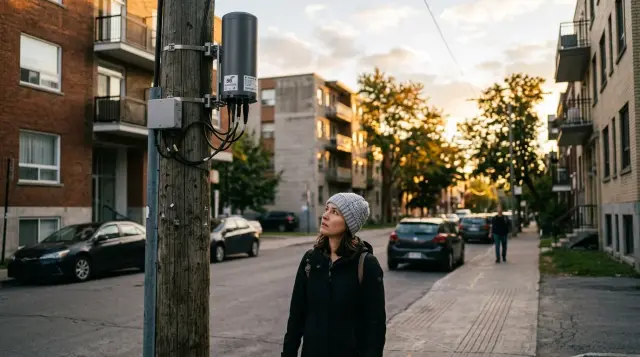
About 100,000 new 5G small cell towers go up across the United States every year. And they're not on distant hilltops anymore. They're bolted to streetlights, mounted on building facades, sitting on utility poles right outside apartment windows. If you've ever wondered whether an EMF beanie or other shielding gear actually makes sense given all that, you're asking the right question.
I'm not here to scare you. I'm also not here to tell you everything is perfectly fine and you should stop thinking about it. The truth sits somewhere in the middle, and honestly, it's more interesting than either extreme. The World Health Organization's International Agency for Research on Cancer (IARC) classified radiofrequency electromagnetic fields as Group 2B, meaning "possibly carcinogenic to humans," back in 2011 [1]. That was before 5G even existed. Now the frequencies are higher, the towers are closer, and the research is still catching up.
So what can you actually do? Quite a lot, it turns out. Managing your distance from cell towers, redesigning your home environment, wearing purpose-built EMF shielding clothing. These are practical steps that don't require you to move off the grid or wrap your house in aluminum foil.
This guide covers the science, the materials, and the real-world strategies. We'll talk about why silver fiber works, how RF shielding garments like an EMF beanie are constructed, and what the research actually says about 5G radiation exposure. Let's get into it.
Key Takeaways
What Exactly Is 5G Radiation and How Is It Different?
Let's get specific about what we're dealing with. "5G radiation" refers to the radiofrequency (RF) electromagnetic radiation emitted by fifth-generation wireless network infrastructure. Unlike 4G LTE, which primarily operates between 700 MHz and 2.5 GHz, 5G uses three distinct frequency bands. Low-band (under 1 GHz) is similar to 4G. Mid-band runs from about 1 GHz to 6 GHz. And the high-band millimeter wave (mmWave) operates between 24 GHz and 39 GHz [2].
That mmWave band is where things get interesting. Higher frequencies carry more data but travel shorter distances and don't penetrate surfaces as well. That's exactly why telecom companies need so many more towers. In dense urban areas, 5G small cells are installed roughly every 250 meters. You're physically closer to the source of electromagnetic radiation more often throughout your day.
Does closer automatically mean more dangerous? Not necessarily. The FCC sets exposure limits using specific absorption rate (SAR), capping it at 1.6 W/kg averaged over 1 gram of tissue [2]. 5G equipment operates well within these limits. But here's the thing. Those limits were set in 1996, based on thermal effects only. They don't account for potential non-thermal biological effects that researchers at institutions like the Ramazzini Institute in Italy and the National Toxicology Program (NTP) in the U.S. have been studying.
For a deeper look at the research, check out The Science About 5G Radiation: What the Research Reveals. Understanding the basics helps you make decisions rooted in actual data rather than fear or dismissal.
Quick Q&A
Q: Is 5G radiation the same as ionizing radiation like X-rays?
A: No. 5G uses non-ionizing radiofrequency radiation, which doesn't have enough energy to break chemical bonds or directly damage DNA the way X-rays or gamma rays do.
How Does an EMF Beanie Actually Block Radiation?
An EMF beanie works on the same principle as a Faraday cage, just scaled down to fit on your head. When conductive fibers are woven into fabric, they create a mesh that reflects and absorbs incoming electromagnetic radiation. The key word is "conductive." Silver is one of the best conductors on earth, which is why most high-performance RF shielding garments use silver-threaded textiles.
The science is pretty straightforward. When an RF wave hits a conductive surface, it induces tiny electrical currents in the material. Those currents generate their own opposing electromagnetic field, effectively canceling out or redirecting the incoming signal. This is called electromagnetic shielding attenuation, measured in decibels (dB). A well-constructed silver fiber beanie typically achieves 30 to 50 dB of attenuation. That translates to blocking roughly 99% of RF radiation at common wireless frequencies.
Not all EMF protection hats are created equal, though. The density of the silver weave matters. The coverage area matters. And whether the fabric has been independently tested in a lab matters a lot. Some products on the market make big claims without third-party verification. Look for garments that reference specific shielding effectiveness testing, ideally conducted according to standards like IEEE 299 or ASTM D4935. You can read more about how this technology works in practice at Personal EMF Faraday Shield: How Proteck'd Does It.
The real-world application is simple. You put on a beanie. You go about your day. The silver fiber lining reflects radiofrequency energy from cell towers, Wi-Fi routers, and Bluetooth devices away from your skull. It won't make your phone stop working (the beanie is on your head, not your phone), but it reduces the amount of EM radiation your brain absorbs during your daily commute, your walk past that 5G small cell on Main Street, or your eight hours in an office surrounded by wireless infrastructure.
Why Does Silver Fiber Work Better Than Other Materials?
Silver has the highest electrical conductivity of any element. Full stop. That's not marketing, that's physics. Copper is a close second, and you'll sometimes see copper-based shielding fabrics on the market. But silver has a practical advantage in wearable applications: it's naturally antimicrobial. A 2014 study published in the Journal of Industrial Textiles confirmed that silver-coated fibers maintain both conductivity and antimicrobial properties even after repeated washing cycles [3].
This matters because you're wearing these garments against your skin, sometimes for hours. Nobody wants a hat that starts to smell after two wears. Silver fiber fabrics resist bacterial growth, which keeps the garment fresher longer without chemical treatments. That's a nice bonus on top of the primary RF shielding function.
The way silver fiber gets integrated into EMF shielding clothing varies. Some manufacturers coat standard textile fibers with a thin layer of silver. Others blend pure silver threads directly into the weave. The blended approach tends to be more durable because the silver isn't just a surface coating that can wear off over time. For more on this, Silver Fiber for Privacy and Protection: The Full Picture goes deep on the material science.
Proteck'd uses silver-infused Faraday fabrics in their Faraday EMF Collection, and the approach prioritizes both shielding performance and everyday wearability. Because let's be honest. The best EMF protection in the world doesn't help you if it sits in a drawer because it looks weird or feels uncomfortable.
The precautionary principle is simple: when the protective action costs little and the potential harm is serious, you don't wait for absolute certainty. You act. An EMF beanie is one of the lowest-effort, highest-impact steps you can take for your brain in a wireless world.

Can You Reduce 5G Exposure Without Special Clothing?
Absolutely. EMF shielding garments are one tool in a larger toolkit, and they work best as part of a broader strategy. The single most effective thing you can do is increase your distance from emission sources. RF energy follows the inverse-square law, meaning if you double your distance from a source, your exposure drops to one-quarter. That's a massive reduction from simply crossing the street.
Here's a concrete example. According to measurements taken by RF engineers using calibrated spectrum analyzers, standing 10 meters from a 5G small cell on a utility pole produces exposure levels around 0.1 to 1.0 milliwatts per square meter. At 50 meters, that drops to roughly 0.004 to 0.04 mW/m². Both are well within FCC limits, but the difference is significant if you're trying to minimize cumulative exposure over time.
At home, there are plenty of changes you can make. Turn off Wi-Fi at night. Use wired ethernet connections when possible. Keep your phone out of the bedroom or switch it to airplane mode while you sleep. Free. Simple. They add up. For a comprehensive breakdown, check out Low-EMF Home Design: A Complete Guide.
Your sleep environment deserves special attention. Your brain does its deepest restorative work during sleep, and that's when you want the least electromagnetic interference. An EMF radiation blocking beanie worn at night, combined with distance-based strategies, creates a meaningful reduction in nighttime exposure. EMF Blocking for Better Sleep: The Complete Guide covers this in detail.
What Should You Look for When Choosing an EMF Protection Hat?
Not all EMF protection headwear performs the same, and the market has its share of products that overpromise. Here's what I look for when evaluating any RF shielding beanie or cap.
First, check for independent lab testing. Any credible manufacturer will have their fabric tested at a facility that measures shielding effectiveness across a range of frequencies. You want to see results across the bands that matter: 900 MHz (GSM), 2.4 GHz (Wi-Fi), and ideally up into the 5G mid-band and mmWave ranges. If a brand can't show you test data, that's a red flag.
Second, consider coverage area. A baseball cap covers the top of your head and your forehead. A beanie covers more surface area, including the sides of your head and often down to your ears. Your temporal lobes sit right above your ears, and that's one of the closest brain regions to a phone held against your head. More coverage generally means better protection.
Third, think about comfort and style. You need to actually want to wear this thing. The Men's Faraday Collection from Proteck'd is designed to look like normal streetwear, not protective equipment. That matters for daily use. If your EMF beanie looks like a regular beanie, you'll wear it to the coffee shop, on the train, at your desk. If it looks like a tinfoil hat... you won't.
Finally, durability. Silver-fiber fabrics can degrade if they're washed incorrectly. Look for care instructions and ask whether the shielding effectiveness has been tested after multiple wash cycles. A good EMF protection hat should maintain its performance for at least 30 to 50 washes with proper care. You can learn more about the specific benefits of these garments at the EMF Protection Benefits page.
Quick Q&A
Q: Will an EMF beanie block my phone signal or Bluetooth earbuds?
A: No. The beanie shields your head from incoming RF energy, but your phone and earbuds transmit from outside the shielded area and will continue to function normally.
Does the Research Support Worrying About 5G Exposure?
This is where things get nuanced, and I think nuance is exactly what this conversation needs. The short answer: the evidence is mixed, but there's enough concern from credible institutions to justify precautionary action.
The National Toxicology Program (NTP), a division of the U.S. Department of Health and Human Services, completed a $30 million, 10-year study on RF radiation and cancer in 2018. They found "clear evidence" of heart tumors (schwannomas) in male rats exposed to 2G and 3G frequencies [4]. The study also found "some evidence" of brain tumors (gliomas). These findings led the NTP to conclude that the association was real, not a random occurrence.
Critics point out that the rats were exposed to whole-body radiation at levels higher than typical human exposure. That's a fair point. But researchers at the Ramazzini Institute in Bologna, Italy, found similar tumor types in rats exposed to far lower levels, closer to what humans actually experience from cell tower emissions. Two independent studies. Different countries. Different protocols. Same tumor types. That's hard to dismiss entirely.
On the other side, large epidemiological studies like the Danish Cohort Study (which followed over 400,000 cell phone subscribers) haven't found a consistent cancer link. The FDA stated in 2020 that the existing evidence doesn't support a causal link between RF exposure and cancer in humans. So we're left with animal studies suggesting a concern and human studies that haven't confirmed it at a population level.
The precautionary principle says: when the potential harm is serious and the protective action is low-cost, it makes sense to take reasonable precautions even before you have absolute certainty. Wearing an EMF radiation blocking hat or reducing your exposure at home falls squarely into the "low-cost, potentially beneficial" category.
How Can You Protect Your Whole Body, Not Just Your Head?
Your head is the priority for RF shielding because your brain is the most radiation-sensitive organ in close proximity to wireless devices. But it's not the only part of your body absorbing electromagnetic radiation. If you're serious about reducing overall exposure, a layered approach works best.
Start with the head. An EMF beanie or RF protection cap handles the most critical area. Then consider your torso. Proteck'd's Faraday EMF Collection includes shirts and jackets with integrated silver fiber shielding, designed to protect your chest, heart, and organs while looking like regular apparel.
For your home, you can go further. EMF shielding paint (containing nickel and carbon) can be applied to walls facing cell towers. Window films with metallic coatings block RF from entering rooms. Shielding bed canopies create a low-EMF sleep environment. These aren't fringe products. They're used in military installations and government facilities where electromagnetic security is standard practice.
Think of it like sun protection. You wear sunscreen, sunglasses, and a hat. You seek shade during peak hours. You don't do just one thing. Electromagnetic radiation protection works the same way: multiple layers, each reducing your cumulative exposure a little more.
Is an EMF Beanie Worth It for Everyday Use?
Here's my honest take. If you live in a city, commute on public transit, work in an office building, or spend time near any kind of wireless infrastructure (which is basically everyone at this point), a quality EMF beanie is one of the easiest protective investments you can make. It requires zero behavior change. You just put it on.
Compare that to other protective measures. Turning off your Wi-Fi at night requires remembering to do it. Using wired headphones means carrying an adapter. Moving away from a cell tower means, well, moving. An RF shielding beanie just sits on your head and does its job, whether you're walking through a neighborhood packed with 5G small cells or sitting in a cafe with three Wi-Fi routers within 10 meters.
The people who report the most noticeable benefit tend to be those who already experience sensitivity to electromagnetic fields, sometimes called electrohypersensitivity (EHS). While EHS isn't formally recognized as a medical diagnosis by the WHO, the organization acknowledges that the symptoms are real and can be disabling for some individuals. If you're someone who gets headaches, sleep disruption, or brain fog in high-EMF environments, shielding headwear is worth trying before more expensive interventions.
Even if you're not particularly sensitive, the precautionary logic holds. The cost of an EMF protection beanie is small. The potential downside of chronic, low-level RF exposure over decades is unknown. When the protective action is simple and the risk is uncertain, taking the precaution is just good sense.
Frequently Asked Questions
Q: Do EMF beanies really work to block radiation?
Yes, when they're properly constructed with silver fiber or other conductive materials. Lab-tested EMF beanies can attenuate 99% of radiofrequency radiation at common wireless frequencies. The key is looking for products with independent third-party testing that verifies shielding effectiveness across relevant frequency ranges, including 5G bands.
Q: Can a beanie protect you from 5G specifically?
It can significantly reduce 5G RF exposure to the head area. Silver fiber fabrics work across a wide frequency range, including the sub-6 GHz mid-band frequencies most commonly used in current 5G deployments. How well they handle the highest mmWave frequencies (28-39 GHz) depends on the fabric's specific construction and thread density.
Q: How close do you have to be to a 5G tower for it to matter?
5G small cells are typically installed every 250 meters in urban areas, so you're likely passing within close range regularly. RF exposure at 10 meters from a small cell can be 25 times higher than at 50 meters due to the inverse-square law. If you live, work, or commute near visible small cell installations, your proximity-based exposure is higher than average.
Q: Is 5G radiation actually dangerous?
The evidence is mixed. The National Toxicology Program found clear evidence of tumors in rats exposed to RF radiation, and the WHO classifies RF electromagnetic fields as possibly carcinogenic (Group 2B). However, large-scale human studies haven't confirmed a direct cancer link. The scientific consensus is that more research is needed, particularly on 5G-specific frequencies.
Q: Can you wash an EMF beanie without ruining the shielding?
Yes, but follow the manufacturer's care instructions carefully. Most silver fiber garments should be hand-washed or machine-washed on a gentle cycle with mild detergent. Avoid bleach and fabric softener, which can degrade the silver coating. Quality EMF beanies maintain shielding effectiveness for 30 to 50 wash cycles with proper care.
Q: What's the difference between an EMF beanie and a regular beanie?
The main difference is the silver fiber or conductive metallic thread woven into the fabric. A regular beanie provides warmth. An EMF beanie provides warmth plus radiofrequency shielding. The conductive material creates a partial Faraday cage around your head, reflecting incoming electromagnetic radiation away from your brain.
Q: Do I need to wear an EMF hat all day for it to be effective?
No. Any reduction in cumulative RF exposure helps. Wearing an EMF protection hat during high-exposure periods, like commuting through urban areas, sitting near Wi-Fi routers at work, or sleeping near wireless devices, provides the most benefit per hour of use.
Q: Will an EMF beanie interfere with my phone or Bluetooth headphones?
No. The beanie shields your head from incoming RF radiation, but your devices operate from outside the shielded area. Your phone will still receive calls and data, and your Bluetooth earbuds will still connect. The shielding reduces how much ambient radiation your brain absorbs, not your devices' ability to function.
Q: Are there any side effects of wearing EMF shielding clothing?
There are no known side effects. Silver fiber fabrics are antimicrobial and generally well-tolerated against the skin. People with silver allergies should test a small patch first, but that's rare. The most commonly reported experience is improved sleep quality and fewer headaches, particularly among individuals who identify as electrosensitive.
Q: How do I know if my area has a lot of 5G towers nearby?
You can check the FCC's antenna structure registration database or use apps like OpenSignal and Ookla's tower map to see nearby cell installations. In most U.S. cities with populations over 100,000, 5G small cells are already deployed at relatively high density. If you see small box-shaped antennas on utility poles or streetlights, those are likely 5G small cells.
References
- International Agency for Research on Cancer (IARC), WHO – IARC classified radiofrequency electromagnetic fields as Group 2B, possibly carcinogenic to humans, in 2011.
- U.S. Food and Drug Administration (FDA) – The FCC limits RF exposure via SAR to 1.6 W/kg averaged over 1 gram of tissue, and 5G operates across low-band, mid-band, and mmWave frequency ranges.
- National Institute of Environmental Health Sciences (NIEHS) – The National Toxicology Program found clear evidence of heart tumors (schwannomas) in male rats exposed to radiofrequency radiation in a 10-year, $30 million study.
- National Institutes of Health, National Toxicology Program – NTP studies found clear evidence of carcinogenic activity of RF radiation in male rats, including malignant schwannomas of the heart and some evidence of brain gliomas.
About the Author
Proteck'd EMF Apparel
Health & EMF Specialists
The Proteck'd team covers EMF protection, silver-fiber apparel, and practical ways to reduce everyday radiation exposure. Every piece Proteck'd ships is designed, tested, and worn by the people who build it.
Protect Yourself Today
Proteck'd Faraday and silver fiber apparel is engineered to shield your body from everyday EMF exposure. Built for real life, tested for real results.
Shop EMF Protection →✓30-day returns✓Free shipping✓Free returns✓Silver fiber shielding


Leave a comment