


The Future of AI: The Trends Shaping Tomorrow

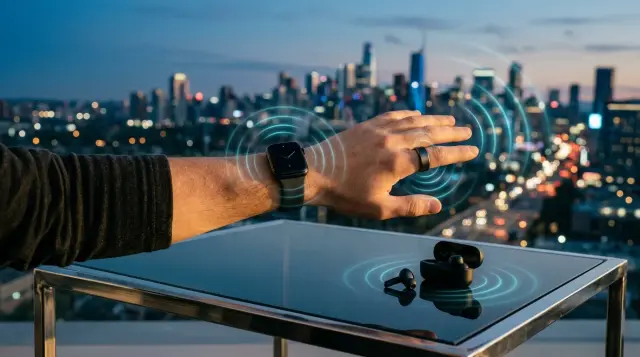
Here's a number worth sitting with: the average person in 2025 carries between three and five wireless devices on their body at any given time. Smartwatch on the wrist. Phone in the pocket. Earbuds in. Maybe an AI-powered fitness ring on the finger. Every single one of those gadgets is broadcasting radiofrequency energy directly against your skin. So let me ask you something. Have you actually thought about what all that cumulative exposure means for your body?
The conversation around wearable tech EMF protection used to feel fringe. Tinfoil hat territory. But as artificial intelligence pushes wearable technology into overdrive, with smarter sensors, always-on connectivity, and devices that literally read your biometrics around the clock, the mainstream is starting to pay attention. The science isn't settled. But it's not silent either.
Back in 2011, the World Health Organization's International Agency for Research on Cancer classified radiofrequency electromagnetic fields as Group 2B, meaning possibly carcinogenic to humans [1]. That classification hasn't been upgraded, but it hasn't been downgraded. And the sheer volume of EM radiation we soak in now is orders of magnitude beyond what it was even a decade ago.
This article is about what's coming next. How AI is reshaping the wearable world, why that matters for electromagnetic radiation exposure, and what real, science-backed protection options look like in practice. No fear-mongering. No snake oil. Just a clear-eyed look at the trends, the technology, and the choices you can make right now.
How Is AI Driving the Explosion in Wearable Devices?
Artificial intelligence isn't just improving wearable tech. It's the reason the category is exploding. Think about what a smartwatch did five years ago compared to today. Apple's latest Watch Ultra uses on-device machine learning to detect irregular heart rhythms, predict VO2 max, and even sense car crashes. Samsung's Galaxy Ring uses AI to process sleep staging data continuously. These aren't gadgets anymore. They're medical-grade monitors strapped to your body around the clock.
According to Grand View Research, the global wearable technology market was valued at $61.4 billion in 2022 and is projected to surpass $186 billion by 2030. That growth is almost entirely powered by AI integration. Machine intelligence makes the data from these sensors useful. Without it, a heart rate reading is just a number. With it, that number becomes a health prediction.
But here's the trade-off nobody talks about. More intelligence means more wireless communication. These AI wearables need constant Bluetooth, Wi-Fi, and sometimes cellular connections to sync data, run cloud models, and deliver real-time insights. Every one of those connections generates radiofrequency radiation. And because the devices are pressed against your skin, the absorption is about as direct as it gets.
Take Meta's Ray-Ban smart glasses. They use onboard AI for real-time translation, visual recognition, and voice commands. They sit on your temples. Right next to your brain. I'm not saying that to scare you. I'm saying it because the question of wearable tech EMF protection is no longer hypothetical. It's something millions of people should be thinking about as these devices become as common as shoes. And if you're also building out smart home systems, the RF exposure compounds further, something we covered in Home Automation: The Honest Guide.
What Does the Science Actually Say About EMF Health Risks?
Let's get into the research, because this is where things get genuinely interesting. The most significant government study on radiofrequency radiation and health was the National Toxicology Program (NTP) study, completed in 2018 by the National Institute of Environmental Health Sciences. After exposing rats to RF radiation for two years, researchers found "clear evidence" of malignant heart tumors (schwannomas) in male rats [2]. They also found "some evidence" of brain tumors. These weren't tiny, ambiguous results. The NTP spent $30 million and over a decade on this work.
On the other side, organizations like the FDA have maintained that current evidence doesn't conclusively prove that RF exposure below FCC limits causes harm in humans [3]. The FCC itself sets the specific absorption rate (SAR) limit at 1.6 W/kg averaged over 1 gram of tissue. Every device sold in the U.S. must comply. But critics point out those limits were established in 1996 and haven't been updated to reflect our current exposure reality, where people wear multiple transmitting devices simultaneously.
Quick Q&A
Q: Are current FCC SAR limits outdated for modern wearable use?
A: The FCC's SAR limit of 1.6 W/kg was set in 1996 and hasn't been updated, even though people now wear multiple RF-emitting devices simultaneously, creating cumulative exposure scenarios that weren't anticipated.
The BioInitiative Working Group, a team of independent researchers, reviewed over 1,800 studies and concluded in their 2012 report (updated through 2020) that biological effects occur at exposure levels well below current safety standards. They documented effects on DNA repair, oxidative stress, and the blood-brain barrier. Not everyone agrees with their conclusions, and mainstream bodies like the IEEE have pushed back. But the data they compiled is real, peer-reviewed, and publicly available.
Here's my honest take. The science sits in that uncomfortable middle zone where there's enough evidence to warrant caution but not enough for governments to overhaul regulations. That's exactly the kind of situation where personal protection makes sense. You don't wait for the house to burn down to buy a fire extinguisher. If you want to understand the broader picture of EMF Protection Benefits, Proteck'd breaks it down clearly.
As AI pushes us to wear more connected devices every day, the question of personal electromagnetic shielding is no longer theoretical. It's a practical decision you can make right now with the right clothing and the right information.
How Do Wearable Devices Emit Electromagnetic Radiation?
Understanding how your devices produce electromagnetic fields helps you make smarter choices about protection. Every wireless device uses radio waves to communicate. Your smartwatch talks to your phone over Bluetooth (2.4 GHz). Your fitness tracker syncs over Wi-Fi (2.4 or 5 GHz). Some wearables use NFC for payments. AR glasses might use all three plus cellular LTE or 5G.
The key factor is proximity. The inverse square law in physics tells us that radiation intensity decreases rapidly with distance. A phone in your pocket generates dramatically more tissue absorption than the same phone across the room. A smartwatch clamped to your wrist? Zero distance. The electromagnetic radiation is absorbed directly into skin, muscle, and bone. For children, whose skulls are thinner and bodies smaller, the absorption rates can be significantly higher.
Bluetooth Low Energy (BLE), which most modern wearables use, transmits at lower power levels than classic Bluetooth, typically between 1 and 10 milliwatts. That's not nothing, but it's far less than a cell phone's output, which can reach up to 2 watts. The catch is duration. A phone call lasts minutes. A smartwatch transmits all day, every day. Cumulative exposure from BLE devices may matter more than peak exposure from a phone call, though long-term studies on this specific question are still limited.
Then there's the compounding effect. If you're also living in a connected home with smart speakers, mesh Wi-Fi routers, and smart thermostats, your ambient RF background is already elevated before you even strap on a device. We've written about this overlap in The Connected Home: The Beginner's Guide and The Best Smart Home Devices: Ranked and Reviewed.

What EMF Protection Methods Actually Work?
Not all EMF protection is created equal. Some of it is backed by physics. Some of it is just marketing. Let's separate the two.
The gold standard is conductive shielding, also known as faraday shielding. It works on a simple principle: a mesh or solid layer of conductive material (copper, silver, nickel, or blends) reflects and absorbs electromagnetic radiation before it reaches your body. This is real physics, the same principle that protects sensitive electronics in military and medical applications. A well-constructed silver-threaded fabric can attenuate RF signals by 40 to 60 dB, which translates to blocking over 99% of incoming radiation at tested frequencies.
EMF blocking clothing is where this science becomes practical and wearable. Companies like Proteck'd weave silver and other conductive fibers directly into everyday garments. Hoodies, shirts, boxers, hats. The fabric looks and feels normal, but it functions as a personal faraday cage for the areas it covers. You can explore their full range in the Faraday Protection Collection.
Quick Q&A
Q: Does silver-threaded fabric really block EMF radiation?
A: Yes, silver is highly conductive and reflects RF energy; lab-tested silver-threaded fabrics can attenuate electromagnetic radiation by 40 to 60 dB, blocking over 99% of radiofrequency energy at measured frequencies.
On the other end of the spectrum, you've got products like EMF "harmonizing" stickers, pendants with vague claims about "restructuring" frequencies, and patches that claim to neutralize radiation through crystals or resonance. There's no credible, peer-reviewed research supporting these mechanisms. The FTC has actually taken action against companies making unsupported EMF protection claims. If a product can't explain its shielding mechanism in terms of basic electromagnetic physics, be skeptical.
Distance-based strategies also work. Using speakerphone instead of holding a phone to your head, keeping your phone in a bag instead of a pocket, choosing wired earbuds over wireless ones. These aren't glamorous solutions, but the physics of the inverse square law makes them effective. The best approach combines shielding garments with smart distance habits.

Does Silver Fabric Actually Block EMF From Smart Wearables?
Silver has been used as a conductor for centuries, and its EMF shielding properties are well-documented in materials science. According to research published in the journal Textile Research Journal, fabrics containing silver-coated fibers demonstrated shielding effectiveness of 40+ dB across the 30 MHz to 3 GHz range, which covers Bluetooth, Wi-Fi, and cellular frequencies. That's not a marketing claim. That's materials science.
The practical question is whether wearing a silver-threaded shirt actually reduces your personal RF absorption. The answer depends on coverage and fit. A garment covering your torso will shield the organs beneath it from external RF sources and from a phone in your pocket. It won't shield your wrist from your smartwatch, because the watch sits on exposed skin above the garment. That's where layered strategies come in.
Proteck'd's Men's Faraday Tech Wear line is a good example of how this works in real life. Their garments use faraday fabric technology that integrates silver and other conductive materials into comfortable, modern clothing. You're not wearing a space suit. You're wearing a hoodie that happens to function as radiofrequency exposure reduction gear. That's a meaningful difference from the bulky, ugly shielding solutions of ten years ago.
For maximum coverage, think in combinations: shielding underwear protects reproductive organs (a common concern with phones in pockets), a shielding shirt covers the torso, and a hat or beanie covers the head. No single garment blocks everything. But a thoughtful combination addresses the areas of highest concern while letting your devices still function normally through unshielded pathways.
What Are the AI-Driven Trends in Wearable EMF Protection for 2025 and Beyond?
This is where the future gets genuinely exciting. AI isn't just creating the EMF exposure problem. It's also helping solve it. Researchers at MIT's Media Lab are developing adaptive shielding textiles that use embedded sensors and machine learning to adjust their shielding properties based on real-time RF measurements. Picture a jacket that detects a spike in ambient electromagnetic radiation and responds by activating additional shielding layers. That's not science fiction. Prototypes exist.
Another trend is AI-powered personal EMF monitoring. Companies are building wearable dosimeters, small devices that track your cumulative RF exposure throughout the day and send reports to your phone. Think of it as a step counter for electromagnetic field exposure. When paired with shielding garments, these monitors let you make data-driven decisions about when and where you need protection most.
Generative AI is also accelerating materials discovery. Google's DeepMind and similar labs have used AI to identify new material compositions that could offer better electromagnetic radiation shielding at lower weight and cost. A 2023 paper in Nature reported that machine learning models screened over 2 million potential materials and identified hundreds of stable structures with promising electrical conductivity profiles. Some of those could end up in next-generation shielding fabrics.
The convergence is clear: as AI pushes us to wear more connected devices, it's simultaneously giving us the tools to protect ourselves from the consequences. Wearable tech EMF protection is becoming smarter, more adaptive, and more woven into daily life. The question isn't whether you'll need it. It's whether you'll adopt it before or after the science fully catches up to the concern.
How Can You Protect Yourself Without Giving Up Your Devices?
Nobody's asking you to go off the grid. That's not realistic, and honestly, AI-powered wearables offer genuine health benefits. Early atrial fibrillation detection from Apple Watch has literally saved lives. The Stanford Heart Study enrolled over 400,000 participants and found that the watch identified irregular pulses with a 84% positive predictive value. The technology is good. The goal is to keep using it more safely.
Step one: reduce unnecessary radiation. Turn off Bluetooth and Wi-Fi on devices when you don't need them. Use airplane mode on your smartwatch while you sleep, if it doesn't need to track your sleep through a connected app. Simple behavior changes cost nothing and meaningfully cut your exposure.
Step two: shield what you can. EMF blocking clothing is the most practical form of wearable tech EMF protection for everyday life. You're not changing your routine. You're just changing your shirt. Proteck'd makes this easy with garments that look like regular streetwear but contain faraday fabric technology. No learning curve. You just wear them.
Step three: address your environment. Your body doesn't care whether the radiation comes from your watch or your mesh router. If you've got a home full of smart devices, that ambient exposure adds up. We covered practical steps for managing this in Digital Security: The Complete Guide and Taking Back Your Online Life: The Complete Guide.
Step four: stay informed. The research is evolving fast. The WHO is expected to release an updated environmental health criteria monograph on radiofrequency fields, and several countries including France and Belgium have already implemented precautionary measures around children's exposure to wireless devices. Being proactive today means you won't have to scramble to catch up tomorrow.
Why Do Some EMF Protection Products Work and Others Don't?
I get asked this one a lot, and the answer comes down to basic physics versus wishful thinking. Products that work, like silver-threaded garments, copper mesh enclosures, and properly constructed faraday bags, rely on electromagnetic shielding principles verified for over 180 years since Michael Faraday first demonstrated his cage in 1836. The conductive material reflects and absorbs EM radiation. Measurable. Repeatable. Testable.
Products that don't work typically lean on unverifiable claims. "Scalar energy" pendants. "Frequency harmonizing" chips you stick on your phone. "Bio-resonance" bracelets. None of these have peer-reviewed evidence supporting their mechanisms. The Federal Trade Commission has specifically warned consumers about companies making unsubstantiated EMF neutralization claims. In 2021, the FTC sent warning letters to several companies selling products with unproven EMF protection benefits.
How do you tell the difference? Ask two questions. First: does the product claim to block, reflect, or absorb RF energy using a conductive material? If yes, it could work, and you can verify with an RF meter. Second: does the company provide lab testing data showing shielding effectiveness in decibels (dB)? Reputable companies like Proteck'd test their fabrics and publish the results. Scam products never do.
The broader point is that wearable electromagnetic radiation shielding is a legitimate field of materials science. But the market is cluttered with products that prey on people's genuine concerns. Stick with physics-based solutions. Your health is too important for magic stickers.
Key Takeaways
Frequently Asked Questions
What is wearable tech EMF protection?
Wearable tech EMF protection refers to clothing, accessories, and personal devices designed to reduce your body's absorption of electromagnetic radiation from wireless gadgets like smartwatches, fitness trackers, and earbuds. The most effective forms use conductive materials like silver-threaded fabric to block or attenuate RF energy. These garments look and feel like regular clothing but function as personal electromagnetic shields.
Does EMF from smartwatches actually pose a health risk?
The science is still evolving. The WHO classifies radiofrequency electromagnetic fields as Group 2B (possibly carcinogenic), and the NTP's 2018 study found clear evidence of tumors in rats exposed to RF radiation. However, agencies like the FDA maintain that current evidence below FCC limits doesn't conclusively prove harm in humans. Many researchers advocate for a precautionary approach given the long-term, close-body exposure from modern wearables.
How does silver-threaded fabric block EMF radiation?
Silver is a highly conductive metal that reflects and absorbs radiofrequency energy. When woven into fabric, silver threads create a conductive mesh similar to a flexible faraday cage. Lab-tested silver fabrics can attenuate EMF by 40 to 60 dB, blocking over 99% of RF energy at common wireless frequencies. The fabric stays breathable and comfortable while providing measurable shielding.
Can I still use my wireless devices while wearing EMF-shielding clothing?
Yes. EMF-shielding garments protect the body areas they cover without necessarily blocking all device signals. Your smartwatch on an exposed wrist will still connect to your phone. A shielding shirt protects your torso from RF exposure while allowing your devices to communicate through uncovered areas. It's about reducing absorption where it matters most, not creating a total signal blackout.
Are EMF protection stickers and harmonizing pendants effective?
No credible peer-reviewed evidence supports the claims made by EMF harmonizing stickers, pendants, or chips. These products often claim to "neutralize" or "restructure" electromagnetic frequencies without providing any measurable shielding data. The FTC has warned consumers about such products. Stick with physics-based solutions like conductive fabrics that provide measurable attenuation in decibels.
What is the FCC SAR limit for wireless devices?
The FCC limits the specific absorption rate (SAR) of wireless devices to 1.6 watts per kilogram (W/kg), averaged over 1 gram of tissue. This standard was established in 1996 and applies to all devices sold in the United States. Critics note that the limit hasn't been updated to account for cumulative exposure from multiple simultaneously worn devices, which is the norm now.
How much EMF does Bluetooth Low Energy actually emit?
Bluetooth Low Energy (BLE) typically transmits at 1 to 10 milliwatts, significantly less than a cell phone's peak output of up to 2 watts. However, BLE devices like smartwatches and fitness trackers transmit continuously throughout the day, creating sustained low-level exposure. The long-term health effects of chronic BLE exposure specifically haven't been extensively studied yet.
Is EMF-shielding clothing the same as a faraday cage?
EMF-shielding clothing works on the same principle as a faraday cage, using conductive material to block electromagnetic fields. The difference is that a faraday cage is a complete enclosure, while clothing only shields the body areas it covers. A shielding shirt protects your torso but not your head or arms. Combining multiple garments (hat, shirt, underwear) provides broader coverage similar to a partial faraday enclosure.
Will AI make EMF exposure worse in the future?
Almost certainly. AI requires constant data syncing, cloud processing, and multi-device connectivity, all of which increase radiofrequency emissions from wearables. As AI wearables become more sophisticated, with features like real-time translation, health monitoring, and augmented reality, they'll need stronger and more frequent wireless connections. This makes proactive protection through shielding garments and exposure management increasingly important.
How do I test whether my EMF-shielding clothing actually works?
You can verify shielding effectiveness with a portable RF meter like the Trifield TF2 or Acousticom 2. Hold the meter against your skin, take a baseline reading, then place the shielding garment between the RF source and the meter. You should see a significant drop in the reading, typically 90% or more for quality silver-threaded fabrics. Reputable manufacturers also provide third-party lab testing results showing attenuation in decibels.
References
- International Agency for Research on Cancer (IARC), WHO – The WHO's IARC classified radiofrequency electromagnetic fields as Group 2B, possibly carcinogenic to humans, in 2011.
- National Institute of Environmental Health Sciences (NIEHS), National Toxicology Program – The NTP's 2018 study found clear evidence of malignant heart tumors (schwannomas) in male rats exposed to high levels of radiofrequency radiation.
- U.S. Food and Drug Administration (FDA) – The FDA has maintained that current evidence does not conclusively prove that RF exposure below FCC limits causes harm in humans.
About the Author
Proteck'd EMF Apparel
Health & EMF Specialists
The Proteck'd team covers EMF protection, silver-fiber apparel, and practical ways to reduce everyday radiation exposure. Every piece Proteck'd ships is designed, tested, and worn by the people who build it.
Protect Yourself Today
Proteck'd Faraday and silver fiber apparel is engineered to shield your body from everyday EMF exposure. Built for real life, tested for real results.
Shop EMF Protection →✓30-day returns✓Free shipping✓Free returns✓Silver fiber shielding


