


The Best Biohacks: What the Research Shows

Here's something funny about biohacking: the stuff that actually works is mostly free, and the stuff that costs a fortune is mostly unproven. If you've been searching for how to block best biohacks science backed by real evidence from the ones that are pure marketing, good. That's the right question to ask. The biohacking world is overrun with influencers pushing peptide stacks, $5,000 red light panels, and extreme fasting protocols that would make your doctor physically recoil.
I've spent a lot of time reading through actual clinical research on self-optimization techniques. The pattern is hard to miss. The interventions with the strongest evidence behind them? They're the ones your grandmother could have told you about. Sleep. Sunlight. Movement. Stress management. Cold water. The boring stuff.
That doesn't mean every trendy biohack is worthless. Some newer approaches do have promising data behind them. But the gap between what the research supports and what the biohacking community promotes is staggering.
This guide walks you through what works, what doesn't, and what might actually hurt you. We'll look at specific studies, name specific researchers, and give you evidence-based biohacking strategies you can start using today. No $300 supplement stacks required.
Key Takeaways
What Counts as a Science-Backed Biohack?
Let's set the bar before we go any further. A "science-backed" biohack means there's at least one well-designed clinical trial, systematic review, or meta-analysis supporting it. Not a podcast anecdote. Not a case study of one person. Not a mouse study that got extrapolated to humans without blinking. Actual human research, ideally replicated.
The National Institutes of Health maintains one of the largest databases of peer-reviewed research in the world through PubMed. When I reference studies here, they're findable there. That matters, because the biohacking space has a serious credibility problem. Dave Asprey popularized the term "biohacking" in the early 2010s. Since then, the category has ballooned to include everything from genetic modification (real biohacking, sometimes called "grinder" biohacking) to putting butter in your coffee.
Nutrigenomics, the study of how food interacts with your genes, is one branch with legitimate scientific roots. Research from Stanford University's Christopher Gardner has shown that genetic variation does influence how individuals respond to different diets [1]. But knowing that doesn't mean the $200 at-home gene test you bought through an Instagram ad is giving you anything actionable.
Quick Q&A
Q: Does biohacking actually work?
A: Some biohacks have strong clinical evidence behind them, particularly sleep optimization, time-restricted eating, cold exposure, and mindfulness, but many popular protocols lack human trial data.
The bottom line: if someone is selling you a health optimization shortcut and can't point to a peer-reviewed study, your skepticism is well placed. The best proven wellness hacks don't need a marketing budget because the evidence speaks for itself.
Does Sleep Optimization Actually Work Better Than Supplements?
Yes. It's not even close. Harvard Medical School's Division of Sleep Medicine has published extensively on how consistent sleep-wake timing, the single simplest thing you can do, outperforms every sleep supplement on the market for long-term circadian health. Dr. Charles Czeisler's research at Harvard has shown that irregular sleep schedules disrupt metabolic function, immune response, and cognitive performance regardless of total sleep duration.
Yet the biohacking community has created "sleepmaxxing." People obsess over sleep scores, stack melatonin with magnesium threonate and apigenin, and track every metric their Oura ring spits out. Here's the problem: a 2022 study published in the Journal of Clinical Sleep Medicine coined the term "orthosomnia" to describe people who become so anxious about their sleep data that it actually worsens their sleep quality. The very tracker designed to help you sleep better can make you sleep worse.
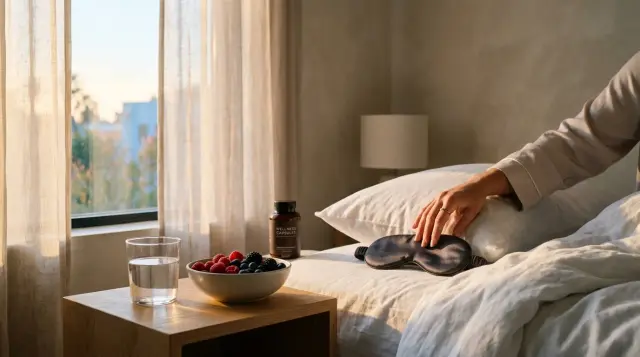
What the research actually supports is straightforward. Cool your bedroom to between 65 and 68 degrees Fahrenheit. Get morning sunlight within 30 minutes of waking, something Stanford neuroscientist Andrew Huberman has popularized from decades of circadian biology research. Limit blue light exposure in the evening. We've written an entire guide on The Best Sleep Biohacks That Actually Work that goes deeper on the specific protocols.
One factor that gets overlooked in sleep quality conversations is your electromagnetic environment. Your phone, Wi-Fi router, and smart devices emit radiofrequency radiation throughout the night. The WHO's International Agency for Research on Cancer has classified RF-EMF as a Group 2B possible carcinogen [2]. Reducing that exposure, whether by switching devices to airplane mode or wearing EMF-shielding clothing from the Faraday Health Collection, is one of the simplest biohacks for sleep you'll find. For a step-by-step approach, check out our How to Sleep Better Tonight: The Complete Checklist.
Is Intermittent Fasting Actually Backed by Research?
Time-restricted eating is one of the few biohacking trends with serious clinical weight behind it. A landmark 2019 review in the New England Journal of Medicine by Dr. Rafael de Cabo and Dr. Mark Mattson analyzed decades of fasting research and concluded that intermittent fasting improves insulin sensitivity, reduces blood pressure, and decreases markers of oxidative stress [3]. That's not a blog post opinion. That's the NEJM.
But there's a big difference between what the research shows and how biohackers actually practice fasting. The evidence supports modest time-restricted eating windows, typically 16:8 or 14:10. Not the 72-hour water fasts or extended "detox" protocols that blow up on social media. Extreme fasting can trigger muscle catabolism, hormonal disruption (particularly in women), and disordered eating patterns.
Dr. Satchin Panda at the Salk Institute has published compelling research showing that simply eating within a consistent 10-hour window improves metabolic markers, even without changing what you eat. That's the kind of evidence-based biohacking that actually moves the needle. You don't need to white-knuckle your way through a three-day fast. You just need to stop snacking at midnight.
One practical tip: if you're going to try time-restricted eating, keep your eating window aligned with daylight hours. Research consistently shows that late-night eating disrupts circadian rhythm regardless of fasting duration. And if you want to reduce the environmental stressors your body deals with during recovery periods, limiting screen time matters too. Our guide to Screen-Free Living covers how to approach that practically.
The biohacks with the strongest clinical evidence are almost always free: consistent sleep, morning sunlight, time-restricted eating, brief cold exposure, and daily mindfulness. The expensive, complicated protocols are usually the ones with the weakest research behind them.

How Effective Is Cold Exposure for Health?
Cold plunges are everywhere right now. Every gym has one, every podcast host swears by them, and Wim Hof built a global brand on the practice. But what does the research actually say?
A frequently cited 2014 study published in PLOS ONE found that immersion in 57°F (14°C) water increased plasma norepinephrine concentrations by 530% [4]. Norepinephrine is involved in attention, focus, and mood regulation. That's a real, measurable physiological effect. There's also evidence that cold exposure activates brown adipose tissue, which burns calories to generate heat, though the magnitude of that caloric burn is modest.
Here's where the biohacking community goes off the rails, though. The leap from "cold water triggers a norepinephrine spike" to "cold plunges cure inflammation, reset your immune system, and reverse aging" is massive. The data simply doesn't support most of those claims. Dr. Susanna Søberg's research at the University of Copenhagen suggests that the benefits follow a dose-response curve, and more is not better. Short exposures of one to three minutes seem to provide the most benefit relative to risk.
Quick Q&A
Q: How long should a cold plunge last to get health benefits?
A: Research suggests one to three minutes of cold water immersion at around 50 to 59°F provides measurable norepinephrine increases without the risks of prolonged exposure.
The verdict: cold exposure is a legitimate, science-backed tool for mood and alertness. But treating it as a cure-all, or pushing yourself into dangerously cold water for extended stretches, isn't supported by evidence and carries real cardiac risk for some people.
Which Popular Biohacks Can Actually Backfire?
Not every trending self-optimization technique is harmless. Some can genuinely hurt you. And the biohacking community doesn't always acknowledge that part.
Supplement stacking is a big one. The "more is better" mentality leads people to take 15 or 20 supplements daily without understanding interactions. Dr. Pieter Cohen at Harvard Medical School has published repeatedly on the risks of dietary supplements, finding that many products contain unlisted ingredients, pharmaceutical compounds, or doses that far exceed what clinical trials tested. A 2018 study in the journal Hepatology found that herbal and dietary supplements are the second leading cause of drug-induced liver injury in the United States.
DIY peptide therapy is another area of serious concern. Peptides like BPC-157 and Thymosin Beta-4 are being self-administered by biohackers based on animal studies, but neither has completed Phase III human clinical trials. The FDA has issued multiple warning letters to companies selling these compounds for human use. You're essentially running an uncontrolled experiment on yourself with research-grade chemicals.
Over-tracking is subtler but just as real. When you're checking your heart rate variability, sleep score, glucose levels, and step count dozens of times a day, you can develop health anxiety that negates whatever benefit the data might provide. A 2023 paper in the journal Cyberpsychology found that excessive health tracking correlates with increased anxiety and reduced subjective wellbeing, particularly in younger adults. Sometimes the best biohack is putting the tracker in a drawer.
Can Reducing EMF Exposure Improve Your Health?
This is one of those topics the mainstream biohacking world tends to skip over, but the science is getting interesting. The question of how to block best biohacks science backed from unsupported ones gets really relevant here, because EMF reduction sits at the intersection of precaution and measurable health intervention.
The WHO's IARC classified radiofrequency electromagnetic fields as Group 2B, possibly carcinogenic, back in 2011 based on studies of mobile phone use and glioma risk [2]. Since then, the $30 million National Toxicology Program study, conducted under the NIH, found "clear evidence" of heart tumors in male rats exposed to cell phone radiation levels at or near current human exposure limits. That study, completed in 2018, was one of the largest and most carefully designed RF-EMF studies ever conducted.
You don't have to wait for full scientific consensus to take practical steps. Reducing your EMF exposure, especially during sleep, is a low-cost, zero-risk intervention. You can learn more about specific mechanisms on our EMF Health Benefits page. Proteck'd's Women's Wellness Collection uses silver-infused Faraday fabrics that physically block electromagnetic radiation, letting you reduce exposure without changing your routines.
Think of EMF reduction like air filtration. You don't need a peer-reviewed meta-analysis to justify breathing cleaner air. You just do it because it makes sense. And as the evidence base keeps growing, being ahead of the curve looks a lot smarter than waiting for decades of additional data while you sleep next to your phone every night.
Is Mindfulness a Legitimate Biohack or Just a Buzzword?
If someone told you there was a free intervention that reduces anxiety, lowers blood pressure, improves immune function, and physically changes the structure of your brain, you'd want the catch. With mindfulness meditation, there really isn't one.
A 2014 meta-analysis published in JAMA Internal Medicine reviewed 47 randomized controlled trials involving over 3,500 participants. The researchers, led by Dr. Madhav Goyal at Johns Hopkins University, found that mindfulness meditation programs produced moderate evidence of improvement in anxiety, depression, and pain [5]. That's the same level of evidence as many pharmaceutical interventions. Without the side effects.
Neuroscience research from Sara Lazar's lab at Massachusetts General Hospital has shown that regular meditators have measurably thicker prefrontal cortex tissue and larger hippocampal volume compared to non-meditators. These are the brain regions responsible for decision-making, emotional regulation, and memory. And the changes are detectable after just eight weeks of consistent practice.
So yes, mindfulness is one of the most proven wellness hacks available, and it costs nothing. The science-backed health optimization community should be shouting about it. We've put together a detailed guide on Mindfulness: The Science-Backed Guide if you want a practical starting framework. And for anyone who struggles with the screen-related distractions that make meditation harder, our Getting Better Sleep: The Science-Backed Guide covers how managing technology use creates the conditions for a calmer mind.
What's the Smartest Way to Start Biohacking?
If you've read this far, you already know the answer isn't buying an expensive gadget. The smartest approach to biohacking for beginners is stacking the free, foundational habits first and only adding tools or supplements once those basics are locked in.
Here's what that looks like in practice. First, fix your sleep. That means a consistent schedule, a cool and dark room, and limited screen time before bed. Second, get morning sunlight within the first 30 to 60 minutes of your day. Third, try a modest time-restricted eating window, something like 12 or 14 hours overnight. Fourth, move your body daily, even if it's just a 30-minute walk. These four things alone, all free, will outperform 90% of the supplements and devices being sold to you.
Once those are in place, you can start layering in things like cold exposure, mindfulness practice, and environmental optimization like EMF reduction. The reason this order matters is simple: no biohack works well on a bad foundation. A cold plunge won't fix chronic sleep deprivation. A meditation app won't compensate for eating processed food at midnight.
When people ask how to block best biohacks science backed by evidence from the ones that are just noise, I always come back to this: follow the boring research, not the exciting marketing. The scientists studying these interventions aren't trying to sell you anything. They're just reporting what they found. And what they've found, over and over, is that simple, consistent habits beat complex, expensive protocols every single time.
Frequently Asked Questions
Q: What are the most science-backed biohacks?
The biohacks with the strongest research support are sleep optimization, time-restricted eating, cold exposure (one to three minutes), mindfulness meditation, and morning sunlight exposure. These have been validated in peer-reviewed clinical trials and systematic reviews published in journals like the NEJM and JAMA Internal Medicine.
Q: Is biohacking safe for beginners?
Most foundational biohacks like improving sleep, adjusting meal timing, and practicing mindfulness are completely safe. The risks show up with more extreme approaches like DIY peptide therapy, extended fasting, or unregulated supplement stacking. Start with free, low-risk habits before adding anything advanced.
Q: Does cold plunging really work?
Yes, but with caveats. A 2014 PLOS ONE study showed cold water immersion at 57°F increased norepinephrine by 530%, which improves mood and alertness. However, claims about immune system resets or anti-aging effects aren't well supported. One to three minutes appears to be the effective range.
Q: Can tracking health metrics too much be harmful?
It can. Researchers coined the term "orthosomnia" to describe anxiety caused by obsessive sleep tracking, and a 2023 Cyberpsychology study linked excessive health monitoring to increased anxiety and lower wellbeing. Trackers are useful tools, but checking them compulsively can undermine the very health outcomes you're trying to improve.
Q: Is intermittent fasting better than calorie counting?
Research suggests they produce similar weight loss outcomes, but intermittent fasting offers additional metabolic benefits beyond calories. A 2019 NEJM review found that time-restricted eating improves insulin sensitivity and reduces oxidative stress independent of caloric reduction. For many people, a consistent eating window is also simpler to maintain than counting every calorie.
Q: Does reducing EMF exposure have health benefits?
The WHO classifies RF-EMF as Group 2B, possibly carcinogenic, and the NIH's National Toxicology Program found clear evidence of tumors in animals exposed to cell phone radiation levels. While human long-term studies are ongoing, reducing exposure during sleep is a precautionary step with zero downside risk.
Q: Are expensive biohacking gadgets worth the money?
Most aren't, at least not until you've nailed the free basics. The biohacks with the most evidence, like sleep consistency, sunlight, movement, fasting, and mindfulness, cost nothing. Gadgets like red light panels and neurofeedback devices have some promising research behind them, but the effect sizes are often smaller than what simple habit changes deliver.
Q: How does mindfulness compare to medication for anxiety?
A 2014 JAMA Internal Medicine meta-analysis found mindfulness meditation produced moderate improvements in anxiety comparable to those seen with some pharmaceutical interventions. Mindfulness isn't a replacement for medication in severe cases, but for mild to moderate anxiety, it's a strong evidence-based option with no side effects.
Q: What supplements do biohacking experts actually recommend?
Most evidence-based practitioners limit recommendations to a few well-studied compounds: vitamin D (especially if you're deficient), magnesium, omega-3 fatty acids, and creatine. The practice of stacking 15 or more supplements daily isn't supported by clinical data and carries risks of drug interactions and liver stress.
Q: Can biohacking help with sleep disorders?
Foundational biohacks like consistent sleep scheduling, morning light exposure, cool bedroom temperatures (65 to 68°F), and evening screen reduction are first-line recommendations from sleep researchers at institutions like Harvard and Stanford. These approaches address root causes of poor sleep rather than masking symptoms with supplements.
References
- National Institutes of Health / National Library of Medicine – PubMed is the primary database for peer-reviewed biomedical research, used to verify the clinical evidence behind biohacking interventions discussed in this article.
- International Agency for Research on Cancer (IARC), WHO – IARC classified radiofrequency electromagnetic fields as Group 2B, possibly carcinogenic to humans, based on increased glioma risk associated with wireless phone use.
- New England Journal of Medicine – De Cabo and Mattson's 2019 review found intermittent fasting improves insulin sensitivity, blood pressure, and markers of oxidative stress across multiple human and animal studies.
- PLOS ONE – Cold water immersion at 14°C (57°F) increased plasma norepinephrine concentrations by 530% in human subjects.
- JAMA Internal Medicine – A meta-analysis of 47 trials with 3,515 participants found moderate evidence that mindfulness meditation programs improve anxiety, depression, and pain.
About the Author
Proteck'd EMF Apparel
Health & EMF Specialists
The Proteck'd team covers EMF protection, silver-fiber apparel, and practical ways to reduce everyday radiation exposure. Every piece Proteck'd ships is designed, tested, and worn by the people who build it.
Protect Yourself Today
Proteck'd Faraday and silver fiber apparel is engineered to shield your body from everyday EMF exposure. Built for real life, tested for real results.
Shop EMF Protection →✓30-day returns✓Free shipping✓Free returns✓Silver fiber shielding


Leave a comment