


How to Do a Digital Detox: The Method That Works

Here's a number that stopped me cold: people who sleep fewer than six hours a night are 30% more likely to become obese than those getting seven to nine hours. Thirty percent. You could be nailing your diet, crushing your workouts, and still fighting a losing battle because of what happens (or doesn't happen) between midnight and 6 a.m.
So what is sleep optimization for weight loss, exactly? It's a deliberate effort to improve how long you sleep, how well you sleep, and when you sleep, so your body can actually do its job. Burning fat. Regulating appetite. Recovering from exercise. This isn't about popping a melatonin and crossing your fingers. It's about understanding the biological machinery that runs while you're unconscious.
I spent years thinking weight loss was purely a calories-in, calories-out equation. And honestly, that math does matter. But the hormones controlling your hunger, your cravings, and your metabolic rate? They're all calibrated during sleep. Mess with your nightly recovery and those hormones go sideways fast.
This guide covers the real science behind sleep and metabolism, the hormones involved, the mistakes most people make, and a concrete method you can start using tonight. If you've been wondering why the scale won't budge despite your best efforts, keep reading. Your bedroom might be the problem, not your kitchen.

How Does Sleep Actually Affect Weight Loss?
Let's talk about what's actually going on inside your body when you sleep well versus when you don't. During deep sleep, your body releases growth hormone, repairs muscle tissue, and processes the glucose you ate during the day. Cut that process short or break it up with poor sleep quality, and your body shifts into a stress state. Cortisol climbs. Insulin sensitivity drops. Your metabolism slows down to compensate.
A landmark 2010 study from the University of Chicago, published in the Annals of Internal Medicine, put hard numbers on this. Researchers took dieters and split them into two groups: one sleeping 8.5 hours, the other sleeping 5.5 hours. Both ate the same number of calories. The sleep-deprived group lost 55% less fat than the well-rested group [1]. Same diet. Wildly different results.
Sit with that for a second. You could follow your meal plan to the letter, hit the gym four days a week, and still lose mostly lean muscle instead of fat because your circadian rest was off. The connection between sleep and metabolism isn't some fringe theory. It's one of the most well-documented relationships in modern nutrition science.
If you want a deeper look at the fundamentals, I'd recommend checking out Sleep Optimization: What Actually Works for a broader breakdown of what the research says about improving your nightly recovery.
Quick Q&A
Q: Can you lose weight just by sleeping more?
A: Not from sleep alone, but a 2022 JAMA Internal Medicine study found that extending sleep by 1.2 hours led participants to naturally eat about 270 fewer calories per day without any dietary intervention.
Why Do Hunger Cravings Get Worse When You're Tired?
Two hormones run most of your appetite regulation: leptin and ghrelin. Leptin tells your brain you're full. Ghrelin tells your brain you're hungry. Get enough rest, and these two stay balanced. Don't, and ghrelin spikes while leptin tanks. You feel hungrier. Your body takes longer to register that you've eaten enough.
Research published in PLOS Medicine by Taheri et al. in 2004, based on the Wisconsin Sleep Cohort Study, found that participants sleeping fewer than five hours had ghrelin levels 14.9% higher and leptin levels 15.5% lower than those sleeping eight hours [2]. That's not a subtle shift. That's your body's appetite thermostat getting cranked to max.
It gets worse. Sleep deprivation doesn't just make you hungrier in general. It makes you crave the worst stuff. According to research from UC Berkeley published in Nature Communications in 2013, poor sleep fires up the brain's reward centers in response to high-calorie foods. So you're not just hungry. You specifically want pizza, chips, and ice cream. Meanwhile, your prefrontal cortex, the part responsible for impulse control, is simultaneously less active. Double hit.
I've lived this. After a few nights of broken rest, I notice myself reaching for snacks I wouldn't normally touch. My portions at meals quietly grow. Understanding how sleep affects hunger hormones gave me a framework to recognize when poor sleep was driving bad food choices rather than genuine hunger.
You could follow your meal plan perfectly and hit the gym four days a week, and still lose mostly lean muscle instead of fat because your sleep was off. The hormones that control appetite, cravings, and metabolic rate are all calibrated during rest. Fix your sleep, and the weight loss that was stalling often starts moving again.
Does Poor Sleep Slow Your Metabolism?
Yes. And the mechanism is surprisingly direct. When you're sleep-deprived, your resting metabolic rate drops. A 2015 study published in the journal Sleep by researchers at the University of Colorado Boulder measured participants' energy expenditure after sleep restriction and found measurable decreases in morning resting metabolic rate [3]. Your body literally burns fewer calories just existing.
On top of that, poor rest tanks your insulin sensitivity. According to research from Cedars-Sinai Medical Center, just one night of partial sleep deprivation can reduce insulin sensitivity by 25% or more. When your cells resist insulin, your body stores more glucose as fat instead of using it for energy. This is one of the key reasons sleep deprivation and weight gain are so tightly linked.
Then there's the exercise angle. Ever tried to push through a hard workout on four hours of sleep? Your strength drops. Your coordination suffers. Your perceived effort goes through the roof. Research from the journal Sports Medicine confirms that sleep restriction reduces exercise performance and, just as importantly, reduces the calories you burn during physical activity. You move less. You move slower. You recover worse.
The big picture: inadequate circadian rest creates a triple threat. Higher hunger. Lower metabolism. Reduced exercise output. That's a metabolic environment where losing fat becomes nearly impossible, no matter how disciplined your diet is. For more on building a sleep environment that actually supports deep rest and recovery, take a look at The Perfect Sleep Environment: What Makes the Biggest Difference.

What Is the Best Sleep Schedule for Weight Loss?
Consistency beats everything. Going to bed at the same time and waking up at the same time, even on weekends, is the single most effective change you can make. A 2019 study from Brigham and Women's Hospital published in Current Biology found that irregular sleep patterns were associated with higher body mass and increased metabolic dysfunction, independent of sleep duration. It's not just about how much you sleep. It's about when.
The National Sleep Foundation recommends 7 to 9 hours for adults aged 18 to 64. For weight management specifically, most research showing significant hormonal benefits clusters around the 7.5 to 8.5 hour range. Sleeping less than 7 hours reliably disrupts leptin and ghrelin. Sleeping more than 9 is associated with its own health risks, though those tend to reflect underlying conditions more than the sleep itself.
Here's a practical way to dial this in. Pick a wake time that works for your life, then count backwards 8 hours. That's your target bedtime. Protect it like you'd protect a meeting with your boss. I started treating my 10:30 p.m. bedtime as non-negotiable about two years ago, and the difference in my energy, appetite, and body composition was noticeable within weeks.
Don't underestimate the power of a wind-down routine, either. Your brain needs a transition period between the stimulation of your day and actual rest. We've written more about this in Sleep Optimization: The Honest Guide To Better Rest, which covers the habits that set up genuinely restorative nightly recovery.
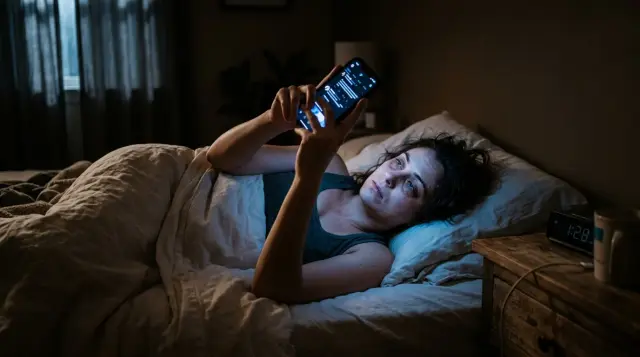
How Does Blue Light and EMF Exposure Sabotage Your Sleep?
Your circadian rhythm runs on light cues. When blue light from screens hits your retinas after sunset, it suppresses melatonin production by up to 50%, according to research from Harvard Medical School. Melatonin isn't just a "sleep hormone." It's the signal that tells your entire endocrine system it's nighttime. That cascade affects everything from cortisol regulation to growth hormone release.
Then there's the electromagnetic field (EMF) issue. Fewer people talk about this one, but it deserves attention. Wireless devices, routers, and smartphones emit low-level electromagnetic radiation continuously. A growing body of research is examining whether nighttime EMF exposure disrupts sleep architecture, particularly the deep slow-wave sleep stages where the most metabolic repair happens. For a closer look at this, check out Proteck'd's resource on EMF Health Benefits.
The practical fix is straightforward, though it takes some intentionality. Put your phone in airplane mode or leave it in another room. Kill the WiFi router if you can. And consider what you're wearing to bed. Proteck'd's Faraday Health Collection includes EMF-shielding apparel designed to reduce your body's exposure to electromagnetic radiation during sleep. For women specifically, the Women's Wellness Collection offers the same shielding technology in styles that actually feel comfortable to sleep in.
Quick Q&A
Q: Should I put my phone on airplane mode before bed for better sleep?
A: Yes. Airplane mode eliminates both blue light notifications and EMF emissions, which research from Harvard Medical School shows can suppress melatonin by up to 50% and potentially disrupt deep sleep stages.
Can What You Eat and When You Eat It Affect Sleep Quality?
Absolutely. And this is where better rest for fat loss becomes a feedback loop. Heavy meals close to bedtime force your digestive system to work when it should be resting. That raises your core body temperature, which directly conflicts with the natural cooling your body needs to enter deep sleep. Research from the Journal of Clinical Sleep Medicine found that eating within three hours of bedtime was associated with more nighttime awakenings and reduced sleep quality.
Specific nutrients matter, too. Magnesium deficiency, which the National Institutes of Health estimates affects roughly 50% of Americans, is directly linked to insomnia and restless sleep [4]. Foods rich in magnesium like dark leafy greens, almonds, and pumpkin seeds can help. Tryptophan-rich foods (think turkey, eggs, and dairy) provide the building blocks for serotonin and melatonin production.
Alcohol is the big trap. A lot of people believe a glass of wine helps them sleep. And sure, it might make you drift off faster. But alcohol fragments sleep architecture, reduces REM sleep, and increases wakefulness in the second half of the night. A 2018 Finnish study of over 4,000 participants found that even moderate alcohol consumption reduced sleep quality by 24%. That fragmented rest drives cravings the next day, and the cycle keeps going.
If you want to connect these dietary habits with a broader healthy living framework, The Essential Guide To Healthy Living Tips is a solid place to start.
What Is the Step-by-Step Digital Detox Method for Better Sleep?
Here's the method I've pieced together from research and personal experimentation. It's not complicated, but it does require commitment. Start with a hard cutoff: no screens 60 minutes before your target bedtime. If that feels impossible, start with 30 minutes and work your way up. During that screen-free window, do something analog. Read a physical book. Stretch. Write in a journal. Talk to someone face to face.
Next, address your sleep environment. Set your bedroom temperature between 60 and 67°F (the National Sleep Foundation's recommended range). Make the room as dark as possible. Blackout curtains or a sleep mask work well. Remove or power down all wireless devices. If you need an alarm, use a battery-powered clock or put your phone on airplane mode across the room.
The third piece is a mindfulness bridge. Even five minutes of breathing exercises or body scanning can shift your nervous system from sympathetic (fight or flight) to parasympathetic (rest and digest). This isn't woo-woo stuff. Research from the University of Southern California found that mindfulness practices before bed increased total sleep time by an average of 40 minutes. We've covered practical approaches to this in How to Make Mindfulness Stick: For Busy People.
Finally, wear something that supports rather than disrupts your sleep. This is where reducing EMF exposure through shielding fabrics becomes practical, not theoretical. Proteck'd's Faraday line was designed specifically with nighttime recovery in mind. Combine that with a cool, dark, device-free room, and you've built an environment where your circadian rhythm weight management systems can actually function.
What Are Common Sleep Mistakes That Prevent Weight Loss?
The most common mistake I see? The "I'll catch up on weekends" approach. Social jet lag, the term researchers use for shifting your sleep schedule by two or more hours on weekends, disrupts your circadian rhythm in ways that mimic actual jet lag. A 2017 study from the University of Arizona presented at the SLEEP conference found that every hour of social jet lag was associated with an 11% increase in the likelihood of heart disease. It also correlates with higher BMI.
Another big one: relying on caffeine past early afternoon. Caffeine has a half-life of roughly 5 to 6 hours, according to the American Academy of Sleep Medicine. That means a 3 p.m. coffee still has half its caffeine active in your system at 9 p.m. You might fall asleep, but your deep sleep stages get wrecked. And those deep stages are where growth hormone release and metabolic repair happen.
Exercising too late is sneaky, too. Moderate exercise improves sleep quality significantly, but intense workouts within two to three hours of bedtime can raise core body temperature and cortisol, making it harder to fall asleep. Morning or early afternoon exercise is the sweet spot for sleep optimization for weight loss, according to a 2019 meta-analysis in Sports Medicine.
And here's one people rarely think about: sleeping with electronics on your nightstand. Your phone, your tablet, your smartwatch. They all emit low levels of EM radiation throughout the night. Even in sleep mode. Moving them away or switching to airplane mode is a small change with outsized impact on your sleep architecture and, by extension, your body's ability to burn fat overnight.
Key Takeaways
Frequently Asked Questions
What is sleep optimization for weight loss?
Sleep optimization for weight loss means intentionally improving your sleep duration, quality, and timing to support fat burning, appetite regulation, and metabolic health. It includes strategies like keeping a consistent schedule, reducing blue light and EMF exposure, keeping your bedroom cool and dark, and avoiding food and caffeine too close to bedtime. Research consistently shows that poor sleep undermines weight loss even when diet and exercise are on point.
How many hours of sleep do I need to lose weight?
Most research points to 7 to 8.5 hours as the sweet spot for weight management. The National Sleep Foundation recommends 7 to 9 hours for adults. Studies show that sleeping fewer than 7 hours disrupts hunger hormones and slows metabolism, while sleeping in the 7.5 to 8.5 hour range optimizes leptin, ghrelin, and growth hormone levels.
Can sleeping more really help me lose weight without dieting?
It can reduce how much you eat without any conscious dieting effort. A 2022 JAMA Internal Medicine study found that participants who extended their sleep by just 1.2 hours per night naturally consumed about 270 fewer calories daily. Over time, that deficit could translate to meaningful weight loss without any dietary changes.
Does poor sleep cause belly fat specifically?
There's evidence pointing that way. Research from Wake Forest University found that sleeping five hours or fewer was associated with significantly more visceral fat accumulation compared to sleeping six to seven hours. Cortisol, which rises with sleep deprivation, tends to direct fat storage toward the abdominal area.
How does blue light from screens affect sleep and weight?
Blue light suppresses melatonin production by up to 50%, according to Harvard Medical School research. Reduced melatonin delays sleep onset, lowers sleep quality, and disrupts the hormonal cascade that supports fat metabolism overnight. The fix: avoid screens for at least 30 to 60 minutes before bed, or use blue-light blocking tools.
Is it bad to eat before bed if I'm trying to lose weight?
Eating within three hours of bedtime can disrupt sleep quality by raising core body temperature and keeping your digestive system active. The Journal of Clinical Sleep Medicine found this linked to more nighttime awakenings. Poor sleep then drives cravings the next day, creating a cycle that works against weight loss.
Does caffeine affect sleep quality even if I fall asleep fine?
Yes. Caffeine has a half-life of 5 to 6 hours, so even if you drift off after a late-afternoon coffee, the caffeine still circulating in your system reduces deep sleep stages. Deep sleep is when growth hormone release and metabolic repair happen, so your rest might feel adequate but still fail to support fat loss.
Can EMF from my phone affect my sleep quality?
Research is ongoing, but there's growing interest in how electromagnetic radiation from wireless devices may disrupt sleep architecture, particularly deep slow-wave sleep. Putting your phone on airplane mode or removing it from the bedroom eliminates both EMF exposure and the temptation to check notifications, both of which interfere with restorative rest.
What is social jet lag and how does it affect weight?
Social jet lag refers to the gap between your sleep schedule on work nights versus weekends. A 2017 study from the University of Arizona found that each hour of social jet lag was associated with an 11% higher likelihood of heart disease, and it correlates with higher BMI. Keeping a consistent schedule, even on weekends, helps keep your circadian rhythm stable.
Does exercise timing matter for sleep optimization and weight loss?
It does. Moderate exercise improves sleep quality significantly, but intense workouts within two to three hours of bedtime can raise core temperature and cortisol, making it harder to fall and stay asleep. Morning or early afternoon exercise seems to offer the best combination of performance benefits and sleep quality improvement.
References
- National Institutes of Health (Annals of Internal Medicine) – Sleep-restricted dieters lost 55% less body fat compared to well-rested dieters on identical calorie plans in a 2010 University of Chicago study
- PLOS Medicine (Taheri et al., 2004) – Sleeping fewer than 5 hours was associated with 14.9% higher ghrelin and 15.5% lower leptin levels compared to 8-hour sleepers in the Wisconsin Sleep Cohort Study
- National Institutes of Health (Sleep Journal) – Sleep restriction leads to measurable decreases in resting metabolic rate and changes in energy expenditure
- National Institutes of Health Office of Dietary Supplements – Roughly 50% of Americans have inadequate magnesium intake, which is linked to insomnia and poor sleep quality
About the Author
Proteck'd EMF Apparel
Health & EMF Specialists
The Proteck'd team covers EMF protection, silver-fiber apparel, and practical ways to reduce everyday radiation exposure. Every piece Proteck'd ships is designed, tested, and worn by the people who build it.
Protect Yourself Today
Proteck'd Faraday and silver fiber apparel is engineered to shield your body from everyday EMF exposure. Built for real life, tested for real results.
Shop EMF Protection →✓30-day returns✓Free shipping✓Free returns✓Silver fiber shielding


Leave a comment