


Digital Detox: The Honest Guide

Here's a stat that should bother you: the average American spends over 7 hours a day staring at screens, then can't figure out why sleep feels impossible. If you've ever wondered what is sleep optimization, the short answer isn't complicated. It's the science and practice of making your sleep actually count. Not just lying there longer, but improving what your brain and body do while you're out.
I used to think I was a "bad sleeper." Turns out I was a bad preparer. My evenings were a blur of email, Instagram, late-night Netflix, and the blue glow of a phone propped six inches from my face. Sound familiar?
Your body already knows how to sleep. It's been doing it for hundreds of thousands of years. The problem? We've built a modern life that actively fights against the biological machinery that makes rest possible. We've wrapped ourselves in artificial light, constant connectivity, and electromagnetic noise. Then we pop a melatonin gummy and hope for the best.
This guide is the honest version. No miracle supplements, no $3,000 mattress pitches. Instead, we'll look at what the science actually says about sleep quality improvement, why a digital detox might be the single most effective sleep intervention you're ignoring, and how small environmental changes can create a massive shift in your nightly recovery. Let's get into it.

What Is Sleep Optimization, Really?
Sleep optimization is not the same thing as sleep hygiene. Sleep hygiene is the basics: keep a consistent schedule, don't drink coffee at 9 PM, make your room dark. Good advice? Sure. But it's table stakes. Sleep optimization goes further by addressing the actual architecture of your sleep, meaning the cycles of light sleep, deep sleep, and REM that your brain moves through every single night [1].
Think of it this way. Sleep hygiene is brushing your teeth. Sleep optimization is the full dental plan, with X-rays, cleanings, and targeted treatment. It's a systems-level approach to rest. One that considers your chronotype, your light exposure patterns, your stress hormones, your bedroom environment, and yes, how much screen time you're racking up before you hit the pillow.
According to the CDC, about 35% of American adults regularly get less than the recommended 7 hours of sleep [2]. But here's what that stat doesn't capture: many of the people getting 7 or 8 hours are still waking up feeling wrecked. That's because duration without quality is just time spent horizontal. If you're not cycling through adequate deep sleep stages, your brain's glymphatic system, a waste clearance pathway identified by researchers at the University of Rochester in 2013, can't do its job of flushing out metabolic toxins like beta-amyloid [3].
Quick Q&A
Q: What's the difference between sleep hygiene and sleep optimization?
A: Sleep hygiene covers basic habits like consistent bedtimes, while sleep optimization targets sleep architecture, circadian alignment, and environmental factors to improve the actual quality of each sleep stage.
We've covered the science behind this in more depth in our post on Sleep Optimization: What Actually Works. The core idea is simple but powerful: you can't just add hours and expect results. You have to improve the system.
Why Are Screens So Destructive to Sleep Quality?
Let's talk about the elephant glowing in your bedroom. Research from Harvard Medical School found that exposure to blue light in the evening suppresses melatonin production by more than 50% compared to exposure to green light of comparable brightness [1]. Melatonin isn't just a "sleepy" hormone. It's the chemical signal that tells your entire circadian system it's time to shift into nighttime mode. When you suppress it, you're not just delaying sleep. You're degrading the quality of the sleep you eventually get.
A friend of mine tracked her sleep with an Oura ring for three months. During the first month, she changed nothing. During the second, she stopped using her phone after 9 PM. During the third, she also turned off Wi-Fi and wore Proteck'd Faraday clothing in the evening to reduce ambient EMF exposure. Her deep sleep percentage went from 12% to 22%. Nearly double. From one behavioral shift plus an environmental tweak.
Here's what most people miss, though: it's not just about blue light. Screens are stimulating in ways that go beyond the wavelength of the glow. Email triggers cortisol. Social media lights up reward pathways. News apps dump adrenaline into your bloodstream. A 2014 study published in the Proceedings of the National Academy of Sciences (PNAS) found that people who read on light-emitting devices before bed took longer to fall asleep, had less REM sleep, and felt sleepier the next morning than those who read print books [4]. The effect persisted even after participants stopped using the devices.
This is why a digital detox before bed isn't some wellness fad. It's a biological necessity if you're serious about circadian rhythm regulation. We break this down in detail in our Digital Detox: The Complete Guide.
Sleep optimization isn't about perfecting a routine. It's about removing the barriers, screens, stress, electromagnetic noise, that stand between your body and the deep, restorative rest it already knows how to produce.
How Does Your Circadian Rhythm Actually Work?
Your circadian rhythm is a 24-hour internal clock, run by a tiny cluster of about 20,000 neurons in the hypothalamus called the suprachiasmatic nucleus (SCN). The SCN takes cues from light, temperature, and meal timing to sync your body's processes, from hormone release to body temperature to gene expression, to the 24-hour day. When this clock is aligned, everything works. When it's not, things start falling apart fast.
A landmark 2013 study published in PNAS by researchers at the University of Surrey found that just one week of insufficient sleep altered the expression of 711 genes, including genes involved in inflammation, immune function, and stress response [4]. These weren't people pulling all-nighters. They were sleeping 5.7 hours instead of 8.5. That's the kind of difference most of us shrug off as normal.
So how do you realign a circadian rhythm that modern life has thrown off? Morning light. It's the single most powerful tool available to you. According to Dr. Andrew Huberman at Stanford University's Department of Neurobiology, viewing bright light within the first 30 to 60 minutes after waking sets a cortisol timer that also determines when melatonin will release that evening. No supplement replaces this. No app can fake it. You need photons hitting your retina.
Evening light is the other side of that coin. Dimming lights after sunset, avoiding screens (or at minimum using a red-light filter), and reducing electromagnetic exposure in your bedroom can all support a more natural transition into sleep mode. If you're curious about how EMF plays into this, check out the research we've compiled on EMF Health Benefits.
What Does a Practical Digital Detox for Better Sleep Look Like?
"Digital detox" sounds extreme, like you need to move to a cabin in Montana. But the version that actually helps sleep is pretty modest. You don't need to delete Instagram forever. You just need to create a window of time each evening where your brain gets the signal that the day is ending.
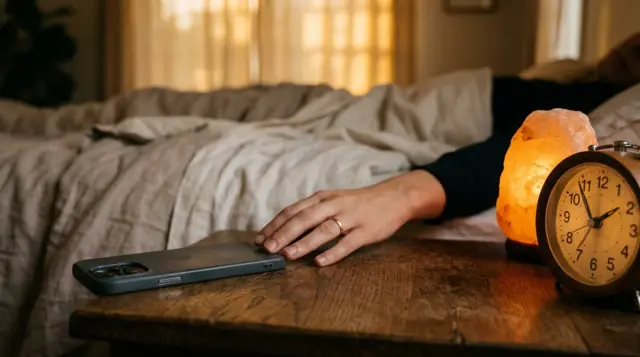
Here's what worked for me. Starting at 8:30 PM, I put my phone in a different room. Not on the nightstand. Not face-down on the bed. In a different room, plugged in, on silent. I switch to a paper book or a conversation with my partner. I dim every light in the house to warm tones. The whole routine costs zero dollars and takes zero willpower once it becomes habit, which took about 10 days.
For people who want to go a step further, reducing ambient wireless signals in the bedroom can make a noticeable difference. This is where EMF-reducing clothing and fabrics come in. Proteck'd's Women's Wellness Collection uses silver-infused Faraday fabric designed to shield against electromagnetic radiation during rest. It's the kind of biohacking that doesn't require a blood test or a subscription. You just put it on.
Quick Q&A
Q: How long before bed should I stop using screens for better sleep?
A: Most sleep researchers, including those at Harvard Medical School, recommend at least 60 to 90 minutes of screen-free time before bed to allow melatonin production to normalize.
We've written extensively about this intersection of technology and rest in The Perfect Sleep Environment: What Makes the Biggest Difference. The short version: your bedroom should be cool (the National Sleep Foundation recommends 60 to 67°F), dark, quiet, and low-EMF.
Does the Glymphatic System Really Only Work During Sleep?
This is one of the most fascinating discoveries in sleep science in the last decade. In 2012, Dr. Maiken Nedergaard and her team at the University of Rochester Medical Center discovered the glymphatic system, a waste clearance network in the brain that operates primarily during deep sleep [3]. During waking hours, this system is mostly inactive. During deep sleep, the spaces between brain cells expand by about 60%, allowing cerebrospinal fluid to flush out metabolic waste, including beta-amyloid, a protein associated with Alzheimer's disease.
Think of it like a dishwasher that only runs at night. If you keep cutting the cycle short by getting shallow or fragmented sleep, the dishes pile up. Over time, that accumulation may contribute to neurodegeneration. A 2019 study published in Science by researchers at Boston University used real-time brain imaging to confirm that slow-wave sleep triggers large waves of cerebrospinal fluid that wash through the brain.
This is why sleep optimization matters so much more than simple duration. You could spend 8 hours in bed, but if you're waking up every 45 minutes because your phone buzzed or your Wi-Fi router is pulsing signals three feet from your head, your glymphatic system never gets a full cycle. The quality of your nightly recovery determines how well your brain cleans itself.
If you're interested in how biohacking tools and protocols, from cold exposure to EMF reduction, can support these biological processes, our guide on Biohacking: What It Is, What Works, What Doesn't is a good starting point.
Can You Improve Sleep Without Spending a Fortune?
The sleep optimization industry wants you to believe you need a $2,000 smart mattress, a $300 sleep tracker, a $150 white noise machine, and a monthly supplement subscription. Some of those things are nice. Most of them are optional. The interventions with the strongest evidence behind them are either free or very cheap.
Morning sunlight exposure: free. Consistent wake time, even on weekends: free. Removing screens from the bedroom 90 minutes before bed: free. Keeping your room cool: maybe a slight bump on your electricity bill. Blocking blue light with amber glasses in the evening: about $12 on Amazon. These are the foundations. And according to the American Academy of Sleep Medicine, behavioral interventions like Cognitive Behavioral Therapy for Insomnia (CBT-I) are more effective than medication for chronic sleep issues and typically cost between $100 and $300 for a full course.
Where targeted spending does make sense is in reducing environmental factors that interfere with sleep quality. EMF-shielding clothing from Proteck'd's Faraday Health Collection, for instance, addresses something you can't fix with a bedtime routine alone: the electromagnetic radiation from routers, phones, and smart devices that fills most modern bedrooms. It's not about fear. It's about creating the cleanest possible rest environment.
For a broader look at how these strategies fit together, take a look at our Integrative Wellness: The Complete Guide. Sleep optimization doesn't exist in a vacuum. It's connected to your stress levels, your diet, your movement patterns, and your relationship with technology.
What Is Sleep Architecture and Why Should You Care?
Sleep architecture refers to the cyclical pattern of sleep stages your brain moves through each night. A healthy night typically includes 4 to 6 cycles, each lasting roughly 90 minutes. Each cycle contains periods of light sleep (stages N1 and N2), deep slow-wave sleep (stage N3), and REM sleep. They're not interchangeable. Deep sleep handles physical restoration, immune function, and glymphatic clearance. REM sleep handles memory consolidation, emotional processing, and learning.
Here's the catch: the ratio of these stages shifts across the night. According to the National Institute of Neurological Disorders and Stroke (NINDS), deep sleep dominates the first half of the night, while REM sleep becomes more prominent toward morning. That means going to bed late but waking up at your normal time doesn't just cost you total hours. It selectively robs you of REM sleep, which affects your mood, creativity, and ability to regulate emotions the next day.
A concrete example: shift workers. Research published in the journal Occupational and Environmental Medicine found that rotating shift workers had significantly reduced REM and slow-wave sleep compared to day workers, even when total sleep duration was similar. The timing was wrong, so the architecture collapsed. This is circadian rhythm disruption in action, and it illustrates why what is sleep optimization is fundamentally a question about alignment, not just quantity.
Tracking your sleep stages (with devices like Oura, Whoop, or even a basic Fitbit) can give you a rough map of your architecture. It's not perfect, but it's useful for spotting patterns. If your deep sleep is consistently below 15% of total sleep time, something environmental or behavioral is likely interfering.
How Does EMF Exposure Affect Circadian Rest?
This is a topic that generates a lot of debate, so let's stick to what the research actually says. A 2013 study published by researchers at the University of Melbourne and reviewed in the journal Bioelectromagnetics examined the effect of radiofrequency electromagnetic fields (RF-EMF) on sleep EEG patterns. They found that exposure to pulsed RF-EMF altered sleep spindle activity during stage N2 sleep. Sleep spindles are important for memory consolidation and protecting sleep continuity.
The World Health Organization classifies RF-EMF as "possibly carcinogenic to humans" (Group 2B), placing it in the same category as lead and chloroform. That classification doesn't mean your Wi-Fi router is giving you cancer. It means the science is still emerging, and precaution is reasonable. Especially during the 7 to 9 hours you spend unconscious and unable to make choices about your exposure.
This is exactly where sleep optimization and digital detox strategies overlap. Turning off your router at night, charging your phone in another room, and wearing EMF-reducing fabrics during rest are low-cost, low-effort interventions that hedge against a risk we don't fully understand yet. Proteck'd's Faraday line was specifically designed with this in mind, using lab-tested silver fiber fabrics to create a personal shielding layer. You can learn more about how that technology works on the EMF Health Benefits page.
You don't have to be an EMF alarmist to take this seriously. You just have to ask yourself: if reducing electromagnetic exposure during rest is easy and might meaningfully improve my sleep quality, why wouldn't you?
Key Takeaways
Frequently Asked Questions
What is sleep optimization?
Sleep optimization is the strategic improvement of sleep quality, timing, and stage composition, not just increasing time in bed. It addresses factors like circadian rhythm alignment, light exposure, sleep environment, and behavioral patterns to improve deep sleep and REM stages. It goes well beyond basic sleep hygiene tips.
How is sleep optimization different from sleep hygiene?
Sleep hygiene covers foundational habits like maintaining a consistent schedule and avoiding caffeine late in the day. Sleep optimization builds on that by targeting sleep architecture, chronotype alignment, environmental factors like EMF and temperature, and measurable outcomes like time spent in deep sleep and REM. Think of hygiene as the baseline and optimization as the performance layer.
Does blue light from screens really affect sleep that much?
Yes, significantly. Research from Harvard Medical School showed that evening blue light exposure suppresses melatonin by over 50% and shifts the circadian clock by about 90 minutes. A PNAS study confirmed that people using light-emitting devices before bed had less REM sleep and worse next-day alertness than those reading print books.
What's the ideal bedroom temperature for sleep?
The National Sleep Foundation recommends keeping your bedroom between 60 and 67 degrees Fahrenheit (about 15 to 19°C). Your core body temperature needs to drop by about 2 to 3 degrees to initiate sleep, and a cool room supports this natural thermal shift.
Can EMF exposure from Wi-Fi routers and phones affect sleep?
Some research suggests it can. Studies have shown that pulsed radiofrequency EMF can alter sleep spindle activity during stage N2 sleep, which matters for memory consolidation. The WHO classifies RF-EMF as "possibly carcinogenic" (Group 2B). Reducing bedroom EMF exposure is a low-cost precaution that many sleep researchers consider reasonable.
How long should a digital detox before bed last?
Most sleep researchers recommend 60 to 90 minutes of screen-free time before bed. This window allows melatonin production to normalize and your nervous system to shift out of fight-or-flight mode. Even 30 minutes is better than nothing if 90 feels unrealistic at first.
What is the glymphatic system and why does it matter for sleep?
The glymphatic system is a brain waste clearance network discovered by Dr. Maiken Nedergaard at the University of Rochester in 2012. It flushes metabolic toxins, including beta-amyloid (linked to Alzheimer's), using cerebrospinal fluid during deep sleep. The system is roughly 10 times more active during sleep than waking, making deep sleep quality a factor in long-term neurological health.
Do I need expensive gadgets to optimize my sleep?
No. The most effective sleep optimization tools are free: morning sunlight, consistent wake times, a cool dark room, and an evening digital detox. Sleep trackers can help you identify patterns, and EMF-shielding fabrics are a worthwhile targeted investment. But you don't need a $2,000 mattress or monthly supplement subscriptions to see real improvement.
What is a chronotype and should I know mine?
Your chronotype is your genetic tendency toward earlier or later sleep and wake times. It's often described as being a "morning lark" or "night owl," though researchers like Dr. Michael Breus identify four types. Knowing yours helps you schedule sleep, exercise, and demanding cognitive work at times that align with your biology rather than fighting against it.
How does morning sunlight improve sleep at night?
Morning light exposure triggers a cortisol pulse through the SCN (your master circadian clock) that starts a biological timer. According to Stanford neuroscientist Dr. Andrew Huberman, this timer determines when melatonin will release 12 to 14 hours later. Getting bright light within 30 to 60 minutes of waking is the most effective way to anchor your circadian rhythm and improve nighttime sleep onset.
References
- Harvard Health Publishing, Harvard Medical School – Blue light exposure in the evening suppresses melatonin production by more than 50% compared to green light exposure of comparable brightness.
- Centers for Disease Control and Prevention (CDC) – Approximately 35% (1 in 3) of American adults regularly get less than the recommended 7 hours of sleep per night.
- National Institute of Neurological Disorders and Stroke (NINDS), NIH – The glymphatic system clears toxic waste from the brain during deep sleep, and sleep architecture involves cyclical stages of NREM and REM sleep across the night.
- Proceedings of the National Academy of Sciences (PNAS) – Reading on light-emitting devices before bed leads to longer sleep onset, reduced REM sleep, and lower next-morning alertness compared to reading printed books.
About the Author
Proteck'd EMF Apparel
Health & EMF Specialists
The Proteck'd team covers EMF protection, silver-fiber apparel, and practical ways to reduce everyday radiation exposure. Every piece Proteck'd ships is designed, tested, and worn by the people who build it.
Protect Yourself Today
Proteck'd Faraday and silver fiber apparel is engineered to shield your body from everyday EMF exposure. Built for real life, tested for real results.
Shop EMF Protection →✓30-day returns✓Free shipping✓Free returns✓Silver fiber shielding


Leave a comment