


Holistic Health: The Beginner's Guide

Here's something that might surprise you: you could be sleeping seven or eight hours a night and still not getting enough deep sleep. That's the stage where your brain flushes out waste products, your muscles repair, and your immune system gets a serious tune-up. Without it, you wake up feeling like you barely slept at all. Sound familiar?
If you've been searching for how to optimize deep sleep, you're asking the right question. The answer isn't just "sleep more." It's about what you do during the day, what you do in the hour before bed, and what kind of environment you create so your body can actually do its nightly repair work.
I spent years thinking sleep was purely a numbers game. Eight hours, check, done. But when I started paying attention to sleep quality, specifically that deep, restorative slow wave sleep, everything shifted. My energy came back. My focus sharpened. Even my mood changed in ways I hadn't expected.
This guide is your starting point. We're going to cover the science of sleep stages, practical bedtime routines, the role of light and temperature, how stress and screens wreck your rest, and some strategies you probably haven't tried yet. Let's get into it.
Deep sleep isn't a luxury or a nice bonus on top of your regular rest. It's the stage where your brain clears waste, your muscles rebuild, and your immune system recharges. Getting enough of it isn't about sleeping more hours. It's about creating the right conditions for your body to do its most important repair work.
- Deep sleep (slow wave sleep) should make up 15 to 25 percent of your total sleep and is concentrated in the first half of the night.
- Morning sunlight exposure within 30 to 60 minutes of waking anchors your circadian rhythm and promotes better deep sleep later.
- Cut caffeine by early afternoon and avoid alcohol close to bedtime, as both significantly reduce time in deep sleep stages.
- Keep your bedroom cool (60 to 67°F), dark, and free from electronic devices to support optimal sleep architecture.
- Consistent daily habits like moderate exercise, stress management, and reducing EMF exposure compound over time for better nightly recovery.
What Exactly Is Deep Sleep and Why Does It Matter?
Your brain cycles through several stages every night. There's light sleep (NREM stages 1 and 2), deep sleep (NREM stage 3, also called slow wave sleep), and REM sleep where most dreaming happens. Deep sleep is the heavy hitter. It's the stage where your brain produces slow delta waves, your blood pressure drops, and your body releases growth hormone to repair tissues [1].
According to the National Institutes of Health, healthy adults typically spend 15 to 25 percent of their total sleep time in deep sleep [1]. For someone sleeping eight hours, that works out to roughly 72 to 120 minutes. But here's the catch. Most of your deep sleep happens in the first half of the night. If you're going to bed late or your early sleep cycles keep getting disrupted, you're shortchanging the most restorative part of your rest.
Why does this matter so much? During slow wave sleep, your glymphatic system activates. It literally washes cerebrospinal fluid through your brain to clear metabolic waste, including beta-amyloid proteins associated with Alzheimer's disease. A 2019 study published in the journal Science by researchers at Boston University confirmed that this cleaning process ramps up dramatically during deep sleep stages [2].
Quick Q&A
Q: How much deep sleep do I actually need each night?
A: Most adults need about 1 to 2 hours of deep sleep per night, which typically accounts for 15 to 25 percent of total sleep time.
Think of deep sleep as your body's maintenance window. Skip it or cut it short, and the repairs don't get finished. Over time, that deficit shows up as brain fog, weakened immunity, slower physical recovery, and increased risk for chronic diseases. Figuring out how to optimize deep sleep isn't some wellness luxury. It's a health fundamental.
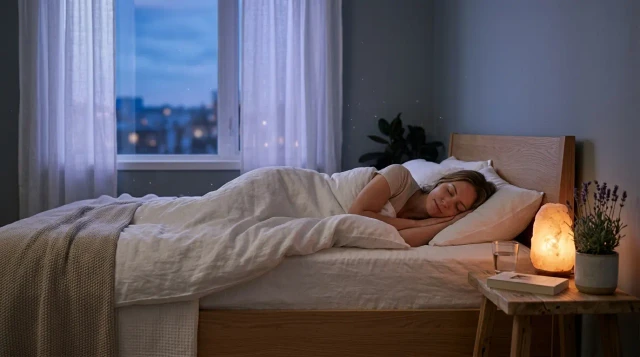
How Does Your Daily Routine Affect Deep Sleep Quality?
Most people focus on what they do right before bed. That matters (we'll get there), but what you do at 7 a.m. and 2 p.m. has just as much impact on your nightly recovery. Your circadian rhythm, the internal clock regulating sleep and wakefulness, takes its cues from the entire day.
Start with morning light. Research from Stanford neuroscientist Dr. Andrew Huberman has shown that getting bright natural light within 30 to 60 minutes of waking helps anchor your circadian rhythm. This early light exposure triggers a cortisol pulse that makes you alert in the morning and sets a timer for melatonin release roughly 14 to 16 hours later. No morning light? That timer gets fuzzy. Your body struggles to drop into deep sleep at the right time.
Then there's exercise. A meta-analysis published in Sleep Medicine Reviews in 2018 found that regular moderate aerobic exercise increased the amount of slow wave sleep participants got by a measurable margin. Timing matters, though. The Cleveland Clinic recommends finishing vigorous exercise at least 3 hours before bed, because elevated core body temperature interferes with sleep onset [3]. A brisk morning walk or afternoon gym session hits the sweet spot.
Caffeine is the other big one. Harvard Medical School published findings showing that caffeine consumed even 6 hours before bedtime reduced total sleep time by more than an hour and significantly decreased deep sleep specifically [4]. That 3 p.m. coffee habit? It's probably costing you more than you think. I switched to herbal tea after noon and noticed the difference within a week. Your results may vary, but the science is pretty clear on this one.

What Should Your Pre-Sleep Routine Look Like?
The hour before bed is where a lot of people accidentally torpedo their rest. Quick example: you finish a stressful email at 10:45 p.m., scroll Instagram until 11:15, then wonder why you can't fall asleep. Your nervous system is lit up. Your brain is processing blue light. Deep sleep doesn't stand a chance.
A better approach starts about 60 to 90 minutes before your target bedtime. Dim the lights in your home. This signals your pineal gland to start producing melatonin. If you need to use screens, turn on blue-light-blocking settings. But honestly, putting the phone down entirely works better. We've written a whole guide on How to Reduce Screen Time: The Method That Works that covers practical strategies for this.
Temperature plays a huge role too. The Cleveland Clinic recommends keeping your bedroom between 60 and 67 degrees Fahrenheit for optimal sleep [3]. Your core body temperature needs to drop by about 2 to 3 degrees for sleep to kick in. A cool room, or even a warm shower before bed (which paradoxically cools your core afterward through radiative heat loss), can speed up this process.
Consider adding a simple relaxation practice. A 2015 study published in JAMA Internal Medicine by researchers at USC found that mindfulness meditation significantly improved sleep quality compared to standard sleep hygiene education alone. You don't need 30 minutes of guided breathwork. Even 10 minutes of quiet body scanning or simple breathing makes a measurable difference. If you're new to this, check out our How to Start Meditating: The Practical Guide.
One more thing. Keep your bedroom for sleep and intimacy only. No working, no binge-watching, no doom-scrolling. When your brain associates the bed with sleep and nothing else, the transition into those deep sleep stages happens faster. For a full breakdown of these principles, our Getting Better Sleep: The Complete Guide goes much deeper.
Can Reducing EMF Exposure Actually Improve Your Sleep?
This is where things get interesting and, admittedly, a bit controversial. We know that blue light from screens disrupts melatonin production. But what about the electromagnetic fields those devices emit even when you're not looking at them? Your phone on the nightstand, your Wi-Fi router humming in the hallway, your smartwatch on your wrist. They all emit low-level electromagnetic radiation throughout the night.
A 2013 study from the University of Melbourne published in Sleep Medicine Reviews reviewed existing research on radiofrequency EMF exposure and sleep, finding evidence that EMF exposure may alter sleep architecture, particularly affecting the deeper stages. The WHO's International Agency for Research on Cancer has classified radiofrequency electromagnetic fields as "possibly carcinogenic to humans" (Group 2B). The sleep research is still developing, but the precautionary principle makes sense here.
Practically speaking, this means considering a nightly digital detox. Put your phone in airplane mode or, better yet, leave it in another room. Unplug unnecessary electronics in the bedroom. If you want to learn more about a structured approach, we've put together a guide on How to Do a Digital Detox: Step by Step as well as a broader overview in our Digital Detox: The Complete Guide.
Quick Q&A
Q: Does sleeping near a phone really affect deep sleep?
A: Emerging research suggests that radiofrequency EMF exposure from nearby devices may alter sleep architecture, and removing electronics from the bedroom is a low-risk way to improve sleep quality.
For people who want to take this a step further, Proteck'd makes clothing with built-in Faraday fabric designed to shield against electromagnetic radiation. Their Faraday Health Collection and Women's Wellness Collection use silver-infused textiles that can reduce EMF exposure while you're resting or going about your day. You can learn more about the science behind this on their EMF Health Benefits page. Whether or not you go that route, simply reducing the number of active electronics in your sleep space is a smart move for anyone serious about improving deep sleep quality.
How Do Nutrition and Supplements Affect Slow Wave Sleep?
What you eat and drink, especially in the hours before bed, has a direct effect on your sleep stages. Alcohol is the biggest offender people misunderstand. Sure, a glass of wine makes you drowsy. But according to the NIH's National Institute on Alcohol Abuse and Alcoholism, alcohol significantly suppresses deep sleep and REM sleep during the second half of the night, even in moderate amounts [1]. You fall asleep faster but get worse sleep. Terrible trade.
On the flip side, certain nutrients actively support deep sleep. Magnesium is the standout. A 2012 randomized controlled trial published in the Journal of Research in Medical Sciences found that magnesium supplementation (500mg daily) significantly improved subjective and objective measures of insomnia in elderly participants, including time spent in deeper sleep stages. Many Americans don't get enough magnesium through diet alone, and forms like magnesium glycinate or magnesium threonate are well-absorbed and less likely to cause digestive issues.
Fiber intake matters too, which honestly surprised me when I first came across the research. A 2016 study from Columbia University published in the Journal of Clinical Sleep Medicine found that higher fiber intake was associated with more time in slow wave sleep. Meanwhile, diets high in saturated fat and sugar were linked to lighter, more disrupted rest. A simple shift toward more vegetables, legumes, and whole grains at dinner can genuinely improve deep sleep quality.
Tryptophan-rich foods like turkey, eggs, and pumpkin seeds also help because tryptophan is a precursor to serotonin and melatonin. Eating these earlier in the evening gives your body time to convert them. But avoid large heavy meals within 2 to 3 hours of bedtime. The digestive process can interfere with the temperature drop your body needs to fall asleep.
How Do You Track Whether You're Getting Enough Deep Sleep?
You can't improve what you don't measure. The gold standard for sleep tracking is polysomnography, a clinical sleep study conducted in a lab. That's obviously not practical for most people on a nightly basis. But consumer-grade wearables have gotten surprisingly decent at estimating sleep stages.
Devices like the Oura Ring (third generation), Whoop 4.0, and the Apple Watch Ultra use a combination of heart rate variability (HRV), movement, and skin temperature to estimate how much time you spend in light sleep, deep sleep, and REM. A 2022 validation study published in the journal Sleep by researchers at West Virginia University found that the Oura Ring's deep sleep estimates correlated reasonably well with polysomnography, though no consumer device is perfectly accurate.
Even without a wearable, you can gauge your sleep quality by feel. Do you wake up refreshed? Can you concentrate well in the morning without caffeine? Do you get through the afternoon without an energy crash? These are rough but useful indicators that your rest is working properly. If the answer to all three is no, your deep sleep is probably insufficient.
I'd recommend tracking for at least two weeks before making big changes. This gives you a baseline. Then try one adjustment at a time. Maybe a consistent bedtime for a week, then adding a caffeine cutoff, then adjusting room temperature. See what moves the needle. Stacking too many changes at once makes it impossible to know what actually helped you optimize deep sleep.
What's the Connection Between Stress and Deep Sleep Loss?
Stress is probably the single biggest deep sleep killer. It's also the hardest one to fix with a quick hack. When your sympathetic nervous system is activated ("fight or flight" mode), your body produces cortisol and adrenaline. These hormones are the opposite of what you need for sleep. They raise your heart rate, increase alertness, and suppress the slow brainwave patterns associated with deep restorative rest.
A 2020 study from the American Academy of Sleep Medicine found that individuals reporting high psychological stress had significantly less slow wave sleep compared to low-stress individuals, even when total sleep time was similar. Stress doesn't just make it harder to fall asleep. It changes the architecture of your sleep, robbing you of the deepest stages even after you're out cold.
So what actually works? Cognitive behavioral therapy for insomnia (CBT-I) is the treatment recommended by the American College of Physicians as a first-line intervention for chronic insomnia, ahead of medication. It addresses the thought patterns and behaviors that keep your nervous system wound up at night. You can access CBT-I through apps like Insomnia Coach (developed by the U.S. Department of Veterans Affairs) or through a licensed sleep therapist.
For everyday stress management, consistent practices beat occasional heroic efforts. Ten minutes of meditation, a brief journaling session to dump your worries onto paper, or a simple breathing exercise where you exhale longer than you inhale (try 4 counts in, 7 counts out). These calm your nervous system and create the conditions for deep sleep to happen naturally. The key word is consistent. Your brain learns to relax through repetition, not willpower.
How to Optimize Deep Sleep: Putting It All Together
Here's a practical daily blueprint that pulls together everything we've covered. This isn't meant to be rigid. Pick the pieces that fit your life and build from there.
Morning (within 30 minutes of waking): Get outside and expose your eyes to natural sunlight for 10 to 15 minutes. This anchors your circadian rhythm better than any supplement. Have your coffee if you need it, but set a personal cutoff time. For most people, noon to 2 p.m. is a good boundary based on caffeine's 5 to 6 hour half-life.
Afternoon: Get some form of physical activity. It doesn't have to be intense. A 30-minute walk, a yoga class, a bike ride. The 2018 meta-analysis we mentioned earlier found moderate aerobic exercise to be the sweet spot for improving slow wave sleep. Finish any vigorous exercise at least 3 hours before bed.
Evening (60 to 90 minutes before bed): Dim lights, put devices away or switch to blue-light filters, and do something calming. This is also when you might take a magnesium supplement if you've chosen to add one. Keep your bedroom cool (60 to 67°F), dark, and quiet. Consider removing electronics from the room entirely to reduce both the temptation to scroll and the ambient electromagnetic radiation.
Over time, these habits compound. You're not just learning how to optimize deep sleep for one night. You're training your body to consistently access the restorative rest it was designed for. Not one magic trick, but a collection of daily choices that support your biology instead of working against it.
Frequently Asked Questions
Most healthy adults need about 1 to 2 hours of deep sleep per night, which is roughly 15 to 25 percent of total sleep time. The exact amount varies by age, with younger adults typically getting more. If you're consistently sleeping 7 to 9 hours with good sleep habits, you're likely hitting an adequate amount.
Going to bed between 10 p.m. and midnight aligns with most people's natural circadian rhythms and maximizes early-night deep sleep stages. Consistency matters more than the exact time. Going to bed and waking up at the same time every day, including weekends, helps your body reliably access deep sleep.
Yes. Regular moderate aerobic exercise has been shown to increase the amount of slow wave sleep you get. A 2018 meta-analysis in Sleep Medicine Reviews confirmed this effect. Just avoid vigorous exercise within 3 hours of bedtime, as elevated core body temperature can delay sleep onset.
Unusually high amounts of deep sleep can sometimes indicate that your body is recovering from sleep deprivation, illness, or intense physical stress. In healthy individuals, the brain self-regulates sleep stages, so you generally won't get "too much" under normal conditions. If your wearable consistently shows unusually high deep sleep percentages, it may be a calibration issue with the device.
It does. While alcohol may help you fall asleep faster, it significantly disrupts sleep architecture in the second half of the night. According to the NIH, even moderate alcohol consumption suppresses both deep sleep and REM sleep. If better deep sleep is your goal, limiting or avoiding alcohol in the evening is one of the most impactful changes you can make.
Magnesium plays a role in activating the parasympathetic nervous system, which helps your body relax. A 2012 randomized trial found that 500mg of magnesium daily improved sleep quality in elderly participants. Forms like magnesium glycinate and magnesium threonate are popular for sleep support because they're well-absorbed and gentle on the stomach.
No, they're distinct stages. Deep sleep (NREM stage 3) is characterized by slow delta brain waves and is focused on physical restoration, tissue repair, and immune function. REM sleep involves rapid eye movement, vivid dreaming, and is more associated with memory consolidation and emotional processing. Both matter, but they serve different functions.
Consumer wearables like the Oura Ring and Whoop provide reasonable estimates of deep sleep but aren't as accurate as clinical polysomnography. A 2022 validation study found moderate correlation between the Oura Ring's estimates and lab measurements. They're useful for spotting trends over time, but don't obsess over any single night's numbers.
Emerging research suggests that radiofrequency electromagnetic fields may affect sleep architecture, though the evidence is still developing. The WHO classifies RF-EMF as "possibly carcinogenic" (Group 2B). Removing phones and electronics from the bedroom is a simple precautionary step that many sleep experts recommend regardless of where you stand on the EMF question.
This usually means you're not getting enough deep sleep or your sleep is being fragmented. Common culprits include alcohol, caffeine too late in the day, a warm bedroom, screen use before bed, and high stress levels. Tracking your sleep stages and systematically addressing these factors is the best way to figure out what's going on.
Long naps (over 30 minutes) or naps taken late in the afternoon can reduce your sleep drive and make it harder to access deep sleep at night. Short 20-minute naps earlier in the day generally don't interfere. If you're struggling with nighttime deep sleep, try cutting out naps for a couple of weeks and see if it helps.
References
- National Institutes of Health (NIH) - Brain Basics: Understanding Sleep – Deep sleep accounts for 15-25% of total sleep time and is when the body releases growth hormone and performs tissue repair; alcohol disrupts sleep architecture.
- Boston University / Science Magazine - Coupled electrophysiological, hemodynamic, and cerebrospinal fluid oscillations i – During deep sleep, the glymphatic system activates and cerebrospinal fluid washes through the brain to clear metabolic waste.
- Cleveland Clinic - Sleep Tips – Bedroom temperature between 60 and 67°F is recommended for optimal sleep; vigorous exercise should be completed at least 3 hours before bedtime.
- Harvard Medical School - Sleep and Caffeine – Caffeine consumed 6 hours before bedtime can reduce total sleep time by more than 1 hour and decrease deep sleep.
About the Author
Proteck'd EMF Apparel
Health & EMF Specialists
The Proteck'd team covers EMF protection, silver-fiber apparel, and practical ways to reduce everyday radiation exposure. Every piece Proteck'd ships is designed, tested, and worn by the people who build it.
Get the Free EMF Home Audit Checklist
A room-by-room PDF that walks you through the biggest EMF sources in your house and what to do about each one. No cost, no fluff.
Download the Checklist →✓30-day returns✓Free shipping✓Free returns✓Silver fiber shielding


Leave a comment