


The Gut-Brain Connection: The Complete Guide

Here's a number that stopped me cold: about 95% of your body's serotonin, the neurotransmitter most people link to happiness, is produced in your gut. Not your brain. Your gut. That single fact pretty much rewrites everything most of us learned about mental health and digestion.
If you've been searching "is gut health complete guide safe," good on you for asking. The internet is overflowing with gut health advice, and it ranges from solid science to wildly irresponsible nonsense. Some guides push pricey supplement stacks. Others recommend extreme elimination diets that leave you hangry and confused. A gut health guide grounded in peer-reviewed research? That's safe. And honestly, it's long overdue for most people.
The gut-brain axis is one of the most exciting areas in modern medical research right now. Scientists at Harvard, Johns Hopkins, and UCLA have spent years mapping the two-way communication system between your gastrointestinal tract and your central nervous system. What they've found is remarkable. Your gut microbiome influences your mood, your immune response, your energy levels, and even how well you sleep at night.
This guide covers the science without the hype. We'll talk about what your microbiome actually is, how the vagus nerve acts like a telephone line between your belly and your brain, why common gut issues like bloating and IBS are more tied to mental health than you'd expect, and what you can actually do about all of it. No magic pills. No miracle cleanses. Just real research and practical steps that make a measurable difference.
Whether you're dealing with chronic digestive discomfort or you're just curious about how your gut affects everything else, you're in the right place. Let's get into it.
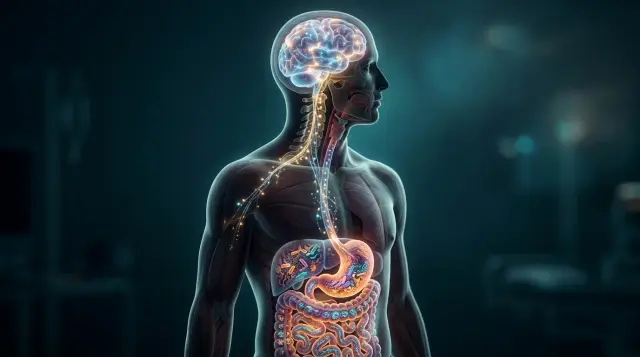
Your gut contains 100 trillion microorganisms that produce 95% of your body's serotonin, making your digestive tract one of the most powerful regulators of mood, immunity, and overall health. You can't meaningfully improve your brain while ignoring your belly.
What Exactly Is the Gut Microbiome?
Think of your gut microbiome as a dense, teeming city of microorganisms living inside your digestive tract. According to the NIH Human Microbiome Project, your gut hosts roughly 100 trillion bacteria, viruses, fungi, and other microbes from over 1,000 different species [1]. That's more microbial cells than human cells in your entire body. Sit with that for a second.
These organisms aren't just hitching a ride. They actively break down food, synthesize vitamins like B12 and K, train your immune system, and produce neurotransmitters that shape how you think and feel. A 2019 study published in Nature analyzed over 1,000 participants and identified 69 dietary factors linked to distinct microbiome compositions [2]. What you eat directly shapes the community of organisms living inside you. Full stop.
Here's a concrete example. Researchers at Stanford ran a clinical trial in 2021 comparing a high-fiber diet to a high-fermented-food diet. The fermented food group saw significant increases in microbiome diversity and measurable decreases in inflammatory markers after just 10 weeks. That's not years of disciplined eating. That's roughly two and a half months of adding yogurt, kimchi, and sauerkraut to your meals.
Your microbiome composition is unique to you, almost like a fingerprint. It's shaped by how you were born (vaginal delivery vs. C-section), whether you were breastfed, what medications you've taken, where you live, and what you eat day after day. Understanding this foundation is what makes any gut health resource actually useful rather than generic filler.
Quick Q&A
Q: Is everyone's gut microbiome the same?
A: No. Each person's microbiome is unique, shaped by genetics, birth method, diet, environment, and medication history, which is why personalized approaches outperform one-size-fits-all gut advice.
How Does the Gut-Brain Axis Actually Work?
The gut-brain axis is the bidirectional communication system between your gastrointestinal tract and your central nervous system. It's not a metaphor. It's actual, measurable biology. The main highway for this communication is the vagus nerve, the longest cranial nerve in the body, running from your brainstem all the way down to your abdomen [3].
According to researchers at Johns Hopkins Medicine, the enteric nervous system (sometimes called the "second brain") contains over 500 million neurons lining your GI tract [3]. These neurons don't just manage digestion. They send signals to your brain that influence mood, stress responses, and even decision-making. When people talk about a "gut feeling"? There's real neuroscience behind it.
Here's what fascinates me about this. Your gut bacteria produce neurotransmitters like serotonin, dopamine, and GABA. About 95% of your body's serotonin is manufactured in the GI tract, not the brain. So when your microbiome gets disrupted, serotonin production can drop, and that can show up as anxiety, depression, or brain fog. A 2019 study in Nature Microbiology analyzed fecal samples from over 1,000 people and found that two specific bacterial genera, Coprococcus and Dialister, were consistently depleted in individuals diagnosed with depression [2].
Stress flows the other direction too. When you're chronically stressed, your brain sends signals through the vagus nerve that alter gut motility, increase intestinal permeability (often called "leaky gut"), and shift the makeup of your microbiome. I've written more about how stress and mindfulness practices interact with your body in our Mindfulness: The Science-Backed Guide, and honestly, the overlap with digestive wellness is striking.
The takeaway? Your brain and your gut are in constant conversation. You can't meaningfully improve one while ignoring the other. That's what makes the gut-brain connection so central to any legitimate digestive health resource.
What Are the Most Common Gut Health Issues?
Bloating, gas, and general abdominal discomfort are so common that most people just shrug them off as normal. They're not. Occasional bloating after a big meal? Sure. But if you're bloated most days, dealing with cramping, irregular bowel movements, or persistent fatigue after eating, something in your gut ecosystem is off.
Irritable bowel syndrome (IBS) is one of the most widespread functional GI disorders on the planet. According to the Cleveland Clinic, IBS affects between 25 and 45 million people in the United States alone [4]. It's characterized by abdominal pain, bloating, and altered bowel habits. And here's the frustrating part: there's no single definitive test for it. Diagnosis typically comes through symptom-based criteria (the Rome IV criteria) after other conditions have been ruled out.
What many people don't realize is how tightly linked gut dysfunction is to immune health. Roughly 70% of your immune system resides in your gut-associated lymphoid tissue (GALT). When your microbiome diversity drops, whether from antibiotics, poor diet, chronic stress, or environmental factors, your immune defenses can weaken. That's why people with compromised gut health often seem to catch every cold circulating the office.
Skin conditions are another surprising downstream effect. Dermatologists at the University of Pennsylvania have identified what they call the "gut-skin axis." Conditions like eczema, psoriasis, and acne have been linked to intestinal dysbiosis, which is just a fancy word for a microbiome that's out of balance. I had a friend who struggled with adult acne for years. Nothing topical worked. When she finally addressed her gut health through dietary changes and a targeted probiotic, her skin cleared up within three months.
Fatigue is another red flag worth paying attention to. If you're eating enough calories and sleeping adequate hours but still dragging through the afternoon, your gut could be the bottleneck. Poor nutrient absorption, low-grade inflammation, and disrupted serotonin production all trace back to microbiome imbalances. For a broader look at how all these systems connect, check out our Whole-Body Health: The Honest Guide.

Can What You Eat Really Change Your Microbiome?
Yes. And faster than you'd think. Research from Harvard's T.H. Chan School of Public Health showed that dietary changes can alter microbiome composition in as little as 24 hours. The changes become more stable and pronounced over weeks and months, but the point is your gut bacteria respond quickly to what you feed them.
Diversity is the name of the game. The more varied your diet, the more diverse your microbiome, and diversity is consistently associated with better health outcomes in the scientific literature. A practical rule of thumb from the American Gut Project (one of the largest citizen-science microbiome studies ever conducted): aim for 30 different plant foods per week. Sounds like a lot, right? But it includes fruits, vegetables, nuts, seeds, herbs, spices, and whole grains. A single stir-fry can knock out five or six.
Fermented foods deserve special attention. Kimchi, sauerkraut, kefir, miso, tempeh, and plain yogurt with live cultures all introduce beneficial bacteria directly into your digestive tract. That Stanford study I mentioned earlier found that participants eating six or more servings of fermented foods per day experienced significant increases in microbiome diversity and reduced levels of 19 inflammatory proteins.
On the flip side, ultra-processed foods, artificial sweeteners, and excessive alcohol can wreck your beneficial bacteria. A 2022 paper published in Cell found that the artificial sweetener saccharin significantly altered gut microbiome composition and impaired glucose tolerance in human participants. So it's not just about adding good things. It's also about cutting back on the stuff that's actively working against your gut.
Quick Q&A
Q: How quickly can diet changes improve gut health?
A: Research from Harvard shows microbiome shifts can begin within 24 hours of a dietary change, though meaningful, stable improvements typically take several weeks of consistent effort.
Do Probiotics Actually Help, or Are They Overhyped?
This is where the gut health conversation gets messy. Walk into any health food store and you'll see shelves lined with probiotic supplements, each one promising to fix everything from bloating to brain fog. The truth is more nuanced. Some probiotics have strong clinical evidence behind them. Many don't.
According to the World Gastroenterology Organisation, specific probiotic strains have demonstrated benefits for specific conditions. Lactobacillus rhamnosus GG, for instance, has solid evidence for reducing the duration of infectious diarrhea in children. Saccharomyces boulardii has been shown to help prevent antibiotic-associated diarrhea. But a generic "probiotic blend" from a random brand? That's a coin flip.
The problem is that probiotics are strain-specific in their effects. Lactobacillus acidophilus NCFM does different things than Lactobacillus acidophilus La-5. Most supplement labels don't even specify strains, let alone cite the research supporting their particular formulation. This is why the personalized probiotic movement is gaining so much traction in 2025 and 2026, with companies now offering microbiome testing to match you with strains that address your specific deficiencies.
My honest advice? Don't start with supplements. Start with food. Fermented foods provide a broad spectrum of live cultures along with prebiotics, fiber, and other nutrients that help those bacteria thrive once they arrive. If you do want to try a probiotic supplement, look for one that lists specific strains (not just species), has colony-forming units (CFUs) in the billions, and ideally has clinical trials behind its formulation. And always talk to your doctor first, especially if you're immunocompromised.
How Do Sleep and Stress Affect Your Digestive System?
Ever notice how your stomach acts up when you're anxious or running on fumes? That's the gut-brain axis in action. A 2019 study published in PLOS ONE found that just two consecutive nights of sleep deprivation significantly altered the gut microbiome composition of healthy adults, increasing the ratio of Firmicutes to Bacteroidetes, a pattern associated with obesity and metabolic dysfunction.
Chronic stress is equally destructive. When your hypothalamic-pituitary-adrenal (HPA) axis is constantly activated (that's your body's stress response system), it increases cortisol. Cortisol in turn increases intestinal permeability. Dr. Emeran Mayer, a gastroenterologist at UCLA and author of "The Mind-Gut Connection," has spent decades documenting how psychological stress physically changes the gut lining and shifts microbiome composition toward less beneficial species.
Here's a real-world example. I know someone who developed severe digestive issues during a particularly brutal year at work. Every test came back normal. No Crohn's, no celiac, no parasites. It was only when she addressed the stress directly, through therapy, regular exercise, and better sleep habits, that her symptoms resolved. Her gastroenterologist wasn't surprised at all. We've got a detailed breakdown of the sleep side of this equation in our Sleep Optimization: The Honest Guide To Better Rest, and it connects directly to digestive wellness.
The practical takeaway is clear. You can eat all the fermented foods in the world, but if you're sleeping five hours a night and running on cortisol, your microbiome will still suffer. A safe, complete approach to gut health has to include stress management and sleep optimization. They're not bonus extras. They're the foundation.
Does Your Environment Affect Your Gut Health?
Your microbiome doesn't exist in a bubble. It's shaped by everything around you, from the water you drink to the air you breathe to the electromagnetic environment you live in. That might sound surprising, but emerging research is looking at how environmental exposures influence gut bacteria composition and intestinal permeability.
A 2020 review in the journal Environmental Health Perspectives documented how pollutants, heavy metals, and pesticide residues alter gut microbiome diversity. People living in more polluted urban areas consistently showed lower microbiome diversity compared to rural populations, even when diet was controlled for. This is one reason why the "eat organic when possible" advice keeps showing up in microbiome research. Not as a lifestyle flex. As a measurable variable.
Environmental stressors extend beyond what we typically think about. Many people are now paying closer attention to electromagnetic field (EMF) exposure as part of a broader wellness strategy. If you're curious about how EMF exposure fits into the bigger picture, Proteck'd has some genuinely useful resources on EMF Health Benefits. Their Faraday Health Collection and Women's Wellness Collection are designed for people who want to reduce environmental stressors while going about their daily lives.
The bigger point is that a truly comprehensive gut health strategy considers the whole environment you live in, not just what's on your plate. If you're interested in how all these factors tie together, our The Essential Guide To Healthy Living Tips covers the full spectrum. Your microbiome reflects your entire lifestyle. The more you can reduce unnecessary stressors, the better your gut ecosystem will function.
Is a Gut Health Complete Guide Safe to Follow Long-Term?
This is the question behind the question, and it's a smart one. Yes, following evidence-based gut health guidance long-term is safe. The strategies with the best research support, like eating diverse plant foods, consuming fermented foods, managing stress, sleeping well, and staying physically active, are the same strategies recommended by the American Gastroenterological Association and major research hospitals like Mayo Clinic and Johns Hopkins.
Where people run into trouble is with extreme approaches. Extended juice cleanses, aggressive "gut detoxes," or self-prescribing antimicrobial herbs without medical supervision can genuinely cause harm. A 2023 case report in the American Journal of Gastroenterology documented a patient who developed severe intestinal dysbiosis after a prolonged herbal antimicrobial protocol she'd found online. The treatment was worse than the original problem.
The safest path is also the least glamorous. Eat 30 or more plant foods per week. Include fermented foods regularly. Move your body daily. Manage stress through proven techniques like meditation, therapy, or breathwork. Prioritize seven to nine hours of sleep. And if you have persistent symptoms, work with a gastroenterologist, not a social media influencer.
That said, asking "is gut health complete guide safe" shows good instincts. Not all guides are created equal. Look for ones that cite specific research, name specific institutions and study authors, and avoid making dramatic promises. The fact that you've read this far tells me you already have a solid filter for this stuff. Trust your gut. Literally.
- The gut microbiome contains approximately 100 trillion microorganisms that directly influence mood, immunity, digestion, and energy levels through the gut-brain axis.
- About 95% of your serotonin is produced in your GI tract, making gut health inseparable from mental health.
- Eating 30 or more diverse plant foods per week and including fermented foods can measurably increase microbiome diversity within weeks.
- Chronic stress and poor sleep physically alter your gut lining and shift microbiome composition toward harmful species.
- A safe gut health approach is evidence-based and long-term: diverse whole foods, stress management, quality sleep, and medical guidance when needed.
Frequently Asked Questions
Yes. An evidence-based gut health guide is safe for the vast majority of people. The core recommendations, like eating diverse plant foods, consuming fermented foods, managing stress, and prioritizing sleep, are backed by major medical institutions including Mayo Clinic, Johns Hopkins, and the American Gastroenterological Association. The only time to be cautious is with extreme protocols like prolonged cleanses or self-prescribed antimicrobial supplements.
The gut-brain axis is the two-way communication network between your GI tract and your central nervous system. It works primarily through the vagus nerve and involves neurotransmitters, hormones, and immune signals. It matters because about 95% of your serotonin is produced in your gut, which means digestive health directly affects your mood, stress response, and how clearly you think.
Research from Harvard shows that microbiome changes can start within 24 hours of a dietary shift. That said, stable and meaningful improvements typically take four to twelve weeks of consistent dietary and lifestyle changes. A Stanford clinical trial found measurable increases in microbiome diversity after 10 weeks of a high-fermented-food diet.
Fermented foods like kimchi, sauerkraut, kefir, yogurt with live cultures, miso, and tempeh are among the best for introducing beneficial bacteria. Beyond those, aim for 30 or more diverse plant foods per week, including vegetables, fruits, whole grains, nuts, seeds, herbs, and spices. That diversity feeds a wider range of beneficial gut bacteria.
Absolutely. Chronic stress activates the HPA axis, raises cortisol levels, and increases intestinal permeability while shifting microbiome composition toward less beneficial species. Dr. Emeran Mayer at UCLA has documented extensively how psychological stress physically changes the gut lining. Many people with IBS symptoms find that addressing stress does more good than dietary changes alone.
Some do, for specific conditions. Lactobacillus rhamnosus GG is well-studied for reducing the duration of infectious diarrhea, and Saccharomyces boulardii helps prevent antibiotic-associated diarrhea. But generic probiotic blends without strain-specific labeling are basically a coin flip. Always look for products that list specific strains and cite clinical research.
Common signs include chronic bloating, gas, abdominal pain, irregular bowel movements, persistent fatigue, getting sick frequently, skin conditions like eczema or acne, and unexplained mood changes. If you're experiencing several of these consistently, it's worth seeing a gastroenterologist rather than trying to self-diagnose.
Significantly. A 2019 study in PLOS ONE showed that just two nights of sleep deprivation altered gut microbiome composition in healthy adults, increasing bacteria associated with obesity and metabolic dysfunction. Prioritizing seven to nine hours of quality sleep is one of the most impactful things you can do for your microbiome.
Yes. Dermatologists at the University of Pennsylvania have documented a "gut-skin axis" linking intestinal dysbiosis to conditions like eczema, psoriasis, and acne. When the gut microbiome is out of balance, systemic inflammation can increase, and that inflammation often shows up on the skin. Improving gut health through diet has resolved persistent skin conditions for many people.
Probiotics are live beneficial microorganisms you consume through fermented foods or supplements. Prebiotics are non-digestible fibers that feed those beneficial microorganisms, found in foods like garlic, onions, leeks, asparagus, bananas, and oats. You need both for a thriving microbiome. Think of prebiotics as fertilizer and probiotics as the seeds.
"Leaky gut," or increased intestinal permeability, is a real and measurable phenomenon where the tight junctions in the intestinal lining become compromised, allowing molecules into the bloodstream that normally wouldn't pass through. It's been documented in peer-reviewed research and is associated with conditions like IBS, celiac disease, and type 1 diabetes. However, most medical bodies don't yet recognize it as a standalone diagnosis, which is why many doctors are cautious with the term.
References
- National Institutes of Health - Human Microbiome Project – The human gut microbiome contains approximately 100 trillion microorganisms from over 1,000 species.
- Nature - Population-level analysis of gut microbiome variation – A 2019 Nature study of over 1,000 participants linked 69 dietary factors to distinct microbiome composition patterns and found Coprococcus and Dialister depleted in individuals with depression.
- Johns Hopkins Medicine - The Brain-Gut Connection – The enteric nervous system contains over 500 million neurons and communicates bidirectionally with the brain through the vagus nerve.
- Cleveland Clinic - Irritable Bowel Syndrome – IBS affects between 25 and 45 million people in the United States.
About the Author
Proteck'd EMF Apparel
Health & EMF Specialists
The Proteck'd team covers EMF protection, silver-fiber apparel, and practical ways to reduce everyday radiation exposure. Every piece Proteck'd ships is designed, tested, and worn by the people who build it.
Get the Free EMF Home Audit Checklist
A room-by-room PDF that walks you through the biggest EMF sources in your house and what to do about each one. No cost, no fluff.
Download the Checklist →✓30-day returns✓Free shipping✓Free returns✓Silver fiber shielding


Leave a comment