


Are Your Kids Getting Too Much EMF?: What the Research Shows

Here's a stat that hit me hard: the average American kid between 8 and 12 spends nearly five hours a day on screens. Teens? Closer to seven and a half. And that's before you count all the time near Wi-Fi routers, Bluetooth speakers, baby monitors, smart TVs, or the cell tower a quarter mile from their school. Every single one of those sources emits radiofrequency electromagnetic radiation. Your kid's body absorbs it differently than yours does.
If you've ever looked into a faraday beanie or other RF-shielding gear and wondered whether the concern is real or overblown, that's a fair question. The science here isn't wrapped up in a tidy bow. But there's enough peer-reviewed research out there to make any parent want to understand what's actually going on.
I'm not trying to scare you into wrapping your house in tinfoil. What I will do is walk through the real studies, from the World Health Organization to the National Institutes of Health, that look at how electromagnetic fields interact with children's bodies. Then we'll talk about what you can actually do about it. Some of the changes are surprisingly simple.
Because whether you lean cautious or skeptical, you deserve to see the data for yourself.

Why Do Children Absorb More EMF Than Adults?
This isn't guesswork. It's physics and anatomy. Children have thinner skulls, smaller heads, and brain tissue with higher water content and conductivity. All of that means radiofrequency radiation penetrates deeper into a child's brain than it does into an adult's. A widely cited 2012 paper published in Electromagnetic Biology and Medicine by researchers including Om Gandhi at the University of Utah found that children's bone marrow absorbs roughly 10 times more RF radiation than adult bone marrow [1].
Sit with that for a second. The FCC's current SAR (Specific Absorption Rate) testing standards were designed using a model based on a 220-pound adult male head. That's the model that determines whether a phone is "safe." The American Academy of Pediatrics wrote to the FCC back in 2013, explicitly requesting that testing be updated to reflect children's anatomy. Those standards still haven't changed.
Then there's cumulative exposure. A child born in 2020 will have 70 or 80 years of continuous wireless radiation exposure ahead of them, starting from infancy. No previous generation has dealt with anything close to that. The developing nervous system, the still-forming blood-brain barrier, the rapid cell division happening in young bodies. All of these create a biological situation that's fundamentally different from an adult scrolling through their inbox.
Quick Q&A
Q: Do children's heads absorb more cell phone radiation than adults'?
A: Yes. Due to thinner skulls and higher tissue conductivity, RF radiation penetrates proportionally deeper into children's brains, and their bone marrow absorbs significantly more energy than adults'.
So when parents look at products like an EMF blocking hat or a Faraday EMF Collection, they're responding to a real gap between how safety standards are tested and how their kids actually use technology.
What Does the WHO Say About EMF and Children's Health?
In 2011, the World Health Organization's International Agency for Research on Cancer (IARC) classified radiofrequency electromagnetic fields as Group 2B, meaning "possibly carcinogenic to humans" [2]. That classification was based partly on the Interphone study, a massive multinational investigation that found a suggestive link between heavy cell phone use and glioma, a type of brain tumor. Group 2B isn't a guarantee of danger. It means there's enough evidence that the possibility can't be dismissed.
For some context, Group 2B also includes things like lead, DDT, and certain industrial chemicals. It's the "we can't rule this out, so let's keep studying it" category. And that studying is exactly what's been happening. The U.S. National Toxicology Program (NTP) completed a major study in 2018 that exposed rats to RF radiation at levels similar to what cell phones emit. They found "clear evidence" of heart tumors in male rats and "some evidence" of brain tumors [3].
Rats aren't humans. Obviously. But the NTP study was one of the most comprehensive toxicological evaluations of RF radiation ever conducted, and its findings were significant enough to prompt further review. Meanwhile, the Ramazzini Institute in Italy published results from a similar large-scale animal study and found comparable tumor patterns, particularly in the brain and heart.
So what does all this mean for your 7-year-old watching YouTube on a tablet? It means the question of whether chronic, low-level electromagnetic radiation affects developing bodies hasn't been answered with a definitive no. If you want to understand how EM radiation interacts with biology on a deeper level, there's a solid explanation in this piece on what EMF does at the cellular level, including oxidative stress.
Children's bone marrow absorbs roughly 10 times more RF radiation than adults', yet our safety testing standards are still based on a model of a 220-pound adult male head. That gap between testing and reality is exactly why parents are taking precautions into their own hands.
How Much EMF Exposure Do Kids Actually Get in a Typical Day?
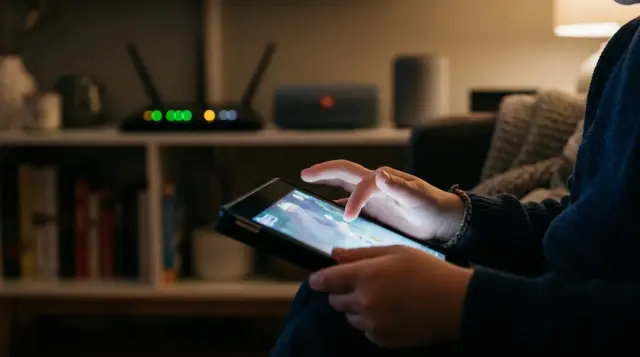
Let's make this concrete. Your child wakes up in a bedroom with a Wi-Fi router down the hall, broadcasting around the clock. They sit near a Bluetooth speaker at breakfast. They head to school, where they might be within a few feet of a classroom access point for six hours straight. Some schools have 30 or 40 Wi-Fi access points across a single building. After school, they come home, grab a tablet or phone, and hold it inches from their face or rest it on their lap.
Every one of those devices emits RF radiation. Individually, each source is low power. Together, they add up to a daily exposure level that simply didn't exist 20 years ago. A 2018 study by researchers at the National Institute of Environmental Health Sciences (NIEHS) noted that children's total daily exposure to wireless radiation has increased substantially over the past decade, driven mainly by personal device use and indoor Wi-Fi [4].
The head is a particular concern because of how phones and tablets get used. Kids hold phones against their ears. They watch videos with screens propped close to their faces. Some fall asleep with a phone or tablet on the pillow right next to them. This is where RF shielding headwear comes in. A faraday beanie, for example, uses silver-threaded fabric to attenuate RF signals across a wide frequency range, reducing the wireless radiation that reaches the scalp and skull.
I'll be honest. I used to think shielding clothing sounded a bit out there. Then I looked at the attenuation data for silver-threaded textiles. Quality RF shielding fabric can block over 99% of radiation in the frequency ranges used by Wi-Fi, cellular, and 5G networks. That's measurable, repeatable, lab-verified performance. If you're curious about how these wearables work in practice, take a look at why more people are wearing EMF-shielding everyday wear.
Does a Faraday Beanie Actually Block EMF Radiation?
Yes. And it's not magic. It's basic electromagnetic shielding. The same principle that makes a Faraday cage work in a physics lab applies to wearable fabric. When you weave conductive fibers, typically silver or silver-coated threads, into a textile, that fabric reflects and absorbs incoming electromagnetic waves. The effectiveness depends on the fabric's conductivity, the density of the weave, and the frequency range of the radiation.
A well-constructed faraday beanie can attenuate RF signals by 30 dB or more. That translates to blocking over 99% of the incoming radiation in the most common wireless bands. We're talking 2.4 GHz and 5 GHz Wi-Fi, cellular frequencies from 700 MHz to 2600 MHz, and newer 5G bands. Proteck'd's Faraday EMF Collection uses lab-tested shielding fabrics designed to perform across these ranges, and you can find more details about the technology on their EMF Protection Benefits page.
One thing worth keeping in mind: a beanie covers the top and sides of the head, not the face. It's not creating a sealed Faraday cage around the entire skull. What it does is significantly cut the RF energy reaching the brain from above, behind, and from the sides. Since most ambient Wi-Fi and cellular signals arrive from access points mounted on ceilings or walls, or from towers at various angles, that coverage area matters a lot.
Quick Q&A
Q: How much EMF can a silver-threaded faraday beanie actually block?
A: Quality faraday beanies using silver-threaded fabric can block over 99% of RF radiation (30+ dB attenuation) across frequencies used by Wi-Fi, cellular, and 5G networks.
For parents worried about 5G specifically, this practical guide on how to protect yourself from 5G tower emissions is a good starting point. The newer millimeter-wave 5G signals are actually easier to block than lower-frequency radiation because of their shorter wavelengths.

What Are the Signs of Too Much EMF Exposure in Children?
This is where things get tricky. The symptoms that some researchers and clinicians associate with excessive electromagnetic field exposure overlap with about a dozen other things. Headaches. Trouble concentrating. Sleep problems. Irritability. Fatigue. Sound like every overtired kid you've ever met? Exactly. That overlap is part of why this issue is so hard to pin down.
Still, there are studies worth paying attention to. A 2010 study published in the Journal of Epidemiology and Community Health surveyed over 13,000 children and found that prenatal and postnatal exposure to cell phones was associated with behavioral difficulties by school age. The study was observational, so it can't prove causation. But the correlation was statistically significant and held up after adjusting for confounding factors.
Sleep disruption is another area with growing evidence. Research from the University of Melbourne and Swinburne University of Technology has shown that RF exposure before sleep can alter brain wave patterns during sleep. If your kid has trouble settling down at night after screen time, the blue light might not be the only factor. The electromagnetic radiation from the device itself could be playing a role too. For a deeper look at this connection, check out this guide on EMF blocking for better sleep.
I'm not saying every headache your child gets is from Wi-Fi. But when a kid is surrounded by wireless radiation for 12 to 16 hours a day, in an environment that simply didn't exist a generation ago, paying attention to patterns seems reasonable. Especially when simple changes can reduce exposure without turning anyone's life upside down.
How Can Parents Reduce Their Children's EMF Exposure at Home?
The single most effective strategy is distance. The intensity of electromagnetic radiation drops off rapidly as you move away from the source, following an inverse square law. Moving a Wi-Fi router from a child's bedroom to a hallway closet makes a huge difference. Setting a phone on a desk instead of pressing it against a child's ear reduces exposure dramatically. Even a few inches matter.
Here are some other practical steps that don't require a degree in electrical engineering. Turn off Wi-Fi at night. Use a timer on your router so it shuts down during sleeping hours. Switch to wired ethernet connections where you can, especially for stationary devices like desktop computers or gaming consoles. Keep phones and tablets out of bedrooms at night. If you want to go further, this complete guide to low-EMF home design covers everything from router placement to wiring strategies.
Wearable shielding is another layer of protection, and this is where a faraday beanie or other EMF blocking hat becomes genuinely practical. A child wearing a silver-threaded beanie while doing homework near a Wi-Fi access point is getting measurably less RF radiation to their brain. It's not about fear. It's about reduction. Same logic as sunscreen: you don't panic about the sun, but you take reasonable precautions.
For moms looking for their own protection, the Women's Faraday Collection from Proteck'd offers the same shielding technology in styles that don't scream "I live in a bunker." That matters, because if something doesn't look good, nobody wears it consistently.
Why Do Some Studies Show EMF Is Harmless While Others Raise Concerns?
This is the question I hear most when this topic comes up, and the honest answer is complicated. Part of the discrepancy comes down to study design. Short-term exposure studies, the kind where someone sits near an RF source for 30 minutes and then gets checked for immediate effects, tend to find little or nothing. Long-term epidemiological studies, the ones tracking people over years or decades, are where the worrying signals tend to show up.
Funding sources matter too. A 2006 meta-analysis by Henry Lai at the University of Washington found that industry-funded studies were significantly less likely to report biological effects from RF exposure than independently funded research. That's not proof of anything shady on its own, but it's a pattern worth keeping in mind when you're trying to weigh the evidence.
Another wrinkle: different frequencies, power levels, and modulation patterns can produce different biological effects. Studying "EMF" as a single category is a bit like studying "chemicals" as a single category. The specifics matter enormously. A 900 MHz continuous wave signal and a pulsed millimeter-wave 5G signal are very different things biologically, even though both fall under the umbrella of radiofrequency electromagnetic radiation.
The precautionary principle, which suggests taking protective action in the face of uncertainty rather than waiting for conclusive proof of harm, is the approach endorsed by the European Environment Agency and the BioInitiative Working Group. Given that children can't choose their own exposure levels, and the long-term data simply doesn't exist yet, a lot of parents and pediatricians are landing on the side of reasonable caution.
What Should Parents Look for When Choosing EMF-Shielding Headwear?
Not all RF shielding headwear is created equal. The things to look for are third-party lab testing, the type of conductive material used, and the frequency range the fabric covers. Silver-threaded fabrics are generally considered the gold standard because silver has excellent conductivity plus antimicrobial properties, which is a nice bonus in something your kid will sweat in.
Look for products that provide actual attenuation data, measured in decibels (dB), across specific frequency ranges. A product that claims to "block EMF" without showing any test data should raise a flag. Quality EMF blocking hats will typically show 30+ dB of attenuation across a range from around 300 MHz to 10 GHz, covering everything from older cellular bands through 5G and Wi-Fi frequencies.
Comfort and style matter too, especially for kids. An itchy, weird-looking hat ends up shoved in a drawer. Proteck'd designs their faraday beanie and other headwear to look and feel like regular, well-made clothing. That means kids will actually wear them. The silver threading is woven into the fabric itself, not applied as a coating that peels off after a few washes.
Finally, think about washability. Kids are messy. Any EMF shielding headwear you buy should be machine washable without losing its attenuation properties over time. High-quality silver-threaded fabrics maintain their shielding effectiveness through dozens of wash cycles when cared for properly. That typically means cold wash and air dry.
Key Takeaways
Frequently Asked Questions
Is EMF radiation actually dangerous for children?
The evidence suggests children may be more vulnerable to RF radiation than adults, but conclusive proof of harm from typical daily exposure levels doesn't exist yet. The WHO classifies radiofrequency fields as possibly carcinogenic (Group 2B), and the NTP found tumor evidence in animal studies. Many pediatricians and health agencies recommend reducing children's exposure as a precaution while research continues.
What is a faraday beanie and how does it protect against EMF?
A faraday beanie is a knit cap woven with silver or other conductive threads that reflect and absorb incoming radiofrequency radiation. It works on the same principle as a Faraday cage. Quality versions block over 99% of RF radiation across Wi-Fi, cellular, and 5G frequency bands. They're designed to look and feel like a normal beanie while reducing the electromagnetic radiation reaching your scalp and skull.
How much EMF does a Wi-Fi router emit?
A typical home Wi-Fi router emits RF radiation at power levels between 50 and 200 milliwatts. That's low compared to a cell tower, but routers broadcast continuously, and proximity makes a big difference. A router in the same room as a child produces measurably higher exposure than one placed in a hallway or closet 20 feet away.
At what age should parents start worrying about EMF exposure?
It's worth paying attention from birth onward, since infants and toddlers have the thinnest skulls and the most rapidly developing brains. Baby monitors, smart home devices, and nearby phones all contribute to a newborn's RF environment. The American Academy of Pediatrics recommends limiting screen time for children under 2, which also helps reduce close-range EMF exposure.
Can you wash EMF-shielding clothing without losing protection?
Yes. High-quality silver-threaded EMF shielding fabrics are designed to hold up to regular washing. Most manufacturers recommend cold water and air drying to get the most life out of the conductive fibers. Well-made products maintain their shielding performance through dozens of wash cycles.
Does turning off Wi-Fi at night actually reduce EMF exposure?
It does. Your Wi-Fi router broadcasts RF signals around the clock, even when no one is actively using it. Turning it off at night eliminates that source for 8 or more hours, and that's significant since sleep is when the body does its most critical repair and growth work. A simple outlet timer can handle this automatically.
Are schools a major source of EMF exposure for kids?
They can be. Many modern schools have 20 to 50 Wi-Fi access points throughout the building, and students sit near them for six or more hours every day. Add Chromebooks, tablets, and other wireless devices used in classrooms, and the cumulative exposure during school hours is substantial. Some European countries, including France, have restricted Wi-Fi use in schools for young children.
Do cell phone cases that claim to block EMF actually work?
Some do, some don't. Legitimate products use conductive shielding material on one side of the case, typically the side facing the body, to redirect RF radiation away from the user. However, cases that completely enclose the phone can force it to boost its output power to maintain a signal, which could actually increase exposure. Look for cases with independent lab testing and clear attenuation data.
Is 5G more dangerous for children than previous wireless technologies?
5G operates across a wider range of frequencies than 4G, including higher-frequency millimeter waves. These higher frequencies don't penetrate as deeply into tissue but are absorbed more intensely at the skin surface. The long-term biological effects of millimeter-wave exposure haven't been well studied yet. That said, the shorter wavelengths of 5G are actually easier to block with conductive fabrics like those used in faraday beanies.
What's the difference between ionizing and non-ionizing radiation?
Ionizing radiation, like X-rays and gamma rays, carries enough energy to break chemical bonds and directly damage DNA. Non-ionizing radiation, which includes the RF electromagnetic radiation from phones and Wi-Fi, has less energy per photon. But non-ionizing radiation can still cause biological effects through other mechanisms, including oxidative stress and thermal effects. That's why the debate about long-term exposure is ongoing.
References
- National Institutes of Health (PubMed) – Children's bone marrow absorbs approximately 10 times more RF radiation than adults', and their skulls allow deeper penetration of microwave radiation into brain tissue.
- International Agency for Research on Cancer (WHO) – The IARC classified radiofrequency electromagnetic fields as Group 2B, possibly carcinogenic to humans, in 2011.
- National Toxicology Program (NIH) – The NTP study found clear evidence of heart tumors (malignant schwannomas) in male rats exposed to high levels of radiofrequency radiation like that used in 2G and 3G cell phones.
- National Institute of Environmental Health Sciences – Children's total daily exposure to wireless electromagnetic radiation has increased substantially over the past decade due to personal device use and indoor Wi-Fi proliferation.
About the Author
Proteck'd EMF Apparel
Health & EMF Specialists
The Proteck'd team covers EMF protection, silver-fiber apparel, and practical ways to reduce everyday radiation exposure. Every piece Proteck'd ships is designed, tested, and worn by the people who build it.
Get the Free EMF Home Audit Checklist
A room-by-room PDF that walks you through the biggest EMF sources in your house and what to do about each one. No cost, no fluff.
Download the Checklist →✓30-day returns✓Free shipping✓Free returns✓Silver fiber shielding


Laissez un commentaire