


Where EMF Is Strongest: How to Fix Each One

Here's the short answer to a question I see all the time: do cell phone radiation shields really work? Most of them don't. Some are flat-out scams. And a few poorly designed ones can actually increase your exposure, not decrease it. That's uncomfortable, but it's backed by the FCC, independent researchers, and basic electromagnetic physics.
But here's the thing. Just because most stick-on shields are junk doesn't mean electromagnetic radiation in your home isn't real or worth thinking about. It absolutely is. Your phone, your router, your smart meter, your microwave, your baby monitor. Every single one of these pumps out RF energy, and the exposure levels vary wildly depending on how close you are to them.
So instead of trying to sell you on a magic sticker, I want to do something more useful. I'm going to walk you through the actual EMF hotspots in a typical home, explain how strong each one really is, and show you what actually works to bring your exposure down. Real solutions, grounded in physics.
Because the question shouldn't just be "do cell phone radiation shields really work?" The better question is: where is my exposure actually highest, and what can I realistically do about each source? That's what this guide is for.
Why Don't Most Cell Phone Radiation Shields Work?
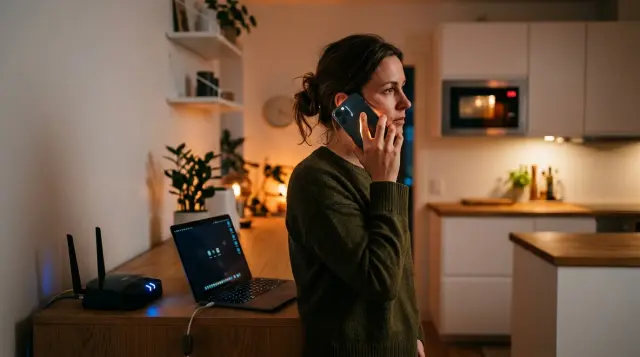
Let's start with the physics. Your phone communicates with cell towers using radio frequency (RF) electromagnetic radiation. It needs a clear signal path. When you slap a sticker or thin metallic disc on the back of your phone, one of two things happens. Either it does nothing measurable, or it partially blocks the signal and your phone compensates by cranking up its transmit power [1].
That second scenario is the dangerous one. According to the National Center for Health Research, some radiation shield products can actually increase your RF exposure because the phone works harder to maintain its connection [1]. The Federal Trade Commission took this seriously enough to fine a company called Cellphone Cop $32 million back in 2011 for making deceptive claims about their radiation-blocking products.
Then there are the EMF stickers that claim to "harmonize" or "neutralize" radiation. These fall into an even worse category. They have zero measurable effect on RF field strength. Not a reduction. Not an increase. Nothing. Independent testing with calibrated RF meters consistently shows no change in emissions [1]. It's like putting a "no rain" sticker on your umbrella.
Quick Q&A
Q: Can a phone radiation blocker sticker increase my EMF exposure?
A: Yes. If the sticker partially obstructs the antenna, your phone boosts its transmit power to maintain a signal, which can increase the SAR your body absorbs.
So if you're asking do cell phone radiation shields really work, the honest answer for the vast majority of products is no. The ones that use real shielding material (like silver-threaded Faraday fabric) can reduce exposure, but only if they're designed so the shielding sits between the phone and your body, not between the phone and the cell tower. That distinction matters enormously, and it's something we'll come back to.
Where Is EMF Strongest in Your Home?
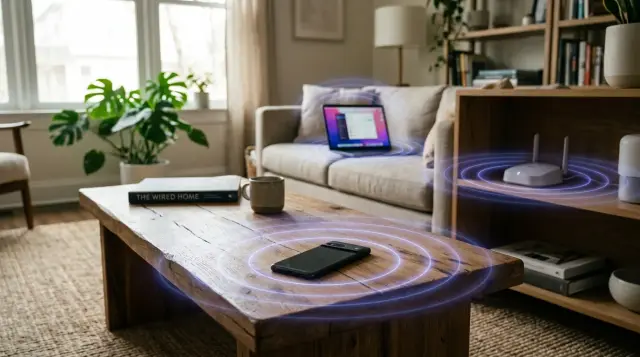
Your phone gets all the headlines, but it's far from the only electromagnetic radiation source under your roof. Let's map the real hotspots. I've measured dozens of homes with an RF meter (a Trifield TF2, if you're curious), and the pattern is remarkably consistent.
The single strongest RF source in most homes? The Wi-Fi router, when you're within about 3 feet of it. At that distance, readings commonly hit 10,000 to 50,000 microwatts per square meter. For reference, the BioInitiative Working Group's 2012 recommendation for long-term exposure was 1,000 microwatts per square meter. That's a significant gap. If your desk sits right next to your router, you're soaking in a lot of RF energy every workday.
Smart meters are another big one. According to the California Council on Science and Technology, smart meters emit RF bursts at up to 1 watt of power. These bursts are short (typically a few milliseconds) and happen a few times per minute on average, but the peak power is comparable to a cell phone transmitting at full strength. The catch? Many smart meters are mounted on bedroom walls. If your headboard shares a wall with your meter, that's worth addressing. Our guide on Low-EMF Home Design: A Complete Guide covers the best placement strategies.
Baby monitors, cordless phones (yes, people still have them), Bluetooth speakers, and microwave ovens all add to the mix. A microwave oven can leak RF at 2.45 GHz even when functioning within the FDA's allowable limit of 5 milliwatts per square centimeter at 5 cm distance. That's not a defect. It's the legal limit. So standing with your face pressed against the microwave door while your burrito heats up? Not ideal.
The single most effective radiation shield ever discovered costs nothing and requires no product at all. It's distance. Double your distance from any RF source, and you cut power density by 75%. Everything else is secondary to that one free, physics-based intervention.
How Much EMF Does a Cell Phone Really Emit?
Your cell phone's RF emissions depend heavily on what it's doing at any given moment. During a call with full signal bars, the SAR (specific absorption rate) is relatively low. In a weak-signal area where the phone is straining to reach a distant tower, it ramps up its transmit power significantly. The FCC caps SAR at 1.6 W/kg averaged over 1 gram of tissue [2], but real-world exposure fluctuates constantly.
Here's a concrete example. A 2019 study published in Environmental Research found that holding a phone against your ear produced SAR values near the FCC limit, while holding it just 15 cm away dropped exposure by over 80%. That's the inverse square law doing its thing. Double the distance, cut the field strength by about 75%. It's the single most effective "shield" there is. And it's free.
The International Agency for Research on Cancer (IARC), part of the World Health Organization, classified RF electromagnetic fields as Group 2B (possibly carcinogenic to humans) in 2011, based partly on data from the Interphone study and the Hardell group's research [3]. That classification doesn't mean "definitely causes cancer." It means there's enough evidence to warrant caution, especially for heavy phone users. For a deeper look at the biological mechanisms, check out RF Radiation and Cell Damage: What the Research Shows.
The bottom line on phones: your greatest exposure comes during calls held against your head, especially in low-signal areas. Speakerphone, wired earbuds, and texting instead of calling are all simple changes that dramatically cut your absorbed dose.

Does Your Wi-Fi Router Need to Be On 24/7?
Most people never even think about this. Your router broadcasts RF continuously, even at 3 AM when nobody's streaming anything. It sends out beacon frames roughly 10 times per second just to announce its existence to nearby devices. And if you've got a dual-band or tri-band router, multiply that by two or three.
A simple timer outlet (about $8 at any hardware store) can shut your router off during sleeping hours. That eliminates 6 to 8 hours of completely unnecessary electromagnetic radiation exposure every night. If you're skeptical about whether nighttime EMF affects sleep quality, our article on EMF Blocking for Better Sleep: What Actually Works covers the research. There's also a more comprehensive walkthrough in our EMF Blocking for Better Sleep: The Complete Guide.
Another option: just move the router. Seriously. If it's currently sitting on your desk two feet from your head, relocating it to a central hallway closet can cut your personal exposure dramatically while still giving you plenty of coverage throughout the house. According to data from Aaronia AG, a German RF measurement company, moving from 1 foot to 10 feet away from a typical home router reduces RF power density by roughly 99%.
For families with young children, this matters even more. The American Academy of Pediatrics wrote to the FCC in 2013 urging the agency to reassess RF exposure guidelines, noting that children absorb more RF energy per kilogram of body weight than adults due to thinner skulls and higher tissue water content.
What About Smart Meters and Appliance EMF?
Smart meters are a particularly interesting case because they've generated so much controversy. Utility companies point out (correctly) that the cumulative RF exposure from a smart meter over a full day is a tiny fraction of what you get from a single phone call. In terms of total energy delivered, that's true.
But the picture is more nuanced than that. The Electric Power Research Institute (EPRI) found in 2011 that smart meters emit RF bursts with peak power levels comparable to a cell phone, even though the duty cycle (time spent actually transmitting) is low. If your bedroom wall is within 3 feet of the meter, those short bursts happen all night long while you sleep. For some people, especially those who report electromagnetic hypersensitivity, this is a meaningful source of disruption.
Quick Q&A
Q: How do I reduce smart meter EMF in my bedroom?
A: Move your bed to the opposite wall, or install a Faraday-rated shielding paint (like YShield HSF54) on the interior wall facing the meter, then paint over it normally.
Kitchen appliances are another overlooked source, though mostly of extremely low frequency (ELF) magnetic fields rather than RF. A blender generates a strong magnetic field within about 12 inches while running. Same with a standing mixer, a garbage disposal, or an electric stove element. These fields drop off rapidly with distance. Simply not pressing your body against a running appliance for extended periods handles most of this exposure.
The bigger concern in kitchens is actually the microwave oven's RF leakage. The FDA mandates that microwave ovens can't exceed 5 milliwatts per square centimeter at 5 cm from the surface [4]. Older units with worn door seals can exceed this. A $30 RF meter from Amazon can tell you in seconds whether yours leaks. Step back 3 feet while it's running, and exposure becomes negligible.
What Actually Reduces Your EMF Exposure?
So if cell phone radiation blockers are mostly useless, what does work? Three things, in order of effectiveness: distance, time, and shielding.
Distance is king. The inverse square law means that doubling your distance from any RF source cuts power density to roughly one quarter. Moving your phone from your ear to a desk 2 feet away using speakerphone is one of the highest-impact changes you can make. Moving your router from your desk to a shelf across the room is another. These cost nothing.
Time matters too. A 2-minute phone call exposes you to a fraction of the RF energy of an hour-long call. Texting instead of calling, using Wi-Fi calling when you have strong Wi-Fi (so the phone transmits at lower power), keeping calls short. It all adds up. The cumulative dose over months and years is what researchers like those in the NTP (National Toxicology Program) study focused on when they found clear evidence of heart tumors in rats exposed to cell phone RF for two years.
Then there's shielding. Real shielding. Not a sticker. Properly engineered Faraday fabric, woven with silver or copper threads, can attenuate (reduce) RF by 30 to 60 dB depending on the material and construction. That translates to blocking 99.9% or more of incoming RF. This is the same principle used in hospital MRI rooms and military SCIF facilities. Proteck'd's Faraday EMF Collection uses silver-threaded fabrics that work on this exact principle. You can read more about how attenuation is measured and what the numbers mean in How Well Does Faraday Clothing Work?: What Attenuation Means for You.
The key difference between a Faraday garment and a phone sticker is design intent. A shirt or blanket with shielding fabric sits between the radiation source and your body. It doesn't interfere with your phone's ability to communicate with a tower. It just reduces the energy that reaches your skin and tissues. That's the correct approach, and it's how actual electromagnetic shielding has worked since Michael Faraday demonstrated the principle in 1836.
How Do You Fix Each Room, Practically?
Let me give you a room-by-room action plan, because I think that's way more useful than abstract advice.
Bedroom: This is where you spend a third of your life, so it's the highest priority. Put your phone on airplane mode or leave it charging in another room. If your smart meter is on the other side of the wall, either move the bed or apply shielding paint. Use a battery-powered alarm clock instead of your phone. Kill the Wi-Fi router on a timer. These four changes alone eliminate the vast majority of nighttime EM radiation exposure.
Home office: Hardwire your computer with an ethernet cable and disable its Wi-Fi adapter. Move the router at least 8 feet away, preferably into another room. Use a wired keyboard and mouse instead of Bluetooth. If you need your cell phone for calls, use a wired headset or speakerphone. For people who work from home full-time, the cumulative exposure difference between a fully wireless setup and a hardwired one is enormous over the course of a year.
Kitchen: Stand at least 3 feet from the microwave while it runs. Check door seals annually. Don't lean against a running dishwasher (the motor creates a strong ELF magnetic field). These are easy habits that become automatic within a week.
Living room: Smart TVs, gaming consoles, and streaming sticks all emit RF. You can disable Wi-Fi on most smart TVs and use a wired ethernet connection instead. For everything else, distance is your friend. Sitting 8 feet from a TV versus 3 feet makes a real difference in exposure. If you want personalized guidance on reducing EM radiation throughout your home, our EMF Protection Benefits page has more details. And if you're looking to try Faraday clothing without a big investment, the Proteck'd Sale page often has discounted options.
Do Cell Phone Radiation Shields Really Work If They Use Faraday Fabric?
This is where it gets nuanced. The answer depends entirely on design. A phone case that lines the back panel with Faraday fabric (the side facing your body when the phone is in your pocket) can meaningfully reduce the RF reaching your thigh or hip. It works because it shields the body-facing side while leaving the tower-facing side open for signal transmission.
This is fundamentally different from a full-enclosure case or an all-over sticker. If you wrap shielding around the entire phone, you create a partial Faraday cage. The phone detects the signal loss and ramps up its transmit power, sometimes to the maximum allowed. That means the small amount of RF that does leak through the imperfect cage is now at a higher power level. You've made things worse [1].
So the question "do cell phone radiation shields really work" has a split answer. Directional shields that use genuine conductive fabric (silver, copper, nickel) on one side of the phone can reduce body-side SAR by 50% or more. Full-enclosure products, stickers, and "harmonizing" chips do not work and may cause harm. Look for products that specify their attenuation in decibels and explain which direction they shield. If a product can't tell you its dB rating, walk away.
For body-worn shielding beyond phone cases, Faraday-rated clothing offers a more comprehensive approach. A silver-threaded shirt, for instance, provides shielding across your entire torso regardless of where the RF source is. Think of it as the difference between holding up a small shield versus wearing armor. The physics is the same either way, but the coverage is dramatically better.
Key Takeaways
Frequently Asked Questions
Do cell phone radiation shields really work?
Most don't. Stickers, chips, and "harmonizing" devices show no measurable effect on RF emissions in independent testing. Directional shields made with real Faraday fabric on the body-facing side of the phone can reduce SAR, but full-enclosure shields often backfire by forcing the phone to boost its transmit power.
Can an EMF phone case actually increase radiation?
Yes, it can. If the case blocks the signal path between your phone and the cell tower, the phone compensates by increasing its transmit power to the maximum. That means the RF leaking through is now at a higher intensity, potentially increasing your absorbed dose.
What is the safest distance to keep a cell phone from your body?
Most phone manufacturers recommend keeping the device at least 5 to 15 mm from your body, which is buried in the fine print of their SAR testing disclosures. In practice, using speakerphone or wired earbuds and keeping the phone at arm's length reduces SAR by over 80% compared to holding it against your ear.
How much EMF does a Wi-Fi router emit?
At 1 foot away, a typical home router can produce RF power densities of 10,000 to 50,000 microwatts per square meter. This drops fast with distance. At 10 feet, levels fall by roughly 99%, which makes router placement one of the simplest and most impactful changes you can make.
Are smart meters a significant source of EMF exposure?
Smart meters emit short RF bursts at up to 1 watt of peak power, comparable to a cell phone. The total daily energy output is low because the duty cycle is brief, but if the meter is mounted on a bedroom wall, the repeated nighttime bursts can add meaningfully to your cumulative exposure.
Does turning off Wi-Fi at night reduce EMF exposure?
Yes. Your router broadcasts beacon frames roughly 10 times per second even when nobody is using the internet. A simple outlet timer that cuts power during sleeping hours eliminates 6 to 8 hours of unnecessary RF exposure every night, adding up to thousands of hours over the course of a year.
What is Faraday fabric and how does it block EMF?
Faraday fabric is a textile woven with conductive threads, typically silver or copper, that reflects and absorbs electromagnetic radiation. Quality Faraday fabrics attenuate RF by 30 to 60 dB, which translates to blocking 99.9% or more of incoming radiation. It works on the same principle as the Faraday cage, first demonstrated in 1836.
Is it better to hardwire my computer or use Wi-Fi?
Hardwiring with an ethernet cable is always better for EMF reduction. It eliminates the RF emissions from your computer's Wi-Fi adapter entirely. For people who work from home 8 hours a day, the cumulative exposure difference between Wi-Fi and ethernet over a year is substantial.
Do microwaves leak radiation?
All microwaves leak some RF, but the FDA limits this to 5 milliwatts per square centimeter at 5 cm from the surface. Older units with worn door seals can exceed this limit. Standing 3 feet away while the microwave runs reduces your exposure to negligible levels regardless of the oven's condition.
What does the WHO say about cell phone radiation?
The International Agency for Research on Cancer (IARC), part of the WHO, classified RF electromagnetic fields as Group 2B, meaning possibly carcinogenic to humans, in 2011. This was based on limited evidence of increased glioma risk among heavy cell phone users, drawing on data from the Interphone study.
References
- U.S. Food and Drug Administration – The FCC limits cell phone SAR to 1.6 W/kg averaged over 1 gram of tissue.
- International Agency for Research on Cancer (WHO/IARC) – IARC classified RF electromagnetic fields as Group 2B (possibly carcinogenic to humans) in 2011.
- U.S. Food and Drug Administration – FDA mandates that microwave ovens cannot exceed 5 milliwatts per square centimeter at 5 cm from the surface.
About the Author
Proteck'd EMF Apparel
Health & EMF Specialists
The Proteck'd team covers EMF protection, silver-fiber apparel, and practical ways to reduce everyday radiation exposure. Every piece Proteck'd ships is designed, tested, and worn by the people who build it.
Get the Free EMF Home Audit Checklist
A room-by-room PDF that walks you through the biggest EMF sources in your house and what to do about each one. No cost, no fluff.
Download the Checklist →✓30-day returns✓Free shipping✓Free returns✓Silver fiber shielding


Laissez un commentaire