


Building a Streetwear Wardrobe From Scratch: The Practical Guide

Here's something nobody tells you when you're getting into streetwear: most people start by buying the wrong stuff. They grab a hyped hoodie here, an overpriced sneaker there, and six weeks later they're staring at a closet full of pieces that don't go together. The real foundation of a solid streetwear wardrobe isn't one grail piece. It's a well-curated tee collection that gives you options every single day.
I've watched friends blow hundreds of dollars chasing trends, only to realize months later that they can't put together a single coherent outfit. Meanwhile, someone with ten thoughtfully chosen tees and a few quality bottoms looks effortlessly put together every time they walk out the door. That's the gap between collecting clothes and building a wardrobe.
Streetwear grew out of 1980s LA skate culture and New York hip-hop. It was niche. Now it's global. The worldwide streetwear market hit roughly $187 billion in 2023, and it's still climbing. But the beauty of street style has always been accessibility. You don't need to spend like a celebrity to dress like you belong.
This guide is the practical playbook. We're going category by category, starting with your tee shirt collection and building out to bottoms, layers, kicks, and accessories. Whether you're 19 and putting together your first real wardrobe or 35 and finally ready to dress with intention, this is your starting line.
Streetwear isn't about spending the most or chasing every drop. It's about building a tee collection and wardrobe foundation where every piece works together, so getting dressed feels effortless instead of stressful.
- Start with 8 to 12 quality tees split 60/40 between neutral basics and graphic statement pieces
- Build around 25 to 30 total pieces across five categories: tees, bottoms, outerwear, sneakers, and accessories
- Stick to a three-to-four color core palette so everything in your wardrobe mixes and matches
- Prioritize fabric quality over brand names, aiming for 180 GSM or heavier cotton in your tees
- Layer intentionally with a maximum of three visible layers, letting one piece be the focal point per outfit
Why Should You Start With a Tee Collection?
Think about what you actually wear the most. For most people, it's a t-shirt. According to the U.S. Bureau of Labor Statistics 2022 Consumer Expenditure Survey, Americans spend roughly $1,945 annually on apparel, and a significant chunk goes to everyday basics like tees [1]. That makes your tee collection the backbone of your wardrobe. Not an afterthought.
The reason tees matter so much in streetwear specifically is versatility. A solid graphic tee works under an open flannel, beneath a bomber jacket, or completely on its own with the right pair of cargo pants. A clean blank tee in black or white? Even more flexible. You can dress it up, dress it down, or let it anchor a louder outfit without competing.
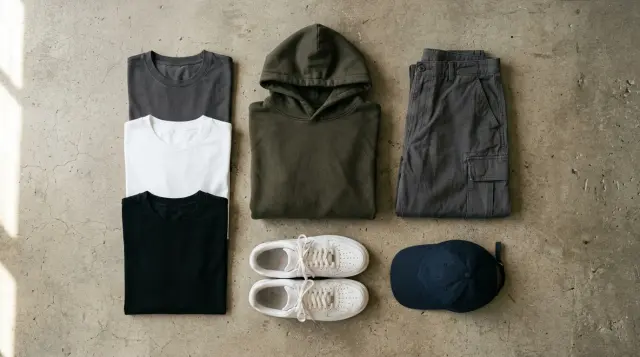
I'd recommend starting with 8 to 12 tees. Split them roughly 60/40 between basics and statement pieces. Your basics are your black, white, gray, and maybe olive or navy blanks in heavyweight cotton. Your statement pieces are the graphic tees, the bold prints, the shirts that say something about who you are. The Men's Proteck'd Collection is a great example of this balance, offering clean silhouettes alongside pieces with real design intention.
Quick Q&A
Q: How many tees do you actually need to start a streetwear wardrobe?
A: Aim for 8 to 12, split roughly 60% neutral basics and 40% graphic or statement tees, which gives you enough rotation for two weeks without repeating outfits.
Don't sleep on fabric weight either. A flimsy, thin tee looks cheap no matter what's printed on it. Look for 180 GSM (grams per square meter) or higher for that structured, slightly oversized drape that defines modern streetwear. Cotton and cotton-blend fabrics dominate the category for good reason. They breathe, they hold up, and they take prints beautifully.
What Bottoms Complete a Street Style Wardrobe?
Once your t-shirt lineup is set, bottoms are where things get interesting. Streetwear has always played with silhouette, and right now in 2024 we're in a wide-leg and relaxed-fit moment. Skinny jeans had their decade. Brands like Carhartt WIP, Dickies, and newer labels have pushed things toward looser cuts with more structure.
You need three to four pairs of pants to start. Here's what actually works: one pair of straight-leg or relaxed-fit jeans in a dark wash, one pair of cargo pants (black or olive), one pair of joggers or tech pants for casual days, and optionally a pair of chinos or trousers if you want to bridge into smart-casual territory. That last pair comes in handy if you ever need something more polished. We've actually covered that crossover in detail in our guide on What to Wear to a Business Meeting: The Complete Guide.
Fit matters more than brand. Seriously. A $40 pair of well-fitting cargos will outperform a $200 pair that bunches weird at the ankle. Try things on. Move around in them. Sit down. Streetwear is supposed to feel comfortable, and if your pants fight you every time you bend your knee, they're wrong no matter what the tag says.
For women building a streetwear rotation, the same principles apply but with more range. Wide-leg trousers, biker shorts paired with an oversized tee, structured cargo pants. All of it works. The Women's Proteck'd Collection pairs well with these kinds of relaxed, confident silhouettes.
How Do You Layer Streetwear Without Looking Overdone?
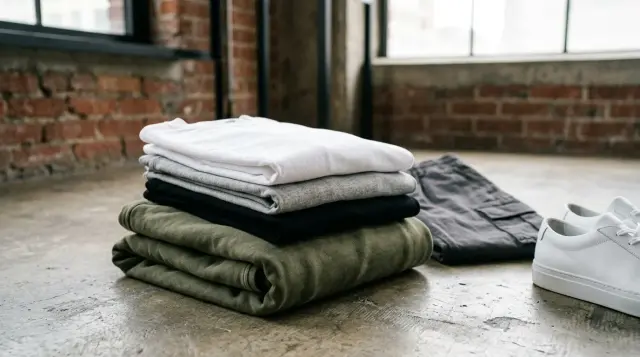
Layering is where streetwear separates itself from just wearing casual clothes. But there's a fine line between looking intentional and looking like you put on everything you own. The rule I follow is simple: no more than three visible layers at a time. A tee, an open shirt or lightweight jacket, and an outer layer. That's it.
Your first layer is always your tee shirt. This is literally why building a strong shirt collection matters so much. If your base layer is boring or ill-fitting, no jacket in the world saves the outfit. Second layer? Something like a flannel, a hoodie, or an overshirt. Third layer for colder months is a bomber, coach jacket, denim jacket, or parka.
Japanese streetwear brands like WTAPS and Neighborhood have mastered this three-layer formula, and it's been a staple since the early 2000s Harajuku scene. The idea is that each layer should be visible and intentional. Wearing a hoodie under a jacket? Let the hood show. Your tee has a graphic? Leave the overshirt unbuttoned so it's visible.
For something that bridges style and function, the Faraday Fashion Collection offers pieces that work as standalone statements or as layering elements. And if you're putting all of this together on a budget, we've got a full breakdown in How to Build a Streetwear Wardrobe on a Budget: Step by Step.
Quick Q&A
Q: What's the biggest layering mistake beginners make in streetwear?
A: Wearing too many competing statement pieces at once, which creates visual noise instead of a cohesive outfit. Stick to one focal point per look and keep other layers more subdued.
Which Sneakers Should You Buy First?
Footwear can make or break a streetwear outfit. It's also where people overspend the fastest. Before you start chasing limited drops on StockX or GOAT, take a breath. You need two to three pairs to start, and none of them have to be rare.
Pair one: a clean, versatile sneaker in white or off-white. The Nike Air Force 1 Low has held this position since 1982 for a reason. It goes with everything. Pair two: something with more personality. Think New Balance 550s, Adidas Samba OGs, or a Nike Dunk in a colorway you love. Pair three is optional early on. A boot or high-top for colder months. Dr. Martens 1460s and Nike Air Force 1 Highs both work well here.
According to research published by the American Academy of Podiatric Sports Medicine, wearing properly fitted athletic footwear reduces lower extremity injuries significantly [2]. This matters because streetwear sneakers aren't just for show. You're walking in them all day. Comfort and support should rank right alongside looks when you're choosing.
One more thing. Keep your sneakers clean. A $90 pair of white Air Forces that are spotless will always look better than a $300 pair of Jordans that are scuffed and yellowed. A quick wipe-down after each wear goes a long way. Jason Markk cleaning kits or even just warm water and a soft brush do the job.
How Do Accessories Tie a Streetwear Outfit Together?
Accessories in streetwear aren't an afterthought. They're the punctuation on your outfit. A hat, a bag, or even the right pair of socks can take a simple tee-and-cargos combo from "I just got dressed" to "I thought about this." You don't need a lot of them, either.
Start with a cap. A five-panel or dad hat in black, navy, or a muted tone works with almost everything. Next, consider a crossbody bag or sling. Carhartt WIP and Uniqlo make affordable options, while higher-end picks from Acronym or Porter have become streetwear icons in their own right. A simple silver chain or a wristwatch adds texture without screaming for attention.
Socks might sound trivial, but visible socks are a real styling detail in streetwear. Nike crew socks in white are the default for a reason, though brands like Stance and Anonymous Ism offer patterns that add flavor. The key is intentionality. Every piece you add should look like a choice, not an accident.
For a deeper look at figuring out what resonates with your personal taste, check out Finding Your Personal Style: Without Spending a Fortune. Knowing the categories is one thing. Knowing which pieces actually feel like you is something else entirely.
What's the Best Way to Build a Capsule Streetwear Wardrobe?
A capsule wardrobe means owning fewer pieces that all work together. Applied to streetwear, that's roughly 25 to 30 items total across your tees, bottoms, outerwear, shoes, and accessories. Not a lot. That's the point. Every piece earns its spot.
Here's a real example. My friend Marcus rebuilt his entire wardrobe after a move. He started with 10 tees (six blanks, four graphics), three pairs of pants, two jackets, two pairs of sneakers, and a handful of accessories. Total cost came in under $800 because he prioritized quality basics over hype. Six months later, he hadn't felt the need to add a single piece.
The concept traces back to designer Donna Karan's "Seven Easy Pieces" philosophy from 1985, but it applies perfectly to urban fashion. When you're strategic about color palette and fit, a small wardrobe creates dozens of outfit combinations. Stick to a core palette of three to four colors and let everything mix freely. Black, white, olive, and one accent color is a bulletproof formula.
Our guide on What Every Man Should Own: Ranked by Importance ranks wardrobe essentials by versatility and daily use, which is a helpful lens when you're deciding what makes the cut and what doesn't.
Does Fabric Quality Actually Matter in Streetwear?
Yes. Full stop. It matters more than most beginners realize. The difference between a $12 fast-fashion tee and a $35 quality tee is obvious after exactly one wash. Cheap shirts lose their shape, fade unevenly, and start pilling at the seams. A well-made shirt in heavyweight cotton actually gets better with wear.
According to research from the Sustainable Apparel Coalition, the environmental impact of clothing is significantly reduced when garments are worn at least 30 times before disposal [3]. Quality fabric makes that possible. When your tee collection is built on durable materials, you're not replacing shirts every season. You're buying once and wearing them for years.
Look for details like double-stitched hems, reinforced necklines, and pre-shrunk fabrics. These aren't luxury features. They're markers of a brand that cares about longevity. Cotton weights of 180 to 220 GSM feel substantial without being stiff, and a slight texture to the weave indicates better raw material.
Also worth considering: what tech-forward fabrics can do for you. The Faraday Fashion Collection from Proteck'd incorporates EMF-shielding properties into everyday streetwear silhouettes. It's a fascinating example of function meeting urban fashion. You look good and you get genuine technical performance built into the garment.
How Do You Avoid Common Streetwear Beginner Mistakes?
Mistake number one: buying based on brand name alone. A Supreme box logo doesn't automatically make an outfit good. I've seen guys in head-to-toe branded gear look worse than someone in a well-fitted plain tee and clean sneakers. Streetwear is about how you wear it, not what label is on it.
Mistake number two: ignoring fit. The oversized look is in, but there's a difference between intentionally oversized and "I grabbed the wrong size." According to a 2021 survey by fashion analytics platform Edited, oversized and relaxed-fit searches increased by 94% compared to 2019, confirming the trend is real [4]. But the proportions still have to make sense on your body. If your tee is oversized, balance it with tapered or straight-leg pants. If your pants are wide, keep the top half more fitted.
Mistake number three: chasing every trend. Remember when everyone suddenly needed a Bape shark hoodie? Or when Travis Scott's reverse swoosh Jordans sent resale prices through the roof? Trends move fast. Your wardrobe shouldn't be built on things that feel dated in six months. Build the foundation first with timeless pieces, then add trendy items sparingly.
Mistake number four: neglecting care. Wash your graphic tees inside out on cold. Air dry anything you want to keep in shape. Store sneakers properly. These small habits extend the life of every piece and keep your rotation looking fresh way longer than the average person's.
Frequently Asked Questions
About 25 to 30 total pieces will give you a fully functional streetwear wardrobe. That breaks down to roughly 10 tees, 4 bottoms, 3 outerwear pieces, 3 pairs of shoes, and a handful of accessories. Enough variety for daily rotation without unnecessary clutter.
A 60/40 split works really well. About 60% of your shirts should be neutral-colored basics in black, white, gray, and similar tones. The other 40% should be graphic or statement tees that add personality. This ratio keeps your outfit options wide open.
You can build a solid starting wardrobe for $500 to $1,000 if you shop smart. Put more money toward outerwear and sneakers since those take the most visible wear and tear. Tees and basics can be more affordable without losing quality, as long as you know what fabric weights to look for.
Aim for 180 GSM or higher. Lightweight tees under 150 GSM tend to feel flimsy and lose their shape after washing. Heavyweight cotton between 200 and 220 GSM gives you that structured, slightly boxy drape that defines modern street style.
Depends on your workplace, but many streetwear pieces translate well into smart-casual settings. Clean sneakers, fitted chinos, and a quality blank tee under a structured jacket can read as polished while keeping that streetwear DNA. Just avoid overly loud graphics in professional environments.
Black, white, gray, and olive form the strongest base palette. These neutrals mix freely and let you add one or two accent colors, like burgundy or rust, for variety. Sticking to a three-to-four color core makes throwing outfits together almost automatic.
No. They overlap, but they're distinct. Athleisure centers on athletic-inspired comfort wear like leggings and moisture-wicking fabrics. Streetwear draws from skate, surf, and hip-hop culture, emphasizing graphic tees, sneakers, and looser silhouettes. You can blend elements of both, but their roots and aesthetics are different.
Wash graphic tees inside out on cold water and air dry them whenever possible. Clean sneakers after every few wears with a soft brush and mild cleaner. Store hats on a rack or shelf instead of cramming them into drawers. These small habits dramatically extend the lifespan of your wardrobe.
Start with one clean, versatile white sneaker like the Nike Air Force 1 Low. Then add one with more character, like a New Balance 550 or Adidas Samba. A third pair for cold weather, such as a boot or high-top, rounds things out. You don't need rare or expensive shoes to build great outfits.
Neither exclusively. The smartest approach is mixing quality mid-range pieces with a few investment items. A well-made $40 tee often looks just as good as a $120 designer version, especially in basics. Spend more on outerwear, sneakers, and standout pieces where construction differences are actually noticeable.
References
- American Academy of Podiatric Sports Medicine (Harvard Health Publishing) – Wearing properly fitted athletic footwear reduces lower extremity injuries significantly
- Sustainable Apparel Coalition via Nature – The environmental impact of clothing is significantly reduced when garments are worn at least 30 times before disposal
- Edited Fashion Analytics (referenced via industry reporting) – Oversized and relaxed-fit searches increased by 94% in 2021 compared to 2019
About the Author
Proteck'd EMF Apparel
Health & EMF Specialists
The Proteck'd team covers EMF protection, silver-fiber apparel, and practical ways to reduce everyday radiation exposure. Every piece Proteck'd ships is designed, tested, and worn by the people who build it.
Get the Free EMF Home Audit Checklist
A room-by-room PDF that walks you through the biggest EMF sources in your house and what to do about each one. No cost, no fluff.
Download the Checklist →✓30-day returns✓Free shipping✓Free returns✓Silver fiber shielding


Laissez un commentaire