


How to Build a Streetwear Wardrobe on a Budget: Step by Step

Here's a number that might sting: the global streetwear market hit roughly $187 billion in 2023, according to Allied Market Research. That's a staggering amount of money flowing through an industry that literally grew out of skate parks and DIY culture. And somewhere along the way, people started believing you need to drop $300 on a hoodie to earn your spot. You don't. A great puffer coat, a few clean basics, and some actual strategy will carry you further than any single hyped release ever could.
I've watched friends blow entire paychecks on one drop, then rotate the same three outfits for six months because they had nothing left to pair with their grail piece. That's not a wardrobe. That's a shrine to one item. Real streetwear style comes from how you put things together, not from any single price tag.
The Bureau of Labor Statistics says the average American household spends about $1,945 per year on clothing [1]. If you're thoughtful about it, you can carve out a solid streetwear rotation for a fraction of that. The trick is knowing where your money actually matters and where it's just paying for a logo.
This guide walks you through the whole process, step by step. We'll cover foundational pieces, the layering game, how to shop smarter, and where brands like Proteck'd fit into a budget-conscious strategy. Let's get into it.
What Are the Core Pieces Every Streetwear Wardrobe Needs?
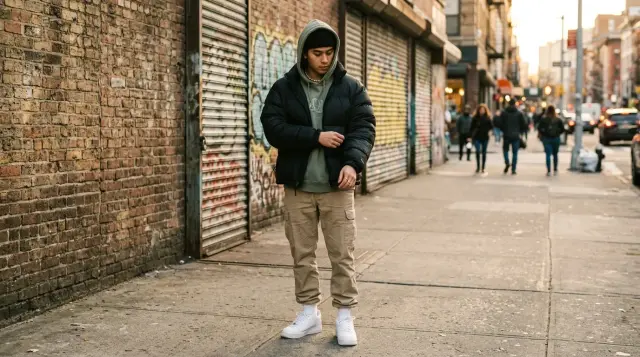
Before you buy a single thing, you need a blueprint. Think of your wardrobe like a playlist. You don't need 500 songs. You need 25 to 30 that all work together. According to capsule wardrobe research from fashion programs at institutions like Parsons School of Design, that range can produce over 100 distinct outfit combinations. Start with the foundation: oversized tees in neutral tones, well-fitting joggers or cargo pants, one or two quality hoodies, a solid pair of sneakers, and a go-to outerwear piece like a puffer coat or quilted jacket.
The mistake most people make? They start with the flashiest piece first. Don't. Your first purchases should be the boring stuff. Three to four tees in black, white, olive, and grey. Two pairs of pants that fit well. One hoodie. These are the pieces that make everything else in your closet actually function.
If you want basics that punch above their weight, the Men's Proteck'd Collection has options that blend clean streetwear aesthetics with functional fabric technology. Same goes for the Women's Proteck'd Collection, which carries pieces designed to layer without adding bulk.
Quick Q&A
Q: How many pieces do you actually need to start a streetwear wardrobe?
A: Most capsule wardrobe experts recommend starting with 25 to 30 versatile pieces, which can generate well over 100 unique outfits when mixed intentionally.
Once your foundation is locked in, then you add personality. A graphic tee from a brand you genuinely care about. A hat. A bag. But those come later. Foundation first. Always.
Why Is a Puffer Coat the Smartest Outerwear Investment for Streetwear?
If I had to pick one outerwear piece for a budget streetwear wardrobe, it's the puffer coat every single time. Here's why. A padded jacket works across seasons (spring nights, fall days, full winter if you get the right fill weight), layers over literally anything, and carries that oversized silhouette streetwear thrives on. Brands like The North Face turned the puffy jacket into a streetwear icon during the '90s New York scene, and it's never really gone away.
You don't need to spend $400 on a designer version, either. According to Consumer Reports' 2023 outerwear review, synthetic insulation in modern budget puffer coats performs nearly as well as down in temperatures above 20°F, which covers most urban winter scenarios. Look for a water-resistant shell with a 600-fill-power equivalent synthetic fill, and you'll stay warm without the premium price.
The key is buying off-season. Shopping for a quilted jacket in March or April, when retailers are clearing winter stock, can save you 40 to 60 percent compared to buying in November. I picked up one of my favorite insulated coats for $45 in late February. The exact same model was $110 the following October. Patience pays, plain and simple.
For something that bridges the gap between tech-forward and street-ready, check out the Faraday Fashion Collection. It's a different approach to outerwear that you won't find at every mall store. And honestly, that's kind of the point when you're building a wardrobe with personality.
Real streetwear style was never about the price tag. It was about the eye. A $30 outfit put together with intention will always outperform a $300 piece worn without a plan.
How Do You Layer Streetwear Without Looking Overdressed?
Layering is the secret weapon of affordable street style. It's also where most beginners trip up. The golden rule is simple: each layer should be visible and intentional. That means your base tee peeks out below your hoodie, and your hoodie sits right under your jacket's collar. Think of it as stacking frames in a painting. Every edge matters.
A practical example: black oversized tee, grey crewneck sweatshirt, olive bomber or lightweight padded jacket on top. Three pieces, three tones, instant depth. The whole outfit might cost you $80 if you shop smart. Compare that to a single $200 designer hoodie worn with nothing else interesting happening around it.
We've written about this idea before in our guide on How to Look Put Together in Sweats: What Makes the Difference. The big takeaway? Fit and proportion matter more than brand names. A $20 hoodie that fits your body well will outperform a $150 one that's too tight in the shoulders. Every time.
Also, don't sleep on accessories as a layering tool. A beanie, a crossbody bag, or a simple chain can add a whole new dimension without requiring another full garment. Our piece on Accessories That Elevate Any Outfit: What to Actually Buy breaks this down in detail.

Where Should You Actually Shop for Budget Streetwear?
Let's get specific. Amazon has over 10,000 results when you search for a puffer jacket, and while some of those are genuinely decent (Amazon Essentials' lightweight water-resistant padded jacket runs about $35 to $50 and has solid reviews), a lot of it is disposable fast fashion that'll pill after two washes. The trick is reading fabric composition. Look for at least a 60/40 cotton-poly blend on basics, and check for reinforced stitching on outerwear.
Thrift stores are still criminally underrated for streetwear. Goodwill's online auction site, ShopGoodwill.com, regularly has vintage Nike, Carhartt, and Champion pieces for under $15. Depop and Grailed are great for specific searches, though prices have crept up as resale culture has gone mainstream. According to ThredUp's 2023 Resale Report, the secondhand market grew 28 percent faster than the broader retail clothing market [2].
Then there are brands doing interesting things at accessible price points. Proteck'd is a good example. Their pieces incorporate functional technology like EMF-shielding Faraday fabric into streetwear silhouettes, which means you're getting something genuinely different. Not just another blank tee with a markup. Worth exploring if you're building a wardrobe that says something beyond "I followed a trend."
End-of-season sales at places like Uniqlo, H&M's Divided line, and ASOS are your friends for commodity basics. But for anchor pieces, the ones people actually notice, invest a little more in brands with better construction. The cost-per-wear math always favors the piece that lasts three years over the one that lasts three months.

How Do You Find Your Personal Streetwear Style on a Budget?
This is where things get fun. It's also where most budget guides fall short. They tell you what to buy but never who you're dressing as. Streetwear has subcultures within subcultures. There's techwear (utilitarian, all-black, lots of zippers). There's skate-influenced (looser fits, graphic-heavy). There's the minimalist Japanese approach (clean lines, muted tones, impeccable proportions). You don't need to pick just one lane, but knowing what draws your eye saves you from buying things you'll never actually wear.
I'd recommend spending an hour on Pinterest or Instagram before spending a dollar anywhere. Create a mood board. You'll start noticing patterns in what attracts you: certain color palettes, certain silhouettes, certain vibes. That becomes your shopping filter. If your mood board is full of earth tones and relaxed fits, you don't need that neon windbreaker, no matter how cheap it is.
We covered this process in depth in Finding Your Personal Style: Without Spending a Fortune. The core idea is that style clarity saves money. When you know what you want, you stop impulse-buying things that don't fit your vision.
Quick Q&A
Q: What's the biggest money mistake people make when building a streetwear wardrobe?
A: Buying trendy statement pieces before establishing a base of versatile basics, which leads to a closet full of items that don't work together.
Can Streetwear Actually Work in Professional Settings?
This question comes up more than you'd think, especially as dress codes keep relaxing in industries from tech to creative agencies. According to a 2023 Society for Human Resource Management (SHRM) survey, roughly 50 percent of U.S. companies have adopted a casual or business-casual dress code, up from 32 percent in 2014 [3]. That opens the door for streetwear elements to show up in places they never could before.
The trick is restraint. A clean pair of joggers in a structured fabric, a fitted crewneck, and minimalist sneakers can read as "intentional casual" rather than "rolled out of bed." Swap the insulated jacket for a tailored overcoat on meeting days, and you're code-switching without abandoning your aesthetic. Our guide on What to Wear to a Business Meeting: The Complete Guide covers this crossover in more depth.
Here's another argument for building your streetwear wardrobe on a budget. When your closet has range, you don't need a completely separate set of "work clothes." You just recombine. That black tee works under a blazer. Those cargo pants work with a button-down. Your clean white sneakers work everywhere. One wardrobe, multiple contexts. That's real efficiency.
What's the Best Season-by-Season Buying Strategy?
Timing your purchases is one of the most underrated budget moves in fashion. Here's a rough calendar that's saved me hundreds over the years. January through March: buy winter outerwear like puffer coats and insulated jackets at clearance prices. April through May: stock up on lightweight hoodies and transitional layers. July through August: grab shorts and tees during mid-summer sales. October: buy sneakers, as major brands like Nike and Adidas tend to run promotions around back-to-school and early holiday shopping.
According to Adobe Analytics' 2023 holiday shopping data, online apparel discounts peaked at an average of 25 percent off during Cyber Week, but specific categories like outerwear saw discounts as high as 45 percent [4]. If you can plan ahead and buy your padded jacket or quilted coat before you actually need it, you'll come out way ahead.
A practical approach: set a monthly streetwear budget of $50 to $75. That's $600 to $900 per year, well below the national average household apparel spend, and more than enough to build a strong rotation if you're strategic about it. Each month, add one or two pieces. By month six, you've got a solid capsule. By month twelve, you're rotating outfits that look like you spent twice what you actually did.
The patience game is hard. I get it. When you see a piece you love, you want it now. But discipline is the difference between someone who looks good occasionally and someone who looks good consistently. Build slowly. Build smart.
How Do You Take Care of Streetwear So It Lasts Longer?
All the budget strategy in the world doesn't matter if your clothes fall apart after a few months. Garment care is the unsexy part of fashion that nobody wants to talk about, but it's where budget shoppers either win or lose. The American Cleaning Institute recommends washing most cotton and synthetic-blend garments in cold water, which reduces shrinkage by up to 5 percent and preserves color significantly longer than hot water cycles.
For graphic tees, always wash inside out. For hoodies and sweatshirts, zip up any zippers before tossing them in the machine to prevent snags. For your puffer coat or insulated outerwear, use a front-loading washer on a gentle cycle with a small amount of liquid detergent (powder can clump in the baffles). Toss two clean tennis balls in the dryer on low heat to re-fluff the fill. That's it. That's the whole secret to keeping a quilted jacket looking fresh for years.
Storage matters too. Don't hang your knit pieces. They'll stretch out at the shoulders. Fold them. Hang your outerwear and structured pieces. And for the love of everything, don't leave your sneakers in a pile by the door. Use a shoe rack or stuff them with newspaper to hold their shape. These small habits add months, sometimes years, to the life of your clothes.
Key Takeaways
Frequently Asked Questions
How much does it cost to build a streetwear wardrobe from scratch?
You can build a solid starting rotation for $300 to $500 if you shop strategically. That covers five to seven basics, a pair of sneakers, and one quality outerwear piece like a puffer coat bought off-season. Adding pieces monthly at $50 to $75 builds a full capsule within a year.
What is the most important piece in a streetwear wardrobe?
A versatile outerwear piece, typically a puffer coat or bomber jacket, tends to anchor most streetwear outfits. It's the first thing people see, it defines your silhouette, and it layers over almost anything in your closet. Invest here even if you save everywhere else.
Is it worth buying streetwear from Amazon?
It can be, but you need to be picky. Amazon Essentials offers surprisingly decent basics like lightweight padded jackets for under $50. Always check fabric composition and reviews carefully, though, because quality varies wildly across sellers.
How many outfits can you make from 25 streetwear pieces?
A well-planned capsule of 25 to 30 pieces can generate over 100 unique outfits. The key is choosing items in complementary colors and versatile silhouettes so that nearly any combination works together.
When is the best time to buy a puffer coat?
Late February through April is the sweet spot. Retailers are clearing winter inventory, and discounts of 40 to 60 percent are common. Buying off-season is one of the simplest ways to save on quality outerwear.
Can you wear streetwear to work?
Yes, in many workplaces. About 50 percent of U.S. companies now allow casual or business-casual dress codes, according to SHRM. Clean sneakers, structured joggers, and minimal streetwear pieces can absolutely work in creative and tech settings.
What colors should you start with for a budget streetwear wardrobe?
Black, white, grey, and olive are the four most versatile starting colors. They mix with each other seamlessly and serve as a neutral base for adding bolder accent pieces later. Starting neutral maximizes your outfit combinations per dollar spent.
How do you wash a puffer coat without ruining it?
Use a front-loading washer on a gentle cycle with liquid detergent, not powder. Dry on low heat with two clean tennis balls to restore loft. Skip dry cleaning, which can strip the water-resistant coating on the shell fabric.
What's the difference between down and synthetic fill in a puffer jacket?
Down is lighter and warmer per ounce but costs more and loses insulation when wet. Synthetic fill is heavier but performs better in damp conditions and costs significantly less. For most urban streetwear use, synthetic is the smarter budget pick.
Is thrifting a good way to build a streetwear wardrobe?
Absolutely. Thrift stores and online resale platforms like Depop and Grailed are excellent for finding vintage streetwear pieces at a fraction of original retail. The secondhand market is growing 28 percent faster than traditional retail, which means more inventory is available than ever.
About the Author
Proteck'd EMF Apparel
Health & EMF Specialists
The Proteck'd team covers EMF protection, silver-fiber apparel, and practical ways to reduce everyday radiation exposure. Every piece Proteck'd ships is designed, tested, and worn by the people who build it.
Get the Free EMF Home Audit Checklist
A room-by-room PDF that walks you through the biggest EMF sources in your house and what to do about each one. No cost, no fluff.
Download the Checklist →✓30-day returns✓Free shipping✓Free returns✓Silver fiber shielding


Laissez un commentaire