


Chronic Inflammation: How to Reduce It

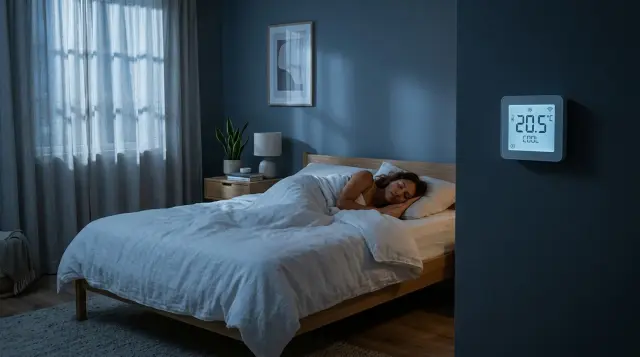
Here's something most people never consider when they're trying to fight chronic inflammation: how warm their bedroom is. We'll spend hours researching turmeric supplements and anti-inflammatory diets (both worthwhile, for the record), but the room we sleep in every night might be quietly working against us. So what is optimal sleep temperature, and why does it matter for inflammation? For most adults, it's somewhere between 60 and 67°F [1].
That probably sounds cold. I thought so too. When I first started sleeping in a cooler room, I figured I'd be miserable. But within a week? Falling asleep faster. Waking up less. Noticeably less stiffness in the morning. The link between your sleep environment and systemic inflammation is more direct than most people realize.
Your body temperature follows a circadian rhythm, dropping roughly 2°F as you transition into sleep [2]. When your bedroom fights that natural decline, you don't just toss and turn. You trigger stress hormones. You cut into the deep sleep stages where tissue repair and immune regulation actually happen. Stretch that pattern over weeks and months, and you've got a recipe for chronic, low-grade inflammation that never fully resolves.
This isn't a comfort issue. It's a biology issue. And the good news? Adjusting your sleep environment is one of the simplest, cheapest things you can do for your long-term health. Let's look at exactly how this works, what the research actually shows, and how to set up your bedroom so your body can do its overnight repair work properly.
Your thermostat is an inflammation dial you can actually control. Unlike genetics or environmental pollutants, bedroom temperature is entirely in your hands, and adjusting it costs nothing.
- The optimal sleep temperature for most adults is 60 to 67°F, supporting the natural 2°F core body temperature drop that initiates deep sleep.
- Sleeping in rooms above 75°F elevates cortisol, reduces REM sleep by up to 20%, and raises inflammatory markers like CRP and IL-6.
- Infants need 68 to 72°F; adults over 65 do best at 65 to 68°F with breathable bedding.
- A warm shower 90 minutes before bed accelerates the natural cooling process and can help you fall asleep up to 10 minutes faster.
- Temperature is one factor; combining it with darkness, EMF reduction, consistent sleep duration, and dietary timing creates the strongest anti-inflammatory effect.
How Does Bedroom Temperature Affect Sleep and Inflammation?
Your body doesn't just "turn off" when you fall asleep. It enters a carefully choreographed sequence of repair work, and temperature is one of the main conductors. According to research published by the National Institutes of Health, your hypothalamus regulates core body temperature as part of your circadian rhythm, signaling the release of melatonin as your temp drops in the evening [2]. If your bedroom is too warm, that signal gets scrambled.
When your room sits above 75°F, your body struggles to shed heat. The result: more time spent awake, more fragmented sleep architecture, and significantly less time in slow-wave sleep (the deepest, most restorative stage). A study published in the journal Sleep found that elevated ambient temperature reduced REM sleep by up to 20% and increased overnight wakefulness [3].
This is where inflammation enters the picture. Poor sleep quality elevates cortisol, your primary stress hormone. Chronically elevated cortisol raises C-reactive protein (CRP) and interleukin-6 (IL-6), both well-established markers of systemic inflammation. It becomes a feedback loop: bad sleep drives inflammation, and inflammation makes it harder to sleep well. For a deeper look at what disrupts your nightly recovery, check out Why You Can't Sleep: What the Science Says.
Quick Q&A
Q: Can sleeping in a hot room cause inflammation?
A: Yes. Rooms above 75°F disrupt deep sleep and elevate cortisol, which raises inflammatory markers like CRP and IL-6 over time.
Think of your thermostat as an inflammation dial you can actually control. Unlike genetics or environmental pollutants, this one is entirely in your hands. And unlike a supplement that runs $40 a month, adjusting your room temperature costs you nothing.
What Is the Best Sleeping Temperature for Different Age Groups?
The 60 to 67°F range works well for most healthy adults, but it's not one-size-fits-all. Babies, older adults, and people managing certain health conditions each have slightly different sweet spots. Getting this wrong isn't just uncomfortable. For infants, it can be dangerous.
The American Academy of Pediatrics (AAP) recommends keeping infant sleep environments between 68 and 72°F. Babies can't regulate their body temperature as efficiently as adults, and overheating is a recognized risk factor for sudden infant death syndrome (SIDS). A good rule of thumb: dress your baby in one more layer than you'd wear comfortably in the same room. No heavy blankets. No hats indoors.
For adults over 65, thermoregulation naturally becomes less efficient. Research from Harvard Medical School notes that older adults often have a blunted temperature rhythm, meaning their core temp doesn't drop as sharply at night. A room set to 65 to 68°F, paired with breathable bedding, tends to work well for this group. Going too cold can increase blood pressure and joint stiffness, so you don't want to overcorrect.
If you're someone who runs hot due to hormonal changes (perimenopause or menopause, for example), you might benefit from the lower end of the range. Cooling pillows, moisture-wicking sheets, and layered blankets you can kick off all help. I've talked to women who swear that dropping their room temp by just 3 degrees cut their night sweats in half. The Proteck'd Women's Wellness Collection offers sleepwear designed with temperature regulation in mind, which can complement a cooler bedroom setup nicely.
What Happens When Your Bedroom Is Too Hot or Too Cold?
Too hot is the more common culprit, especially in summer or for people who pile on heavy comforters year-round. When the ambient temperature climbs above 75°F, your body ramps up sweating to cool itself. That's active work, and it pulls you out of deeper sleep stages. You might not fully wake up, but your sleep becomes shallow and broken. Stretch that pattern over time and you're driving up inflammation while weakening immune function.
According to the Cleveland Clinic, sleeping in an overheated room can also increase heart rate and reduce heart rate variability (HRV), a key indicator of nervous system balance [1]. Lower HRV is associated with higher inflammatory burden and greater cardiovascular risk. If you track your sleep with a wearable, you've probably noticed your worst HRV scores land on the hottest nights. That's not a coincidence.
Sleeping too cold has its own problems, though they're less studied. When your room drops below 55°F without adequate bedding, your body constricts blood vessels to preserve heat. This can raise blood pressure, increase muscle tension, and make it harder to fall asleep in the first place. For most people, though, the bigger risk is sleeping too warm rather than too cold.
The real goal is finding your personal best bedroom temperature for sleep. Some people thrive at 62°F. Others need 66°F. Start at 65°F and adjust by a degree or two over a few nights. Pay attention to how you feel in the morning, not just how you feel when you're pulling up the covers at 10 p.m. For a complete set of practical adjustments, see our How to Sleep Better Tonight: The Complete Checklist.
How Does Body Temperature Circadian Rhythm Work During Sleep?
Your core body temperature isn't static. It follows a predictable 24-hour cycle governed by your suprachiasmatic nucleus (SCN), the brain's master clock. Temperature peaks in the late afternoon, around 98.6°F for most people, and hits its lowest point around 4 to 5 a.m., dropping to roughly 96.4°F [2]. That decline is one of the strongest signals your brain uses to start and maintain sleep.
Melatonin plays a role here too. As melatonin rises in the evening, it promotes vasodilation, the widening of blood vessels in your hands and feet. This pushes heat away from your core toward your extremities, speeding up the temperature drop. That's why warm hands and feet but a cool core is actually the ideal state for falling asleep quickly. Sounds backward, but it works.
When your environment disrupts this process (whether through a hot bedroom, blue light exposure delaying melatonin, or late-night intense exercise), your thermoregulation gets thrown off. The downstream effects ripple into sleep quality, hormonal balance, and inflammatory regulation. It's all connected. If you want to understand the broader system, our article on Human Performance: What It Is, What Works, What Doesn't covers how sleep temperature fits into the bigger performance picture.
One practical trick from sleep researcher Dr. Matthew Walker at UC Berkeley: take a warm bath or shower about 90 minutes before bed. It sounds counterintuitive, but the rapid cooling effect afterward mimics your natural temperature drop and can help you fall asleep up to 10 minutes faster. Your body gets the signal that it's time to wind down.
How Cold Should Your Room Be to Reduce Chronic Inflammation?
If you're specifically targeting inflammation, the temperature recommendation stays the same (60 to 67°F), but the reasoning goes deeper. Chronic inflammation is driven by a handful of measurable biomarkers, primarily CRP, IL-6, and TNF-alpha. Multiple studies have shown that short sleep duration and poor sleep quality significantly elevate all three [4].
A 2010 study published in the journal Sleep by researchers at the University of California, Los Angeles found that even modest sleep disturbance (losing just 2 hours relative to normal) produced a measurable spike in IL-6 and TNF-alpha the following day. Now imagine that disturbance happening every night because your room is 5 degrees too warm. Over months, that's a sustained inflammatory load your body never gets a break from.
Gut health is tangled up in this too. Your gut microbiome follows its own circadian patterns, and disrupted sleep alters microbial composition in ways that promote intestinal permeability, sometimes called "leaky gut." That lets bacterial endotoxins enter the bloodstream, triggering more inflammation. If you're working on your gut alongside your sleep, our Gut Health: The Complete Guide is a solid companion piece.
Quick Q&A
Q: What is optimal sleep temperature for reducing inflammation specifically?
A: The same 60 to 67°F range applies, because that range maximizes slow-wave sleep, the stage where anti-inflammatory cytokines are released and cortisol is suppressed.
Natural Methods to Cool Your Bedroom Without Cranking the AC
Not everyone has central air. And even if you do, running it all night gets expensive fast. Plenty of low-tech and mid-tech strategies genuinely work. I've tried most of them, and it's the combination approach that makes the biggest difference.
Start with airflow. A ceiling fan or a simple box fan creates air movement that helps sweat evaporate, cooling your skin more effectively. Cross-ventilation (opening windows on opposite sides of a room) can drop the ambient temperature several degrees on mild nights. If you're in a humid climate, a small dehumidifier can make a bigger difference than you'd expect, because humid air holds heat against your skin.
Your bedding matters enormously. Cotton and bamboo sheets breathe. Polyester traps heat. If you're sleeping under a heavy synthetic comforter in July, that alone could be your problem. The same logic applies to what you wear to bed. The Faraday Health Collection from Proteck'd uses fabrics that work with your body's thermoregulation rather than against it, and many of their pieces double as EMF-reducing sleepwear. You can learn more about how that works on the EMF Health Benefits page.
A "bed cooling system" is another option that's gotten more popular lately. Devices like the Eight Sleep Pod or ChiliPad circulate temperature-controlled water through a mattress pad, letting you dial in exact temperatures without affecting room air. They range from $150 to $2,000+ depending on features. For couples who disagree on how cold the room should be, these systems with dual-zone control can honestly be a relationship saver.
Does Seasonal Change Affect Your Ideal Sleeping Temperature?
Absolutely. And most people don't adjust for it, which is a missed opportunity. In winter, your bedroom might naturally sit in the low 60s without any help, making temperature regulation easy. The challenge is summer, when indoor temps can climb into the mid-70s or higher by bedtime, even with windows open.
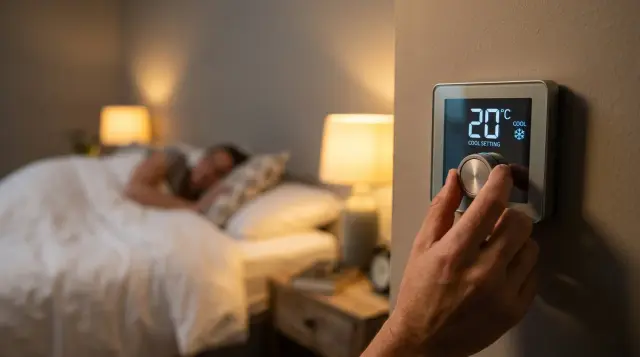
A programmable thermostat is one of the simplest seasonal tools. Set it to begin cooling your bedroom about 30 minutes before your normal bedtime. A target of 65°F by lights-out works well for most seasons. In summer, you may need the AC or a fan running through the night. In winter, the opposite problem crops up: bedrooms that get too cold because people turn the heat way down.
Seasonal light exposure also interacts with thermoregulation. Longer summer days delay melatonin onset, which delays the natural temperature drop. So your body may not be ready to cool down as early in June as it is in December. Combine that with a warmer room and you've got a double hit against your circadian rest cycle. Blackout curtains and limiting screen time in the hour before bed can help compensate. For other evidence-based wind-down strategies, Meditation: What It Actually Is covers techniques that naturally support the relaxation response.
One thing I've noticed personally: my sleep quality drops noticeably in the first two weeks of a seasonal transition, spring to summer especially. My body seems to need a week or two to recalibrate. If you notice the same pattern, don't stress about it. Just focus on keeping your sleep environment consistent even as the weather shifts.
What Else Beyond Temperature Helps Reduce Chronic Inflammation Through Sleep?
Temperature is a big lever, but it's not the only one. Sleep duration matters too. According to the CDC, adults need 7 to 9 hours per night, and consistently getting less than 6 hours is associated with significantly elevated inflammatory markers. A 2016 meta-analysis published in Biological Psychiatry found that short sleepers had 40% higher CRP levels compared to those sleeping 7 to 8 hours [4].
Light exposure is another factor. Artificial light at night, especially blue-spectrum light from phones and laptops, suppresses melatonin production by up to 50%, according to research from Harvard Medical School. Less melatonin means a delayed temperature drop, less deep sleep, and more inflammation. The fix is straightforward: dim lights an hour before bed and keep screens out of the bedroom.
Your sleep environment extends beyond temperature and light. Electromagnetic fields from devices can affect sleep quality for some people, particularly those who keep phones, routers, or smart devices in or near the bedroom. Proteck'd's approach to EMF-shielding clothing and accessories is designed to minimize nighttime exposure while remaining comfortable enough to wear to bed. It's one piece of a broader strategy for creating a sleep space that truly supports recovery.
Finally, what you eat and drink in the hours before bed matters more than people think. Alcohol might make you drowsy, but it raises core body temperature and fragments sleep in the second half of the night. Caffeine's half-life is 5 to 6 hours, so that 3 p.m. coffee is still circulating at 9 p.m. These aren't minor details. They compound with bedroom temperature to either support or undermine your body's anti-inflammatory processes every single night.
Frequently Asked Questions
Between 60 and 67°F (15.5 to 19.4°C) for most adults. This range supports your body's natural core temperature decline, promotes melatonin release, and maximizes time in deep, restorative sleep stages. Individual preferences vary by a few degrees, so it's worth experimenting within this range.
Over time, yes. Rooms above 75°F fragment sleep and elevate cortisol, which raises inflammatory markers like CRP and IL-6. One bad night won't cause chronic inflammation, but weeks or months of overheated sleep can create a sustained inflammatory burden that adds up.
For most adults, yes. While 72°F feels comfortable when you're awake, it can interfere with the 2°F core temperature drop your body needs to enter deep sleep. Most sleep researchers recommend dropping to at least 67°F for better sleep quality.
The American Academy of Pediatrics recommends 68 to 72°F for infant sleep environments. Overheating is a risk factor for SIDS, so skip heavy blankets and keep the room at the lower end of this range when you can. Dress your baby in one layer more than you'd wear comfortably.
It does. Older adults (65+) often have less efficient thermoregulation, so 65 to 68°F with breathable bedding tends to work well. Going too cold can raise blood pressure and increase joint stiffness. Hormonal changes during menopause can also shift preferences toward the cooler end of the range.
A warm shower 60 to 90 minutes before bed causes vasodilation, bringing blood to the skin's surface. When you step out, heat dissipates quickly, speeding up your core temperature drop. Research from the University of Texas found this can help you fall asleep about 10 minutes faster.
A box fan and cross-ventilation (opening windows on opposite sides of the room) can drop room temperature several degrees for almost nothing. Switching from synthetic bedding to cotton or bamboo sheets also makes a real difference. These low-tech changes often do more than people expect.
There's some evidence for it. A 2014 study published in the journal Diabetes by researchers at the National Institutes of Health found that sleeping at 66°F for one month increased brown fat activity by 42% and improved insulin sensitivity. The effect is modest, though, and shouldn't replace diet and exercise.
Some research suggests that electromagnetic fields from devices may interfere with melatonin production, which plays a role in thermoregulation during sleep. Reducing EMF exposure by moving devices away from the bed or using EMF-shielding products may support the body's natural temperature rhythm.
Yes. In summer, longer daylight hours delay melatonin and your bedroom naturally runs warmer, creating a double challenge. Use a programmable thermostat to start cooling 30 minutes before bed. In winter, be careful not to overcool the room. The target is still 60 to 67°F regardless of the season.
References
- Cleveland Clinic – The ideal bedroom temperature for sleep is between 60 and 67°F for most adults.
- National Institutes of Health (NHLBI) – Core body temperature drops approximately 2°F during sleep onset as part of the circadian thermoregulation process.
- National Library of Medicine (PubMed) – Elevated ambient temperature during sleep reduces REM sleep, increases wakefulness, and disrupts sleep architecture.
- National Library of Medicine (PubMed) – Short sleep duration and poor sleep quality are associated with elevated CRP, IL-6, and TNF-alpha inflammatory markers.
About the Author
Proteck'd EMF Apparel
Health & EMF Specialists
The Proteck'd team covers EMF protection, silver-fiber apparel, and practical ways to reduce everyday radiation exposure. Every piece Proteck'd ships is designed, tested, and worn by the people who build it.
Protect Yourself Today
Proteck'd Faraday and silver fiber apparel is engineered to shield your body from everyday EMF exposure. Built for real life, tested for real results.
Shop EMF Protection →✓30-day returns✓Free shipping✓Free returns✓Silver fiber shielding


Laissez un commentaire