


Sleep Optimization: The Science-Backed Guide

Here's a stat that should bother you. According to the CDC, roughly one in three American adults is chronically sleep-deprived [1]. That's over 80 million people running on fumes every single day. And the question so many of them are really asking, whether they'd phrase it this way or not, is simple: how does sleep standby optimization work? Not just for their phones and laptops. For their own bodies.
"Standby" isn't only a tech term. Your body runs its own version every night. Your brain cycles through stages of rest, dropping into low-power states that mirror what your devices do when the screen goes dark. When that process gets interrupted by light, noise, temperature swings, or the electromagnetic signals humming from your nightstand, the whole system falls apart.
I've spent months pulling apart the research on this, from the neuroscience of circadian rhythms to Microsoft's latest changes to Windows 11 Modern Standby. What I found is that the best sleep optimization strategies treat your bedroom like a system. One where both biological and electronic standby modes need to work together.
This guide goes well beyond the usual "put your phone down" advice. We're going to look at what the science actually says about nightly recovery, how your devices quietly sabotage your rest, and what concrete steps you can take starting tonight. If you've been wondering how does sleep standby optimization work in practice, you're about to get a very thorough answer.
Sleep optimization isn't about one silver bullet. It's about treating your bedroom like an integrated system where your biology and your technology both need to enter true low-power mode for genuine recovery to happen.
- Configure all bedroom devices to airplane mode or power them off completely before sleep to reduce EMF exposure and prevent micro-awakenings from notifications.
- Maintain bedroom temperature between 60 and 67 degrees Fahrenheit to support the core body temperature drop needed for deep sleep onset.
- Get 10 to 30 minutes of outdoor sunlight within the first hour of waking to reset your circadian rhythm and improve nighttime melatonin production.
- Set a screen curfew 60 to 90 minutes before bed, as blue light suppresses melatonin by up to 50% according to PNAS research.
- Anchor your wake time to the same 30-minute window every day, including weekends, for the single biggest impact on sleep quality consistency.
What Actually Happens to Your Body During Sleep?
Sleep isn't one thing. It's a sequence of distinct stages, each doing different work. Your brain moves through light sleep (N1 and N2), deep sleep (N3, also called slow-wave sleep), and REM sleep in roughly 90-minute cycles. Deep sleep handles physical repair, hormone release, and immune system maintenance. REM handles memory consolidation and emotional processing. Skip either one, and you wake up feeling wrecked even after a full eight hours.
According to research from the National Institute of Neurological Disorders and Stroke (NINDS), deep sleep declines naturally with age, dropping by as much as 60% between ages 25 and 45 [2]. That's not just a number on a chart. It means your body's repair window is literally shrinking every year, which makes optimizing the sleep you do get even more important.
Think of your sleep stages like your laptop's power states. N1 is your screen dimming. N2 is sleep mode. N3 is full standby, minimal power, maximum recovery. REM is something else entirely, almost like a background defrag running while everything else is powered down. The parallel between biological circadian rest and electronic standby optimization isn't just a metaphor. Both systems are designed to conserve energy while performing maintenance tasks.
Quick Q&A
Q: How many sleep cycles does a healthy adult go through per night?
A: A healthy adult typically completes 4 to 6 full sleep cycles per night, each lasting approximately 90 minutes, according to the National Sleep Foundation.
The real trouble starts when something breaks these cycles before they complete. A notification buzz at 2 AM. A router blinking on your nightstand. The quiet hum of a device that never fully powers down. These micro-disruptions pull you out of deep sleep and force your brain to restart the cycle from scratch, robbing you of the most restorative stages. If you've read our guide on How to Sleep Better Tonight: The Complete Checklist, you already know how much environment matters.
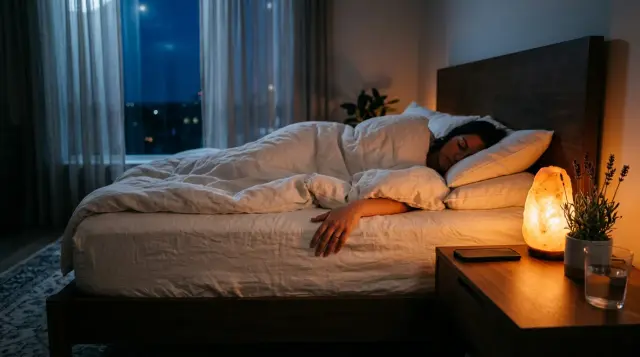
How Does Sleep Standby Optimization Work for Your Devices?
Let's talk about the tech side for a moment, because it directly affects your biological rest. So how does sleep standby optimization work on your laptop, phone, or tablet? In simple terms, your device drops into a low-power state where most components shut down, but certain processes stay active. Things like maintaining a Wi-Fi connection or checking for notifications. On Windows 11, Microsoft introduced "Modern Standby" (S0 Low Power Idle), replacing the older S3 sleep state.
The difference matters more than you'd think. Legacy S3 sleep essentially froze everything in RAM and powered down. Modern Standby keeps the system in a lighter idle, able to receive emails, update apps, and respond to network events. Microsoft's 2024 updates to Windows 11 brought shorter default sleep timers and stricter power controls, aiming to reduce battery drain during standby by roughly 30%. That sounds great from an energy perspective. But there's a catch for your sleep.
Devices in Modern Standby still emit electromagnetic radiation. They're still communicating with routers, cell towers, and Bluetooth peripherals. A phone sitting on your nightstand in "sleep mode" isn't really sleeping at all. It's in a restless low-power idle, pinging the network every few seconds. If you're curious about how those emissions might affect your health, the EMF Health Benefits page breaks it down in detail.
For true sleep mode power management in your bedroom, you need to go beyond default settings. Airplane mode is a start. Better yet, move devices out of the room entirely. Or use shielding solutions that reduce EMF exposure while you rest. The Faraday Health Collection from Proteck'd was designed specifically for people who want a cleaner electromagnetic environment without tossing all their tech in a drawer.
Does Blue Light Really Wreck Your Sleep?
You've heard this one before. Probably a hundred times. But how strong is the evidence, actually? Pretty strong. A 2014 study published in the Proceedings of the National Academy of Sciences (PNAS) by researchers at Brigham and Women's Hospital found that participants who read from an iPad before bed took an average of 10 minutes longer to fall asleep and experienced roughly 50% less melatonin secretion compared to those who read a printed book [3].
Melatonin is your body's primary sleep signal. It's produced by the pineal gland in response to darkness, and it tells every system in your body that it's time to shift into rest mode. Blue light, which peaks at wavelengths around 450 to 495 nanometers, directly suppresses this signal. Your phone screen, your laptop, your TV. They're all broadcasting on exactly the frequency that keeps your brain convinced it's still daytime.
Night mode filters help, but they don't solve the problem entirely. A 2021 study from Brigham Young University found that Night Shift on iPhones made no statistically significant difference in sleep quality compared to normal phone use. The real issue isn't just the light spectrum. It's the cognitive stimulation. Scrolling through social media or reading the news keeps your brain in an alert, problem-solving state that fights against circadian rest.
The most effective strategy? Set a hard cutoff. Our step-by-step guide on How to Reduce Screen Time walks you through building a realistic screen curfew that actually sticks. Pair that with dimming your overhead lights to 40% brightness or lower about 90 minutes before bed, and you'll notice a difference within a week.
Can Your Bedroom Environment Be Quietly Sabotaging Your Rest?
Temperature is probably the most underrated sleep variable out there. The National Sleep Foundation recommends keeping your bedroom between 60 and 67 degrees Fahrenheit. Your core body temperature needs to drop by about 2 to 3 degrees to initiate sleep onset. If your room is too warm, your body can't make that transition, and you end up lying there wondering why you can't drift off.
Research from Dr. Matthew Walker at UC Berkeley, author of "Why We Sleep," has shown that even a 1-degree increase in room temperature above the optimal range can reduce deep sleep by up to 20%. That's not trivial. Deep sleep is when growth hormone gets released, when tissue repair happens, when your immune system does its heaviest work.
Then there's noise. And I don't just mean obvious noise like traffic or barking dogs. Sub-threshold sounds, things too quiet to wake you fully, still trigger cortisol micro-spikes that fragment your sleep architecture. A 2019 study from the World Health Organization estimated that environmental noise affects the sleep of up to 25% of the European population [4].
And here's one most people never consider: the electromagnetic environment. Your Wi-Fi router, charging phones, smart speakers, baby monitors. They all emit low-level radiofrequency radiation throughout the night. Whether that EMF exposure directly disrupts sleep is still debated in the scientific community, but multiple studies have reported associations between nighttime EMF exposure and reduced melatonin production. If you want to test this yourself, the Women's Wellness Collection from Proteck'd offers comfortable, wearable shielding you can actually sleep in.
What Role Do Circadian Rhythms Play in Sleep Optimization?
Your circadian rhythm is basically a 24-hour internal clock run by the suprachiasmatic nucleus (SCN) in your hypothalamus. It responds primarily to light and darkness, but also to meal timing, exercise, and social cues. When this clock is synchronized, you feel alert during the day and sleepy at night without much effort. When it's misaligned, everything from your metabolism to your mood starts unraveling.
According to a 2017 Nobel Prize-winning body of research by Jeffrey Hall, Michael Rosbash, and Michael Young, circadian disruption at the cellular level affects gene expression in virtually every organ. We're not just talking about feeling tired. Chronic circadian misalignment has been linked to Type 2 diabetes, obesity, depression, and cardiovascular disease by researchers at Harvard Medical School [2].
Quick Q&A
Q: What's the single most effective way to reset your circadian rhythm?
A: Morning sunlight exposure within 30 to 60 minutes of waking is the most effective circadian reset, according to Stanford neuroscientist Dr. Andrew Huberman.
The fix is surprisingly simple, at least in theory. Get bright light (ideally sunlight, at least 10,000 lux) within the first hour of waking. Eat meals at consistent times. Exercise before 3 PM. And protect your evening hours from bright artificial light. Dr. Andrew Huberman at Stanford's Huberman Lab has popularized the "morning sunlight protocol," recommending 10 to 30 minutes of outdoor light exposure each morning, even on cloudy days.
Pairing circadian optimization with other recovery practices amplifies the results. Techniques like cold water therapy in the morning can sharpen your cortisol awakening response, while an evening meditation practice helps downregulate your nervous system before bed. These aren't gimmicks. They're tools for training your body's standby optimization system to work the way it was designed to.
How Does Sleep Standby Optimization Work When You Combine Biology and Technology?
This is where everything comes together. How does sleep standby optimization work when you treat your entire sleep environment as an integrated system? You manage both the biological inputs (light, temperature, timing) and the technological ones (device power states, EMF emissions, notification interruptions) as a single problem.
Start with a pre-sleep protocol. Around 90 minutes before bed, dim all lights to 40% or lower. Put all devices into airplane mode, or better yet, power them down entirely. If you use a phone as an alarm, switch to a standalone alarm clock. Set your thermostat to 65 degrees Fahrenheit. None of these steps are complicated, but doing them consistently rewires your body's expectation of what "bedtime" means.
For the tech side, configure your laptop's sleep settings with intention. On Windows 11, go to Settings, then System, then Power & Battery, and set your sleep timer to 5 minutes or less when on battery. Disable "Network Connected Standby" if you don't need overnight updates. On macOS, use the Energy Saver preferences to enable "Put hard disks to sleep when possible" and disable Power Nap. These small changes reduce both power consumption and the low-level radiation your devices emit during standby.
Your gut health plays a role here too, believe it or not. Research published in the journal Molecular Psychiatry in 2019 found that gut microbiome diversity correlates with sleep quality. The gut produces about 95% of the body's serotonin, which is a precursor to melatonin. Our Gut Health: The Complete Guide explains that connection in much more detail. Sleep optimization isn't just one thing. It's a chain of systems that either support each other or tear each other down.
What Are the Long-Term Health Consequences of Poor Sleep?
The short-term effects of bad sleep are obvious. Brain fog, irritability, an intense craving for junk food. But the long-term consequences are genuinely alarming. According to Harvard Medical School's Division of Sleep Medicine, adults who consistently sleep fewer than 5 hours per night have a 56% higher risk of developing cardiovascular disease compared to those who get 7 to 8 hours [2].
The Nurses' Health Study, one of the largest and longest-running epidemiological studies ever conducted, followed over 70,000 women and found that those sleeping fewer than 5 hours per night were 30% more likely to develop coronary heart disease. A separate 2022 analysis published in the European Heart Journal found that poor sleep quality, independent of duration, was associated with a 44% increase in coronary heart disease risk.
There's a cognitive dimension too. Dr. Matthew Walker's research at UC Berkeley demonstrated that just one night of sleep deprivation reduces hippocampal activity by 40%, effectively cutting your ability to form new memories nearly in half. Chronic nightly recovery deficits compound this effect over time. Over years, they're associated with significantly elevated Alzheimer's risk, because the glymphatic system, which clears amyloid-beta plaques from the brain, only operates during deep sleep.
This is why I keep hammering the environmental angle. If your bedroom is full of buzzing, blinking, radiation-emitting devices, you're not just losing a few minutes of rest. You're chipping away at your long-term health. Taking steps to reduce EMF exposure at night, whether through the Faraday Health Collection or simply moving your router to another room, is an investment in decades of better health. Not just tomorrow morning's energy levels.
How Can You Build a Personalized Sleep Optimization Protocol?
Generic advice only gets you so far. The best sleep optimization protocol is one you actually follow, which means it needs to fit your life. Here's a framework I've found works for most people, based on the research we've covered.
First, anchor your wake time. Pick a time you'll wake up every single day, weekends included, and stick to it within a 30-minute window. Dr. Andrew Huberman at Stanford recommends this as the single most impactful change you can make. Your body adjusts its melatonin onset based on when it expects you to wake, so consistency here cascades into better sleep onset at night.
Second, audit your bedroom environment. Use a simple thermometer to check that your room hits 60 to 67 degrees Fahrenheit. Identify every device that stays powered on overnight. Either remove them, switch them to airplane mode, or use Proteck'd's shielding products to reduce their electromagnetic footprint. Third, set a screen curfew 60 to 90 minutes before bed and replace screen time with something calming. Reading, stretching, journaling. Even a brief meditation session counts.
Finally, track what works. You don't need a $300 sleep tracker. A simple notebook where you rate your sleep quality from 1 to 10 each morning and note what you did differently the night before will reveal patterns within two weeks. The Stanford Sleep Epidemiology Research Center has published data showing that subjective sleep quality ratings correlate well with polysomnography results for most healthy adults. Trust your own experience. Adjust. Repeat.
Frequently Asked Questions
Sleep standby optimization works by managing both your biological sleep environment and your electronic devices to minimize disruptions during rest. When you reduce EMF exposure, control light and temperature, and configure device power states properly, you give your body a chance to complete full sleep cycles. Complete cycles mean more deep sleep and REM, which is when physical repair and memory consolidation happen.
Sleep mode (S3) saves your session to RAM and powers down most hardware. Standby, specifically Modern Standby (S0 Low Power Idle), keeps your device in a lighter idle state that can still receive network updates and notifications. Modern Standby uses more power than S3 sleep but wakes faster and stays more connected.
The evidence is mixed but growing. Several studies have found associations between nighttime radiofrequency EMF exposure and reduced melatonin production, though the exact mechanisms aren't fully established. What is clear is that device notifications, screen light, and the behavioral habit of checking phones all measurably disrupt sleep architecture.
The National Sleep Foundation recommends 60 to 67 degrees Fahrenheit. Your core body temperature needs to drop about 2 to 3 degrees to trigger sleep onset, and a cool room supports that process. Sleeping in a room warmer than 70 degrees has been shown to reduce deep sleep duration.
Quite a lot. A PNAS study from Brigham and Women's Hospital found that reading from a light-emitting device before bed suppressed melatonin by approximately 50% compared to reading a printed book. The effect also delayed the circadian clock by about 1.5 hours, meaning you'll feel sleepy later the following night too.
Ideally, no. Even in airplane mode, a phone on your nightstand creates the temptation to check it if you wake during the night. A standalone alarm clock removes that trigger entirely. If you must use your phone, put it in airplane mode and place it across the room where you can't reach it from bed.
Yes. The gut produces roughly 95% of the body's serotonin, which is a chemical precursor to melatonin. Research published in Molecular Psychiatry has shown correlations between gut microbiome diversity and sleep quality. Supporting your gut health through diet and probiotics can have indirect but meaningful effects on nightly recovery.
According to Stanford neuroscientist Dr. Andrew Huberman, anchoring a consistent wake time is the single most impactful change. Your body calibrates its melatonin release based on when it expects you to wake up, so keeping this consistent within a 30-minute window every day, weekends included, naturally improves sleep onset timing.
Microsoft's 2024 updates to Windows 11 Modern Standby introduced shorter default sleep timers and stricter power controls. These changes can reduce standby battery drain by approximately 30% compared to earlier Modern Standby implementations. You can further optimize by disabling Network Connected Standby in your power settings.
Wearables can give you useful data on sleep stages and trends, but they're not necessary. Research from the Stanford Sleep Epidemiology Research Center shows that subjective sleep quality ratings correlate well with lab-measured sleep for most healthy adults. A simple 1-to-10 morning rating in a notebook can reveal actionable patterns within two weeks.
References
- Centers for Disease Control and Prevention – 1 in 3 American adults regularly gets less than the recommended 7 hours of sleep per night
- Harvard Medical School Division of Sleep Medicine – Sleeping fewer than 5 hours per night is associated with a 56% higher risk of cardiovascular disease; circadian disruption linked to multiple chronic diseases
- Proceedings of the National Academy of Sciences (PNAS) – Reading from a light-emitting device before bed suppresses melatonin production by approximately 50% and delays the circadian clock by about 1.5 hours
- World Health Organization – Environmental noise affects the sleep quality of up to 25% of the European population
About the Author
Proteck'd EMF Apparel
Health & EMF Specialists
The Proteck'd team covers EMF protection, silver-fiber apparel, and practical ways to reduce everyday radiation exposure. Every piece Proteck'd ships is designed, tested, and worn by the people who build it.
Get the Free EMF Home Audit Checklist
A room-by-room PDF that walks you through the biggest EMF sources in your house and what to do about each one. No cost, no fluff.
Download the Checklist →✓30-day returns✓Free shipping✓Free returns✓Silver fiber shielding


Laissez un commentaire