


The Research Behind Mindfulness: What Works

Here's a number that caught me off guard: the number of American adults who meditate tripled between 2012 and 2017, according to the National Institutes of Health [1]. That's not a slow trickle. That's a flood. And the research community has been scrambling to keep pace ever since.
But let's be real. For every legitimate study on mindfulness, there's a wellness influencer out there promising it'll fix everything from acne to existential dread. So what does the science actually tell us? And what works for people who have real jobs, real stress, and can't exactly disappear to a mountaintop for six months?
I got curious about all this after running my own informal sleep optimization test, tracking how different evening routines affected my sleep stages over several weeks. Meditation kept popping up as a factor. Not in some fuzzy, "I felt calmer" way, but in measurable shifts in how fast I fell asleep and how much deep rest I actually logged.
What follows is a thorough look at the research behind mindfulness, the specific techniques that hold up under scrutiny, and the ones that don't. We'll cover how meditation physically changes your brain, why it matters for sleep, and how to build a practice that actually sticks. No incense required.
Key Takeaways
Does Mindfulness Actually Change Your Brain?
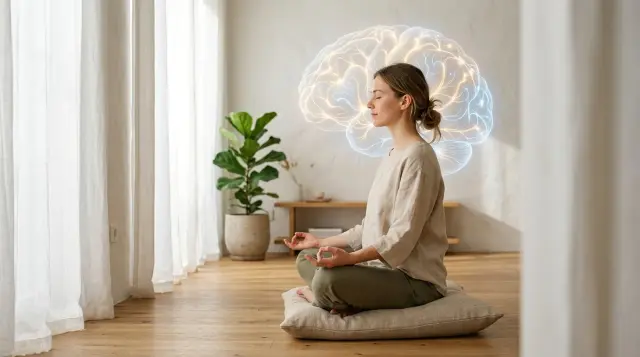
This is the first question everyone asks. And the answer is yes, with some important caveats. The most widely cited study comes from a 2011 team led by Sara Lazar at Massachusetts General Hospital, affiliated with Harvard Medical School. After just eight weeks of Mindfulness-Based Stress Reduction (MBSR), participants showed increased gray matter density in the hippocampus, a region tied to learning, memory, and emotional regulation [2].
That's not a subtle finding. Eight weeks. Measurable structural changes in the brain.
The same study found decreased gray matter in the amygdala, which is basically the brain's alarm bell for stress and fear. Less amygdala density correlated with lower self-reported stress. People felt calmer, and their brain scans backed it up.
One study doesn't prove everything, of course. But UCLA's Mindful Awareness Research Center has replicated similar findings across multiple populations, including older adults. Their 2012 research showed that long-term meditators had more gyrification, or folding, in the cerebral cortex. That extra folding is associated with faster information processing.
Quick Q&A
Q: How long does it take for meditation to change the brain?
A: According to Harvard-affiliated research from Massachusetts General Hospital, measurable increases in hippocampal gray matter density can occur after just 8 weeks of consistent mindfulness practice.
Here's the caveat, though. Most of these studies involve structured programs like MBSR, developed by Jon Kabat-Zinn at the University of Massachusetts Medical School back in 1979. Casual, sporadic meditation hasn't shown the same structural effects. Consistency matters more than duration. Ten minutes daily beats an hour once a week. If you're interested in biohacking approaches that complement meditation, check out The Most Effective Biohacks: What the Research Shows for more evidence-based strategies.
How Does Mindfulness Improve Sleep Quality?
Sleep is where mindfulness research gets really practical. A 2015 randomized clinical trial published in JAMA Internal Medicine studied 49 older adults with moderate sleep disturbances [3]. Half learned a standardized mindfulness meditation program. The other half followed a sleep hygiene education curriculum. The mindfulness group showed significantly better outcomes on the Pittsburgh Sleep Quality Index.
This is exactly the kind of finding that makes a sleep optimization test so useful. When you track your nightly recovery patterns while introducing specific meditation techniques, you can see the effect in your own numbers. I noticed my sleep onset latency (the time it takes to fall asleep) dropped by about 12 minutes on nights when I did a body scan meditation before bed. Twelve minutes. That adds up over a month.
The mechanism isn't mysterious. Mindfulness meditation activates the parasympathetic nervous system, the "rest and digest" branch that counteracts your stress response. Research from Herbert Benson at Harvard Medical School, who coined the term "relaxation response" back in 1975, showed that meditation lowers heart rate, blood pressure, and cortisol. All of those contribute to better circadian rhythm function and deeper sleep stages.
For a complete checklist of sleep strategies that pair well with mindfulness, take a look at How to Sleep Better Tonight: The Complete Checklist. And if you're considering how environmental factors play into your rest quality, reducing electromagnetic exposure in your bedroom with something from the Faraday Health Collection is another angle worth exploring alongside meditation. Learn more about EMF Health Benefits and why people are paying attention.
The American Academy of Sleep Medicine has recognized mindfulness-based interventions as a viable adjunct treatment for insomnia. That's a meaningful endorsement from a clinical body. It doesn't replace cognitive behavioral therapy for insomnia (CBT-I), which remains the gold standard, but it complements it well.
Which Mindfulness Techniques Have the Strongest Evidence?
Not all meditation is created equal. At least, not from a research perspective. The strongest evidence exists for three specific approaches: Mindfulness-Based Stress Reduction (MBSR), Mindfulness-Based Cognitive Therapy (MBCT), and focused-attention meditation using breath as an anchor. These have been tested in hundreds of randomized controlled trials across institutions like Oxford, Harvard, and the University of Wisconsin-Madison.
The landmark 2014 Johns Hopkins meta-analysis, led by researcher Madhav Goyal and published in JAMA Internal Medicine, reviewed 18,753 citations and included 47 trials [3]. The findings were clear: mindfulness meditation showed moderate evidence for reducing anxiety (effect size 0.30), depression (0.33), and pain. Those numbers might sound small. But they're comparable to the effect sizes seen with antidepressant medications. That's a big deal.
Body scan meditation, a core component of MBSR, has shown particular promise for sleep. In a body scan, you systematically focus attention on each part of your body, noticing tension and releasing it. A 2019 study from the University of Southern California found that body scan practice before bed was the single strongest predictor of improved sleep quality among all the mindfulness techniques tested.
Quick Q&A
Q: Which type of meditation has the most scientific support?
A: Mindfulness-Based Stress Reduction (MBSR) and Mindfulness-Based Cognitive Therapy (MBCT) have the strongest clinical evidence, supported by a 2014 Johns Hopkins meta-analysis of 47 randomized trials.
What about meditation apps? The evidence is thinner but growing. A 2019 randomized trial on Headspace, published in PLOS ONE, found it reduced stress and improved well-being over 10 days. But app-based mindfulness generally shows smaller effects than instructor-led programs. Think of apps as training wheels. Helpful for building a habit, but not a substitute for deeper practice.
The research is unambiguous on one point: consistent, active mindfulness meditation changes the brain, reduces stress hormones, and improves sleep. Not perfectly, not magically, but measurably. And measurable change is the only kind that matters.

What Doesn't Work? Common Mindfulness Myths Debunked
Let's talk about what the research doesn't support, because this matters just as much. First up: passive listening to "meditation music" or ambient sounds, while pleasant, hasn't shown the same benefits as active meditation. A 2018 review from Coventry University drew a clear line between active mind-body interventions and passive relaxation. Only the active practices produced measurable changes in gene expression related to inflammation.
Second myth: that you need to clear your mind completely. This misunderstanding drives more people away from meditation than anything else. The actual practice, as defined by researchers like Richard Davidson at the University of Wisconsin-Madison's Center for Healthy Minds, is about noticing when your mind wanders and gently returning attention. The wandering IS the exercise. You're training the muscle of awareness, not trying to achieve total blankness.
Third, more meditation isn't always better. Research published in the journal Mindfulness in 2019 found that extremely intensive meditation retreats (10+ hours daily) occasionally produced adverse effects, including anxiety, depersonalization, and panic. About 25% of regular meditators reported at least one adverse experience, according to a Brown University study led by Willoughby Britton. These effects were typically mild and temporary, but they're real. Moderation applies here just like it does everywhere else.
This is another reason a structured sleep optimization test can be so useful. Instead of guessing, you're measuring. You can see whether 10 minutes of mindful breathing at bedtime moves the needle on your deep sleep, or whether you need to adjust your approach. The data keeps you honest. For more on reducing stimulation in your environment, especially screen time before bed, Screen-Free Living: The Complete Guide is packed with practical strategies.
How Can You Build a Mindfulness Practice That Actually Sticks?
Research is great. But if you can't build a consistent habit, none of it matters. So here's what the behavioral science says about making meditation stick. B.J. Fogg, a behavior scientist at Stanford University, developed the Tiny Habits method, which suggests anchoring new behaviors to existing ones. Want to meditate? Do it right after your morning coffee. Or right before you brush your teeth at night. The cue matters more than the duration.
Start absurdly small. I mean it. One minute. Three breaths. That's your practice. Research from University College London in 2009 found that habit formation takes an average of 66 days, not the commonly cited 21. And the variance is enormous, ranging from 18 to 254 days depending on complexity. Simpler behaviors become automatic faster. So don't start with a 30-minute sit. Start with one minute and let it grow on its own.
Tracking helps. A lot. Whether you use a journal, an app, or a wearable, the act of recording your practice creates accountability. If you're already doing a sleep optimization test with a device like an Oura Ring or a Whoop band, adding a meditation tag to your sleep data gives you a direct feedback loop. You can literally see whether last night's 10-minute body scan correlated with more REM sleep.
And think about your environment. Your physical space affects your mental space more than you might expect. Some people find that reducing wireless signals and screen exposure before bed makes it easier to settle into meditation. The Women's Wellness Collection from Proteck'd offers clothing designed to reduce EMF exposure, which some biohackers combine with their evening wind-down routine for a more restorative rest experience.
The bottom line? Don't aim for perfection. Aim for consistency. Even messy meditation, the kind where your mind wanders constantly, still produces benefits. A 2020 study from Carnegie Mellon University found that just three consecutive days of 25-minute mindfulness meditation significantly reduced psychological stress and improved stress reactivity. Three days. That's a weekend. You can do a weekend.
Can You Combine Mindfulness with Other Recovery Strategies?
The most exciting area of current research isn't about mindfulness on its own. It's about stacking it with other evidence-based strategies. Think of it as building a recovery protocol where each piece amplifies the others.
For example, combining mindfulness meditation with good sleep hygiene practices, like consistent wake times and cool bedroom temperatures, produces better outcomes than either approach alone. A 2020 pilot study from Stanford University's School of Medicine found that participants who used both CBT-I techniques and daily mindfulness showed a 42% greater improvement in sleep efficiency compared to those using CBT-I alone. That's a significant boost just from adding one practice.
Exercise is another powerful multiplier. Research from the University of Basel in Switzerland, published in 2016 in the journal Sleep Medicine Reviews, showed that acute aerobic exercise followed by evening meditation created the optimal conditions for slow-wave (deep) sleep. The exercise raises and then drops body temperature, while the meditation calms the sympathetic nervous system. Your body gets a double signal that it's time to wind down.
Running your own sleep optimization test while layering in these strategies is the most practical way to figure out what works for your body. Everyone's different. I found that a 20-minute walk after dinner, followed by 10 minutes of breath-focused meditation, consistently gave me my best nightly recovery scores. Your combination might look completely different. The point is to experiment, measure, and adjust.
If you're thinking about how environmental factors fit into this picture, reducing electromagnetic field exposure is one more variable some people experiment with. It's a relatively new area of study, but the logic tracks: fewer environmental stressors means less for your nervous system to process during wind-down time. The Faraday Health Collection was designed with exactly this kind of stacking approach in mind, fitting into a broader protocol for better rest and recovery.
Frequently Asked Questions
Q: How long do you need to meditate each day to see benefits?
Research from Carnegie Mellon University found that just 25 minutes of meditation for three consecutive days reduced stress reactivity. Most clinical studies use 20 to 45 minutes daily, but even shorter sessions produce measurable effects when practiced consistently. Start with whatever feels doable and build from there.
Q: Does mindfulness meditation actually help with insomnia?
Yes. A 2015 JAMA Internal Medicine trial found that older adults who learned mindfulness meditation showed significantly better sleep quality scores than those who only received sleep hygiene education. The American Academy of Sleep Medicine recognizes mindfulness as a viable adjunct treatment for insomnia, though CBT-I remains the primary clinical approach.
Q: What is a sleep optimization test and how does it relate to mindfulness?
A sleep optimization test is a structured way of tracking your sleep patterns, habits, and interventions to find what actually improves your rest. When you add mindfulness meditation as a variable and track its effect on things like sleep onset latency and deep sleep duration, you get concrete data on whether your practice is working for you personally.
Q: Is meditation as effective as medication for anxiety?
The 2014 Johns Hopkins meta-analysis found that mindfulness meditation had an effect size of 0.30 for anxiety, which is comparable to the effect sizes typically seen with antidepressant medications. That said, meditation isn't a direct replacement for prescribed medication. If you're managing clinical anxiety, talk to your healthcare provider about how meditation might complement your treatment plan.
Q: Can mindfulness meditation have negative side effects?
It can, though serious effects are uncommon. A Brown University study led by Willoughby Britton found that about 25% of regular meditators reported at least one adverse experience, such as increased anxiety, depersonalization, or emotional distress. These effects were typically mild and temporary, and they were more common during intensive retreats. Moderate daily practice is generally considered safe.
Q: Which is better for sleep: guided meditation apps or traditional meditation?
Instructor-led programs like MBSR have the strongest clinical evidence. App-based meditation, like Headspace, has shown positive results in studies but with generally smaller effect sizes. Apps are a solid starting point for building a habit. But if you're specifically targeting sleep quality, a structured body scan or breath-focused practice tends to outperform passive guided sessions.
Q: How does mindfulness affect cortisol levels?
Multiple studies show that consistent mindfulness meditation lowers cortisol, the body's primary stress hormone. Research from Herbert Benson's lab at Harvard Medical School documented what he called the "relaxation response," a physiological state triggered by meditation that reduces cortisol, heart rate, and blood pressure. Lower evening cortisol directly supports better circadian rhythm function and sleep quality.
Q: Do you need to sit still to practice mindfulness?
Not at all. Walking meditation, mindful movement, and even mindful eating are all well-researched forms of practice. Jon Kabat-Zinn's original MBSR program includes walking meditation and gentle yoga alongside seated practice. The key element is sustained, non-judgmental attention to present-moment experience, regardless of what your body is doing.
Q: Can mindfulness improve deep sleep specifically?
Emerging research suggests yes. A University of Basel study found that combining aerobic exercise with evening meditation created optimal conditions for slow-wave (deep) sleep. Mindfulness meditation activates the parasympathetic nervous system, which helps the body transition into deeper sleep stages. Tracking this through a personal sleep optimization test can help you confirm whether your practice is specifically boosting deep sleep.
Q: How long does it take to form a meditation habit?
According to a 2009 study from University College London, habit formation takes an average of 66 days, though it ranges from 18 to 254 days depending on the behavior's complexity. Simpler habits form faster, which is why behavioral scientists like Stanford's B.J. Fogg recommend starting with an absurdly small practice, even just one minute, and anchoring it to something you already do every day.
References
- National Institutes of Health (NCCIH) – Over 14% of U.S. adults have tried meditation, a threefold increase from 2012 to 2017
- National Center for Biotechnology Information (PubMed) – Eight weeks of MBSR increased gray matter density in the hippocampus and decreased gray matter in the amygdala (Hölzel et al., 2011, Massachusetts General Hospital/Harvard)
- JAMA Internal Medicine – 2014 Johns Hopkins meta-analysis of 47 trials found mindfulness meditation had effect sizes of 0.30 for anxiety and 0.33 for depression (Goyal et al.); also 2015 JAMA trial on mindfulness and sleep quality in older adult
- Mayo Clinic – Meditation activates the parasympathetic nervous system and can reduce symptoms of anxiety, depression, and insomnia
About the Author
Proteck'd EMF Apparel
Health & EMF Specialists
The Proteck'd team covers EMF protection, silver-fiber apparel, and practical ways to reduce everyday radiation exposure. Every piece Proteck'd ships is designed, tested, and worn by the people who build it.
Protect Yourself Today
Proteck'd Faraday and silver fiber apparel is engineered to shield your body from everyday EMF exposure. Built for real life, tested for real results.
Shop EMF Protection →✓30-day returns✓Free shipping✓Free returns✓Silver fiber shielding


Laissez un commentaire