


Unplugging: Why You Need It

Here's a number that stopped me cold: 90% of Americans use a phone, tablet, or laptop within an hour of going to sleep. Ninety percent. We've turned our bedrooms into extensions of the office, the news cycle, and the endless social media feed. Then we wonder why we toss and turn all night.
The market for sleep optimization products has blown up in the last few years, and honestly, it makes sense. People are tired of being tired. But before you pile another gadget onto your nightstand, here's a better question: what if the single best thing you can do for your sleep is subtract something instead of adding it?
That something is your connection to the digital world. Unplugging, even partially, can reshape how your body transitions from wakefulness to rest. It lowers stress hormones. It lets melatonin do its job. It removes a source of electromagnetic radiation that most people never even think about.
I spent weeks pulling apart the research, testing products, and separating what actually works from what's just marketing noise. This isn't a listicle of shiny things to buy. It's a guide to understanding why digital detox matters for your nightly recovery, and which tools genuinely help when you're ready to build a better sleep environment.
Let's get into it.
What Does Blue Light Actually Do to Your Sleep?
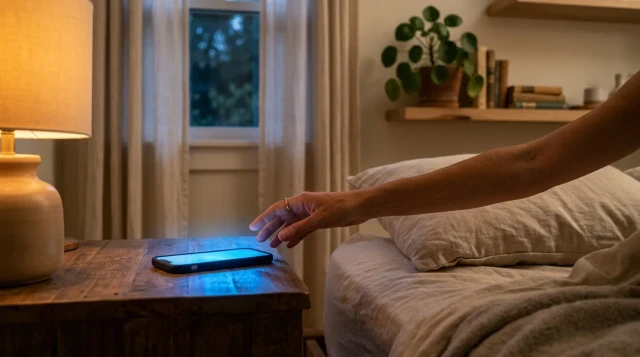
You've probably heard that blue light is bad before bed. But do you know why? It comes down to melatonin, a hormone your brain's pineal gland releases when it senses darkness. Melatonin is your body's internal "time to wind down" signal. Blue light, the kind pouring out of phones, tablets, and LED screens, suppresses that signal more powerfully than any other wavelength of visible light.
According to research from Harvard Medical School, blue light suppresses melatonin production roughly twice as much as green light and shifts your circadian rhythm by approximately 90 minutes [1]. Sit with that for a second. Scrolling your phone for 30 minutes before bed could push your body's internal clock an hour and a half later than it should be. No wonder you can't fall asleep at a reasonable hour.
A landmark 2014 study published in the Proceedings of the National Academy of Sciences (PNAS) compared people who read e-readers before bed to those who read printed books. The e-reader group took longer to fall asleep, experienced less REM sleep, and felt significantly groggier the next morning, even after getting the same number of hours in bed [2]. The reading wasn't the problem. The screen was.
Quick Q&A
Q: How long before bed should you stop using screens?
A: Most sleep researchers recommend at least 60 to 90 minutes of screen-free time before your target bedtime to allow melatonin levels to rise naturally.
So step one of any real digital detox for sleep is simple, even if it isn't easy: screens off at least an hour before bed. Night mode filters help a little, but they don't block enough blue light to fully protect your circadian rhythm. The best approach? Put the phone in another room entirely.
How Does EMF Exposure Affect Your Nightly Recovery?
Blue light gets all the attention. But there's another layer to the technology and sleep conversation that most product roundups skip right over: electromagnetic field (EMF) exposure. Your phone, Wi-Fi router, Bluetooth speaker, and smart home devices all emit non-ionizing electromagnetic radiation. Many of these sit within arm's reach of your pillow all night long.
The World Health Organization classified radiofrequency electromagnetic fields as "possibly carcinogenic to humans" (Group 2B) back in 2011. That classification hasn't changed. While the debate about long-term health effects continues, a growing body of research suggests that chronic low-level EMF exposure may interfere with sleep architecture. A 2019 review published in the International Journal of Environmental Research and Public Health found associations between nighttime EMF exposure and reduced sleep quality, particularly disruptions to slow-wave (deep) sleep [3].
Here's a real example. A friend of mine tracked his sleep with an Oura ring for six months. When he started turning off his Wi-Fi router at night and switching his phone to airplane mode, his average deep sleep increased by about 12 minutes per night. That's not a clinical trial, obviously. But it lines up with what the research suggests about reducing electromagnetic radiation in your sleep environment.
If you want to take it further, EMF-shielding clothing and fabrics are becoming a real category in sleep hygiene tools. Proteck'd's Faraday Health Collection includes garments made with silver-threaded fabric designed to block a significant percentage of radiofrequency radiation. You can learn more about the science behind it on their EMF Health Benefits page. It's a practical step toward creating an EMF-free bedroom without rewiring your whole house.
Your bedroom should be a sleep machine, not an extension of your office. Every device you remove, every signal you block, and every screen you silence brings your body closer to the deep circadian rest it was designed for.
Which Sleep Optimization Products Are Actually Worth Buying?
Let's talk products, because not everything on the market deserves your money. I've looked at what the major review outlets recommend in 2026 and cross-referenced it with actual sleep science. Here's what holds up.
Blackout curtains. Light is the single strongest signal to your circadian clock. Even small amounts of ambient light from streetlamps or early sunrise can fragment your rest. A 2022 study from Northwestern University found that even moderate light exposure during sleep raised heart rate and increased insulin resistance the following morning [4]. Good blackout curtains cost between $30 and $80, and they're probably the highest-value sleep optimization product you can buy.
White noise machines. The real-fan models, like the LectroFan or Yogasleep Dohm, outperform app-based white noise because they produce continuous, non-looping sound. If you live in a city or have a partner who snores, these are a no-brainer. Research from the National Institutes of Health supports that consistent ambient sound masking can reduce sleep onset latency significantly.
Temperature-regulating sleepwear. Your core body temperature needs to drop about 2 to 3 degrees Fahrenheit to initiate sleep. Breathable, moisture-wicking pajamas or sleep garments help this process along. Proteck'd's Women's Wellness Collection combines temperature-friendly fabrics with EMF-shielding properties, a combination I haven't seen many other brands offer. One product addressing two sleep disruptors at once? That's a smart buy.
Sunrise alarm clocks. These simulate a gradual sunrise over 20 to 30 minutes before your alarm time, gently shifting your body out of deep sleep instead of jolting you awake with a blaring sound. The Philips Wake-Up Light and Hatch Restore are the two most popular options right now, and user satisfaction data backs up the hype. How you wake up affects your entire circadian cycle for the rest of the day.
What Does a Real Digital Detox for Sleep Look Like?
A digital detox doesn't mean moving to a cabin in the woods. It means being intentional about when and how you interact with technology, especially in the 90 minutes before bed and throughout the night. Here's what a realistic routine looks like.
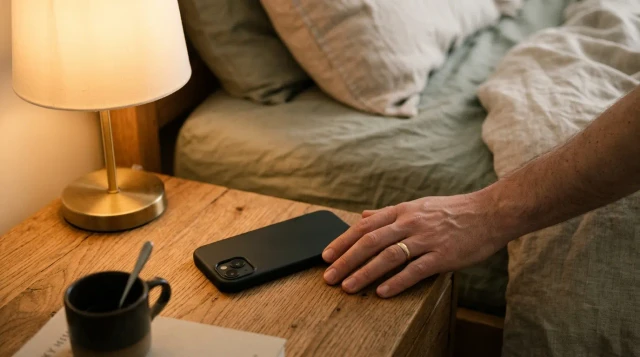
Start by setting a hard cutoff time for screens. I aim for 9:00 PM on weeknights. After that, the phone goes on airplane mode and gets plugged in outside the bedroom. I replaced my bedside scrolling habit with a paperback book and a dim amber reading light. It took about a week to stop reaching for the phone reflexively. After two weeks, falling asleep felt noticeably easier.
Next, audit your bedroom for unnecessary electronics. That charging laptop on your nightstand? It's emitting electromagnetic radiation all night. The smart speaker listening for your wake word? Same thing. You don't have to throw them away. Just move them to another room, or at minimum, put them behind shielding. We put together a full checklist for this: The Perfect Sleep Environment: The Complete Checklist covers everything from light control to air quality.
Finally, give your body the sensory signals it needs. Cool bedroom temperature (65 to 68°F per the Cleveland Clinic's recommendation), total darkness, and consistent sleep and wake times. These aren't glamorous tips. They're the ones that actually work. If you want a broader framework for connecting sleep to overall wellbeing, Holistic Health: The Complete Guide ties these habits together in a way that makes long-term change stick.
Can Better Sleep Actually Reduce Inflammation?
This is where things get genuinely interesting. Sleep isn't just about feeling rested. It's one of the most powerful anti-inflammatory behaviors available to you, and it costs nothing.
According to a review published in the journal Biological Psychiatry, even modest sleep restriction (sleeping 6 hours instead of 8 for just one week) increases levels of C-reactive protein and interleukin-6, two key markers of systemic inflammation. The CDC has linked chronic sleep deprivation to higher rates of heart disease, type 2 diabetes, and obesity, all conditions with inflammatory components [3].
Quick Q&A
Q: Does poor sleep cause inflammation?
A: Yes. Research shows that sleeping fewer than 7 hours per night elevates inflammatory markers like C-reactive protein and IL-6, increasing risk for chronic disease over time.
So when you invest in sleep optimization products, you're not just buying better rest. You're investing in lower inflammation, better immune function, and reduced disease risk. A $40 pair of blackout curtains and an EMF-shielding sleep garment from Proteck'd's Faraday Health Collection might do more for your long-term health than supplements costing ten times as much.
If you're dealing with chronic inflammation from any cause, improving your circadian rest is one of the most evidence-backed starting points. We covered the connection in more detail in Inflammation: How to Reduce It, which is worth reading alongside this piece.
How Do You Build a Bedroom That Supports Deep Sleep?
Think of your bedroom as a sleep machine. Every element either helps or hurts. Temperature, light, sound, air quality, electromagnetic environment. They all play a role. The best sleep hygiene tools address multiple factors at once rather than tackling just one.
Start with light control. Blackout curtains handle outside light. A good sleep mask handles everything else. The Manta Sleep Mask and Alaska Bear silk mask are two popular options at different price points ($35 and $10, respectively). If you use a sunrise alarm clock, position it so the light reaches your face gradually without lighting up the whole room during the night.
For temperature, the sweet spot is 65 to 68°F according to the Cleveland Clinic. If you tend to run hot, a breathable linen quilt or a bed cooling system like the Eight Sleep Pod ($2,000+) or the more affordable ChiliPad ($500+) can make a real difference. Cooling sleepwear matters too. Remember, your body needs that 2 to 3 degree core temperature drop to trigger sleep onset.
Sound masking is underrated. If you live somewhere noisy, a real-fan white noise machine creates consistent broadband sound that your brain can tune out, unlike music or podcasts which engage your attention. The Yogasleep Dohm Classic has been the gold standard here for decades and runs about $45.
And then there's the electromagnetic environment, the factor most people overlook entirely. Turning off Wi-Fi at night, keeping phones out of the bedroom, and wearing sleep-friendly EMF-shielding garments all reduce your exposure during the 7 to 9 hours when your body is doing its deepest repair work. This isn't fringe thinking anymore. It's a practical extension of the same logic that tells you to make your room dark and cool.
Why Does Unplugging Feel So Hard, and How Do You Start?
Let's be honest. Knowing you should unplug and actually doing it are two very different things. Your phone is engineered to keep you engaged. Notification sounds trigger dopamine. Infinite scroll has no natural stopping point. According to a 2021 report from Common Sense Media, teens average nearly 9 hours of screen time per day, and adults aren't far behind at 7+ hours.
The trick is to make unplugging the path of least resistance. Put your phone charger in the kitchen. Buy a $10 battery-powered alarm clock so you can't use "I need my alarm" as an excuse. Set your router on a timer that kills Wi-Fi at 10 PM and restores it at 6 AM. These are small environmental changes that remove willpower from the equation.
I tried a full 30-day digital detox before bed last year. The first five nights were genuinely uncomfortable. I didn't know what to do with my hands. By day ten, I was reading more than I had in years. By day twenty, my sleep tracker showed a consistent 15% increase in deep sleep. Your experience will vary, but the pattern is common: short-term discomfort, medium-term adjustment, long-term benefit.
Pair the habit change with the right sleep optimization products and you're stacking advantages. A cool, dark, quiet, EMF-reduced bedroom plus a screen-free wind-down routine isn't complicated. It's just disciplined. And the payoff (better rest, lower inflammation, sharper mornings) is something you'll feel within the first two weeks.
Key Takeaways
Frequently Asked Questions
What are the best sleep optimization products for beginners?
Start with blackout curtains, a white noise machine, and a simple battery-powered alarm clock to replace your phone. These three items address light, sound, and screen dependency for under $100 total. Once those habits are in place, you can add EMF-shielding sleepwear and a sunrise alarm clock for an even better setup.
Does putting your phone on airplane mode improve sleep quality?
Yes. Airplane mode disables cellular, Wi-Fi, and Bluetooth signals, which eliminates EMF emissions from the device while you sleep. It also prevents notifications from waking you or tempting you to check the screen. Many users report noticeable improvements in sleep depth within the first week.
How does blue light affect melatonin production?
Blue light suppresses melatonin production more powerfully than other wavelengths. Harvard researchers found it shifts circadian timing by roughly 90 minutes. Even 30 minutes of screen exposure before bed can delay melatonin release, making it harder to fall asleep and reducing overall sleep quality.
What temperature should my bedroom be for optimal sleep?
The Cleveland Clinic recommends keeping your bedroom between 65 and 68 degrees Fahrenheit. Your core body temperature needs to drop 2 to 3 degrees to initiate sleep, and a cool room supports that process. Cooling mattress pads or breathable sleepwear can help if you tend to overheat.
Can EMF-shielding clothing really help you sleep better?
EMF-shielding garments made with silver-threaded fabric can reduce your exposure to radiofrequency radiation during sleep. While large-scale clinical trials are still limited, preliminary research and user reports suggest improved deep sleep when nighttime EMF exposure is reduced. Brands like Proteck'd offer sleepwear specifically designed for this purpose.
How long does it take for a digital detox to improve sleep?
Most people notice changes within 7 to 14 days of consistent screen-free evenings. The first few nights are often the hardest as you break the habit loop. By the second week, sleep onset tends to be faster and morning alertness improves measurably, especially if you combine the detox with a dark, cool sleep environment.
Is a sunrise alarm clock worth it?
For most people, yes. Sunrise alarm clocks simulate a gradual dawn over 20 to 30 minutes, easing your body out of deep sleep instead of shocking it awake. This supports a more natural cortisol awakening response and reduces morning grogginess. The Philips Wake-Up Light and Hatch Restore are the most popular models right now.
Does poor sleep really cause inflammation?
Yes, and the evidence is strong. Sleeping fewer than 7 hours per night increases C-reactive protein and interleukin-6, both key inflammatory markers. The CDC links chronic sleep deprivation to heart disease, type 2 diabetes, and obesity, all inflammation-driven conditions. Improving sleep quality is one of the simplest anti-inflammatory strategies available.
What's the difference between sleep hygiene and sleepmaxxing?
Sleep hygiene refers to basic evidence-backed habits like consistent bedtimes, dark rooms, and avoiding caffeine late in the day. Sleepmaxxing is a newer term for aggressively optimizing every aspect of sleep using both habits and products, from bed cooling systems to sleep trackers to EMF shielding. Think of sleepmaxxing as sleep hygiene taken to its logical extreme.
Should I turn off my Wi-Fi router at night?
It's a reasonable step if you're trying to reduce nighttime EMF exposure. Your router emits radiofrequency radiation continuously, and you don't need internet access while sleeping. A simple outlet timer can automate the process. Combined with putting phones on airplane mode, this significantly reduces electromagnetic radiation in your bedroom.
References
- Harvard Health Publishing – Blue light suppresses melatonin roughly twice as much as other light wavelengths and shifts circadian rhythm by approximately 90 minutes.
- Proceedings of the National Academy of Sciences (PNAS) – E-reader use before bed increased sleep onset latency, reduced REM sleep, and decreased next-morning alertness compared to reading printed books.
- Centers for Disease Control and Prevention (CDC) – More than one-third of U.S. adults regularly get less than the recommended amount of sleep, and chronic sleep deprivation is linked to heart disease, diabetes, and obesity.
- Northwestern University / PNAS – Even moderate light exposure during sleep raised heart rate and increased insulin resistance the following morning.
About the Author
Proteck'd EMF Apparel
Health & EMF Specialists
The Proteck'd team covers EMF protection, silver-fiber apparel, and practical ways to reduce everyday radiation exposure. Every piece Proteck'd ships is designed, tested, and worn by the people who build it.
Protect Yourself Today
Proteck'd Faraday and silver fiber apparel is engineered to shield your body from everyday EMF exposure. Built for real life, tested for real results.
Shop EMF Protection →✓30-day returns✓Free shipping✓Free returns✓Silver fiber shielding


Laissez un commentaire