


Why You Can't Sleep: Practical Solutions

You're exhausted. You know you need sleep. You crawl into bed at a reasonable hour, close your eyes, and... nothing. Your brain decides it's the perfect time to replay every awkward conversation you've had since 2014. Sound familiar? If you've ever searched "how does sleep optimization guide work," you're probably at the point where counting sheep feels like a cruel joke and you're ready for something that actually makes a difference.
Here's what most people get wrong about sleep. It's not about willpower or discipline. You can't force yourself to fall asleep any more than you can force yourself to digest food faster. Sleep is a biological process governed by hormones, light signals, temperature shifts, and neural pathways that have been fine-tuned over millions of years of evolution.
The CDC reports that roughly 1 in 3 American adults don't get enough sleep on a regular basis [1]. That's not a personal failing. It's a systemic problem, and it usually comes down to a handful of fixable issues that nobody bothered to explain to us.
So instead of giving you another list of vague tips like "reduce stress" (gee, thanks), I want to walk you through what's actually happening in your body when you can't sleep, and what specific changes make the biggest impact. Some of these might surprise you.
Key Takeaways
How Does a Sleep Optimization Guide Actually Work?
Let's answer this directly. A sleep optimization guide works by identifying the specific biological and environmental factors disrupting your rest, then giving you a structured plan to fix them one by one. There's no single magic trick here. Sleep is the output of a system. When the system has broken inputs, the output breaks too.
Think of it like troubleshooting a car that won't start. You don't just randomly replace parts. You check the battery, the starter, the fuel line. A good sleep improvement plan does the same thing for your nightly recovery. It checks your light exposure, your timing, your temperature, your stress levels, and your environment in a logical order.
According to researchers at the Stanford Sleep Medicine Center, the single most effective behavioral change for better sleep is a consistent wake time, even more so than a consistent bedtime [2]. That's counterintuitive for most people, who tend to obsess over when they go to bed. But your circadian clock anchors itself to when you wake up and see light, not when you close your eyes.
Quick Q&A
Q: What is the first step in a sleep optimization guide?
A: Set a consistent wake time and get bright light exposure within 30 minutes of waking, which resets your circadian rhythm and improves melatonin timing at night.
A practical example: my friend Sarah spent months trying to fix her insomnia by going to bed earlier. She'd lie there for two hours, frustrated, every single night. When she finally flipped her approach and locked in a 6:30 AM wake time regardless of when she fell asleep, her body started producing melatonin earlier within about 10 days. That's how circadian rhythm resets actually work. If you want a more comprehensive breakdown, check out How to Sleep Better Tonight: The Complete Checklist for a step-by-step walkthrough.
Why Does Blue Light Wreck Your Sleep So Badly?
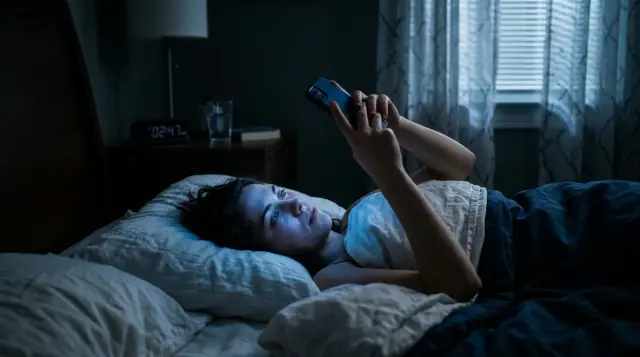
You've heard it a million times: "Put your phone down before bed." But do you actually know why? It's not just about screen stimulation. It's specifically about the wavelength of light your screen emits and how it hijacks your brain's internal clock.
Research from Harvard Medical School found that blue light suppresses melatonin production for about twice as long as green light and shifts circadian rhythms by roughly twice as much [3]. Your brain interprets blue-spectrum light (around 460 to 480 nanometers) as daylight. So when you're scrolling Instagram at 11 PM, your brain literally thinks it's still afternoon.
Here's a concrete number that might change your behavior. Exposure to blue light two hours before bed can delay melatonin onset by up to 90 minutes. That means even if you feel sleepy, the chemical signal your brain needs to kick off deep sleep hasn't arrived yet. You might fall asleep, but the quality of your rest will be significantly worse.
And it's not just your phone. Overhead LED lights, your TV, even some smart home devices all pump out blue-spectrum light. I've found that switching to warm, dim lighting after sunset makes a noticeable difference within just a few nights. If you're curious about how electromagnetic fields from devices might also be affecting your rest, Proteck'd has a whole breakdown of EMF Health Benefits worth reading. Their Faraday Health Collection is designed with exactly this kind of environmental sleep hygiene in mind.
What Role Does Body Temperature Play in Falling Asleep?
Your core body temperature drops by about 2 to 3 degrees Fahrenheit as part of your natural sleep onset process. If your bedroom is too warm, or if your body can't cool down efficiently, you're fighting your own biology. The National Sleep Foundation recommends keeping your bedroom between 60 and 67°F for optimal sleep quality.
Dr. Matthew Walker, a neuroscience professor at UC Berkeley and author of "Why We Sleep," explains that your body needs to drop its core temperature by about 1°C to initiate and maintain good sleep. This is why a warm bath before bed can actually help. It draws blood to the surface of your skin, and when you step out, you cool rapidly. The drop itself is the signal.
I tested this myself last winter. I'd been sleeping in a room around 72°F because, honestly, I like being warm. When I dropped the thermostat to 65°F and added a heavier blanket, I noticed I was falling asleep about 15 minutes faster and waking up less often. It felt almost too simple. But the science backs it up.
This also connects to what you wear to bed. Breathable, temperature-regulating fabrics make a real difference. Proteck'd's Women's Wellness Collection uses silver-infused fabric that naturally helps with thermoregulation while also providing EMF shielding. If you've never thought about how your sleepwear interacts with your body temperature, it's worth experimenting with. You might also look into Cold Water Therapy: Does It Actually Work? for more on how temperature manipulation affects your body's recovery systems.
Sleep isn't something you can force. It's the natural output of a well-tuned system. Fix the inputs, from light and temperature to stress and gut health, and the output fixes itself.
Can Stress and Gut Health Really Affect How Well You Sleep?
Absolutely. And the connection is more direct than most people think. When your cortisol levels are elevated at night, your body is running its daytime operating system. Cortisol and melatonin are inversely related: when one is high, the other should be low. Chronic stress keeps cortisol elevated past its natural evening drop-off, and that single hormonal disruption can wreck your ability to fall asleep.
A 2019 study published in JAMA Internal Medicine examined 49 older adults with sleep problems and found that a mindfulness meditation program significantly improved sleep quality compared to a standard sleep hygiene education program [4]. The meditation group showed reduced insomnia severity, less fatigue, and lower depression scores. This wasn't some fringe finding. It was a randomized clinical trial published in one of the most respected medical journals in the world.
Quick Q&A
Q: Does meditation actually help with sleep or is it overhyped?
A: It's backed by strong clinical evidence, including a 2019 JAMA Internal Medicine trial showing significant improvements in insomnia severity, fatigue, and depression scores compared to standard sleep education alone.
If you're new to meditation and skeptical, I get it. I was too. But the research keeps piling up. You don't have to become a monk. Even 10 minutes of guided breathing before bed can measurably lower cortisol. We've written practical guides on this: How to Start Meditating: The Practical Guide and How to Build a Meditation Practice: The Practical Guide are both solid starting points.
Then there's your gut. The gut-brain axis isn't just a wellness buzzword. About 95% of your body's serotonin is produced in the gastrointestinal tract, according to research from Caltech, and serotonin is a precursor to melatonin. If your gut health is compromised, your melatonin production may be too. That means fixing your sleep might actually start with fixing your digestion. Check out Gut Health: The Complete Guide for the full picture on that connection.
How Does Your Bedroom Environment Sabotage Your Rest?
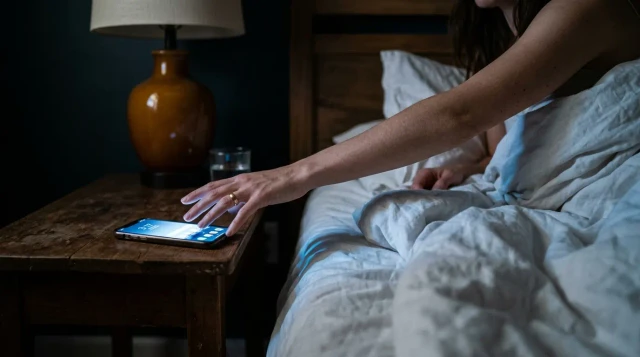
Let's talk about something most sleep guides gloss over: the invisible stuff in your bedroom that's messing with your recovery. We've covered temperature and light, but what about noise, air quality, and electromagnetic radiation from all those devices charging on your nightstand?
A 2017 study in the journal Sleep Medicine Reviews found that environmental noise, even at relatively low levels (around 40 decibels, roughly the volume of a quiet library), can fragment sleep architecture without fully waking you. You might think you slept through the night, but your brain was bouncing out of deep sleep repeatedly. White noise machines or earplugs can help, but so can addressing the noise at its source.
Then there's the device question. Most of us sleep within a few feet of phones, tablets, Wi-Fi routers, and smart speakers. While the science on EMF and sleep is still developing, many people report noticeably better sleep quality when they reduce the electromagnetic environment in their bedroom. That's one reason Proteck'd developed their Faraday line of EMF-shielding apparel and accessories. If you're the kind of person who optimizes everything else and still can't figure out why your sleep quality is poor, your electromagnetic exposure might be the missing variable.
A practical approach: try one week with your phone on airplane mode, your Wi-Fi router on a timer that shuts off at 10 PM, and no electronics within arm's reach. Track how you feel. This kind of sleep environment optimization is low-cost and low-effort. A lot of people who try it are genuinely surprised by the results.
What's the Right Way to Build a Sleep Routine That Sticks?
This is where how does sleep optimization guide work becomes a very personal question, because your routine needs to fit your life. A protocol designed for a 9-to-5 office worker won't work for a shift nurse. The principles are universal, but the application has to be customized.
Start with your anchor. That's your wake time. Dr. Andrew Huberman, a neuroscience professor at Stanford, recommends getting bright light exposure (ideally sunlight) within the first 30 to 60 minutes of waking. This sets your cortisol pulse and begins the roughly 16-hour countdown to your natural melatonin release. If you wake at 6:30 AM, your body should be primed to sleep around 10:30 PM.
Next, build your wind-down. The last 90 minutes before bed should involve progressively dimmer lighting, no screens (or at minimum blue-light-filtered screens), and some form of relaxation that works for you. That could be reading, stretching, journaling, or meditation. The key is consistency. Your brain is a pattern-recognition machine. Give it the same pre-sleep signals every night and it will start automating the transition.
One more thing. Stop trying to be perfect about it. If you have a late night, don't try to "catch up" by sleeping until noon the next day. Get up within 30 minutes of your normal wake time and accept that you'll be a little tired. Your circadian clock will thank you. Missing one night doesn't ruin the system, but constantly shifting your schedule does. This is a sleep improvement plan that works on the scale of weeks, not single nights. Give it time.
And if you're thinking about the bigger picture of how sleep fits into your overall wellness, remember that rest doesn't exist in isolation. Your daytime habits, your stress management, your movement patterns, even what you eat for dinner all feed into your ability to sleep well. Understanding how does sleep optimization guide work means understanding that sleep is the result of everything you do during the hours you're awake.
Frequently Asked Questions
Q: How does sleep optimization guide work for people with insomnia?
A sleep optimization guide addresses insomnia by going after root causes rather than just symptoms. It typically starts with behavioral changes like sleep restriction therapy and stimulus control, both core components of Cognitive Behavioral Therapy for Insomnia (CBT-I). The American College of Physicians recommends CBT-I as the first-line treatment. The guide helps you rebuild your sleep drive and get your circadian rhythm back on track.
Q: How long does it take for sleep optimization to show results?
Most people notice some improvement within 3 to 7 days, but meaningful, consistent changes in sleep quality usually take 2 to 4 weeks. Your circadian rhythm needs time to recalibrate, especially if it's been off for months or years. Consistency matters more than perfection during this period.
Q: Is it better to go to bed at the same time or wake up at the same time?
Waking at the same time is more effective. According to Stanford Sleep Medicine Center researchers, your circadian clock anchors to your morning light exposure and wake signal, not your bedtime. A consistent wake time naturally regularizes when you feel sleepy at night within about 1 to 2 weeks.
Q: Does blue light actually affect melatonin production?
Yes, significantly. Harvard Medical School research shows that blue light (460 to 480 nm wavelength) suppresses melatonin for roughly twice as long as green light. Evening exposure to blue light from screens and LED bulbs can delay melatonin onset by up to 90 minutes, reducing both how quickly you fall asleep and the quality of your rest.
Q: What is the best bedroom temperature for sleep?
The National Sleep Foundation recommends between 60 and 67°F (15.5 to 19.4°C). Your body needs to drop its core temperature by about 1°C to initiate sleep. A room that's too warm prevents this natural drop and can lead to restlessness, more awakenings, and less time spent in deep sleep.
Q: Can gut health problems cause poor sleep?
Yes. About 95% of your body's serotonin is produced in your gut, and serotonin is the precursor to melatonin. Research from institutions like Caltech has shown that gut microbiome disruptions can directly affect serotonin and therefore melatonin production. Improving your gut health through diet and probiotics may indirectly improve your sleep.
Q: Does EMF from devices in the bedroom affect sleep quality?
The research is ongoing, but some studies and anecdotal reports suggest that reducing electromagnetic field exposure in the bedroom improves subjective sleep quality. Practical steps like putting your phone on airplane mode, moving your router out of the bedroom, and using EMF-shielding products are low-risk experiments worth trying if other interventions haven't fully worked.
Q: Will melatonin supplements fix my sleep problems?
Melatonin supplements can help with specific issues like jet lag or short-term circadian disruption, but they're not a fix for chronic insomnia. Most over-the-counter doses (3 to 10 mg) are much higher than what your body naturally produces (about 0.3 mg). Lower doses (0.3 to 0.5 mg) taken 1 to 2 hours before your target bedtime tend to work better with fewer side effects.
Q: How does meditation improve sleep quality?
Meditation reduces cortisol levels and activates the parasympathetic nervous system, shifting your body from a stress response into a rest state. A 2019 JAMA Internal Medicine randomized clinical trial found that mindfulness meditation significantly improved insomnia severity scores compared to standard sleep hygiene education. Even 10 minutes of guided breathing before bed can measurably reduce how long it takes to fall asleep.
Q: Should I nap during the day if I didn't sleep well at night?
Short naps (under 20 minutes) before 2 PM are generally fine and won't significantly affect nighttime sleep. But long or late naps reduce your sleep drive, making it harder to fall asleep at night and creating a cycle of poor rest. If you're working on resetting your sleep, skipping naps temporarily can help rebuild your natural sleep pressure.
References
- Centers for Disease Control and Prevention – 1 in 3 American adults regularly gets less than the recommended 7 hours of sleep per night
- Harvard Medical School – Harvard Health Publishing – Blue light suppresses melatonin production for approximately twice as long as green light and shifts circadian rhythms more significantly
- JAMA Internal Medicine – Mindfulness meditation significantly improved sleep quality compared to standard sleep hygiene education in a randomized clinical trial of older adults
About the Author
Proteck'd EMF Apparel
Health & EMF Specialists
The Proteck'd team covers EMF protection, silver-fiber apparel, and practical ways to reduce everyday radiation exposure. Every piece Proteck'd ships is designed, tested, and worn by the people who build it.
Get the Free EMF Home Audit Checklist
A room-by-room PDF that walks you through the biggest EMF sources in your house and what to do about each one. No cost, no fluff.
Download the Checklist →✓30-day returns✓Free shipping✓Free returns✓Silver fiber shielding


Laissez un commentaire