


The Best Wearable for Your Lifestyle: An Honest Comparison

You're standing in a store, or more likely scrolling through tabs on your phone, trying to figure out which smartwatch actually deserves your money. There are at least a dozen serious contenders in 2026. Every review site ranks them differently. So what is a smartwatch comparison guide actually supposed to do for you? Strip away the noise and line up the features that matter to your life, not just list specs nobody remembers five minutes later.
I've worn five different smartwatches over the past two years. Some I loved. Some gave me a rash. One died in a rainstorm despite being marketed as "swim-proof." Specs on a page and real-world performance are often very different animals, and I learned that the hard way.
Most comparison guides from PCMag, Tom's Guide, and Wareable do a solid job covering the basics: display quality, fitness tracking, app support. But they almost never talk about what happens when you strap a Bluetooth and Wi-Fi transmitter to your wrist for 16 hours a day. That's a gap I want to fill here.
This guide is built for people who care about performance and health in equal measure. We'll compare the top AI wearables of 2026, break down which features actually improve your daily routine, and address the EMF question that the big review sites keep ignoring. Let's get into it.
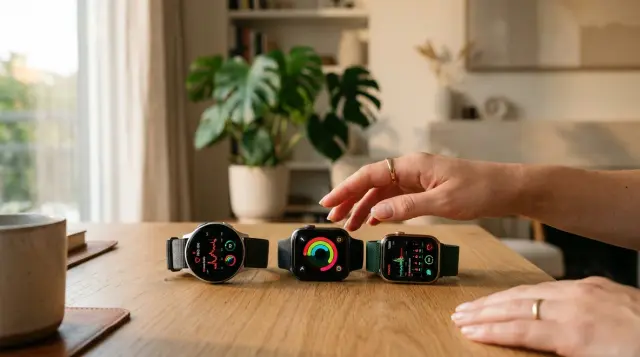
What Should a Good Smartwatch Comparison Guide Actually Cover?
A genuinely useful wearable comparison guide goes beyond screen resolution and strap materials. It should cover five core pillars: health sensor accuracy, battery endurance, software ecosystem, build quality, and daily comfort. If a guide skips any of these, it's really just a spec sheet with opinions stapled on.
Think about it this way. Two watches can both claim "all-day heart rate monitoring," but if one samples every second and the other checks in every ten minutes, you're getting wildly different data. A 2023 review published by the Mayo Clinic found that consumer wearable ECG monitors can reliably detect atrial fibrillation, but accuracy varies significantly between brands and sensor generations [1]. That distinction matters a lot if you're buying a smartwatch specifically for health insights.
Then there's the question of what you're actually optimizing for. A runner training for the 2026 Chicago Marathon needs GPS accuracy and VO2 max estimates. A remote worker wants seamless notification management and maybe a blood oxygen check during long Zoom sessions. A parent might prioritize fall detection and emergency SOS. No single watch wins every category. That's exactly why a structured smartwatch feature comparison matters more than a simple "best of" list.
Quick Q&A
Q: What's the single most important factor in choosing a smartwatch?
A: Your primary use case, because a watch optimized for outdoor endurance sports performs very differently from one designed for smartphone notifications and health monitoring.
I also think comfort is wildly underrated in these comparisons. The Garmin Fenix 8 is an incredible device, but it weighs 85 grams and sits like a small hockey puck on a slim wrist. The Google Pixel Watch 3, at roughly 36 grams, disappears on your arm. Neither weight is "wrong." But one might drive you crazy after a week of wearing it.
How Do the Top AI Wearables of 2026 Stack Up on Health Tracking?
Health tracking is where the real arms race is happening. Apple, Samsung, and Google are all pouring billions into sensor technology, and the 2026 results are genuinely impressive. The Apple Watch Ultra 3 now includes a refined blood oxygen sensor, continuous skin temperature monitoring, and an FDA-cleared ECG that's been around since the Series 4 back in 2018 but keeps getting more accurate with each generation [1]. Apple's AI health assistant can flag unusual trends in your resting heart rate over a 30-day window and suggest you talk to a doctor.
Samsung's Galaxy Watch 7, powered by its BioActive sensor array, tracks heart rate, SpO2, and skin temperature simultaneously. Samsung also introduced an experimental blood pressure monitoring feature through its Samsung Health Monitor app, though it requires periodic calibration with a traditional cuff. If you're curious about how AI is evolving in medical predictions, Can AI Predict Health Problems?: What the Research Shows is a solid deeper read.
Google's Pixel Watch 3 leans heavily on Fitbit's legacy. It offers a "Daily Readiness Score" that combines sleep, HRV (heart rate variability), and recent activity to tell you whether to push hard or recover. Garmin goes even further with its Body Battery metric, refined over six years and still arguably the most intuitive recovery tool in any wearable ecosystem.
Here's where things get really interesting. AI-driven pattern detection is starting to show real clinical value. Research from Stanford University's 2023 Apple Heart Study follow-up found that wearable-detected irregular heart rhythms led to confirmed atrial fibrillation diagnoses in approximately 34% of notified participants [2]. That's a meaningful number. Your watch isn't replacing your cardiologist. But it might be the thing that gets you to visit one.
The best wearable isn't the one with the most sensors or the longest battery life. It's the one that fits your actual routine, respects your health, and doesn't become another source of stress strapped to your body.
Which Smartwatch Has the Best Battery Life in 2026?
Battery life is where the field splits dramatically. If you're comparing smartwatch options and battery endurance is your top priority, you're really choosing between two philosophies: full-featured smart displays that need nightly charging, or rugged GPS watches that last weeks.
The Apple Watch Ultra 3 gets about 36 hours on a single charge with normal use, or roughly 72 hours in low power mode. Solid for an Apple device, but it still means you're charging every other night. The Samsung Galaxy Watch 7 is similar, clocking around 40 hours with always-on display turned off. The Pixel Watch 3 trails slightly behind at approximately 30 hours. Google has improved that by about 25% over the Pixel Watch 2, but it still won't last a weekend camping trip.
Then there's Garmin. The Fenix 8 Solar edition can stretch to 48 days in expedition GPS mode and about 29 hours in full GPS plus music streaming mode. For ultramarathon runners or backcountry hikers, nothing else comes close. Withings ScanWatch Light, a hybrid smartwatch highlighted by Wareable's 2026 roundup, takes a completely different approach. Its e-ink display and limited smart features let it last up to 30 days on a charge, making it feel more like a traditional watch that happens to track your heart rate.
The trade-off is always the same: more features and brighter screens drain batteries faster. If you're the kind of person who forgets to charge things (no judgment, I'm right there with you), a Garmin or hybrid watch will save you a lot of frustration.
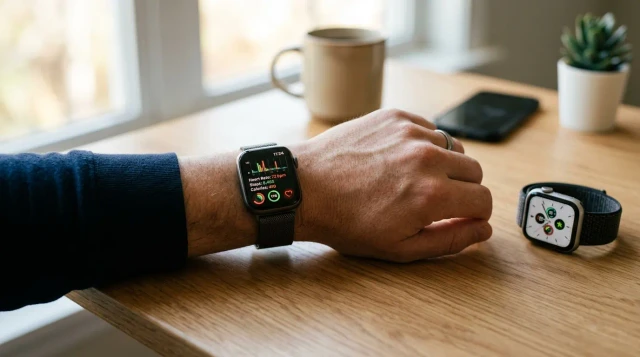
Does Wearing a Smartwatch All Day Expose You to EMF Radiation?
Here's the section most comparison guides completely skip. And honestly, it's the one that matters more than you'd think. Yes, smartwatches emit radiofrequency electromagnetic radiation. They use Bluetooth, Wi-Fi, and in some cases cellular LTE connections, all of which produce RF energy. The device is pressed directly against your skin, often for 16 or more hours a day including sleep tracking.
According to the World Health Organization, radiofrequency electromagnetic fields are classified as "possibly carcinogenic to humans" under Group 2B of the IARC classification system [3]. That's the same category as certain pesticides and gasoline engine exhaust. The WHO stresses that more research is needed, but the classification alone is enough to make you think twice about cumulative exposure from wrist-worn devices.
The FCC regulates specific absorption rates (SAR) for devices sold in the United States, limiting them to 1.6 W/kg averaged over 1 gram of tissue [4]. Most smartwatches fall well below this threshold individually. But here's the thing. SAR limits were designed for devices used intermittently, like holding a phone to your ear for a call. They weren't designed for something you wear on your body around the clock, every single day, for years.
Quick Q&A
Q: Do smartwatches emit enough EMF to be harmful?
A: Individual exposure from a smartwatch falls below FCC limits, but the WHO classifies RF electromagnetic fields as possibly carcinogenic (Group 2B), and long-term cumulative exposure from constant skin contact remains understudied.
This is where thinking about your broader EMF environment makes sense. You've got a smartwatch on your wrist, a phone in your pocket, Wi-Fi routers in every room, and maybe smart home devices throughout the house (if you're curious about that topic, here's our Home Automation: The Complete Guide). The individual sources might be small, but they add up. That's why some people are turning to Faraday-based shielding clothing to reduce exposure in the areas they can control. Proteck'd's Faraday Protection Collection uses silver-infused fabrics to block a significant percentage of RF radiation, giving you a practical layer of defense without requiring you to ditch your devices entirely.
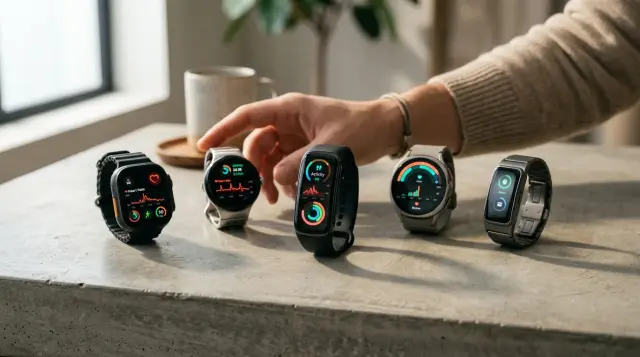
How Can You Reduce EMF Exposure Without Giving Up Your Wearable?
Let's be realistic. Nobody reading a smartwatch comparison guide wants to hear "just don't wear a smartwatch." The health data, the convenience, the connectivity. It's all genuinely useful. The smarter approach is harm reduction: keeping your tech while being intentional about minimizing unnecessary RF exposure.
Start with your watch settings. Turn off always-on Wi-Fi and switch to Bluetooth-only connectivity when you don't need LTE. Bluetooth Low Energy (BLE), which most modern wearables use, operates at lower power levels than full Bluetooth or Wi-Fi. Take the watch off during sleep if you're not using sleep tracking. Every hour off your skin is an hour of zero exposure from that device.
For the exposure you can't avoid, consider what you're wearing underneath. Proteck'd's Men's Faraday Tech Wear line is designed for exactly this situation. The silver-fiber construction blocks electromagnetic radiation while looking like normal, well-made clothing. You can learn more about how the shielding works at the EMF Protection Benefits page. It's not tin-foil-hat territory. It's applied physics in a wearable fabric.
Also think about your digital security when using connected wearables. Smartwatches sync health data to cloud servers, which creates another vector worth understanding. Our Cybersecurity in 2026: The Complete Guide covers how to lock down your devices and data in practical terms.
What About App Ecosystems and Everyday Usability?
Specs are one thing. Living with a watch every day is another. The Apple Watch still dominates app availability because of its tight integration with iOS. If you own an iPhone, you get seamless handoff for calls, messages, Apple Pay, and a massive library of third-party watch apps. The downside? It doesn't work with Android at all. Zero compatibility.
Samsung's Galaxy Watch 7 runs Wear OS 5 with Samsung's One UI Watch overlay, which means you get access to the Google Play Store's growing catalog of watch apps plus Samsung-exclusive features like the Samsung Health ecosystem. Google's own Pixel Watch 3 runs a cleaner version of Wear OS 5, and Google Maps navigation on the wrist is genuinely excellent. Both work only with Android phones.
Garmin occupies a different niche entirely. Its Connect IQ app store is smaller but highly focused on fitness and outdoor tools. You won't find Spotify streaming (though you can download playlists offline) or the ability to reply to texts with a full keyboard. What you will find is the most reliable GPS tracking and training analytics available in any wearable comparison lineup. A marathon runner I know in Denver switched from an Apple Watch to a Garmin Forerunner 965 and cut his GPS drift on mountain trails by nearly 40%.
The Withings ScanWatch Light takes a minimalist approach. No apps, no touchscreen. It vibrates for notifications, tracks your heart rate and sleep, and otherwise stays out of your way. For people who want health data without the digital distraction, it's surprisingly appealing.
How Do You Pick the Right Smartwatch for Your Specific Lifestyle?
After going through every category in this wearable device comparison, the answer is annoyingly simple: it depends on you. But let me make it less annoying with some concrete guidance.
If you train seriously, Garmin wins. The Fenix 8, Forerunner 965, or even the Venu 3 offer training load analysis, recovery advisors, and GPS accuracy that Apple and Samsung still can't match. If you live in the Apple ecosystem and want the most polished all-around smartwatch experience, the Apple Watch Ultra 3 or Series 10 is the obvious pick. On Android and want a balance of health tracking, Google integration, and style? The Pixel Watch 3 is underrated.
If EMF exposure weighs on your mind (and given the WHO's Group 2B classification, it's reasonable that it does), factor shielding into your daily routine. A watch that you can easily remove plus EMF-blocking apparel from Proteck'd creates a practical middle ground between staying connected and protecting your body from cumulative RF radiation.
The best smartwatch comparison guide isn't the one that tells you which watch is "the best." It's the one that helps you see which watch fits your priorities. I hope this one did that.
Key Takeaways
Frequently Asked Questions
What is a smartwatch comparison guide?
A smartwatch comparison guide is a structured resource that evaluates wearable devices across categories like health sensors, battery life, software, build quality, and daily comfort. The best ones go beyond raw specs to include real-world usability testing and considerations like EMF exposure. In 2026, AI health features and data privacy have become additional comparison criteria worth paying attention to.
Which smartwatch has the longest battery life in 2026?
The Garmin Fenix 8 Solar leads the pack with up to 48 days in expedition GPS mode and about 29 days in regular smartwatch mode. Among full-featured smartwatches, the Samsung Galaxy Watch 7 lasts roughly 40 hours, while the Apple Watch Ultra 3 gets about 36 hours. Hybrid watches like the Withings ScanWatch Light can stretch to 30 days.
Do smartwatches emit EMF radiation?
Yes, all smartwatches emit radiofrequency electromagnetic radiation through Bluetooth, Wi-Fi, and sometimes LTE connections. The WHO classifies RF fields as possibly carcinogenic (Group 2B). While individual device emissions fall below FCC SAR limits of 1.6 W/kg, cumulative exposure from wearing a transmitter against your skin all day is a factor worth considering.
Can a smartwatch actually detect heart problems?
Certain smartwatches can detect irregular heart rhythms. The Apple Watch ECG feature has FDA clearance, and Stanford's Apple Heart Study found that about 34% of participants who received irregular rhythm notifications were later confirmed to have atrial fibrillation. That said, smartwatches are screening tools, not diagnostic medical devices. Always follow up with a doctor.
Is the Apple Watch compatible with Android phones?
No. The Apple Watch only works with iPhones, with zero Android compatibility. If you use an Android phone, your best options include the Samsung Galaxy Watch 7, Google Pixel Watch 3, or any Garmin wearable, which supports both Android and iPhone.
What's the difference between a smartwatch and a fitness tracker?
A smartwatch is a wrist-worn computer that runs apps, displays notifications, and often includes cellular connectivity. A fitness tracker is simpler, focused primarily on step counting, heart rate, and sleep data with fewer smart features. The line between them has blurred a lot in 2026, with fitness-focused watches like the Garmin Venu 3 offering plenty of smart features too.
How can I reduce EMF exposure from my smartwatch?
You can reduce exposure by switching to Bluetooth Low Energy mode instead of Wi-Fi or LTE, removing the watch during sleep if you're not tracking it, and wearing EMF-shielding clothing made with silver-infused Faraday fabric. Proteck'd's Faraday collections use conductive silver fibers to block a significant portion of RF radiation while looking like regular clothing.
Are smartwatch health sensors accurate enough to trust?
For heart rate and step counting, most 2026 smartwatches from major brands are quite accurate, generally within 3 to 5 percent of clinical-grade equipment. Blood oxygen readings are less reliable during motion. ECG features on Apple and Samsung watches have clinical validation but are designed for screening, not diagnosis. Always consult a healthcare provider for medical decisions.
Which smartwatch is best for running and outdoor sports?
Garmin dominates here. The Fenix 8 and Forerunner 965 offer multi-band GPS for superior trail accuracy, advanced training load analytics, and battery life measured in weeks rather than hours. The Apple Watch Ultra 3 is a strong second choice with dual-frequency GPS, but its shorter battery life is a drawback for ultra-distance events.
What does SAR mean for wearable devices?
SAR stands for Specific Absorption Rate. It measures how much radiofrequency energy the body absorbs from a device. The FCC sets the limit at 1.6 W/kg averaged over 1 gram of tissue. Most smartwatches fall well below this limit, but the metric was designed for intermittent use, not the 24/7 skin contact that many people have with their watches.
References
- Mayo Clinic – Consumer wearable ECG monitors can reliably detect atrial fibrillation, though accuracy varies between brands and sensor generations.
- Stanford University (Apple Heart Study) – Wearable-detected irregular heart rhythms led to confirmed atrial fibrillation diagnoses in approximately 34% of notified participants.
- World Health Organization / IARC – Radiofrequency electromagnetic fields are classified as possibly carcinogenic to humans (Group 2B) by the International Agency for Research on Cancer.
- National Institutes of Health – The FCC limits specific absorption rate (SAR) for wireless devices to 1.6 W/kg averaged over 1 gram of tissue in the United States.
About the Author
Proteck'd EMF Apparel
Health & EMF Specialists
The Proteck'd team covers EMF protection, silver-fiber apparel, and practical ways to reduce everyday radiation exposure. Every piece Proteck'd ships is designed, tested, and worn by the people who build it.
Protect Yourself Today
Proteck'd Faraday and silver fiber apparel is engineered to shield your body from everyday EMF exposure. Built for real life, tested for real results.
Shop EMF Protection →✓30-day returns✓Free shipping✓Free returns✓Silver fiber shielding


