


How to Protect Yourself from 5G Radiation: What Actually Works

Around 100,000 new 5G small cell towers go up across the United States every year. That number keeps climbing. And if you've been browsing for sweaters men can wear to the office, the gym, or just running errands, you've probably never once wondered whether your pullover could also shield you from electromagnetic radiation. Maybe it's time you did.
Here's the thing. 5G isn't one frequency. It's a collection of frequency bands, some pushing well into the millimeter-wave range of 24 GHz to 100 GHz. That's far higher than the signals your old 4G phone was using. Whether that matters for your health is a question scientists are still actively researching, but there's enough credible data to make any reasonable person want to take a few precautions.
I'm not here to tell you to wrap your house in tinfoil. What I will do is walk you through what the actual science says, what credible agencies have concluded so far, and what practical steps you can take right now to lower your daily RF exposure without turning your life upside down.
Some of these steps are free. Others involve smart upgrades, like choosing EMF-shielding apparel that doesn't look like a costume from a bad sci-fi movie. Think well-made sweaters men would actually grab off the rack, not because of a gimmick, but because they look and feel great while also blocking radiofrequency signals. Let's get into it.
Key Takeaways
What Is 5G Radiation, and How Is It Different from 4G?
5G stands for fifth-generation wireless technology. It works across three frequency bands: low-band (under 1 GHz), mid-band (1 to 6 GHz), and high-band millimeter wave (24 to 100 GHz). The millimeter-wave piece gets the most attention because it's new territory for consumer wireless. According to the Federal Communications Commission, these higher frequencies carry more data faster but travel shorter distances, which is why carriers need so many more small cell antennas [4].
Older 4G LTE signals typically operated in the 0.7 to 2.5 GHz range. Those waves travel farther and penetrate buildings more easily. Millimeter waves? They can be blocked by something as simple as a wall, a tree, or even heavy rain. That sounds like good news, but it also means the antennas have to be closer to you. Sometimes they're mounted on lampposts just 100 feet from your front door.
Back in 2011, the World Health Organization's International Agency for Research on Cancer (IARC) classified radiofrequency electromagnetic fields as Group 2B, meaning "possibly carcinogenic to humans" [1]. That classification was based on older frequency ranges, though. Research on the specific millimeter-wave bands used by 5G is still in earlier stages, and most of the long-term epidemiological data we have comes from frequencies below 6 GHz.
Quick Q&A
Q: Does 5G radiation penetrate the body the same way 4G does?
A: No. Millimeter waves used in high-band 5G are mostly absorbed by the skin and superficial tissues, unlike lower-frequency 4G signals that can penetrate deeper into the body.
So what does this mean practically? Your daily RF exposure profile is shifting. You're not just dealing with one cell tower miles away anymore. You're surrounded by a denser web of shorter-range, higher-frequency transmitters. That change in exposure pattern is exactly why people are looking for realistic ways to reduce their contact with these signals. If you want a deeper breakdown of how city living amplifies this issue, check out this piece on Urban 5G Exposure: How to Reduce Risk.
Does the Science Actually Support Concerns About RF Exposure?
Let's be honest. The science on radiofrequency radiation and health is complicated, and anyone who tells you it's settled in either direction isn't being straight with you. There are studies that raise real red flags. There are studies that show no significant effects. The truth lives in the details.
The most cited piece of evidence comes from the National Toxicology Program (NTP), a research group within the National Institutes of Health. In 2018, the NTP released results from a $30 million, decade-long study on rats exposed to RF radiation at levels similar to what cell phones emit. The findings: clear evidence of malignant schwannomas (tumors of the heart) in male rats, along with some evidence of brain tumors [2]. These weren't subtle findings. The NTP labeled the evidence "clear," their highest classification.
On the other side, the FDA reviewed the available literature in 2020 and concluded that current evidence does not support a causal link between RF exposure at or below FCC limits and adverse health effects in humans [3]. The FCC sets the specific absorption rate (SAR) limit for cell phones at 1.6 W/kg averaged over 1 gram of tissue [4]. Most modern phones fall within that range during normal use.
But here's a subtlety that gets lost in the headlines. The NTP study exposed animals to whole-body RF radiation for nine hours a day. Not a perfect analog for human phone use. Yet the Ramazzini Institute in Bologna, Italy, found similar tumor types in rats exposed to much lower levels of RF, closer to what you'd get living near a cell tower. Two independent studies pointing in the same direction. That's the kind of concordance that makes toxicologists sit up.
Curious about how electromagnetic radiation might be affecting your sleep? That's actually one of the better-studied areas. Research from the University of Melbourne has shown that RF exposure before sleep can alter EEG brain activity patterns. For more on that specific connection, take a look at Insomnia and Electromagnetic Radiation: What to Check Tonight.

How Can You Reduce 5G Exposure at Home?
The single most effective tool you have is distance. Radiofrequency radiation follows the inverse square law, meaning that when you double your distance from a source, the exposure drops to one-quarter. So moving your Wi-Fi router from your bedroom to a hallway closet, or even just to the far side of the room, makes a measurable difference. A 2019 analysis published in Environmental Research found that keeping a phone just 12 inches from your body instead of in your pocket can reduce RF absorption by a factor of 10 or more.
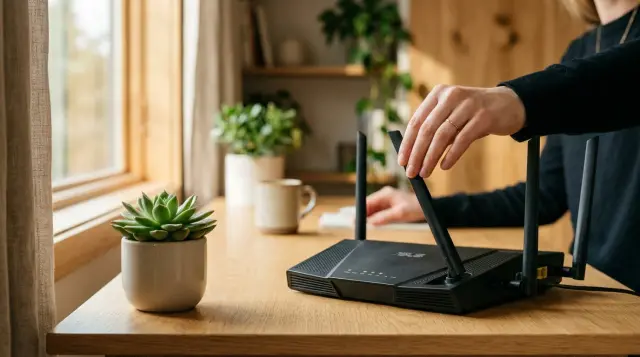
Turn off your Wi-Fi router at night. I know it sounds old-school. But think about it: you're not using it while you sleep, and that's roughly eight hours of continuous RF exposure you can simply eliminate. A basic outlet timer costs about five bucks. For a more thorough guide to creating an EMF-friendly sleep environment, check out EMF Blocking for Better Sleep: The Complete Guide.
Ethernet cables still exist. And they work beautifully. Wiring your desktop computer, gaming console, or smart TV with a direct Ethernet connection removes one more wireless source from your living space. Same idea with switching to a wired keyboard and mouse. Every wireless device you convert to wired is one less RF emitter in your home.
For the bigger picture of redesigning your space with low EMF exposure in mind, including room layout, appliance placement, and smart meter shielding, there's a thorough breakdown at Low-EMF Home Design: A Complete Guide. It's more achievable than you'd think, even if you're renting.
We're still in the early chapters of understanding what chronic, low-level RF exposure does over decades. Taking reasonable precautions now, while the science catches up, isn't paranoid. It's prudent.
Does EMF-Shielding Clothing Actually Work?
This is where a lot of people get skeptical. Honestly, I was too until I started looking at the material science. EMF-shielding garments work on the same principle as a Faraday cage: a conductive mesh or fabric blocks electromagnetic fields from passing through. The key materials are silver, copper, and nickel, usually woven into fibers at a microscopic level. According to testing standards like IEEE 299 and ASTM D4935, well-constructed silver-fiber textiles can attenuate RF signals by 40 to 60 dB. That means blocking over 99% of incoming electromagnetic radiation.
The catch? Not all shielding clothing is created equal. Some companies use a thin metallic coating that washes off after a few cycles. Others use genuinely integrated silver fiber that maintains its shielding effectiveness through dozens of washes. Construction matters as much as the concept.
Quick Q&A
Q: Can you wash EMF-shielding clothing without losing its protective properties?
A: Yes, garments with silver fibers woven into the textile (not just coated) retain their shielding effectiveness through many wash cycles, though following the manufacturer's care instructions is important.
Proteck'd has built their entire line around this idea: EMF-shielding apparel that you'd actually want to wear. Their Men's Faraday Collection includes sweaters men reach for because they look clean and modern, not because they're worried about looking like they're prepping for a dystopian future. Silver fiber is woven directly into the fabric, so you get consistent RF attenuation without sacrificing comfort or style. If you want to browse the full range, including options for women and accessories, the Faraday EMF Collection is a good starting point.
The point isn't to create an impenetrable shield around your entire body. It's about reducing the overall dose. Wearing an EMF-shielding sweater over your chest, for example, reduces the RF exposure to your heart and torso during your commute, your workday, or your walk through a neighborhood packed with small cell sites. For a fuller explanation of how these materials are tested and what benefits they offer, check out the EMF Protection Benefits page.
What About Phone Habits and Daily Behavior Changes?
Your phone is your biggest personal source of RF exposure. Period. And the simplest change you can make is to stop holding it against your head. Use the speakerphone. Use wired earbuds. Even Apple's own iPhone RF exposure documentation recommends keeping the device at least 5 to 15 millimeters from your body during calls. That's not fringe advice. That's the manufacturer telling you the SAR testing was done with a gap between the phone and your skin.
When you're not using your phone, don't keep it in your front pocket. Seriously. A 2014 review published in Environment International by researchers at the University of Exeter analyzed 10 studies and concluded that men who carried phones in their pockets showed lower sperm motility and viability compared to those who didn't. Worth thinking about the next time you mindlessly slide your phone into your jeans.
Airplane mode is your friend. Whenever you don't need connectivity, like when you're sleeping, exercising, or sitting in a meeting, flip it on. Your phone drops to near-zero RF emissions in airplane mode. It's free. It's instant. And it's one of the most effective exposure reduction strategies available to you.
If the idea of children growing up surrounded by this kind of ambient wireless exposure concerns you, there's a well-researched article on Growing Up in a Wireless World: What the Research Shows that covers the pediatric angle specifically. Kids absorb more RF per unit of body weight than adults, so the stakes are genuinely different for them.
Can You Still Enjoy Modern Technology While Limiting EMF Exposure?
Absolutely. And I think this is where the conversation needs to land, because the all-or-nothing framing doesn't help anyone. You're not going to give up your smartphone. I'm not going to give up mine. The goal isn't becoming a digital hermit. It's smarter habits and better gear.
Think of it like sun exposure. Nobody tells you to never go outside. But you wear sunscreen, you seek shade during peak hours, and maybe you throw on a hat. The same logic applies to RF radiation. Use distance when you can. Choose wired over wireless where it's practical. Turn off emitters you're not using. And when you're out in the world moving through zones of higher electromagnetic exposure, wear something that offers a layer of physical shielding.
That's why the concept of sweaters men wear every day doubling as RF protection makes so much sense. It doesn't require you to change your routine. You're already getting dressed in the morning. Choosing a Faraday-shielded sweater from Proteck'd's lineup over a standard merino pullover from a big-box retailer is a swap, not a sacrifice. The fabric feels the same. The fit is modern. The difference is invisible to everyone except the RF signals bouncing off it.
We're still in the early chapters of understanding what chronic, low-level radiofrequency exposure does to the human body over decades. The WHO has called for more research. The NTP study raised serious questions. And meanwhile, the number of transmitters in your environment is growing, not shrinking. Taking reasonable precautions now, while the science catches up, strikes me as the smart play. Not paranoid. Prudent.
How Do You Choose the Right EMF Protection for Your Lifestyle?
Start by figuring out where your exposure is highest. If you work in a dense urban area surrounded by small cell towers and Wi-Fi networks, your daytime exposure is probably the biggest issue. In that case, EMF-shielding clothing you can wear during your commute and workday makes the most difference. If your concern is sleep quality, focus on your bedroom: router placement, phone distance, and possibly shielding bed canopies.
For daily wear, look for garments with independently tested shielding values, measured in decibels (dB) of attenuation. A garment offering 30 dB blocks about 99.9% of incoming RF. One at 50 dB blocks 99.999%. Proteck'd publishes their testing data, which is something you should always look for when evaluating any EMF protection product. Flashy marketing without lab results is a red flag.
Don't overlook the basics, either. A pair of wired earbuds, an outlet timer for your router, and the habit of using airplane mode at night cost almost nothing and reduce your daily electromagnetic field exposure meaningfully. Layer those simple changes with shielding apparel for the times you're out in high-exposure environments, and you've got yourself a practical, sustainable way to manage your RF exposure without becoming obsessive about it.
The best protection strategy is the one you'll actually stick with. If it's comfortable, convenient, and doesn't make you feel like a conspiracy theorist at brunch, you'll keep doing it. That's the whole philosophy behind sweaters men actually want to own, hoodies they'd grab on a cold morning, and shirts that look sharp at a casual dinner. Protection that fits your life, not the other way around.
Frequently Asked Questions
Q: Is 5G radiation dangerous to humans?
The full picture isn't clear yet. The WHO's IARC classifies all radiofrequency radiation as a Group 2B possible carcinogen, and the NIH's National Toxicology Program found tumor evidence in animals exposed to high RF levels. That said, the FDA has stated current evidence doesn't confirm a causal link at levels within FCC limits. Many scientists recommend a precautionary approach while long-term human studies continue.
Q: How far should I keep my phone from my body?
At least 5 to 15 millimeters, according to most manufacturers' own SAR testing documentation. Even Apple recommends a gap between the iPhone and your body during calls. Using speakerphone or wired earbuds creates much greater distance and significantly reduces RF absorption in your head and torso.
Q: Does turning off Wi-Fi at night actually reduce EMF exposure?
Yes. It eliminates one continuous RF source during the roughly eight hours you're asleep. Your router broadcasts radiofrequency signals around the clock whether or not any device is actively using the connection. A simple outlet timer automates the process for about five dollars.
Q: What is the best material for blocking 5G radiation?
Silver-fiber fabric is widely considered the most effective wearable shielding material for RF radiation. Well-constructed silver-fiber textiles can attenuate RF signals by 40 to 60 dB, blocking over 99% of electromagnetic radiation. Copper and nickel mesh are also used, particularly in larger applications like window films and bed canopies.
Q: Can EMF-shielding clothing be washed like regular clothes?
It depends on how the garment is made. Clothing with silver fibers woven directly into the textile, like those from Proteck'd, retains shielding properties through many wash cycles. Garments with only a surface metallic coating tend to lose effectiveness quickly. Always follow the manufacturer's care instructions.
Q: Does airplane mode completely stop phone radiation?
Airplane mode stops your phone from transmitting cellular, Wi-Fi, and Bluetooth signals, which drops RF emissions to near zero. The phone may still emit very low levels of electromagnetic fields from its processor and screen, but the reduction compared to active wireless mode is dramatic.
Q: Are children more vulnerable to 5G and RF radiation than adults?
Yes, according to multiple researchers and the American Academy of Pediatrics. Children's skulls are thinner, their brains are still developing, and they absorb proportionally more RF energy per unit of body weight. This is why pediatric RF exposure is a growing area of concern and study.
Q: How do I know if an EMF-shielding product actually works?
Look for independently tested shielding values measured in decibels (dB) of RF attenuation. Reputable manufacturers publish lab test results following standards like ASTM D4935 or IEEE 299. If a company can't provide specific dB attenuation numbers from third-party testing, treat that as a significant red flag.
Q: Does distance from a 5G tower really make a difference?
It really does. RF radiation follows the inverse square law, so doubling your distance from a source reduces your exposure to one-quarter. Living or working right next to a small cell antenna means significantly higher ambient exposure than being even 50 to 100 feet farther away.
Q: Can sweaters actually block electromagnetic radiation?
Yes, if they're made with conductive fibers like silver. Proteck'd's Faraday sweaters weave silver fiber directly into the textile, creating a wearable Faraday-style shield that attenuates RF signals. They look and feel like normal sweaters men would choose for everyday wear, but they provide measurable radiofrequency shielding.
References
- IARC / World Health Organization – The IARC classified radiofrequency electromagnetic fields as Group 2B, possibly carcinogenic to humans, in 2011.
- National Toxicology Program (NIH) – The NTP found clear evidence of malignant schwannomas of the heart in male rats exposed to high levels of radiofrequency radiation like that used in 2G and 3G cell phones.
- U.S. Food and Drug Administration – The FDA reviewed the available literature and concluded that current evidence does not support a causal link between RF exposure within current limits and adverse health effects in humans.
- Federal Communications Commission – The FCC limits cell phone SAR to 1.6 W/kg averaged over 1 gram of tissue and oversees RF exposure standards for wireless devices.
About the Author
Proteck'd EMF Apparel
Health & EMF Specialists
The Proteck'd team covers EMF protection, silver-fiber apparel, and practical ways to reduce everyday radiation exposure. Every piece Proteck'd ships is designed, tested, and worn by the people who build it.
Protect Yourself Today
Proteck'd Faraday and silver fiber apparel is engineered to shield your body from everyday EMF exposure. Built for real life, tested for real results.
Shop EMF Protection →✓30-day returns✓Free shipping✓Free returns✓Silver fiber shielding


Leave a comment