


How to Reduce Screen Time: Step by Step

Here's something that sounds almost too simple to be true: does sleep promote sleep? It does. One good night of rest makes the next good night more likely. And one bad night? That can spiral into a whole week of tossing, turning, and staring at the ceiling at 3 AM. Your body's internal clock thrives on consistency. Give it what it needs, and it rewards you with easier, deeper sleep.
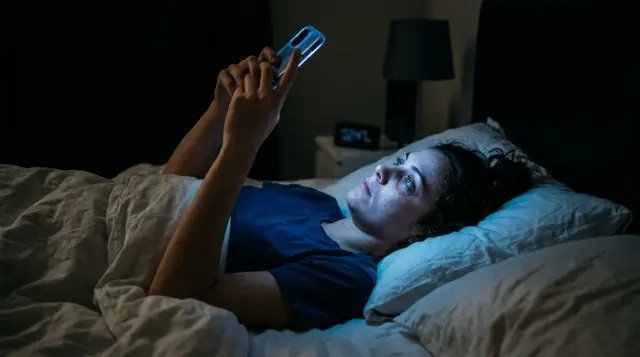
So why are so many of us stuck in the bad-night spiral? For most people, the answer is glowing in their hand right now. Screen time, especially in those hours before bed, is one of the biggest wrecking balls to natural circadian rest. The blue light from your phone, tablet, or laptop tricks your brain into thinking it's still broad daylight.
I used to scroll through my phone until my eyes physically couldn't stay open. Then I'd wonder why I felt like garbage every morning. Sound familiar? It wasn't until I started treating screen time as something I could actively manage that my sleep turned around. And I mean genuinely turned around, not just marginally improved.
This guide isn't about going off the grid or throwing your phone in a river. It's about practical, step-by-step changes that reduce your screen exposure enough to let your body's sleep architecture do what it was designed to do. We'll cover the science, the strategies, and the specific habits that make the biggest difference.
How Does Sleep Actually Promote More Sleep?
The idea that sleep promotes sleep isn't folk wisdom. It's backed by how your circadian rhythm actually works. According to the National Institute of Neurological Disorders and Stroke, your internal clock relies on consistent signals, primarily light exposure and sleep timing, to regulate when you feel drowsy and when you feel alert [1]. Sleep well one night, and you reinforce those signals. The next night's transition into rest gets smoother.
Think of it like a flywheel. The first push is the hardest. But once it's spinning, each rotation takes less effort. Consistent nightly recovery trains your hypothalamus, specifically the suprachiasmatic nucleus, to release melatonin at the right time. Skip a night or flood your eyes with blue light at midnight, and you're basically jamming a stick into the spokes.
A 2019 study published in The Lancet Psychiatry tells a striking story. Researchers looked at over 91,000 UK Biobank participants and found that people with the most disrupted circadian rhythms had significantly higher rates of depression and bipolar disorder [2]. They weren't just measuring total sleep time. They were measuring rhythm consistency. Regular sleepers had better mental health outcomes even when they didn't clock a perfect eight hours every single night.
Quick Q&A
Q: Does one good night of sleep actually make the next night easier?
A: Yes, consistent sleep timing reinforces your circadian rhythm signals, so your brain learns to initiate drowsiness at the same time each night.
This is exactly why screen time matters so much. It's not just about the minutes you spend scrolling. It's about what that light does to the flywheel. If you want to understand the full picture of sleep optimization, check out our guide on How to Sleep Better Tonight: The Complete Checklist.
Why Does Blue Light From Screens Disrupt Your Circadian Rhythm?
Your retinas contain specialized cells called intrinsically photosensitive retinal ganglion cells (ipRGCs). These are particularly sensitive to blue wavelengths of light, around 460 to 480 nanometers. When they detect blue light, they fire a "it's daytime" signal straight to your suprachiasmatic nucleus, which then shuts down melatonin production. Harvard Medical School researchers found that blue light shifted circadian rhythms by about twice as much as comparable green light exposure, and suppressed melatonin for roughly twice as long [3].
Here's how that plays out in real life. You're watching a show on your iPad at 10:30 PM, planning to sleep at 11. Your brain is receiving a stream of photons that says "it's noon." By the time you put the device down and close your eyes, your melatonin levels are still suppressed. Your body has no idea it's supposed to be winding down. You lie there. You check the time. You pick the phone back up. The cycle deepens.
The CDC reports that roughly 1 in 3 American adults don't get the recommended minimum of 7 hours of sleep per night. While there are many contributing factors, screen time before bed is one of the most fixable. You can't always control your work schedule or your stress levels. But you can control when you put down your phone.
Beyond blue light, there's the stimulation factor. Social media feeds, news alerts, work emails. All of it activates your sympathetic nervous system. Your body doesn't distinguish between a stressful email and a mild physical threat. Both trigger cortisol. And cortisol is the biological opposite of what you need when you're trying to fall asleep. For more on environmental factors that affect your health, explore the EMF Health Benefits page at Proteck'd.
Good sleep builds on itself like compound interest. One consistent night makes the next one easier, and over time, you stop fighting your body and start working with it. The single most controllable variable for most people is how they use screens in the hours before bed.
Step 1: Audit Your Current Screen Time Honestly
Before you change anything, you need to know where you actually stand. Both iOS (Screen Time) and Android (Digital Wellbeing) have built-in tracking tools that show exactly how many hours you spend on your phone and which apps eat the most time. I was genuinely shocked the first time I checked mine. I thought I was at maybe two hours a day. It was closer to five.
Look specifically at your screen use after 8 PM. That's the window that matters most for sleep hygiene. A 2020 study from the University of Pennsylvania found that participants who reduced their social media use to 30 minutes per day reported significant reductions in loneliness and depression after just three weeks. The evening hours are where most of that mindless scrolling happens.
Write down your numbers. Total daily screen time. Total screen time after 8 PM. Top three apps by usage. This isn't about shame. It's about having a baseline so you can actually measure progress. You wouldn't start a diet without knowing what you currently eat, right? Same idea.
If you're also interested in optimizing other areas of health alongside your digital detox, The Top Biohacks: Ranked by Evidence is worth your time. Sleep improvement consistently ranks as the single most impactful biohack available.

Step 2: How Do You Create a Screen-Free Wind-Down Routine?
This is where most people fail. And it's because they try to go from full-screen to zero-screen overnight. Don't do that. Start with a 30-minute buffer before your target bedtime. During those 30 minutes, your phone goes in another room. Not on your nightstand face-down. Another room. The proximity alone is enough to tempt you.
Fill that time with something your body actually associates with winding down. Reading a physical book works well. So does stretching, journaling, or even just sitting with a cup of herbal tea. Dr. Matthew Walker, neuroscience professor at UC Berkeley and author of "Why We Sleep," recommends a consistent pre-sleep ritual because it acts as a psychological signal that sleep is approaching. Your brain starts to link those activities with drowsiness over time.
After one week at 30 minutes, push it to 45. Then 60. The National Sleep Foundation recommends a minimum 30-to-60-minute screen-free window, but many sleep researchers suggest 90 minutes is ideal for people who are particularly sensitive to melatonin suppression from screens.
Quick Q&A
Q: Is 30 minutes of screen-free time before bed enough?
A: It's a good starting point, but research suggests 60 to 90 minutes screen-free produces noticeably better melatonin recovery and faster sleep onset.
One thing that helped me enormously was wearing comfortable, purpose-driven clothing as part of my wind-down signal. Proteck'd's Faraday Health Collection serves double duty here. The EMF-shielding fabric gives you one less source of electromagnetic radiation to worry about as you're trying to calm your nervous system for the night.

Step 3: What Should You Do With Your Phone at Night?
Let's talk about the elephant in the bedroom. Most people use their phone as an alarm clock, which means it lives on the nightstand, within arm's reach, all night long. According to a 2021 survey by the American Academy of Sleep Medicine, 93% of Gen Z and 90% of millennials reported losing sleep because they stayed up past their bedtime to scroll. The phone's presence is the problem.
Buy a $10 alarm clock. Seriously. That single purchase removes the excuse for keeping your phone beside your bed. Charge your phone in the kitchen or the living room. If you absolutely need it nearby for emergencies, put it across the room face down with all notifications silenced except calls from specific contacts.
This one change, getting the phone physically away from your sleeping area, is probably the highest-impact, lowest-effort adjustment you can make. I know people who've tried supplements, weighted blankets, white noise machines, and expensive mattresses without ever addressing the fact that they're staring at Instagram until 1 AM. Fix the basics first.
If you're a woman looking for nightwear or loungewear that supports your health goals, Proteck'd's Women's Wellness Collection offers EMF-shielding garments that are actually comfortable enough to sleep in. It's one of those small choices that compounds when paired with better screen habits.
Step 4: How Do You Handle Screens During the Day to Sleep Better at Night?
Nighttime screen reduction gets all the attention, but what you do during daylight hours matters too. Exposure to bright, natural light in the morning is one of the strongest signals your circadian rhythm can receive. Dr. Andrew Huberman of Stanford University's Department of Neurobiology has emphasized that 10 to 15 minutes of outdoor morning light exposure can significantly strengthen circadian timing and improve nighttime sleep quality.
The contrast matters. Bright light during the day. Dim light at night. If you work in a windowless office under fluorescent lights all day and then blast your retinas with your phone at night, your brain never gets a clear signal about what time it actually is. Try to take a walk outside within the first hour of waking up. Even on overcast days, outdoor light intensity far exceeds indoor lighting.
During work hours, try the 20-20-20 rule. Every 20 minutes, look at something 20 feet away for 20 seconds. The American Academy of Ophthalmology recommends this to reduce eye strain, but it also gives your brain micro-breaks from the constant close-range stimulation of screens. Small recovery windows throughout the day add up.
For a broader look at recovery strategies that pair well with screen time reduction, our article on Cold Water Therapy: Does It Actually Work? covers another popular approach to resetting your nervous system.
What Happens to Your Body When You Actually Reduce Screen Time?
Let's paint the picture of what improvement actually looks like. Within the first three to five days of a consistent screen-free evening routine, most people report falling asleep faster. This makes sense. Melatonin suppression from blue light typically resolves within 60 to 90 minutes after the light source is removed. Give your brain that buffer and you're no longer fighting your own biochemistry at bedtime.
After about two weeks, the compounding effect kicks in. This is where the principle of does sleep promote sleep becomes something you can feel. You're falling asleep easier, sleeping more deeply, waking up more refreshed. Then your body naturally gets drowsier at the right time the next evening. According to NIH research, adults who consistently get fewer than 6 hours of sleep show cognitive impairments equivalent to going two full nights without sleep, and those impairments build up cumulatively [1]. Breaking the cycle reverses those deficits.
Beyond cognitive benefits, improved nightly recovery supports heart health, immune function, muscle repair, and hormonal balance. The NIH's National Heart, Lung, and Blood Institute notes that during deep sleep your body releases growth hormone, repairs blood vessels, and strengthens immune defenses. These aren't abstract benefits. They show up as better workouts, fewer colds, and a more stable mood.
Your gut health improves too, which surprises a lot of people. There's a well-documented bidirectional relationship between sleep quality and the gut microbiome. If you're curious about that connection, Gut Health: The Complete Guide breaks it down in detail.
Does Sleep Quality Matter More Than Sleep Quantity?
I get asked this one constantly. The answer: both matter, but quality edges out quantity in most research. You can spend nine hours in bed and still feel awful if you're waking up repeatedly or never reaching deep slow-wave sleep. The sleep stages, specifically Stages 3 and 4 NREM sleep and REM sleep, are where the real restoration happens. Spending eight hours in light Stage 1 and Stage 2 sleep doesn't give you the same benefits.
Harvard Health's overview of sleep and energy explains that REM sleep, which typically occurs in longer stretches during the second half of the night, is particularly important for emotional regulation and memory consolidation [3]. If you're waking up at 3 AM because your phone buzzed or because blue light exposure shifted your circadian timing, you're disproportionately cutting into REM.
Here's a practical test. If you need an alarm to wake up, you're probably not getting enough quality rest. If you wake up naturally within 10 minutes of your alarm, you're in a good place. Track how often you wake during the night, too. More than one or two brief awakenings suggests something, possibly screen-related, is fragmenting your sleep architecture.
The relationship between sleep quality and quantity isn't either-or. They reinforce each other. When does sleep promote sleep most powerfully? When both the timing and the depth are consistent night after night. That's the sweet spot where the flywheel really starts spinning.
Step 5: How to Sustain These Changes Long-Term
Here's the uncomfortable truth about habit change: most people who try a digital detox for better sleep succeed for a week, maybe two, and then slide right back. A 2012 study from University College London, published in the European Journal of Social Psychology, found that it takes an average of 66 days for a new behavior to become automatic. Not 21 days, like the popular myth claims. You need to plan for the messy middle.
Use your environment to your advantage. Keep a book on your nightstand where your phone used to be. Set automated Do Not Disturb schedules on your devices. Some people I know go as far as putting their phone in a timed lockbox. It sounds extreme, but it works because it removes the decision from the moment of weakness entirely.
Track your progress. Use a simple sleep journal or an app like Sleep Cycle that measures your rest patterns without requiring you to stare at a screen. Note your sleep onset time, number of awakenings, and how you feel each morning on a scale of 1 to 10. After 30 days, the data will speak for itself.
And be honest with yourself about backsliding. Missing one night doesn't reset everything. What matters is the pattern over weeks, not perfection on any single night. Does sleep promote sleep? Absolutely. But the keyword is consistency, not rigidity. Give yourself grace while still protecting the routine. That's how these changes stick for years, not just weeks.
Key Takeaways
Frequently Asked Questions
Does sleep promote sleep in adults?
Yes. Consistently getting quality sleep reinforces your circadian rhythm, making it progressively easier to fall asleep and stay asleep on subsequent nights. This works because your suprachiasmatic nucleus strengthens its timing signals with regular input. Adults who maintain consistent sleep schedules, even on weekends, see the biggest benefits.
How many hours before bed should I stop using screens?
The National Sleep Foundation recommends at least 30 to 60 minutes, but many sleep researchers suggest 90 minutes for optimal melatonin recovery. Start with 30 minutes and gradually extend the window. Even a small buffer is significantly better than scrolling right up until you close your eyes.
Do blue light glasses actually help with sleep?
The evidence is mixed. A 2021 meta-analysis published in Sleep Medicine Reviews found that blue light blocking glasses did not significantly improve sleep quality in most studies. Reducing total screen time and increasing the distance between your eyes and the screen appear to be more effective than just filtering the light.
Can reducing screen time help with anxiety and depression?
Research suggests yes. A 2018 University of Pennsylvania study found that limiting social media to 30 minutes per day significantly reduced depression and loneliness. Better sleep from reduced screen time also independently improves mood regulation, so the benefits compound.
Why do I feel more tired when I sleep inconsistently even if I get 8 hours?
Because circadian rhythm disruption affects sleep quality regardless of quantity. When your sleep timing varies widely, your body can't optimize the cycling of NREM and REM stages. You may spend 8 hours in bed but get proportionally less deep and REM sleep, which leaves you feeling unrefreshed.
Is it okay to watch TV before bed instead of using a phone?
TV is generally less disruptive than a phone or tablet because you hold it at a greater distance, which reduces the intensity of blue light reaching your retinas. That said, it still emits blue light, and stimulating content can raise cortisol. If you must watch TV, keep it at least 6 feet away and choose calm, familiar content.
How long does it take to see sleep improvements after reducing screen time?
Most people notice faster sleep onset within 3 to 5 days. Deeper, more restorative sleep typically takes 1 to 2 weeks of consistent evening screen reduction. The full compounding benefits, including improved mood, energy, and cognitive function, usually become noticeable around the 3 to 4 week mark.
Does using night mode or dark mode on my phone help me sleep better?
Night mode reduces blue light emission, which is a step in the right direction, but it doesn't eliminate it entirely. A 2019 study from Brigham Young University found that night mode alone didn't significantly improve sleep outcomes compared to not using night mode. The biggest gains come from putting the device away altogether, not just changing the display settings.
Can poor sleep from too much screen time affect my physical health?
Absolutely. The NIH links chronic sleep deprivation to increased risk of cardiovascular disease, obesity, type 2 diabetes, and weakened immune function. During deep sleep, your body releases growth hormone and repairs tissue. When screen time disrupts that deep sleep, the physical consequences pile up over weeks and months.
What's the best replacement activity for phone scrolling before bed?
Reading a physical book is consistently one of the best options because it's low-stimulation and doesn't emit light. Other effective alternatives include gentle stretching, journaling, meditation, or listening to a calm podcast or audiobook with your phone screen off and placed in another room.
References
- National Institute of Neurological Disorders and Stroke (NINDS), NIH – The circadian clock relies on consistent signals to regulate sleep-wake cycles, and chronic short sleep leads to cumulative cognitive impairments.
- The Lancet Psychiatry – A study of over 91,000 UK Biobank participants linked disrupted circadian rhythms to significantly higher rates of depression and bipolar disorder.
- Harvard Health Publishing, Harvard Medical School – Blue light suppresses melatonin for approximately twice as long as green light and shifts circadian rhythms by about twice as much.
About the Author
Proteck'd EMF Apparel
Health & EMF Specialists
The Proteck'd team covers EMF protection, silver-fiber apparel, and practical ways to reduce everyday radiation exposure. Every piece Proteck'd ships is designed, tested, and worn by the people who build it.
Protect Yourself Today
Proteck'd Faraday and silver fiber apparel is engineered to shield your body from everyday EMF exposure. Built for real life, tested for real results.
Shop EMF Protection →✓30-day returns✓Free shipping✓Free returns✓Silver fiber shielding


Leave a comment