


How to Sleep Better Tonight: The Complete Checklist

Here's a stat that stopped me cold the first time I read it: roughly one in three American adults regularly gets less than the recommended seven hours of sleep, according to the CDC [1]. That's not just a lot of groggy mornings. That's a public health crisis hiding in plain sight.
If you've been searching for how to optimise sleep, you've probably already run into the usual advice. "Put your phone down." "Drink chamomile tea." Great. But you're still wide awake at 1 a.m., right?
Here's the thing. Good sleep isn't about one magic trick. It's a system. Your body runs on a biological clock that responds to light, temperature, food timing, stress hormones, and even the electromagnetic signals bouncing around your bedroom. Fix one piece and you might notice a small shift. Stack several together and you'll feel like a completely different person.
I've spent a long time combing through the actual research on this, from Harvard sleep labs to clinical trials on melatonin, and what follows is the most complete, actionable checklist I could put together. No fluff. No vague "just relax" platitudes. Let's get into it.
Key Takeaways
Why Does Sleep Quality Matter More Than Sleep Quantity?
You can spend eight hours in bed and still wake up feeling absolutely wrecked. Total time asleep is only part of the equation. What really matters is how much deep sleep and REM sleep you're getting within those hours. According to the Sleep Foundation, deep sleep (also called slow-wave sleep) is when your body repairs muscle tissue, consolidates memory, and releases growth hormone. REM sleep handles emotional regulation and creative problem-solving.
Research from UC Berkeley, led by neuroscientist Matthew Walker, has shown that even modest reductions in deep sleep are linked to higher levels of beta-amyloid plaque, a protein associated with Alzheimer's disease. That finding alone should make anyone pay closer attention to sleep architecture, not just how many hours they logged.
So when we talk about how to improve sleep quality, we're really asking: how do we spend more time in those restorative stages? The answer involves everything from your light environment to what you ate six hours ago. Think of the checklist below as a system for getting the most out of every hour you spend asleep.
Quick Q&A
Q: How much deep sleep should I get each night?
A: Most adults need about 1.5 to 2 hours of deep sleep per night, which typically accounts for 15 to 25 percent of total sleep time.
How Does Light Exposure Affect Your Circadian Rhythm?
Your circadian rhythm is basically a 24-hour internal clock, and light is its primary dial. Harvard Medical School researchers have demonstrated that bright light exposure in the morning can shift your circadian clock by up to two hours, making it easier to fall asleep at night and wake up alert [2]. This is free. It's powerful. And almost nobody does it consistently.
The practical version: within 30 minutes of waking up, get outside. Even on a cloudy day, natural outdoor light delivers 10,000 lux or more. Your indoor lights? Usually around 200 to 500 lux. That gap matters a lot. A 2017 study published in the journal Sleep Health found that office workers who got more natural light during the day slept an average of 46 minutes more per night than those stuck under artificial lighting all day.
Now flip to the evening side. Blue light from screens suppresses melatonin production by up to 50 percent, according to a 2019 study published in PNAS [3]. That number is staggering. If you're scrolling Instagram at 11 p.m., your brain genuinely thinks it's still afternoon. This is why I always recommend reading our guide on Screen-Free Living: The Complete Guide if you're serious about fixing your nightly recovery.
And if giving up screens entirely in the evening feels unrealistic (it does for most of us), at minimum switch your devices to night mode after sunset and consider blue-light-blocking glasses. But honestly? A paperback book and a warm lamp will always beat Netflix when it comes to preparing your brain for sleep.
What's the Best Bedroom Setup for Deep Sleep?
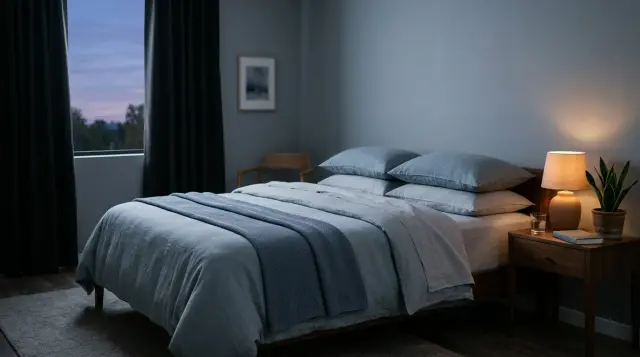
Think of your bedroom as a cave. Sleep researchers love that analogy, and it's surprisingly accurate. You want it dark, cool, and quiet. The National Sleep Foundation recommends a bedroom temperature between 60 and 67°F (about 15 to 19°C) for optimal sleep. Your core body temperature naturally drops as you fall asleep, and a cool room supports that process instead of fighting it.
Darkness matters more than most people realize. Even dim light exposure during sleep, as little as 100 lux (think a nightlight or streetlight seeping through curtains), has been shown by Northwestern University researchers in 2022 to increase heart rate and insulin resistance overnight. Blackout curtains or a quality sleep mask aren't luxuries. They're tools.
Here's one factor that gets almost zero attention: electromagnetic field exposure in the bedroom. Your phone on the nightstand, your Wi-Fi router in the next room, your smart speaker. They're all emitting low-level EMF radiation while you sleep. A growing body of research suggests this may affect melatonin production and sleep architecture. If you're curious about the science, check out Proteck'd's breakdown of EMF Health Benefits. And their Faraday Health Collection offers EMF-shielding apparel that some people wear specifically during sleep to reduce nighttime exposure.
Sound control is the final piece. White noise machines work well for city dwellers. Earplugs are criminally underrated. And if your partner snores, a 2006 Mayo Clinic study found that the non-snoring partner loses an average of one hour of sleep per night. Sometimes the best sleep hack is a good pair of earplugs and an honest conversation.
Good sleep isn't about one magic trick. It's a system. Stack the right habits together, from morning light to cool bedrooms to managing EMF exposure, and you won't just sleep longer. You'll sleep better.

Does Caffeine Really Wreck Your Sleep If You Drink It After Lunch?
Yes. And the research is pretty clear. A landmark 2013 study published in the Journal of Clinical Sleep Medicine by Drake et al. found that consuming 400 mg of caffeine (roughly two strong cups of coffee) six hours before bedtime still reduced total sleep time by more than one hour [4]. Participants didn't just sleep less. They reported significantly worse sleep quality too.
What makes caffeine tricky is its half-life. The average half-life in the human body is about five to six hours, but it varies wildly based on genetics, liver function, and whether you're taking oral contraceptives (which can nearly double caffeine's half-life, according to research published in the American Journal of Clinical Nutrition). So that 3 p.m. latte? For some people, half of that caffeine is still circulating at 9 p.m.
My personal rule is simple: no caffeine after noon. If you're really struggling with sleep and you're a heavy coffee drinker, try moving your cutoff time earlier by one hour each week. You'll probably notice a difference within days. And if you need something warm and ritual-like in the afternoon, switch to herbal tea. Rooibos is my go-to. Zero caffeine, naturally sweet, and you don't have to pretend it's as good as coffee because it's genuinely enjoyable on its own terms.
Can a Consistent Sleep Schedule Actually Fix Insomnia?
It won't fix every case of clinical insomnia, but consistent sleep timing is one of the most evidence-backed strategies for better circadian rest. The CDC's sleep guidelines emphasize going to bed and waking up at the same time every day, including weekends [1]. That last part is where most people fall apart. Sleeping in two extra hours on Saturday morning creates what researchers call "social jet lag," which disrupts your internal clock almost as much as flying across two time zones.
Dr. Michael Grandner, director of the Sleep and Health Research Program at the University of Arizona, has published extensively on this. His work shows that sleep regularity is a stronger predictor of daytime alertness and mood than total sleep duration. Let that sink in. Seven hours at the same time every night will probably leave you feeling better than eight hours at inconsistent times.
A practical tip I've found helpful: set an alarm for bedtime, not just morning. Sounds backwards, but it works. When your phone buzzes at 10:15 p.m. telling you to start winding down, it short-circuits that "just one more episode" reflex. Speaking of phones and the grip they have on our evenings, Phone Addiction: How to Take Back Control is worth a read if you find yourself doom-scrolling past your bedtime every night.
What Should a Pre-Sleep Routine Actually Look Like?
Forget the Instagram version of a nighttime routine with the $200 candles and the jade rollers. An effective pre-sleep routine is simple, repeatable, and boring. Boring is the point. You're training your brain to associate a specific sequence of actions with the onset of sleep.
A solid routine might look like this. At 60 minutes before bed, dim the lights and put your phone in another room (or at least on airplane mode). At 45 minutes, take a warm shower or bath. Research from the University of Texas at Austin, published in Sleep Medicine Reviews in 2019, found that a warm bath one to two hours before bed reduced sleep onset latency by an average of 10 minutes. The mechanism is straightforward: the warm water brings blood to the surface of your skin, and when you step out, your core temperature drops rapidly, mimicking the natural temperature decline your body uses as a sleep signal.
At 30 minutes before bed, do something calm. Read. Journal. Practice a few minutes of mindfulness meditation. If the word "mindfulness" makes you cringe a little, I get it. It doesn't have to be complicated. We wrote a whole guide called How to Make Mindfulness Stick: Without the Woo that strips away all the mystical baggage.
The key is consistency. After about two weeks of the same sequence, your brain starts releasing melatonin and lowering cortisol almost on cue. It's classical conditioning. And it works beautifully.
How Does Exercise Timing Affect Sleep?
Exercise is one of the most reliable ways to improve sleep quality. But timing matters. A 2011 study from the National Sleep Foundation's Sleep in America poll found that people who exercised vigorously reported "very good" or "fairly good" sleep quality at nearly twice the rate of non-exercisers. That's a massive gap.
Morning or early afternoon exercise tends to produce the best sleep outcomes. This is partly because outdoor exercise doubles as bright light exposure, which reinforces your circadian rhythm. But what about evening workouts? The old advice was to never exercise within three hours of bed, but a 2018 meta-analysis published in Sports Medicine found that moderate exercise in the evening doesn't hurt sleep quality for most people. The exception is high-intensity training within one hour of bedtime, which can raise core body temperature and heart rate enough to delay sleep onset.
If you're into more intense recovery protocols, cold exposure after evening workouts might actually help. The rapid cool-down triggers a parasympathetic response that can prepare your body for sleep. Our guide on Cold Plunge: The Complete Guide covers the science and practical how-to if you're curious.
Quick Q&A
Q: Is it bad to work out right before bed?
A: Moderate exercise in the evening is generally fine, but high-intensity workouts within one hour of bedtime can delay sleep onset by raising core body temperature and heart rate.
Should You Take Melatonin or Other Sleep Supplements?
Melatonin is the most studied sleep supplement, and it does work. But probably not the way you think. According to a meta-analysis published in PLOS ONE, melatonin reduces sleep onset latency (the time it takes to fall asleep) by an average of about 7 minutes and increases total sleep time by roughly 8 minutes. Those numbers aren't huge. Where melatonin really shines is for jet lag, shift work, and people whose circadian rhythm is genuinely misaligned.
The problem with melatonin in the U.S. is that it's sold as a supplement, not a drug, so quality varies wildly. A 2017 study in the Journal of Clinical Sleep Medicine found that the actual melatonin content in supplements ranged from 83% less to 478% more than what was listed on the label. Some products even contained serotonin, which is a controlled substance. If you do take melatonin, choose a reputable brand that does third-party testing, and start with 0.5 to 1 mg rather than the 5 to 10 mg mega-doses commonly sold.
Other supplements with some evidence behind them include magnesium glycinate (which may improve sleep quality in older adults with insomnia, per a 2012 study in the Journal of Research in Medical Sciences) and L-theanine (an amino acid found in green tea that promotes relaxation without drowsiness). But supplements should be the cherry on top of a solid sleep hygiene foundation, not the foundation itself.
How Does Stress Sabotage Your Sleep, and What Actually Helps?
Cortisol and melatonin have an inverse relationship. When cortisol is high, melatonin stays suppressed. This is why you can feel completely exhausted but still lie there wired at midnight after a stressful day. Your body is flooded with stress hormones that evolved to keep you alert during danger, and your brain can't tell the difference between a predator and an overdue project.
The American Psychological Association's 2022 Stress in America survey found that 43% of adults reported that stress had caused them to lie awake at night in the past month. Nearly half. That's not a sleep problem. That's a stress problem wearing a sleep mask.
So what works? Cognitive Behavioral Therapy for Insomnia (CBT-I) is the gold standard, recommended as a first-line treatment by the American College of Physicians before sleep medication. It's typically a six to eight week program that addresses the thought patterns and behaviors keeping you awake. Many people see improvements within two to three weeks.
For everyday stress management, a digital detox in the evening can be surprisingly effective. Removing the constant input of news, notifications, and social comparison gives your nervous system a chance to downshift. We've written about this in depth in Unplugging: How to Actually Do It, and it's one of the most impactful things you can do for nightly recovery. The Women's Wellness Collection from Proteck'd is also worth exploring if you're looking for EMF-shielding clothing that supports a lower-stimulation environment.
What Are the Biggest Sleep Myths That Keep People Up at Night?
Let's clear a few things up, because bad advice can be just as harmful as no advice.
Myth number one: "You can catch up on sleep over the weekend." A 2019 study from the University of Colorado Boulder, published in Current Biology, found that weekend recovery sleep did not reverse the metabolic damage caused by chronic weeknight sleep restriction. Your waistline doesn't care that you slept until noon on Sunday.
Myth number two: "Alcohol helps you sleep." Alcohol is a sedative, yes, but sedation isn't sleep. Research from the London Sleep Centre has shown that alcohol disrupts REM sleep and increases nighttime awakenings during the second half of the night. You might fall asleep faster after a glass of wine, but the sleep you get will be fragmented and less restorative.
Myth number three: "If you can't sleep, stay in bed and try harder." This is actually the opposite of what sleep scientists recommend. Dr. Andrew Huberman at Stanford University advocates getting out of bed after 20 minutes of wakefulness and doing something quiet in dim light until you feel sleepy again. Staying in bed while anxious trains your brain to associate the bed with wakefulness, which makes the problem worse over time.
The truth about learning how to optimise sleep is that it requires unlearning a lot of things we've been told. Question everything, and follow the research.
Frequently Asked Questions
Q: How many hours of sleep do adults actually need?
Most adults need 7 to 9 hours per night, according to CDC guidelines. Individual needs vary based on age, genetics, and activity level. The quality of those hours matters just as much as the quantity, so hitting 7 hours of unbroken, restorative sleep often beats 9 hours of fragmented rest.
Q: What is the ideal bedroom temperature for sleeping?
Between 60 and 67°F (15 to 19°C) is the recommended range from the National Sleep Foundation. A cool room supports your body's natural core temperature drop that triggers sleep onset. If you tend to run hot, err toward the lower end and use breathable bedding.
Q: Does blue light from screens actually affect sleep?
Yes, significantly. A 2019 PNAS study found that evening blue light exposure suppresses melatonin by up to 50%. Even using night mode on your phone reduces but doesn't eliminate the effect. The best approach is to stop using screens 60 minutes before bed or switch to non-screen activities.
Q: Is it better to exercise in the morning or evening for sleep?
Morning or early afternoon exercise tends to produce the best sleep outcomes, partly because outdoor exercise combines movement with bright light exposure. That said, moderate evening exercise is fine for most people. Just avoid high-intensity training within one hour of bedtime.
Q: Can EMF exposure from devices affect sleep quality?
Emerging research suggests that electromagnetic field exposure from phones, routers, and smart devices may interfere with melatonin production and sleep architecture. While the science is still developing, reducing EMF exposure in the bedroom is a low-risk, potentially high-reward strategy. EMF-shielding products like those in Proteck'd's Faraday collection offer one practical approach.
Q: How long before bed should I stop drinking caffeine?
At least 6 hours, based on a 2013 study in the Journal of Clinical Sleep Medicine. If you're particularly sensitive, 8 to 10 hours is safer. Caffeine's half-life varies by individual, and factors like genetics and certain medications can extend it significantly.
Q: Does melatonin actually work for sleep?
It works, but its effects are modest for most people, reducing sleep onset by about 7 minutes on average. It's most effective for jet lag, shift work, and circadian rhythm disorders. If you use it, start with 0.5 to 1 mg and choose a third-party tested brand, since supplement quality varies enormously.
Q: Can you actually catch up on lost sleep over the weekend?
Not effectively. A 2019 study from the University of Colorado Boulder found that weekend recovery sleep did not reverse the metabolic disruptions caused by weeknight sleep deprivation. Consistent nightly sleep is far more beneficial than alternating between sleep debt and catch-up attempts.
Q: What should I do if I can't fall asleep after 20 minutes?
Get out of bed and move to another room. Do something quiet and non-stimulating in dim light, like reading a physical book, until you feel genuinely sleepy. This technique, recommended by Stanford sleep researchers, prevents your brain from associating your bed with frustration and wakefulness.
Q: Does alcohol help or hurt sleep?
It hurts sleep quality even though it may help you fall asleep faster. Alcohol acts as a sedative initially, but it disrupts REM sleep and causes more frequent awakenings in the second half of the night. Research from the London Sleep Centre confirms that alcohol-induced sedation is not the same as restorative sleep.
References
- Centers for Disease Control and Prevention – One in three American adults regularly gets less than the recommended seven hours of sleep; CDC recommends 7+ hours for adults and consistent sleep-wake schedules.
- Harvard Medical School - Division of Sleep Medicine – Bright morning light exposure can shift the circadian clock by up to two hours and is a primary regulator of the sleep-wake cycle.
- Proceedings of the National Academy of Sciences (PNAS) – Evening blue light exposure from screens suppresses melatonin secretion, delays circadian timing, and reduces alertness the following morning.
- Journal of Clinical Sleep Medicine (via PubMed) – Caffeine consumed 6 hours before bedtime significantly reduced total sleep time by more than one hour and impaired sleep quality.
About the Author
Proteck'd EMF Apparel
Health & EMF Specialists
The Proteck'd team covers EMF protection, silver-fiber apparel, and practical ways to reduce everyday radiation exposure. Every piece Proteck'd ships is designed, tested, and worn by the people who build it.
Get the Free EMF Home Audit Checklist
A room-by-room PDF that walks you through the biggest EMF sources in your house and what to do about each one. No cost, no fluff.
Download the Checklist →✓30-day returns✓Free shipping✓Free returns✓Silver fiber shielding


Leave a comment