


Integrative Wellness: Beyond the Buzzword

Here's a number that stopped me cold: according to the CDC, more than 70 million Americans suffer from chronic sleep problems. That's roughly one in five adults lying awake, scrolling their phones, and eventually typing "how to optimise sleep reddit" into a search bar at some ungodly hour. I know because I've been one of them.
The Reddit threads on sleep optimization are genuinely fascinating. Some advice is brilliant, backed by real research. Some of it is anecdotal nonsense. And a surprising amount of it overlaps with what integrative wellness practitioners have been saying for years, just stripped of the jargon and explained in plain English by regular people who couldn't sleep.
But here's what most of those threads miss: sleep doesn't exist in a vacuum. Your rest quality is tangled up with your stress levels, your environment, what you ate at 9 PM, and even the electronic devices humming on your nightstand. Fixing one piece without addressing the others is like patching one tire on a car with four flats.
So this isn't just another listicle of sleep hacks. This is a real look at integrative wellness as it applies to your nightly recovery, your energy, and your long-term health. We'll cover what the research says, what the Reddit crowd has figured out on their own, and where those two worlds meet in ways that might surprise you.
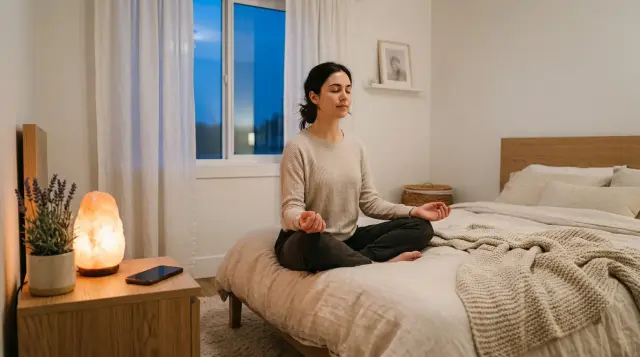
What Does "How to Optimise Sleep Reddit" Actually Reveal?
When you search how to optimise sleep reddit, you're basically crowdsourcing from thousands of insomniacs, biohackers, shift workers, and anxious overthinkers who've tried everything. The recurring advice in subreddits like r/sleep, r/biohackers, and r/selfimprovement tends to cluster around a handful of strategies that actually hold up to scrutiny.
The most upvoted tips? Consistent wake times (even on weekends), cool bedrooms, magnesium glycinate supplementation, blue light blocking glasses after sunset, and the "sleepy girl mocktail" that went viral in 2023. Stanford sleep researcher Dr. Andrew Huberman has echoed many of these, calling a fixed wake time the single most impactful variable for circadian rhythm regulation.
What's interesting is how many Reddit users independently arrive at integrative health principles without using that label. They're stacking habits: morning sunlight plus evening relaxation plus bedroom environment changes. That's not a hack. That's a system. And systems beat one-off tricks every time.
Quick Q&A
Q: What is the single most recommended sleep tip on Reddit?
A: A consistent wake time, even on weekends, is the most frequently upvoted and expert-backed recommendation for improving circadian rhythm and overall sleep quality.
For a deeper breakdown of evidence-based rest strategies, I'd recommend reading our Sleep Optimization: The Honest Guide To Better Rest, which pairs well with the crowd wisdom you'll find in those threads.
Why Does Your Sleep Environment Matter More Than You Think?
Let's talk about something the Reddit sleep community obsesses over, and for good reason: your bedroom environment. A 2022 study published in the Journal of Clinical Sleep Medicine confirmed that room temperature is one of the strongest predictors of sleep quality, with the sweet spot landing between 65 and 68°F (18 to 20°C) [1]. That's colder than most people keep their homes.
Temperature is only part of it, though. Light contamination from LEDs on chargers, standby indicators, and streetlights sneaking through thin curtains disrupts melatonin production. A 2019 study from Northwestern University's Feinberg School of Medicine found that even dim light exposure during sleep increased insulin resistance and heart rate in healthy adults [2]. That's not a minor inconvenience. That's metabolic disruption happening while you're unconscious.
Then there's the electromagnetic factor. This one gets less airtime in mainstream advice, but it's gaining traction. Your phone, Wi-Fi router, and smart devices emit low-level electromagnetic fields throughout the night. While research is ongoing, the WHO's International Agency for Research on Cancer classified radiofrequency electromagnetic fields as "possibly carcinogenic" back in 2011. Many people in integrative health circles choose to minimize exposure, especially during sleep. You can learn more about the research at our EMF Health Benefits page.
Proteck'd's Faraday Health Collection was designed with exactly this kind of environmental awareness in mind. The thinking is straightforward: if you're already optimizing temperature, light, and noise, why not address the electromagnetic fields in your sleep space too? It's one more layer in a genuinely integrative approach to better rest.
Sleep optimization isn't about finding one magic hack. It's about building a system where your environment, habits, nutrition, and stress management all work together. The best Reddit sleep advice and the best clinical research point to the same conclusion: integrative wellness beats isolated tricks every time.
Can Meditation and Stress Management Actually Fix Bad Sleep?
Short answer: yes, but not in the way most wellness influencers describe it. Meditation isn't a magic off switch for your racing thoughts. Think of it more like strength training for your attention. The research backing it up is surprisingly solid, too.
A 2015 randomized clinical trial published in JAMA Internal Medicine found that mindfulness meditation significantly improved sleep quality in older adults with moderate sleep disturbances, outperforming a structured sleep hygiene education program [3]. The meditation group didn't just sleep better subjectively. They showed measurable improvements on the Pittsburgh Sleep Quality Index, a validated clinical tool.
Reddit's r/meditation community frequently recommends body scan meditations and Yoga Nidra specifically for sleep. Yoga Nidra, sometimes called "yogic sleep," is a guided practice that systematically relaxes the body while keeping awareness active. Dr. Richard Miller, who developed the iRest protocol used by the U.S. Department of Defense for veterans with PTSD, has published data showing significant improvements in sleep onset and nighttime waking.
We wrote a thorough breakdown of what meditation can and can't do in our piece on the Science Behind Meditation: Honest Assessment. The takeaway? It works best when you pair it with the environmental and behavioral changes we've already discussed. Meditation without sleep hygiene is like stretching without ever actually exercising.
Quick Q&A
Q: Does meditation help you fall asleep faster?
A: According to a 2015 JAMA Internal Medicine trial, mindfulness meditation improved sleep quality scores significantly compared to sleep hygiene education alone, with measurable reductions in insomnia symptoms.

What Are the Sleep Hygiene Tips That Actually Work?
"Sleep hygiene" has become one of those phrases that makes people's eyes glaze over. And honestly? Fair enough. It's often presented as a checklist of painfully obvious advice. Don't drink coffee at midnight. Wow. Groundbreaking. But when you look at which sleep hygiene tips actually move the needle, the list gets more interesting and a lot more specific.
The National Institutes of Health highlights that timing of light exposure is one of the most powerful regulators of circadian rhythm [1]. Getting 10 to 15 minutes of direct sunlight within the first hour of waking helps anchor your body's internal clock. This is one of the most commonly cited tips in Reddit sleep threads and in Dr. Andrew Huberman's widely shared podcast protocols from Stanford's Department of Neurobiology.
Another underappreciated factor: evening carbohydrate intake. A 2007 study in the American Journal of Clinical Nutrition found that eating a high-glycemic-index meal four hours before bedtime reduced sleep onset latency. In plain terms, a moderate serving of jasmine rice with dinner helped people fall asleep faster. Not a sleeping pill. Rice.
And then there's the digital curfew concept. The Sleep Foundation's 2023 poll reported that 57% of Americans who use screens within an hour of bedtime report "poor" or "only fair" sleep quality. Turning off devices, or at minimum switching to airplane mode, does double duty. It cuts blue light exposure and reduces the ambient EMF in your bedroom. This is where sleep hygiene tips and natural sleep remedies start to converge with the environmental awareness that integrative wellness emphasizes.

How Does Integrative Wellness Connect Sleep, Nutrition, and Movement?
Here's where most sleep advice falls short: it treats rest as an isolated problem. But you don't sleep poorly just because of what happens at 10 PM. Your circadian rhythm optimization starts with what you do at 7 AM, what you eat at noon, and whether you moved your body at all during the day.
A 2011 study in the journal Mental Health and Physical Activity found that 150 minutes of moderate exercise per week improved self-reported sleep quality by 65%. That's the WHO's recommended baseline for adults, and it doesn't require a gym membership. Walking counts. The study, conducted at Oregon State University by Dr. Paul Loprinzi, also showed a 68% reduction in leg cramps during sleep and a 45% reduction in difficulty concentrating when tired.
Nutrition matters too, and not just the rice trick. Magnesium deficiency, which according to the NIH affects roughly 50% of the U.S. population, is directly linked to insomnia and poor sleep architecture. Reddit's biohacking community has latched onto magnesium glycinate and magnesium threonate as preferred forms, and there's reasonable science behind the preference. Glycinate is better absorbed and less likely to cause digestive issues than cheaper magnesium oxide.
The point is, sleep optimization isn't a single-variable problem. It's an interconnected web. Our Holistic Health Guide: Real Wellness Beyond Buzzwords lays this out in more detail, covering how nutrition, movement, mental health, and environment all feed into each other. When someone asks how to optimise sleep reddit style, the best answers always end up pointing toward this kind of layered, integrative thinking.
Does Reducing EMF Exposure at Night Improve Sleep Quality?
This is the part of the conversation where some people check out and others lean in. Electromagnetic field exposure and its effects on sleep is a genuinely debated topic in the research world. But there's enough signal in the noise to pay attention.
A 2013 study from the University of Melbourne, published in the journal PLOS ONE, found that radiofrequency EMF exposure from mobile phones altered brain electrical activity during sleep. Specifically, it affected sleep spindles in non-REM sleep. Sleep spindles are associated with memory consolidation and the brain's ability to stay asleep through external disturbances. Messing with them isn't trivial.
The WHO has acknowledged that more research is needed, but in the meantime, the precautionary principle makes sense to a lot of people. Putting your phone in airplane mode, moving your router out of the bedroom, and choosing clothing and bedding designed to reduce EMF exposure are low-cost, low-risk changes. Proteck'd's Women's Wellness Collection incorporates silver-infused Faraday fabrics that shield against electromagnetic radiation, and it's designed to be worn comfortably day and night.
Whether you're fully convinced by the EMF research or just hedging your bets, reducing electronic interference in your sleep environment aligns with every other principle of good sleep hygiene. Less buzzing, less light, less stimulation. It's the same logic that drives the "phone outside the bedroom" rule that every sleep expert and every Reddit thread agrees on. For a complete primer on healthy living habits that support better circadian rest, check out The Essential Guide To Healthy Living Tips.
What Natural Sleep Remedies Do Reddit Users Swear By?
Let's be honest. Some natural sleep remedies are nonsense. Lavender pillow spray is lovely, but it's not fixing your cortisol dysregulation. That said, some of the remedies Reddit users champion have real data behind them, and they're worth a closer look.
Magnesium glycinate at doses between 200 and 400 mg is probably the most recommended supplement across sleep-focused subreddits. The NIH's Office of Dietary Supplements notes that magnesium plays a role in activating the parasympathetic nervous system, the "rest and digest" pathway. Tart cherry juice is another Reddit favorite. A 2018 study from Louisiana State University published in the American Journal of Therapeutics found that tart cherry juice increased sleep time by an average of 84 minutes per night in older adults with insomnia [4].
Then there's the "sleepy girl mocktail" that took TikTok and Reddit by storm in 2023: tart cherry juice, magnesium powder, and sparkling water. Is it a miracle cure? No. But the combination addresses magnesium levels and provides natural melatonin precursors from the cherries. It's not a bad nightcap, honestly.
What I find most useful about the Reddit approach is the iterative experimentation. People try things, report back, adjust. It's messy, uncontrolled science, sure. But the collective filtering mechanism tends to surface strategies that genuinely help, while the downvote system buries the stuff that doesn't. When you combine that crowd-filtered wisdom with actual clinical research, you get a pretty solid playbook for integrative health practices that support deep, restorative nightly recovery.
How Do You Build a Sustainable Sleep Optimization System?
Here's the part most articles skip. They give you 10 tips and wish you luck. But building a sustainable sleep system requires understanding which changes to make first and how to stack them without overwhelming yourself.
Start with the anchor: a fixed wake time. Dr. Matthew Walker, neuroscientist at UC Berkeley and author of "Why We Sleep," calls this the non-negotiable foundation. Pick a time and stick to it for two weeks, even on weekends. Your circadian rhythm will start to calibrate, and your sleep onset will naturally shift earlier.
Next, address your environment. Temperature, darkness, and device proximity. If you're going to make one equipment purchase, make it blackout curtains or an EMF-reducing sleep setup from the Faraday Health Collection. These aren't luxury upgrades. They're removing obstacles that actively degrade your sleep architecture every single night.
Then layer in the behavioral practices: morning sunlight, evening meditation or body scan, a consistent wind-down routine. Finally, consider targeted supplementation like magnesium if blood work or symptoms suggest a deficiency. The order matters because each layer reinforces the others. A cool, dark, EMF-reduced room makes your meditation practice more effective. A consistent wake time makes your morning light exposure hit at the right biological moment.
This is what integrative wellness actually looks like in practice. Not a single product, not a single habit, but a coherent system where each piece supports the others. And when someone asks how to optimise sleep on Reddit or anywhere else, the answer that actually works is always a system, never a shortcut.
Key Takeaways
Frequently Asked Questions
How to optimise sleep according to Reddit communities?
The most consistently upvoted strategies across Reddit sleep communities include maintaining a fixed wake time every day, keeping the bedroom between 65 and 68°F, taking magnesium glycinate before bed, and getting morning sunlight within the first hour of waking. These recommendations closely mirror advice from sleep researchers like Dr. Andrew Huberman at Stanford.
Does magnesium glycinate actually help with sleep?
Yes. Magnesium glycinate is one of the most bioavailable forms of magnesium and supports the parasympathetic nervous system. The NIH notes that magnesium deficiency affects roughly half of the U.S. population, and correcting it can improve sleep quality. Doses between 200 and 400 mg taken 30 to 60 minutes before bed are most commonly recommended.
What is the sleepy girl mocktail for sleep?
The sleepy girl mocktail combines tart cherry juice, magnesium powder, and sparkling water. It went viral on TikTok and Reddit in 2023. Tart cherries contain natural melatonin precursors, and a 2018 Louisiana State University study found tart cherry juice increased sleep time by 84 minutes per night in adults with insomnia.
Can EMF from phones and Wi-Fi routers affect sleep quality?
Research suggests it's possible. A 2013 University of Melbourne study found that radiofrequency EMF from mobile phones altered sleep spindles during non-REM sleep. While the WHO calls for more research, many sleep experts recommend putting phones in airplane mode and moving routers out of the bedroom as a precaution.
What is the best bedroom temperature for sleep?
Most research and sleep experts agree that 65 to 68°F (18 to 20°C) is ideal. The Journal of Clinical Sleep Medicine has published data confirming this range produces the best sleep quality scores. Your core body temperature needs to drop by about 2 to 3 degrees Fahrenheit to initiate sleep, and a cool room helps that process along.
Does meditation help you fall asleep faster?
A 2015 randomized trial published in JAMA Internal Medicine found that mindfulness meditation significantly improved sleep quality compared to a sleep hygiene education control group. Body scan meditations and Yoga Nidra are particularly effective for sleep onset. Consistency matters more than session length.
How does morning sunlight improve sleep at night?
Morning sunlight triggers your suprachiasmatic nucleus, the brain's master clock, to set the day's circadian rhythm. Dr. Andrew Huberman recommends 10 to 15 minutes of direct sunlight within the first hour of waking. This anchors your melatonin release timing so it happens predictably 14 to 16 hours later, making sleep onset easier.
Is integrative wellness the same as alternative medicine?
No, they're different. Integrative wellness combines evidence-based conventional practices with complementary approaches like meditation, nutrition optimization, and environmental health. It doesn't reject mainstream medicine. Instead, it layers in additional practices that address the whole person, including sleep, stress, movement, and environment.
What is Faraday fabric and how does it relate to sleep?
Faraday fabric is textile woven with conductive materials like silver that blocks or reduces electromagnetic field exposure. Some people use Faraday clothing or bedding to minimize nighttime EMF exposure from phones, routers, and other electronics. While research is ongoing, reducing electronic interference in the sleep environment aligns with standard sleep hygiene principles.
How much exercise do you need for better sleep?
A 2011 Oregon State University study found that 150 minutes of moderate exercise per week improved sleep quality by 65%. That works out to about 30 minutes of walking five days a week. Timing matters, too. Most research suggests finishing vigorous exercise at least two to three hours before bedtime so your core body temperature has time to come back down.
References
- National Institutes of Health - National Heart, Lung, and Blood Institute – Adults need 7 to 9 hours of sleep per night; circadian rhythm is primarily regulated by light exposure timing
- Northwestern University Feinberg School of Medicine (published in PNAS) – Even dim light exposure during sleep increased insulin resistance and heart rate in healthy young adults
- JAMA Internal Medicine – Mindfulness meditation significantly improved sleep quality in older adults compared to a sleep hygiene education program in a 2015 randomized clinical trial
- American Journal of Therapeutics – Tart cherry juice increased sleep time by an average of 84 minutes per night in older adults with insomnia
About the Author
Proteck'd EMF Apparel
Health & EMF Specialists
The Proteck'd team covers EMF protection, silver-fiber apparel, and practical ways to reduce everyday radiation exposure. Every piece Proteck'd ships is designed, tested, and worn by the people who build it.
Get the Free EMF Home Audit Checklist
A room-by-room PDF that walks you through the biggest EMF sources in your house and what to do about each one. No cost, no fluff.
Download the Checklist →✓30-day returns✓Free shipping✓Free returns✓Silver fiber shielding


Leave a comment