


The Top Biohacks: Ranked by Evidence

A third of American adults don't get enough sleep. That's not my number. That's the CDC's. One in three. And yet, when people start exploring biohacking, they tend to skip right past this and reach for the shiny stuff. Nootropics, red light panels, hyperbaric chambers. Meanwhile, the single most evidence-backed biohack is sitting right there on your pillow.
So what is sleep mode optimization, exactly? It's the deliberate practice of tuning your environment, routines, light exposure, and body temperature to maximize how restorative your sleep actually is. Not just "get more sleep." It's about the quality of your nightly recovery, the architecture of your sleep cycles, and how efficiently your body handles repair work while you're out cold.
I've spent years reading the research and testing these strategies on myself. Here's what I keep finding: the biohacks with the flashiest marketing tend to have the thinnest evidence behind them. The ones that actually move the needle? They're usually boring. Sleep hygiene techniques, consistent meal timing, regular exercise, stress management. Not exactly the stuff that goes viral. But the data doesn't care about your feed.
In this guide, I'm ranking the top biohacks by the strength of the evidence behind them. We'll cover everything from circadian rhythm hacking to cold exposure to gut health, and I'll be honest about where the research is strong and where it's still catching up to the hype. Let's get into it.

The most powerful biohack isn't a supplement, a gadget, or a cold plunge. It's the deliberate, consistent optimization of your sleep environment and circadian rhythm. Everything else builds on that foundation, or it builds on sand.
What Is Sleep Mode Optimization and Why Does It Top the List?
Let's start with the heavyweight champion. Sleep mode optimization isn't something you buy or swallow. It's a system. You're engineering the conditions that let your brain cycle properly through light sleep, deep sleep, and REM, in the right proportions, for the right duration. According to research from Harvard Medical School's Division of Sleep Medicine, disrupted circadian rhythms are linked to increased risks of diabetes, obesity, and cardiovascular disease [1].
Think of it this way. Your body runs on a built-in clock, the suprachiasmatic nucleus in your hypothalamus, that responds to light, temperature, and routine. When you fight that clock by scrolling your phone at midnight, eating heavy meals late, or sleeping in a warm room, you're actively sabotaging the systems that are supposed to heal you overnight.
A 2019 study published in Current Biology by researchers at the University of Bern found that sleeping in a cooler room (around 66°F or 19°C) increased deep sleep duration by up to 25%. That's not a marginal gain. That's a quarter more of the sleep stage responsible for tissue repair, immune function, and memory consolidation. If you haven't already, check out our guide on How to Sleep Better Tonight: The Complete Checklist for a step-by-step breakdown.
Quick Q&A
Q: What is the single most important factor in sleep mode optimization?
A: Consistent light exposure management, getting bright light in the morning and eliminating blue light at night, has the strongest evidence for resetting circadian rhythm and improving sleep architecture.
The practical playbook looks like this: morning sunlight within 30 minutes of waking, a cool and dark bedroom, no screens for an hour before bed, and a consistent wake time even on weekends. Boring? Absolutely. But according to the NIH, adults sleeping fewer than 7 hours nightly face a 13% higher mortality risk [2]. That should be enough motivation to take this seriously.
How Does Cold Exposure Compare as a Biohack?
Cold exposure, whether it's cold showers, ice baths, or cryotherapy, has blown up in popularity thanks largely to Wim Hof and Andrew Huberman's Stanford lab. And to be fair, the evidence here goes well beyond anecdote. A 2022 meta-analysis published in the British Journal of Sports Medicine reviewed 104 studies and found that cold water immersion significantly reduced markers of inflammation and improved recovery after exercise [3].
But here's where I think people get confused. Cold exposure is a legitimate recovery tool. It is not a replacement for sleep. Dr. Susanna Søberg's research at the University of Copenhagen showed that just 11 minutes per week of deliberate cold exposure was enough to boost brown fat activation and improve metabolic markers. Notice the dosage there. Eleven minutes per week, not per day.
Where cold exposure does overlap with circadian rest optimization is body temperature regulation. Your core temperature naturally drops at night to initiate sleep. A cold shower 90 minutes before bed can accelerate that drop, which some researchers believe helps you fall asleep faster. It's an interesting complementary strategy, but the effect size is smaller than simply getting your light exposure and room temperature right.
I'd rank cold exposure as a solid tier-two biohack. Good evidence, real benefits, but it shouldn't be the first thing you optimize if your sleep hygiene techniques are still a mess. For a broader look at what the research supports, read our roundup on The Best Biohacks: What the Research Shows.
Does Exercise Really Improve Sleep Quality?
Yes. And not by a little. A 2022 meta-analysis in the British Journal of Sports Medicine (same journal, different analysis) examined the effects of regular physical activity on sleep and found an effect size of 0.57. In research terms, that's moderate-to-large [3]. For context, many pharmaceutical sleep aids struggle to hit that number without side effects.
The type of exercise matters, though. Dr. Matthew Walker at UC Berkeley, author of "Why We Sleep," has pointed out that moderate aerobic exercise, think a 30-minute brisk walk or a bike ride, tends to improve deep sleep more than high-intensity training done close to bedtime. Intense evening workouts can actually delay sleep onset because they spike your core temperature and cortisol at exactly the wrong time.
The sweet spot, according to multiple studies reviewed by the National Sleep Foundation, is finishing vigorous exercise at least 3 hours before bed. Morning or early afternoon exercise seems to provide the greatest benefit for nightly recovery. One 2011 study from Appalachian State University found that people who exercised at 7 a.m. spent 75% more time in deep sleep compared to those who exercised at 7 p.m. That's a massive difference.
If you're someone who works out in the evening and then wonders why you can't wind down, that's worth rethinking. Exercise is a top-tier biohack for sleep, but timing is part of the optimization equation. And if you're exercising outdoors, you're doubling up by getting light exposure too, which feeds right back into your circadian rhythm hacking.
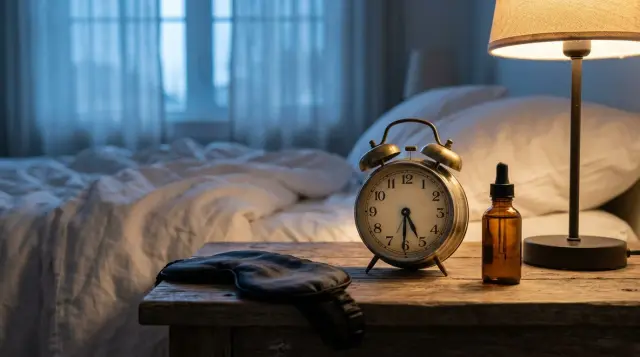
Can Reducing EMF Exposure Actually Help You Sleep Better?
This is an area where the science is still evolving, but the early signals are interesting enough to pay attention to. The concern is straightforward: we're surrounded by electromagnetic fields from WiFi routers, smartphones, Bluetooth devices, and smart home gadgets. Some research suggests this constant exposure may interfere with melatonin production and sleep architecture.
A 2013 study published in the journal PLOS ONE by researchers at the University of Melbourne found that radiofrequency electromagnetic fields altered brain activity during sleep, particularly in the spindle frequency range associated with memory consolidation. It wasn't a massive effect, but it was measurable and reproducible. The World Health Organization's International Agency for Research on Cancer has classified radiofrequency electromagnetic fields as "possibly carcinogenic." That's not a definitive statement, but it does signal the need for more investigation [4].
Quick Q&A
Q: Is there a simple way to reduce EMF exposure while sleeping?
A: Yes. Putting your phone in airplane mode, moving devices out of the bedroom, and wearing EMF-shielding clothing are practical first steps supported by the precautionary principle.
For people who want to take a proactive approach, Proteck'd makes this surprisingly easy. Their Faraday Health Collection uses silver-infused fabric that blocks electromagnetic radiation, and you can learn more about how it works on their EMF Health Benefits page. The Women's Wellness Collection offers the same shielding technology in styles designed for everyday wear.
I wouldn't put EMF reduction at the same evidence tier as sleep mode optimization or exercise. Not yet. But it's a reasonable, low-cost addition to your biohacking toolkit, especially if you're already doing the big things right and looking for an edge on your nightly recovery.
What Role Does Gut Health Play in Biohacking?
Here's something most people don't connect. Your gut microbiome produces about 95% of your body's serotonin, which is a direct precursor to melatonin, the hormone that regulates sleep. Research from Caltech, led by Dr. Elaine Hsiao, demonstrated that specific gut bacteria (particularly Clostridia species) are responsible for triggering serotonin production in the gut lining.
A 2019 study in PLOS ONE found that participants with greater microbial diversity in their gut reported significantly better sleep quality and fewer nighttime awakenings. The connection makes intuitive sense when you sit with it for a second: your gut and brain communicate constantly through the vagus nerve. When one system is disrupted, the other feels it.
Practically, this means biohacking for better rest might involve more fermented foods, prebiotics, and fiber than you'd expect. Think kimchi, kefir, garlic, onions, and a wide variety of plant foods. Dr. Tim Spector's research at King's College London suggests aiming for 30 different plant foods per week to maximize microbial diversity. For a deeper exploration, we've put together a Gut Health: The Complete Guide that covers the research in detail.
Gut health earns a solid spot in the middle of our rankings. The evidence is real and growing, but the mechanisms connecting the microbiome to circadian rest are still being mapped out. It's not a quick fix, either. It takes weeks to months to meaningfully shift your gut composition.
Does Mindfulness Meditation Actually Affect Sleep?
Short answer: yes. And the evidence is stronger than you might think. A 2015 randomized controlled trial published in JAMA Internal Medicine by Dr. David Black at USC found that older adults who completed a 6-week mindfulness meditation program had significantly better sleep quality scores compared to a control group that received basic sleep hygiene education [2].
What's interesting is that the mindfulness group didn't just sleep better. They also showed reductions in daytime fatigue, depression symptoms, and inflammatory markers (specifically NF-kB). The researchers hypothesized that mindfulness reduces the hyperarousal state that keeps many poor sleepers stuck in a cycle of anxiety about not sleeping, which of course makes the problem worse.
Apps like Headspace and Calm have made guided meditation accessible, and there's decent evidence behind both. But you don't need an app. Even 10 minutes of focused breathing before bed, paying attention to your breath without trying to change it, has been shown to lower cortisol and heart rate. We covered this topic in detail in our article on The Research Behind Mindfulness: What Works.
I'd place mindfulness in the same tier as cold exposure: strong supporting evidence, meaningful effect sizes, but it works best when layered on top of the fundamentals. If your bedroom is 78 degrees, you're staring at your phone until midnight, and you haven't seen sunlight all day, ten minutes of meditation isn't going to save you.
How Should You Stack These Biohacks for Maximum Results?
Here's where the ranking really matters. If you try to do everything at once, you'll burn out or lose track of what's actually working. My recommendation, based on the evidence hierarchy: start with sleep mode optimization. Get your light exposure, temperature, and consistency dialed in first. This is tier one. Nothing else comes close.
Tier two is exercise and mindfulness. Both have strong research backing, both are free, and both create cascading benefits across your entire system. A 2021 review from Stanford Medicine confirmed that the combination of regular aerobic exercise and a mindfulness practice produced greater improvements in sleep quality than either intervention alone.
Tier three includes gut health optimization and EMF exposure reduction. The evidence is solid and growing, but these are refinements, not foundations. Think of them as the 20% effort that gets you the last 10% of results. If you're already sleeping well, exercising regularly, and managing stress, then optimizing your microbiome and reducing electromagnetic radiation exposure become the logical next steps.
For a more complete look at how all of these strategies fit together, check out our guide Sleep: What Actually Works. And remember, the best biohack is the one you actually do consistently. A perfect sleep optimization protocol that you follow three nights a week will lose to a good one you follow every night.
- Sleep mode optimization, structuring your light, temperature, and routine for better rest, is the most evidence-backed biohack available.
- Cold exposure has real benefits but works best as a complement to strong sleep hygiene techniques, not a replacement.
- Exercise improves deep sleep significantly, but timing matters. Finish intense workouts at least 3 hours before bed.
- Reducing EMF exposure during sleep is an emerging strategy supported by the precautionary principle and early research.
- Stacking biohacks in order of evidence strength, sleep first, then exercise and mindfulness, then gut health and EMF reduction, produces the best results.
Frequently Asked Questions
Sleep mode optimization is the practice of deliberately engineering your sleep environment, light exposure, body temperature, and bedtime routines to maximize how restorative your sleep actually is. It's rooted in circadian rhythm science and focuses on improving sleep architecture rather than just total hours in bed. Research from Harvard Medical School confirms that proper circadian alignment reduces disease risk significantly.
Sleep optimization consistently ranks as the most effective biohack based on the available evidence. The NIH links insufficient sleep (under 7 hours) to a 13% increase in mortality risk, and studies show that environmental adjustments like temperature and light management can increase deep sleep by 25%. No supplement or device comes close to those numbers.
Cooler rooms significantly improve sleep quality. A 2019 study from the University of Bern found that sleeping at 66°F (19°C) increased deep sleep duration by up to 25%. Your core body temperature naturally drops to initiate sleep, and a cool room supports that process rather than working against it.
They can, but timing matters. Taking a cold shower about 90 minutes before bed can speed up the natural drop in core body temperature that triggers sleepiness. Dr. Susanna Søberg's research at the University of Copenhagen suggests that even brief cold exposure has measurable metabolic benefits, though the direct sleep effects are smaller than other interventions like light management.
Early research suggests it might. A 2013 study published in PLOS ONE found that radiofrequency electromagnetic fields altered brain activity during sleep, particularly spindle frequency patterns involved in memory consolidation. The WHO classifies RF-EMF as 'possibly carcinogenic.' Putting your phone in airplane mode at night is a simple precautionary step.
Your gut produces about 95% of the body's serotonin, which converts into melatonin, the hormone that regulates sleep. Research from Caltech by Dr. Elaine Hsiao showed specific gut bacteria drive this serotonin production. Greater microbial diversity has been linked to better sleep quality in clinical studies, making diet a surprisingly important part of sleep optimization.
Yes. A 2015 JAMA Internal Medicine randomized controlled trial by Dr. David Black at USC showed that a 6-week mindfulness program significantly improved sleep quality in older adults compared to standard sleep hygiene education. Participants also experienced reductions in fatigue, depression symptoms, and inflammation markers.
Finish vigorous exercise at least 3 hours before bed. Research from Appalachian State University found that people exercising at 7 a.m. spent 75% more time in deep sleep than those exercising at 7 p.m. Morning or early afternoon exercise provides the greatest benefit for sleep quality because it doesn't spike cortisol and body temperature close to bedtime.
Sleep hygiene is the standard set of recommendations like avoiding caffeine late and keeping a regular schedule. Sleep mode optimization goes deeper by actively engineering circadian rhythm alignment through strategic light exposure, precise temperature control, and biohacking techniques like cold exposure and EMF reduction. Think of hygiene as the basics and optimization as the advanced playbook.
EMF-shielding clothing made with silver-infused fabric can measurably reduce your exposure to electromagnetic radiation. While the direct sleep studies on shielding clothing are limited, the precautionary principle supports reducing exposure, especially during sleep when your body is in repair mode. Proteck'd's Faraday collection uses lab-tested silver fabric for this purpose.
References
- Harvard Medical School - Division of Sleep Medicine – Disrupted circadian rhythms are linked to increased risks of diabetes, obesity, and cardiovascular disease.
- National Institutes of Health - National Heart, Lung, and Blood Institute – Adults sleeping fewer than 7 hours per night face a 13% higher mortality risk, and mindfulness meditation has been shown to improve sleep quality in randomized trials.
- British Journal of Sports Medicine (BMJ) – Regular exercise improves sleep quality with a moderate-to-large effect size, and cold water immersion significantly reduces inflammation markers and improves recovery.
- IARC / World Health Organization – The WHO's International Agency for Research on Cancer classifies radiofrequency electromagnetic fields as 'possibly carcinogenic to humans' (Group 2B).
About the Author
Proteck'd EMF Apparel
Health & EMF Specialists
The Proteck'd team covers EMF protection, silver-fiber apparel, and practical ways to reduce everyday radiation exposure. Every piece Proteck'd ships is designed, tested, and worn by the people who build it.
Protect Yourself Today
Proteck'd Faraday and silver fiber apparel is engineered to shield your body from everyday EMF exposure. Built for real life, tested for real results.
Shop EMF Protection →✓30-day returns✓Free shipping✓Free returns✓Silver fiber shielding


Leave a comment