


Unplugging: How to Actually Do It

Here's a number that should bother you: according to the CDC, one in three American adults doesn't get enough sleep. Not "could use a fluffier pillow" sleep. Functionally insufficient rest. And if you've ever Googled how to get optimal sleep at 2 a.m. while staring at the blue glow of your phone, well, you already know the irony.
The advice floating around isn't wrong, exactly. "Get more sleep" is technically correct, the same way "eat healthier" is technically correct. But it's not useful. What people actually need is a clear, honest breakdown of the specific habits, environmental tweaks, and behavioral shifts that turn bad sleep into real, restorative rest.
That's what this guide is. Not a list of 47 supplements. Not a pitch for a $3,000 mattress. Just the stuff that genuinely works, backed by research from institutions like Harvard Medical School and the National Institutes of Health, organized by what's most likely to make a real difference for you right now.
I've spent years writing about health, and I keep coming back to sleep because it underpins everything else. Your mood. Your immune function. Your ability to think clearly before noon. If you've been struggling with your nightly recovery, the answer often starts with one word: unplugging.
Let's get into exactly what that looks like.
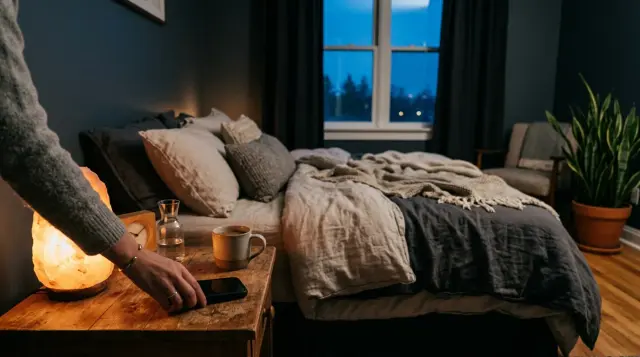
Your bedroom should be a cave: cool, dark, quiet, and free from electronic signals. That single environmental shift does more for nightly recovery than any supplement or sleep hack on the market.
- Sleep quality, driven by uninterrupted deep and REM cycles, matters more than total hours in bed
- Morning bright light exposure and evening darkness are the two most powerful circadian rhythm regulators
- Cut caffeine by 2 p.m. at the latest, as its 5 to 6 hour half-life can silently reduce deep sleep
- Keep your bedroom at 60 to 67°F, completely dark, and free from phones, routers, and other EMF-emitting devices
- A consistent sleep schedule within 30 minutes, even on weekends, is the single most impactful habit for better rest
Why Does Sleep Quality Matter More Than Sleep Quantity?
You can spend nine hours in bed and still wake up feeling wrecked. That's because total hours aren't the whole picture. What matters is cycling through all the stages of sleep, including the deep slow-wave sleep and REM sleep that handle physical repair and memory consolidation. According to the National Institute of Neurological Disorders and Stroke, adults cycle through these stages four to six times per night, and interruptions to any cycle degrade the quality of the entire night [1].
Think of it this way. If you set a pot of water on the stove and keep lifting the lid every few minutes, it takes forever to boil. Sleep works the same way. Every notification buzz, every temperature spike, every burst of light resets part of the process. You might technically be "sleeping" for eight hours, but your brain never gets the uninterrupted stretches it needs for deep rest.
This is why two people can log the same number of hours yet feel completely different in the morning. One sleeps in a cool, dark, quiet room with no phone nearby. The other falls asleep with Netflix on autoplay and a phone on the nightstand. Same duration. Wildly different outcomes.
Quick Q&A
Q: How many hours of deep sleep do adults actually need each night?
A: Most healthy adults need about 1 to 2 hours of deep sleep per night, which typically accounts for 13 to 23 percent of total sleep time, according to the Sleep Foundation.
If you're serious about figuring out how to get optimal sleep, stop fixating on the clock and start paying attention to what's happening in your bedroom. That's where the real gains are. For a deeper look, check out our full guide on Getting Better Sleep: The Complete Guide.
How Does Light Exposure Affect Your Sleep Cycle?
Your body runs on a roughly 24-hour internal clock called the circadian rhythm, and light is its primary input. When sunlight hits your eyes in the morning, it signals your suprachiasmatic nucleus (a tiny cluster in your hypothalamus) to suppress melatonin and ramp up cortisol. That's what makes you feel alert. The reverse happens at dusk: fading light triggers melatonin production, which makes you sleepy.
The problem? Modern life floods us with artificial light long after sunset. A 2019 study published in the Journal of Clinical Sleep Medicine found that blue light from screens suppresses melatonin production by up to 50 percent [2]. That's not minor. That's your brain being tricked into thinking it's mid-afternoon at 11 p.m.
Here's a concrete example. Dr. Charles Czeisler at Harvard Medical School conducted research showing that reading on a light-emitting e-reader before bed shifted circadian timing by roughly 1.5 hours compared to reading a printed book [3]. Participants took longer to fall asleep, had less REM sleep, and felt groggier the next morning. All from a screen.
So the fix has two sides. First, get bright natural light within the first hour of waking. Even 10 to 15 minutes outside makes a measurable difference in resetting your circadian rhythm. Second, dim your environment and cut screens at least 60 minutes before bed. If that feels impossible, you probably want to read our piece on Phone Addiction: How to Take Back Control.
Night-shift workers or anyone stuck indoors during the day can try a 10,000 lux light therapy box in the morning, a strategy endorsed by the Mayo Clinic for regulating sleep-wake cycles. The point is that your body needs contrast. Bright during the day, genuinely dark at night.

What Should Your Bedroom Look Like for Better Rest?
Research from Harvard Medical School points to three core environmental factors for your sleep space: temperature, darkness, and noise level. The ideal room temperature for sleep is between 60 and 67°F (15.5 to 19.4°C) [3]. Your body needs to drop its core temperature by about 2 to 3 degrees Fahrenheit to initiate sleep, and a warm room fights that process every step of the way.
Darkness matters more than most people realize. Even small amounts of ambient light, like a charging indicator or streetlight bleeding through curtains, can interfere with melatonin production. A 2022 study from Northwestern University's Feinberg School of Medicine found that sleeping with even moderate light exposure increased heart rate and insulin resistance the following morning. Blackout curtains or a quality sleep mask aren't luxuries. They're tools.
Then there's the electromagnetic environment. This is the part most sleep guides skip over entirely. Your bedroom is likely filled with Wi-Fi routers, charging phones, Bluetooth speakers, and smart devices, all emitting low-level electromagnetic fields. While the science on chronic low-level EMF exposure is still evolving, the WHO's International Agency for Research on Cancer classified radiofrequency electromagnetic fields as "possibly carcinogenic" back in 2011 [4]. At minimum, reducing EMF in your sleep space removes one more potential disruptor.
That's why people are turning to EMF-shielding clothing for sleep and daily wear. The Faraday Health Collection from Proteck'd uses silver-infused fabric that blocks electromagnetic radiation, giving your body one less thing to process during the night. If you want to understand the research behind this approach, the EMF Health Benefits page has a solid breakdown.
The simplest version of all this? Make your bedroom a cave. Cool, dark, quiet, and as free from electronic signals as you can manage. That alone puts you ahead of most people trying to improve sleep quality naturally.
Does Caffeine Really Ruin Your Sleep If You Drink It in the Afternoon?
Yes. Unambiguously yes. Caffeine has a half-life of approximately 5 to 6 hours, which means if you drink a cup of coffee at 3 p.m., roughly half that caffeine is still circulating in your bloodstream at 9 p.m. [1]. A 2013 study published in the Journal of Clinical Sleep Medicine found that caffeine consumed even 6 hours before bedtime significantly reduced total sleep time by over one hour.
And here's the sneaky part. You might not feel wired. Caffeine doesn't always prevent you from falling asleep. What it does is reduce the amount of deep sleep you get, which means you wake up feeling unrested without connecting it to the coffee you had after lunch. You blame the mattress, the stress, the kids. But that 2 p.m. espresso is quietly wrecking your night.
My rule of thumb, and the one most sleep researchers recommend, is to cut caffeine by noon, or 2 p.m. at the absolute latest. That includes tea, energy drinks, and dark chocolate in significant amounts. If you're a slow metabolizer (and roughly 50% of people are, based on genetic variation in the CYP1A2 enzyme), you may need an even earlier cutoff.
Quick Q&A
Q: Can decaf coffee affect sleep quality?
A: Decaf still contains 2 to 15 mg of caffeine per cup, so drinking several cups in the evening could still affect sensitive individuals, though the impact is far less than regular coffee.
Alcohol is the other big one worth mentioning. A nightcap might make you drowsy, but research from the London Sleep Centre shows that alcohol fragments sleep architecture, particularly reducing REM sleep in the second half of the night. You pass out faster but sleep worse. Not the trade-off most people think they're making.
How Do You Build a Bedtime Routine That Actually Sticks?
The National Sleep Foundation recommends keeping a consistent sleep schedule within 30 minutes, even on weekends. That's the single most impactful habit for how to get optimal sleep, and it's the one people resist the most. "But I like sleeping in on Saturday" is practically a national motto. The reality? Irregular sleep timing confuses your circadian clock, and the "social jet lag" from a Friday-night-to-Sunday-morning shift can take days to recover from.
Building a bedtime routine that sticks means starting small and making it pleasant. You don't need an elaborate 90-minute wind-down ceremony. You need three or four things you do in the same order every night that signal to your brain: we're shutting down now. For me, it's dimming the lights, a short stretch, and 10 minutes of reading a physical book. That's it.
The key is removing the things that compete with the routine. If your phone is in your hand until the moment your head hits the pillow, no bedtime routine in the world will save you. We've written extensively about this in Digital Detox: How to Actually Do It and Digital Detox: The Complete Guide, both of which lay out practical strategies for reducing screen time before bed.
A mindfulness practice can also help, and I don't mean anything mystical. Even 5 minutes of slow breathing or a body scan can downshift your nervous system from sympathetic (fight or flight) to parasympathetic (rest and digest). If you've been skeptical about this, read How to Make Mindfulness Stick: Without the Woo. It takes the eye-roll factor right out of the equation.
Can Exercise Help You Sleep Better, and When Should You Do It?
Absolutely. A meta-analysis published in 2015 in the journal Sleep Medicine Reviews found that regular exercise improved sleep quality, reduced the time it took to fall asleep, and increased total sleep duration across 66 studies involving over 2,800 participants. The effect was comparable to some prescription sleep medications, without the side effects.
Timing matters, though. Vigorous exercise within 2 to 3 hours of bedtime can elevate core body temperature and adrenaline, making it harder to drift off. The sweet spot for most people is morning or early afternoon. A 2019 study from Concordia University in Montreal found that evening exercise didn't hurt sleep as long as it ended at least one hour before bed and wasn't extremely intense. So a walk after dinner? Great. An hour of heavy deadlifts at 10 p.m.? Probably not ideal.
Outdoor exercise gives you a two-for-one benefit: physical activity plus natural light exposure, both of which reinforce a healthy circadian rhythm. Even a 20-minute walk in the morning sun can meaningfully improve how quickly you fall asleep that night. Dr. Andrew Huberman at Stanford University has spoken extensively about how early-day light exposure is one of the most underrated tools for better sleep.
If you're exercising outdoors and want to be mindful of the electromagnetic environment around you, Proteck'd's Women's Wellness Collection offers EMF-shielding activewear that actually looks and performs like regular athletic clothing. It's a practical option for people who want to reduce their daily exposure without changing their routine.
What Role Does EMF Play in Sleep Disruption?
This is the frontier of sleep research that most mainstream articles won't touch, but it's gaining traction. The typical bedroom in 2024 has a Wi-Fi router, one or two phones, a smart speaker, a tablet, and sometimes a smart TV, all emitting radiofrequency electromagnetic fields around the clock. The WHO's International Agency for Research on Cancer (IARC) classified RF-EMF as a Group 2B possible carcinogen in 2011 [4]. While that classification is specifically about cancer risk, a growing body of preliminary research is exploring effects on sleep architecture too.
A 2020 review published in Environmental Research examined multiple studies linking low-level EMF exposure to changes in melatonin production and sleep quality, though the authors noted that study designs varied and more controlled research is needed. The point isn't to panic. The point is that we're surrounded by a type of energy that didn't exist in bedrooms 30 years ago, and we're only starting to understand what it does to us biologically.
Practical steps? Put your phone in airplane mode or leave it outside the bedroom entirely. Move the router out of the bedroom. Switch off Bluetooth devices at night. These are zero-cost, zero-downside changes. If you want to go further, EMF-shielding fabrics offer a passive layer of protection. The Faraday Health Collection from Proteck'd uses silver-fiber technology that blocks a significant percentage of RF radiation, and you can wear it to sleep comfortably.
Whether you're fully convinced by the EMF research or just playing it safe, reducing electronic clutter in your sleep space supports better rest on every level. Fewer blinking lights. Fewer notification sounds. Fewer invisible signals. Your bedroom should be for sleeping, not broadcasting.
How to Get Optimal Sleep: Putting It All Together
Let's make this actionable. Understanding how to get optimal sleep comes down to aligning your behavior with your biology. Your circadian rhythm wants consistency. Your melatonin system wants darkness. Your core temperature regulation wants a cool room. And your nervous system wants a wind-down period. Give your body those things, and it will do what it's designed to do.
Here's a sample evening timeline. At 6 p.m., have your last caffeinated drink well behind you and eat dinner. By 8 p.m., dim the lights in your home and switch screens to night mode (or better yet, put them away entirely). At 9 p.m., start your wind-down: light stretching, reading, a warm shower to trigger the post-shower body temperature drop that encourages sleepiness. Lights out by 10 p.m. Repeat every night, including weekends.
Will you nail this perfectly every night? No. That's fine. The goal isn't perfection. The goal is a pattern strong enough that your body starts anticipating sleep at the right time. Research from the University of Pittsburgh's Sleep and Circadian Science Center shows that sleep regularity, even more than total duration, is associated with better mood, academic performance, and cardiovascular health.
Start with one change this week. Maybe it's moving your phone charger to the kitchen. Maybe it's buying blackout curtains. Maybe it's committing to the same wake-up time for seven straight days. Pick the thing that feels most doable and build from there. Sleep isn't a problem you solve once. It's a practice you maintain, and every small improvement compounds over time.
Frequently Asked Questions
Most adults need 7 to 9 hours per night, according to the National Sleep Foundation. But quality matters just as much as quantity. If you're getting 8 hours but waking up frequently, you may still be sleep-deprived when it comes to deep and REM sleep.
Yes, significantly. Research shows blue light suppresses melatonin production by up to 50 percent. Night mode helps a little, but the most effective strategy is putting screens away 60 to 90 minutes before bed.
Between 60 and 67°F (15.5 to 19.4°C), according to both Harvard Medical School and the Sleep Foundation. Your body needs to drop its core temperature to fall asleep, and a cooler room supports that process.
Not really. Research from the University of Colorado Boulder found that weekend recovery sleep doesn't reverse the metabolic disruption caused by weeknight sleep loss. Keeping a consistent schedule, even on weekends, works far better than binge-sleeping on Saturday.
Melatonin is generally considered safe for short-term use by both the Mayo Clinic and NIH. Long-term nightly use hasn't been extensively studied, though, and it can mask underlying sleep issues. It works best as a tool for jet lag or temporary schedule changes, not as a permanent fix.
Alcohol might help you fall asleep faster, but it fragments your sleep architecture, especially reducing REM sleep in the second half of the night. Research from the London Sleep Centre shows even moderate amounts can cut into restorative sleep. You feel it the next day as grogginess and brain fog.
The research is still developing, but a growing number of studies have found associations between RF-EMF exposure and disrupted melatonin production. The WHO's IARC classified radiofrequency EMF as a Group 2B possible carcinogen. At minimum, removing devices from the bedroom reduces light and noise disruptions that hurt sleep quality.
By noon to 2 p.m. at the latest. Caffeine has a half-life of 5 to 6 hours, so a 3 p.m. coffee still has significant stimulant effects at 9 p.m. Slow metabolizers, roughly half the population, may need an even earlier cutoff.
Yes. A 2022 Northwestern University study found that even moderate ambient light during sleep raised heart rate and insulin resistance. Blackout curtains, covering LED indicators, and removing screens from the bedroom all contribute to the kind of darkness your melatonin system needs.
Most sleep researchers recommend adjusting your bedtime and wake time by 15 to 30 minutes per day until you reach your target schedule. For most people, a consistent routine shows noticeable results within one to two weeks. Consistency matters more than speed.
References
- National Institute of Neurological Disorders and Stroke (NINDS) – Adults cycle through sleep stages four to six times per night; caffeine has a half-life of approximately 5 to 6 hours
- Journal of Clinical Sleep Medicine (via PubMed) – Blue light from electronic screens suppresses melatonin production and disrupts circadian timing
- Harvard Medical School - Division of Sleep Medicine – Ideal sleep temperature is 60 to 67°F; e-reader use before bed shifted circadian timing by approximately 1.5 hours
- WHO International Agency for Research on Cancer (IARC) – Radiofrequency electromagnetic fields classified as Group 2B (possibly carcinogenic to humans) in 2011
About the Author
Proteck'd EMF Apparel
Health & EMF Specialists
The Proteck'd team covers EMF protection, silver-fiber apparel, and practical ways to reduce everyday radiation exposure. Every piece Proteck'd ships is designed, tested, and worn by the people who build it.
Get the Free EMF Home Audit Checklist
A room-by-room PDF that walks you through the biggest EMF sources in your house and what to do about each one. No cost, no fluff.
Download the Checklist →✓30-day returns✓Free shipping✓Free returns✓Silver fiber shielding


Leave a comment