


Dirty Electricity: Filters and Solutions

Here's something that might surprise you. The electricity running through your walls right now probably isn't as clean as you think. Standard household current is supposed to oscillate at a smooth 60 Hz (50 Hz in many other countries). But modern electronics, dimmer switches, LED drivers, and solar inverters dump high-frequency noise back onto your wiring. That noise is called dirty electricity, and figuring out how to filter EMF from it has become a growing concern for health-conscious homeowners.
I started paying attention after measuring my own home with a microsurge meter. Every time my printer cycled on, the readings spiked. Genuinely startling numbers. And I'm far from alone. A whole industry of electromagnetic radiation filtration products has popped up to address the problem, from $30 plug-in devices to $500-plus whole-home systems.
But do these solutions actually work? Which ones are worth your money? Those are the questions I want to answer here, because the market is full of bold claims, and not all of them hold up under scrutiny.
In this guide, we'll cover what dirty electricity really is, how different types of EMF filters function, what the science says about health effects, and practical steps you can take to reduce electromagnetic field exposure throughout your home. Whether you're just learning about this topic or you've already started making changes, there's something here for you.
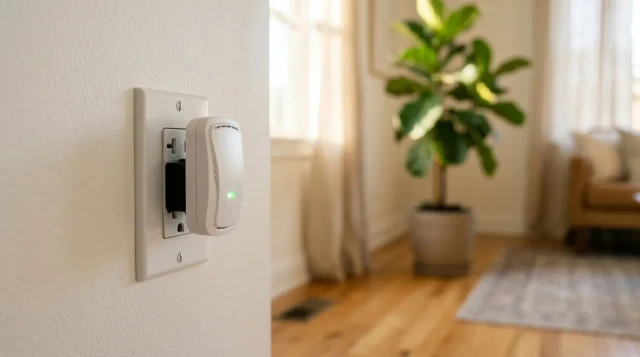
What Is Dirty Electricity and Why Should You Care?
Dirty electricity is the informal name for high-frequency voltage transients that hitch a ride on your home's standard electrical wiring. Your power company delivers electricity at 60 Hz in the United States or 50 Hz in Europe. That's the clean, predictable sine wave your appliances expect. But modern devices don't consume power in that smooth pattern. They chop it up, convert it, and spit irregular frequencies back onto the line.
These transients typically fall in the 2 kHz to 100 kHz range. Think of them as electrical pollution. Switching power supplies in laptops, variable-speed motors in HVAC systems, compact fluorescent bulbs, solar panel inverters. Those are some of the worst offenders. Even your neighbor's equipment can push dirty electricity onto shared utility lines and straight into your home.
So why does this matter? According to the World Health Organization's IARC, extremely low-frequency electromagnetic fields were classified as Group 2B (possibly carcinogenic to humans) back in 2002 [1]. A 2008 study by epidemiologist Samuel Milham and electrical engineer Lloyd Morgan, published in the American Journal of Industrial Medicine, investigated a California middle school where teachers reported unusually high rates of cancer. After installing Graham-Stetzer dirty electricity filters, teacher health complaints dropped by more than 60% [2].
Quick Q&A
Q: What frequency range does dirty electricity typically occupy?
A: Dirty electricity consists of high-frequency voltage transients usually between 2 kHz and 100 kHz, riding on standard 50/60 Hz household wiring.
Now, I want to be upfront. The research base here is still developing. Not every scientist agrees on the magnitude of health effects from dirty electricity specifically. But the biological plausibility is real. The National Institute of Environmental Health Sciences (NIEHS) acknowledges that EMF exposure is a subject of ongoing study and recommends practical, low-cost steps to reduce exposure where possible [3]. If you're already wondering whether How to Know If EMF Is Affecting You: The Connection You Might Be Missing, dirty electricity is one of the pieces of that puzzle.
How Do Plug-In EMF Filters Actually Work?
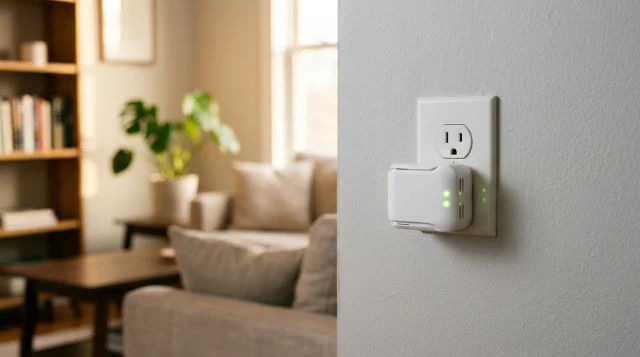
Plug-in filters are the most popular and accessible way to filter EMF from dirty electricity. Brands like Stetzer Electric and Greenwave dominate the space, and they both work on the same basic principle. Each unit contains a low-pass filter circuit, a combination of capacitors and inductors that shunts high-frequency noise to the ground wire while letting clean 60 Hz current pass through normally.
You plug them into a standard wall outlet. That's it. No wiring, no electrician. The filter starts working immediately, absorbing and dissipating the high-frequency transients on that particular circuit. Most manufacturers recommend one filter in every occupied room, with extras near heavy electronics. For an average three-bedroom home, that usually means 15 to 20 filters at $25 to $50 each.
Here's a real-world example that made the concept click for me. I plugged a Stetzer microsurge meter into an outlet near my home office setup (two monitors, a router, a laser printer). The reading was over 1,200 GS units, well above the recommended 50 GS or lower. After installing two plug-in filters on the same circuit, it dropped to around 80. That's a measurable, repeatable result. Not magic. Just physics.
The limitation? Plug-in filters only clean the circuit they're connected to. If your home has 20 separate circuits, you need filters distributed across all of them. They also can't do anything about wireless radiation from Wi-Fi routers, cell phones, or Bluetooth devices. For that, you need a completely different approach, which is where physical shielding and products like those in the Faraday EMF Collection come into play.
Dirty electricity is the invisible pollution riding your home's wiring, and no single product eliminates all EMF exposure. The most effective strategy combines whole-home filtration, targeted plug-in filters, and physical shielding against wireless radiation.
Are Whole-Home Wire-In Filters Worth the Investment?
Whole-home wire-in EMF filters take a different approach. Instead of cleaning individual circuits at the outlet level, these systems are installed directly at your electrical panel by a licensed electrician. They intercept dirty electricity at the point where utility power enters your home, filtering it before it ever reaches your internal wiring.
The most well-known product in this category is the Satic Power Perfect Box, though several other manufacturers offer similar panel-mounted solutions. Prices range from about $300 to over $1,000, plus installation costs. The advantage? Comprehensive coverage. One unit can reduce high-frequency transients across every circuit in your house simultaneously.
But there's a catch. Whole-home filters are great at blocking dirty electricity coming in from the utility line or from your neighbors, but they can't always address noise generated by your own devices inside the house. If your variable-speed furnace motor is dumping transients onto a circuit, a panel-level filter sitting upstream of that motor won't catch them. That's why many EMF consultants recommend a hybrid approach: a whole-home filter at the panel combined with plug-in filters on circuits that serve heavy electronics.
I've talked with building biologists who consider the combination strategy the gold standard. It costs more upfront, sure. But if you're serious enough about reducing electromagnetic radiation exposure to be reading this article, you're probably serious enough to want a solution that actually covers all the bases. And if you're redesigning your living space for lower exposure, our guide on Low-EMF Bedroom Design: How to Build It pairs perfectly with a filtration strategy.
What About Physical EMF Shielding? Does It Complement Filtering?
Filtering dirty electricity is only half the equation. The other major source of EM radiation in your home is wireless. Your Wi-Fi router, smart thermostat, baby monitor, the cell tower a quarter mile away. All pumping out radiofrequency (RF) radiation that no plug-in filter can touch. This is where physical shielding comes in.
Physical barrier filters, or more accurately, EMF shielding materials, work by reflecting or absorbing electromagnetic radiation before it reaches your body. Silver-threaded fabrics, carbon-based paints, metal mesh canopies. The principle is Faraday cage physics: a conductive enclosure blocks electromagnetic fields from passing through.
Picture a bedroom scenario. You've installed plug-in dirty electricity filters on every circuit in the room. Great, you've addressed the wiring noise. But your neighbor's Wi-Fi, the cell tower signal, and Bluetooth from your partner's devices are still flooding the space. Adding shielding materials, things like EMF-blocking curtains, bed canopies, or even wearing shielding fabrics from the Faraday EMF Collection, adds a physical layer of protection that filtration alone simply can't provide.
Quick Q&A
Q: Can a dirty electricity filter block Wi-Fi or cell phone radiation?
A: No. Dirty electricity filters only address high-frequency noise on household wiring. Wireless RF radiation requires physical shielding materials like silver-threaded fabric or conductive paint.
Our guide to Shielding Your Bedroom: The Complete Guide walks through exactly how to layer these protections for the room where you spend a third of your life. Combining filtered wiring with wireless shielding really is the most thorough residential strategy available.
How Do You Measure Dirty Electricity Before and After Filtering?
You can't manage what you can't measure. Before spending hundreds of dollars on filters, you need to know where your problems actually are. Two homes on the same street can have wildly different dirty electricity levels depending on their appliances, wiring age, and proximity to transformers.
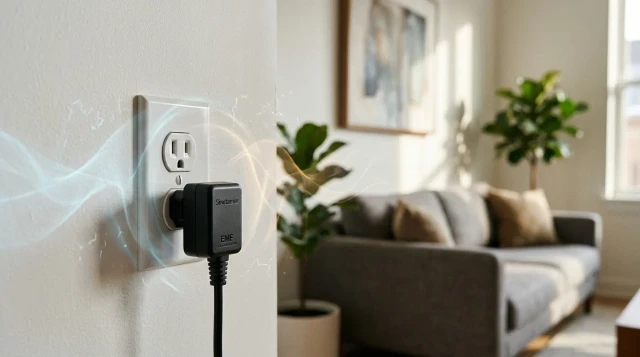
The two most common measurement tools are the Stetzer Microsurge Meter and the Greenwave Broadband EMI Meter. Both plug into a standard outlet and give you an instant reading of high-frequency noise in Graham-Stetzer (GS) units or millivolts (mV). Dave Stetzer, the electrical engineer who developed the GS filter system, recommends keeping readings below 50 GS units. Greenwave suggests below 100 mV on their scale.
Here's what a practical measurement session looks like. Walk through your house with the meter, plugging it into every outlet in every room. Write down the numbers. You'll spot patterns fast. The kitchen circuit with the microwave and refrigerator might read 800 GS units. The guest bedroom with one lamp? Maybe 40. Concentrate your filter budget on the worst circuits first, then measure again after installing filters to confirm the reduction.
I've seen people skip this step and just blanket their whole house with filters based on manufacturer recommendations. That works, but it's not efficient. Targeted placement based on actual measurements saves money and lets you verify results. According to research from the NIEHS, reducing overall EMF exposure through practical, measurable steps is more defensible than relying on unverified products [3]. If you find that EMF might be affecting your sleep quality, check out our deep guide on EMF Blocking for Better Sleep: The Complete Guide.
What Does the Science Actually Say About EMF Health Effects?
Let's talk about the elephant in the room. Are electromagnetic fields from dirty electricity actually harmful? The honest answer: the science is suggestive but not conclusive. That ambiguity frustrates people on both sides of the debate.
The IARC, a branch of the World Health Organization, classified ELF (extremely low-frequency) magnetic fields as Group 2B, meaning "possibly carcinogenic to humans," based primarily on epidemiological studies linking childhood leukemia to residential magnetic field exposure [1]. Radiofrequency electromagnetic fields got the same Group 2B classification in 2011, driven partly by the Interphone study and research from Lennart Hardell's group at Örebro University in Sweden.
On the other side, organizations like the FDA have stated that the current body of evidence does not establish that non-ionizing radiation from common household sources causes health problems at typical exposure levels [4]. That doesn't mean it's safe. It means the evidence hasn't crossed the threshold for a definitive warning. Important distinction.
Milham's 2008 California school study is one of the more compelling pieces of evidence specifically about dirty electricity [2]. But it was a single observational study, not a randomized controlled trial. We need more data. In the meantime, many health-conscious people apply the precautionary principle: reduce exposure where it's practical and affordable, without waiting for a definitive verdict. You can learn more about the potential signs of EMF sensitivity in our article How to Know If EMF Is Affecting You: The Connection You Might Be Missing.
What's the Best Strategy to Filter EMF Throughout Your Entire Home?
So you've read the research, measured your home, and decided to take action. What's the most effective overall strategy? Based on everything I've researched and tested, here's what a comprehensive plan looks like.
Start at the panel. A whole-home wire-in filter catches dirty electricity from the utility grid and from neighboring homes before it spreads through your circuits. Brands like Satic and DNA Filtering offer well-reviewed options in the $400 to $800 range installed. This single step addresses external contamination, which in many homes accounts for 30% to 50% of total dirty electricity, according to building biology assessments.
Next, put plug-in filters on your worst circuits. Measure first, then place filters strategically. Focus on the rooms where you spend the most time: bedrooms, home offices, living rooms. A Stetzer or Greenwave plug-in filter on each high-reading outlet will handle internally generated noise from your own electronics.
Finally, layer in physical shielding where wireless radiation is a concern. This matters most in bedrooms. Silver-threaded canopies, shielding curtains, even Faraday EMF Collection clothing for everyday wear, all contribute to reducing RF exposure from sources that no wiring filter can address. And if budget is a factor, keep an eye on the Proteck'd Sale page for deals on shielding products.
The key insight is that no single product solves everything. Dirty electricity filtration handles one vector. RF shielding handles another. Together, they give you the most complete reduction in total electromagnetic field exposure. For more information about how these protections work, visit our EMF Protection Benefits page.
Key Takeaways
Frequently Asked Questions
What is a dirty electricity filter and how does it work?
A dirty electricity filter is a plug-in or hardwired device that removes high-frequency voltage transients from your home's electrical wiring. It uses a low-pass filter circuit with capacitors that shunt noise frequencies (typically 2 kHz to 100 kHz) to the ground wire while letting clean 60 Hz current flow through. Think of it like a water filter that traps contaminants but lets clean water pass.
How many plug-in EMF filters do I need for my house?
Most homes need between 15 and 20 plug-in filters for full coverage. The exact number depends on how many circuits your home has and how much dirty electricity each one carries. The best approach is to measure each outlet with a microsurge meter first, then focus on the circuits with the highest readings.
Can EMF filters reduce Wi-Fi radiation?
No. EMF filters designed for dirty electricity only address high-frequency noise on your wiring. They have zero effect on wireless radiofrequency radiation from Wi-Fi routers, cell phones, or Bluetooth devices. To reduce RF exposure, you need physical shielding materials like silver-threaded fabrics, EMF-blocking paint, or Faraday-style enclosures.
Are dirty electricity filters scientifically proven to improve health?
The evidence is suggestive but not definitive. A 2008 study by Milham and Morgan found that installing Graham-Stetzer filters in a California school reduced teacher health complaints by over 60%. However, this was an observational study, not a randomized controlled trial. The WHO's IARC classifies ELF electromagnetic fields as Group 2B (possibly carcinogenic), which supports a precautionary approach.
What is a safe level of dirty electricity in my home?
Dave Stetzer, who developed the Graham-Stetzer filter system, recommends keeping readings below 50 GS (Graham-Stetzer) units. Greenwave recommends below 100 millivolts on their measurement scale. Many unfiltered homes test between 200 and 2,000 GS units, especially on circuits serving computers, printers, and modern lighting.
Do whole-home EMF filters work better than plug-in filters?
They actually serve different purposes and work best together. Whole-home wire-in filters installed at the breaker panel are better at blocking dirty electricity from external sources like the utility grid and neighboring homes. Plug-in filters are better at addressing noise your own electronics generate internally. Most EMF consultants recommend using both for the most complete coverage.
What appliances create the most dirty electricity?
The worst offenders are devices with switching power supplies and variable-speed motors. Solar panel inverters, dimmer switches, compact fluorescent and some LED bulbs, laptop chargers, laser printers, and variable-speed HVAC systems top the list. Even a treadmill or a modern washing machine can produce significant high-frequency noise on your wiring.
Is it worth buying a microsurge meter before purchasing filters?
Absolutely. A microsurge meter like the Stetzer or Greenwave model costs $100 to $150 and lets you pinpoint exactly which circuits have the highest dirty electricity levels. This way you can place filters strategically rather than guessing, and you can confirm that they're actually reducing noise after installation. Without measurement, you're flying blind.
Can my neighbor's electronics cause dirty electricity in my home?
Yes, and it's well documented. Dirty electricity generated by your neighbor's solar inverter, pool pump, or HVAC system can travel through shared utility lines and enter your home's wiring. A whole-home wire-in filter at your breaker panel is the most effective way to block this externally sourced contamination.
How do EMF-shielding fabrics like silver-threaded clothing help?
Silver-threaded fabrics work on the Faraday cage principle, reflecting or absorbing electromagnetic radiation before it reaches your body. They're effective against RF radiation from Wi-Fi, cell towers, and Bluetooth, which wiring filters can't address. Proteck'd's Faraday EMF Collection uses silver-fiber technology woven into everyday clothing, giving you portable protection you can wear anywhere.
References
- International Agency for Research on Cancer (IARC/WHO) – IARC classified extremely low-frequency electromagnetic fields as Group 2B, possibly carcinogenic to humans
- National Institutes of Health / PubMed – Milham and Morgan (2008) found that installing Graham-Stetzer filters in a California school reduced teacher health complaints associated with dirty electricity
- National Institute of Environmental Health Sciences (NIEHS) – NIEHS acknowledges EMF exposure as a subject of ongoing study and recommends practical steps to reduce exposure where possible
- U.S. Food and Drug Administration (FDA) – The FDA states that the current body of evidence does not establish that non-ionizing radiation from common household sources causes health problems at typical exposure levels
About the Author
Proteck'd EMF Apparel
Health & EMF Specialists
The Proteck'd team covers EMF protection, silver-fiber apparel, and practical ways to reduce everyday radiation exposure. Every piece Proteck'd ships is designed, tested, and worn by the people who build it.
Protect Yourself Today
Proteck'd Faraday and silver fiber apparel is engineered to shield your body from everyday EMF exposure. Built for real life, tested for real results.
Shop EMF Protection →✓30-day returns✓Free shipping✓Free returns✓Silver fiber shielding


Leave a comment