


The Perfect Sleep Environment: What Makes the Biggest Difference

Here's something that might surprise you. The biggest obstacle between you and a great night's sleep probably isn't stress, caffeine, or your mattress. It's everything else in your bedroom that you've never thought twice about. The phone charging six inches from your head. The laptop in "sleep" mode, still pulsing with wireless signals. Those little LED lights dotting the darkness like a tiny, restless city.
So how does sleep standby optimization work, exactly? At its core, it's about how your electronic devices manage their low-power states, cycling between active processing and idle modes to save energy. But here's where it gets interesting for your health: those "sleeping" devices aren't truly off. They're still emitting light, generating heat, and broadcasting wireless signals. All of that affects your circadian rest in ways science is only beginning to fully map out.
I've spent years reading sleep research, testing biohacks, and, honestly, overthinking my own bedroom setup. What I've found is that the environment wins every time. You can take all the magnesium and melatonin you want. If your room is working against you, you're fighting uphill.
This guide covers the real, evidence-backed changes that make the biggest difference in your sleep environment. We'll talk about device management, temperature, light, sound, EMF exposure, and the surprising ways your "standby" tech might be stealing your rest. Let's get into it.
Your bedroom is an ecosystem, not just a room with a bed. Every device, every light source, every degree of temperature is either helping your sleep or quietly working against it. The fastest path to better rest isn't a supplement. It's an environment that actually lets your body do what it's designed to do.
- Devices in Modern Standby still emit RF signals, heat, and light that can disrupt sleep quality, so power them down or switch to airplane mode before bed.
- Keep your bedroom between 60 and 67°F; even a 2 to 3 degree drop in room temperature can measurably increase deep sleep duration.
- Blue light from screens and LED indicators suppresses melatonin by up to 50%, so eliminate all light sources from your sleep environment.
- Environmental noise above 40 decibels increases nighttime awakenings; white noise machines or earplugs are evidence-backed solutions.
- Reducing bedroom EMF exposure by managing devices and using shielding fabrics addresses multiple sleep disruptors simultaneously.
How Does Sleep Standby Optimization Work in Your Devices?
Let's start with the technical side, because understanding what your devices actually do when they "sleep" changes how you think about your bedroom. Modern Standby, which Microsoft introduced as the S0 low-power idle state, is designed to mimic how smartphones work. Your laptop appears off. But it's maintaining Wi-Fi connections, syncing email, and running background tasks. It's the tech equivalent of sleeping with one eye open [3].
The older model, S3 suspend-to-RAM, was a much deeper sleep. The device genuinely powered down most components and just kept your session alive in RAM. Modern Standby replaced that on most newer Windows machines, and the trade-off is real: faster wake times, but more energy use, more heat, and more wireless activity while you think the device is resting.
Why does this matter for your bedroom? A laptop in Modern Standby is still broadcasting. Still warm. If you're someone who leaves a laptop on your nightstand or desk near your bed, that device is contributing to the electromagnetic environment of your room all night. Research compiled by the National Institute of Environmental Health Sciences shows that even low-level RF emissions from consumer devices remain an area of ongoing study for potential biological effects.
Quick Q&A
Q: Is a laptop in sleep mode still emitting wireless signals?
A: Yes, devices using Modern Standby (S0 low-power idle) maintain active Wi-Fi and Bluetooth connections, periodically syncing data and emitting RF signals even when the screen is off.
The fix is straightforward. If you're going to keep devices in the bedroom, either fully shut them down, enable airplane mode before bed, or switch to the older S3 sleep state if your hardware supports it. Windows users can check their device's standby behavior by running powercfg /a in the command prompt. For most people, though, the simplest move is the most effective: power it off or move it out of the room entirely.
Why Does Your Bedroom Temperature Matter So Much for Sleep Quality?
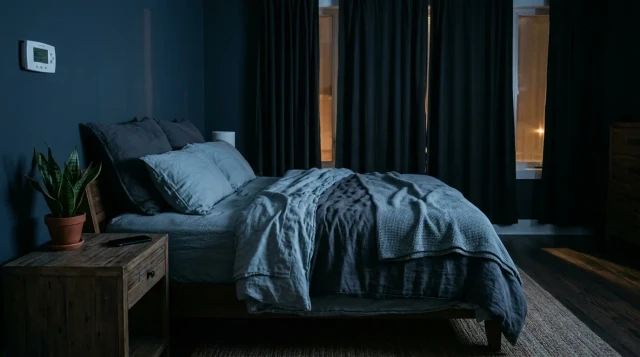
Temperature might be the single most underrated factor in sleep hygiene. The National Sleep Foundation recommends keeping your bedroom between 60 and 67°F (about 15.5 to 19.4°C) for optimal rest. That feels cold to a lot of people, especially if you're used to cranking the thermostat up in winter. But your body needs to drop its core temperature by about 2 to 3 degrees Fahrenheit to kick off and maintain deep sleep.
Dr. Matthew Walker, a neuroscientist at UC Berkeley and author of "Why We Sleep," has called temperature the most underappreciated sleep factor. His research shows that a room that's too warm fragments sleep architecture, reducing the amount of slow-wave (deep) sleep and REM sleep you get. You might technically be "asleep" for eight hours, but the quality is gutted.
Here's a concrete example. I used to sleep in a room that hovered around 72°F. I tracked my sleep with an Oura Ring for two months, then dropped the room to 66°F. My deep sleep increased by roughly 20 minutes per night within the first week. That's not nothing. Twenty extra minutes of deep sleep compounds into dramatically better cognitive function, mood, and physical recovery over time.
And this connects back to how does sleep standby optimization work in a practical sense. Those devices in standby mode generate heat. A charging phone, a laptop in Modern Standby, a smart speaker, a cable box. Each one adds a small amount of thermal output to your room. In a small, insulated bedroom, that can genuinely raise the ambient temperature by a degree or two. If you're already at 68°F, those devices might be pushing you out of the optimal range. For more strategies that actually move the needle, check out The Best Sleep Biohacks That Actually Work.
How Does Light Exposure at Night Disrupt Your Circadian Rhythm?
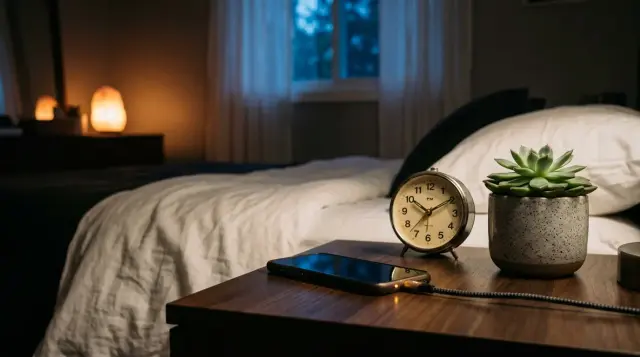
This one has the strongest science behind it, and it's not even close. Research from Harvard Medical School found that exposure to blue light (the kind emitted by phone screens, laptops, and LED indicator lights) suppresses melatonin production by approximately 50% compared to exposure to dim light [1]. Melatonin is the hormone that signals to your body that it's time to sleep. Cut it in half, and you're basically telling your brain it's still daytime.
The issue isn't just screens you're actively looking at. It's the ambient light pollution in your bedroom. That little blue LED on your TV. The green standby light on your power strip. The notification light on your phone. Even the glow from a digital alarm clock. A 2022 study published in the Proceedings of the National Academy of Sciences (PNAS) found that even dim light exposure during sleep was associated with increased heart rate and impaired glucose metabolism the following morning [2].
Circadian rhythm alignment depends on a clear contrast between daytime brightness and nighttime darkness. Your suprachiasmatic nucleus, a tiny region in the hypothalamus, uses light cues to calibrate your internal clock. When your bedroom is peppered with tiny light sources all night, that calibration gets fuzzy. You might fall asleep fine, but the quality of your rest suffers, particularly your deep sleep and REM cycles.
Blackout curtains are a good start. But don't forget about internal light sources. Cover or remove every LED in the room. If you need a nightlight, use one with a red or amber spectrum, which has a much smaller effect on melatonin. And if you want to learn more about how mindful environmental choices affect overall wellness, Mindfulness: The Science-Backed Guide covers the intersection of awareness and health habits beautifully.
Can Bedroom EMF Exposure Actually Affect Your Sleep?
This is where things get interesting, and a bit controversial. Whether electromagnetic fields from household devices affect sleep quality is actively debated in the scientific community. But the research that exists is worth paying attention to. A 2013 study published in the International Journal of Environmental Research and Public Health found that exposure to radiofrequency electromagnetic fields (RF-EMF) from mobile phones before sleep altered sleep EEG patterns, specifically affecting spindle activity during non-REM sleep.
The World Health Organization classifies RF electromagnetic fields as "possibly carcinogenic to humans" (Group 2B), the same category as pickled vegetables and talcum powder. That classification doesn't mean it's dangerous. It means we don't have enough evidence to rule it out, and ongoing research is warranted. The NIEHS (National Institute of Environmental Health Sciences) continues to fund studies on low-level EMF exposure and biological effects.
From a practical standpoint, reducing EMF in your sleep environment is a low-cost, low-effort change with no downside. Even if the health effects turn out to be minimal, you're also removing light sources, heat sources, and potential distractions. It's a win across multiple dimensions. If you're curious about the specifics, Proteck'd has a detailed breakdown on their EMF Health Benefits page that covers the science behind shielding technology.
Quick Q&A
Q: Should I remove all electronics from my bedroom for better sleep?
A: You don't have to go that far, but powering down or switching to airplane mode eliminates RF emissions, indicator lights, and heat output, which collectively improve your sleep environment significantly.
For those who want an extra layer of protection, Proteck'd's Faraday Health Collection uses silver-infused fabrics designed to shield against EMF exposure. It's the kind of approach that fits into a broader Integrative Wellness strategy, where you're not just optimizing one variable but creating a sleep environment that works for you on every level.
What Role Does Sound Play in Sleep Environment Optimization?
Noise is the sleep disruptor people underestimate the most, probably because we adapt to it consciously while our brains still react to it unconsciously. A 2019 review in Sleep Medicine Reviews analyzed dozens of studies and confirmed that environmental noise above 40 decibels significantly increases the frequency of nighttime awakenings. For reference, 40 decibels is roughly the volume of a quiet library or a refrigerator humming.
Here's what's sneaky about noise: you don't have to wake up fully for it to damage your sleep architecture. Traffic sounds, a partner's snoring, the intermittent buzz of a phone receiving notifications. These can cause "micro-arousals," brief shifts from deep sleep to lighter sleep stages. You won't remember them in the morning, but your body will feel the deficit. According to the WHO's 2009 Night Noise Guidelines for Europe, chronic nighttime noise exposure above 40 dB is associated with measurable health effects including cardiovascular stress.
White noise machines and earplugs are the two most studied interventions. White noise works by providing a consistent auditory backdrop that masks sudden changes in sound volume, which are what actually trigger arousals. A 2021 study from the National Institutes of Health found that continuous background noise improved sleep onset latency and overall sleep quality in hospital patients. If a hospital environment can be improved, your bedroom definitely can.
Devices in standby mode contribute to ambient noise too. Fan sounds from laptops, notification chimes, even the faint electrical hum from charging cables or power adapters. These fall well below 40 dB individually, but stacked together in a small room, they add up. Optimizing your standby settings, or simply powering devices down, removes another layer of environmental disruption. For a comprehensive look at building better rest habits from every angle, our Sleep Optimization: The Honest Guide To Better Rest goes deep.
How Do You Build the Perfect Sleep Environment Step by Step?
Let's make this actionable. I'm going to walk you through a bedroom audit that covers every variable we've discussed. Think of it as a checklist you can work through this weekend.
First, handle your devices. Go through your bedroom and identify every electronic device. For each one, ask yourself: does this actually need to be here? If you use your phone as an alarm, switch it to airplane mode and place it face-down across the room. Fully shut down laptops instead of closing the lid, especially if they use Modern Standby. Unplug anything you're not actively using. This single step addresses sleep standby optimization, light pollution, heat, EMF exposure, and noise all at once.
Second, optimize temperature. Set your thermostat to 66°F (19°C) as a starting point and adjust from there. If you run cold, add a breathable blanket rather than raising the room temperature. Your body needs cool air on your face and head to facilitate the core temperature drop that initiates deep sleep. Dr. Christopher Winter, a neurologist and sleep specialist at Charlottesville Neurology and Sleep Medicine, recommends testing different temperatures over a two-week period while tracking subjective sleep quality.
Third, eliminate light. Cover every LED, install blackout curtains or a blackout liner, and remove or face-down any screens. If you read before bed, use a book light with an amber or red filter. Fourth, address sound. If you live in a noisy area, try a white noise machine set to around 50 dB. Earplugs are the budget option and surprisingly effective once you find a comfortable pair.
Finally, think about what you're wearing. Your sleepwear affects thermoregulation, and if you're interested in EMF shielding, it can serve double duty. Proteck'd's Women's Wellness Collection features silver-fabric garments designed to be worn comfortably during rest while providing a layer of EMF protection. For a wider look at how all these habits fit into a healthy life, The Essential Guide To Healthy Living Tips ties it all together.
What Are the Signs Your Sleep Environment Is Sabotaging You?
Here's how you know your room is the problem and not just your stress levels or schedule. According to the CDC, adults who consistently sleep in environments with light and noise exposure report higher rates of daytime fatigue, difficulty concentrating, and irritability, even when they log seven or more hours in bed [4]. The hours matter. But the environment determines what those hours are actually worth.
If you wake up feeling unrested despite spending enough time in bed, that's the clearest red flag. Other signs include waking up multiple times during the night (especially if you can't identify a reason), waking up sweaty or overheated, or finding that your first hour of the day feels foggy and slow. These are all symptoms of fragmented nightly recovery, where your body cycles through sleep stages too quickly or never reaches sufficient deep sleep.
Try this experiment. For one week, make no changes to your schedule, diet, or supplements. Only change your environment: power down all devices, drop the temperature, block all light, and mask sound. Track how you feel each morning on a simple 1 to 10 scale. I've recommended this to friends, and the average reported improvement is between 1.5 and 3 points on that scale within the first five nights. That's not a placebo. That's physics and biology doing what they do.
Understanding how sleep standby optimization works isn't just a tech question. It's a health question. Every device choice you make in your bedroom has a ripple effect on your rest, your cognitive function, and your long-term well-being. The good news? The fixes are simple, free (or close to it), and the results show up fast. Your sleep environment is the foundation. Build it right, and everything else gets easier.
Frequently Asked Questions
Sleep standby optimization is about managing how your electronic devices behave in low-power states so they produce less light, heat, RF emissions, and noise during your rest hours. By fully shutting down devices, enabling airplane mode, or configuring deeper sleep states like S3 suspend-to-RAM, you reduce multiple environmental factors that fragment sleep quality.
Shutting down is better for your sleep environment. Closing the lid on most modern laptops activates Modern Standby (S0), which keeps Wi-Fi active, syncs data, and generates some heat and RF output. A full shutdown eliminates all of that. If you prefer standby convenience, at minimum enable airplane mode before closing the lid.
The National Sleep Foundation recommends 60 to 67°F (15.5 to 19.4°C). Your body needs to drop its core temperature by 2 to 3 degrees to initiate deep sleep, and a cool room helps that process along. If that feels too cold, add breathable layers rather than raising the thermostat.
Yes, significantly. Harvard Medical School research showed that blue light suppresses melatonin by roughly 50% compared to dim light exposure. Even small LED indicator lights on devices contribute to ambient light pollution that can impair your body's sleep signaling throughout the night.
The research is still ongoing, but several studies have found that RF-EMF exposure from mobile devices can alter sleep EEG patterns, particularly spindle activity during non-REM sleep. The WHO classifies RF-EMF as possibly carcinogenic (Group 2B). Reducing bedroom EMF is a precautionary step with no downside, since it also removes light, heat, and noise sources.
Traditional sleep mode (S3 suspend-to-RAM) powers down nearly all hardware and just keeps your session stored in RAM. Modern Standby (S0 low-power idle) keeps the processor partially active and maintains network connections for syncing email and notifications. Modern Standby uses more energy and emits more wireless signals than S3.
Environmental noise above 40 decibels, about the volume of a quiet conversation or a refrigerator, has been shown to increase nighttime awakenings. The WHO's Night Noise Guidelines identify 40 dB as the threshold where measurable health effects begin. Even sounds below conscious awareness can cause micro-arousals that fragment sleep architecture.
Yes, there's solid evidence for them. White noise works by masking sudden changes in ambient sound volume, which are the primary trigger for noise-related arousals. A 2021 NIH-funded study found that continuous background noise improved both sleep onset latency and overall sleep quality. Set the volume to around 50 dB for the best results.
EMF-shielding clothing, like garments made with silver-infused fabrics, creates a barrier that reduces the radiofrequency electromagnetic fields reaching your body. When worn during sleep, these garments can lower your personal EMF exposure without requiring you to remove every device from the room. Proteck'd's Faraday collections are designed specifically for this purpose.
If you spend 7 or more hours in bed but still wake up unrested, foggy, or fatigued, your environment is likely a factor. Other signs include waking up multiple times for no clear reason, feeling overheated at night, or needing over 30 minutes to feel alert in the morning. Try a one-week environment-only intervention before changing supplements or schedules.
It's fine as long as you put it in airplane mode and place it face-down across the room. This eliminates RF emissions, notification lights, and the temptation to scroll before sleep. A dedicated analog alarm clock is even better, since it removes the device from the bedroom entirely and has zero electromagnetic output.
Most people notice a difference within 3 to 5 nights. Temperature and light changes tend to produce the fastest subjective improvements, while the benefits of reducing noise and EMF exposure build more gradually. Tracking your sleep with a wearable or a simple morning rating scale helps you see the pattern clearly.
References
- Harvard Health Publishing – Blue light exposure suppresses melatonin production more than other light wavelengths, with research showing suppression of approximately 50% compared to dim light.
- Proceedings of the National Academy of Sciences (PNAS) – Even dim light exposure during sleep was associated with increased heart rate and impaired glucose metabolism the following morning.
- Centers for Disease Control and Prevention – One in three American adults regularly gets less than the recommended 7 hours of sleep per night.
About the Author
Proteck'd EMF Apparel
Health & EMF Specialists
The Proteck'd team covers EMF protection, silver-fiber apparel, and practical ways to reduce everyday radiation exposure. Every piece Proteck'd ships is designed, tested, and worn by the people who build it.
Protect Yourself Today
Proteck'd Faraday and silver fiber apparel is engineered to shield your body from everyday EMF exposure. Built for real life, tested for real results.
Shop EMF Protection →✓30-day returns✓Free shipping✓Free returns✓Silver fiber shielding


Leave a comment