


5G and EMF: What the Science Shows

Here's a number that stopped me mid-scroll: by the end of 2025, there were over 400,000 5G-capable cell sites in the United States alone. That's a staggering number of new antennas sending signals through your neighborhood, your office, and the coffee shop where you're reading this right now. If you've ever searched for emf protection pendants or quietly wondered whether your phone is slowly cooking your brain, you're far from the only one.
The conversation around 5G and electromagnetic radiation gets louder every year. Some people call the concern overblown. Others point to gaps in the research that genuinely deserve a closer look. I spent weeks sorting through actual studies, regulatory positions, and real-world experiences of people who report sensitivity to electromagnetic fields. The picture is more nuanced than either side usually admits.
What I want to do here is walk you through what the science actually says. Not the conspiracy theories. Not the corporate talking points. We'll look at the frequencies involved, the studies that matter, and the practical tools people are using to lower their exposure. Whether that means EMF protection pendants, shielding apparel, or just rearranging your bedroom, there are concrete steps worth considering.
So grab your (hopefully wired) headphones, and let's get into it.
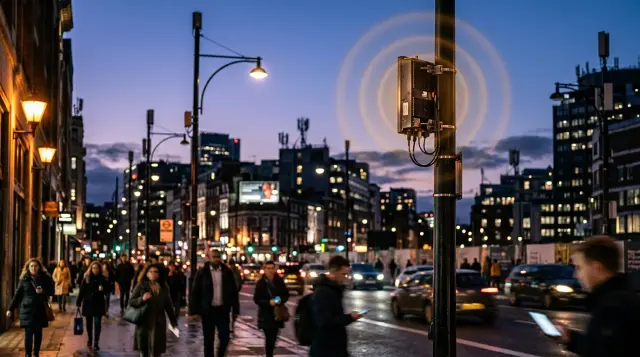
We don't have 20-year epidemiological data on 5G specifically because it hasn't been around that long. The absence of proof isn't proof of absence, which is why a precautionary approach makes sense to a lot of people.
What Exactly Is 5G Radiation, and How Is It Different from 4G?
Let's start with basics, because a lot of the fear around 5G comes from not understanding what actually changed. Previous wireless generations, 3G and 4G LTE, primarily operated on frequencies between about 700 MHz and 2.5 GHz. You've been swimming in those frequencies for over a decade. 5G adds a new layer by also using millimeter-wave (mmWave) frequencies, typically between 24 GHz and 39 GHz.
Higher frequency sounds scarier. But here's the physics: millimeter waves carry more data (that's why your 5G download speeds are faster), yet they have a much shorter range and get absorbed by the surface of your skin rather than penetrating deep into tissue. They can't pass through walls easily. That's actually why carriers need so many more small cells, because each one covers a smaller area.
All of these frequencies fall under non-ionizing radiation. Unlike X-rays or gamma rays, they don't carry enough energy per photon to knock electrons off atoms and directly damage DNA. That's an important distinction. But "non-ionizing" doesn't automatically mean "zero biological effect." And that's where the debate starts getting interesting.
Quick Q&A
Q: Is 5G radiation ionizing or non-ionizing?
A: 5G uses non-ionizing radiofrequency radiation, meaning it lacks the energy to directly break chemical bonds or damage DNA the way X-rays or ultraviolet light can.
The Federal Communications Commission (FCC) sets exposure limits based on the specific absorption rate, or SAR, capped at 1.6 W/kg averaged over 1 gram of tissue [1]. For the higher mmWave frequencies used in 5G, the FCC uses a power density limit of 10 W/m² instead, since those waves don't penetrate past the skin's surface. Critics, including some researchers at institutions like the Ramazzini Institute in Italy, argue these limits were set decades ago and haven't been updated to reflect newer biological research.
What Do the Key Studies Actually Show About RF Radiation and Health?
Two landmark studies dominate this conversation. If you want an informed opinion, you need to know about both.
The first is the National Toxicology Program (NTP) study, which ran for over a decade and cost $30 million. Released in 2018, it exposed rats to RF radiation at 900 MHz (a 2G/3G frequency) for nine hours a day over their entire lifetimes. The results: clear evidence of malignant schwannomas (heart tumors) in male rats, and some evidence of brain tumors [2].
The second is the Ramazzini Institute study from Italy, published the same year. It used much lower exposure levels, closer to what you'd experience living near a cell tower, and found similar tumor types in rats. These two studies got serious attention because they pointed in the same direction despite different exposure levels and independent research teams.
Now, the caveats. These studies used older frequencies, not the mmWave bands specific to 5G. The exposure durations were far longer than typical human use. And as the FDA noted in its own review, animal studies don't always translate directly to human risk [3]. But here's what I find telling: the World Health Organization's International Agency for Research on Cancer (IARC) classified all radiofrequency electromagnetic fields as Group 2B, meaning "possibly carcinogenic to humans," back in 2011 [4]. That classification hasn't been downgraded. If anything, the NTP results have prompted calls from scientists to upgrade it.
The honest answer? We don't have 20-year epidemiological data on 5G specifically because it hasn't existed that long. The absence of proof isn't proof of absence. That's why a precautionary approach makes sense to a lot of people.
Do EMF Protection Pendants Actually Work?
This is the question I see everywhere, and I get the skepticism. The market for EMF protection pendants and EMF blocking jewelry has exploded, and not every product in that space is backed by real science. Some brands sell pendants based on vague claims about "scalar energy" or "quantum frequencies" without providing any measurable, testable data. Those deserve your side-eye.
The pendants that tend to perform better in independent testing are the ones using actual shielding materials with known electromagnetic attenuation properties. Silver, for example, is one of the most conductive metals on Earth and has been used in Faraday cage construction for decades. When a pendant or piece of jewelry incorporates real silver fibers or other conductive metals in sufficient quantity, it can partially deflect RF signals away from the area it covers.
That said, let me be straight with you: a small pendant hanging around your neck can only shield so much surface area. Physics doesn't care about marketing. A pendant might offer localized shielding near your chest, but it won't create a force field around your entire body. This is exactly why many people who take electromagnetic radiation seriously are moving toward full-coverage solutions like shielding apparel.
Quick Q&A
Q: Can an EMF protection pendant block all 5G radiation?
A: No single pendant can block all incoming RF radiation because it only covers a small area, but pendants made with conductive metals like silver can provide measurable localized shielding near the chest.
If you've been researching emf protection pendants, my honest recommendation is to think bigger. A pendant can be one piece of your strategy, but pairing it with Faraday-fabric clothing that covers your torso gives you dramatically more protection. The Faraday EMF Collection from Proteck'd, for example, uses silver-fiber fabrics that can attenuate RF signals by 40 dB or more, meaning they block over 99% of incoming EM radiation across a broad range of frequencies. That's a measurable, testable number. Not a vague energy claim.

What Is Electromagnetic Hypersensitivity, and Is It Real?
Electromagnetic hypersensitivity, often called EHS, is a condition where people report symptoms like headaches, fatigue, difficulty concentrating, and sleep disruption, all of which they attribute to exposure to electromagnetic fields. The WHO acknowledges that the symptoms are real and sometimes severe, but its current position is that scientific evidence doesn't support a direct causal link between EMF exposure and those symptoms [4].
Here's where it gets complicated. Provocation studies, where people with self-reported EHS are exposed to real and sham EMF sources without knowing which is which, have generally failed to show that affected individuals can reliably detect EMF presence. But a negative result in that specific study design doesn't necessarily mean the condition isn't real. Dr. Dominique Belpomme, a French oncologist, published research in 2015 suggesting that EHS patients show measurable biomarkers including elevated histamine and disrupted blood-brain barrier function.
I've spoken with people who describe their symptoms disappearing when they moved to a low-EMF environment. Placebo effect? Maybe. But when someone tells you their chronic headaches vanished after they removed their smart meter and switched to wired internet, it's hard to wave that off entirely. Sweden, to its credit, officially recognizes EHS as a functional impairment and provides workplace accommodations.
Whether or not you personally experience EHS, the growing number of wireless devices in our lives means our cumulative RF exposure is higher than any previous generation's. If you're curious about practical first steps, Reducing EMF Exposure: Where to Start is a solid primer on the low-hanging fruit.
How Does Faraday Fabric Compare to Pendants for EMF Shielding?
Let's talk about surface area, because that's what this really comes down to. A typical EMF protection pendant covers maybe 4 to 6 square inches of your body. A Faraday-fabric shirt covers roughly 3,000 to 4,000 square inches. I don't think I need to explain which one provides more meaningful shielding from radiofrequency radiation.
Faraday fabric works on the same principle as a Faraday cage, named after physicist Michael Faraday, who demonstrated in 1836 that a conductive enclosure blocks external electric fields. Modern Faraday textiles weave thin silver or copper threads into the fabric. When RF waves hit the material, the conductive mesh reflects and absorbs the radiation before it reaches your skin. This has been tested and verified in labs using spectrum analyzers. It's not just claimed in marketing copy.
The Men's Faraday Collection from Proteck'd incorporates this technology into clothing that actually looks good, which matters more than people think. If your "shielding solution" is a tinfoil-looking poncho stuffed in a drawer, it's not protecting you from anything. The most effective EMF protection is the kind you actually wear every day. And Why People Are Switching to EMF Apparel lays out the reasoning behind this shift from gadgets to garments.
I'm not saying toss your emf protection pendants in the trash. They have their place, especially for people who want something lightweight and discreet for targeted chest-area shielding. But if you're genuinely concerned about your total electromagnetic field exposure, especially with 5G frequencies spreading fast, clothing-based protection is the more comprehensive approach. Think of it like sunscreen: a dab on your nose helps, but full-body coverage is what actually prevents a burn.
Why Do Some Studies on EMF Conflict with Each Other?
This might be the most important section in the entire article. Conflicting studies are the reason people throw up their hands and stop trying to understand the topic. So let me explain why the research looks the way it does.
First, funding sources matter. A lot. A 2006 review by Dr. Henry Lai at the University of Washington analyzed 326 studies on the biological effects of RF radiation. Among independently funded studies, 70% found biological effects. Among industry-funded studies, only 32% did. That's a striking gap. It doesn't prove fraud, but it strongly suggests that study design choices, like exposure duration, frequency selection, and which endpoints to measure, can be influenced by who's writing the check.
Second, exposure parameters vary wildly between studies. Some use continuous wave exposure, others use pulsed signals that more closely mimic real cell phone communication. Some expose animals for hours, others for minutes. Some look at thermal effects (tissue heating), while others investigate non-thermal biological responses like oxidative stress or changes in gene expression. Comparing results across these different designs is like comparing apples to car engines.
Third, there's the latency problem. Cancer can take 10 to 30 years to develop. 5G has only been widely deployed since 2019 or 2020. We simply cannot have long-term epidemiological data yet. The Interphone study, which examined brain tumor risk from mobile phone use, took over a decade to complete and still generated debate over its methodology. For more on the broader context of protecting your living environment, EMF-Safe Home: A Complete Guide covers the big picture.
What Practical Steps Can You Take to Reduce 5G and EMF Exposure?
Alright, enough theory. Let's talk action.
The simplest and most effective tool you have is distance. The inverse square law means that doubling your distance from an RF source cuts your exposure to one-quarter. So holding your phone six inches away from your head instead of pressing it against your ear makes a real difference. Using speakerphone or wired earbuds is an easy win.
At home, consider hardwiring your internet connection where possible. An Ethernet cable delivers faster, more stable internet than Wi-Fi anyway, and it eliminates one of the most persistent sources of RF in your living space. If you want to go deeper on this, Low-EMF Home Design: The Highest-Impact Changes You Can Make walks through the highest-return modifications room by room.
For the time you spend outside your home, where you can't control the RF environment, shielding apparel becomes your most practical tool. This is where the Faraday EMF Collection really earns its keep. Wearing a silver-fiber hoodie on your commute through a downtown area packed with 5G small cells gives you a layer of measurable, physics-based protection that no pendant or sticker can match.
And don't forget your bedroom. You spend roughly a third of your life sleeping, and that's time your body is doing its most intensive repair work. Turning off your Wi-Fi router at night, keeping your phone in another room (or at least in airplane mode), and checking out Low-EMF Home Design: A Complete Guide for bedroom-specific tips can meaningfully reduce your cumulative nighttime exposure to electromagnetic radiation.
Should You Worry About 5G, or Is It All Hype?
I think the most honest answer lives somewhere in the middle. I know that's unsatisfying.
The current scientific consensus, as represented by agencies like the FCC and FDA, is that 5G exposure at regulated levels doesn't pose a proven health risk. But "proven" is doing a lot of heavy lifting in that sentence. The IARC's Group 2B classification of RF radiation hasn't been withdrawn [4]. The NTP study found clear evidence of tumors in rats [2]. And we don't have decades of data on the specific mmWave frequencies 5G uses. If you're the type of person who waits for absolute certainty before taking precautions, that's your call. Personally, I'd rather take reasonable steps now and be pleasantly surprised later than do nothing and wonder "what if" in 20 years.
Those reasonable steps don't have to be extreme. You don't need to move to a cabin in Montana. Start with distance. Add some shielding. Reduce unnecessary wireless devices in your home. Pay attention to how you feel. Check out EMF Protection Benefits if you want to understand the specific advantages of integrating Faraday fabric into your routine.
The market for emf protection pendants and EMF blocking jewelry will keep growing, and some of those products will be excellent while others will be snake oil. Your best defense is understanding the science well enough to tell the difference. That, and wearing shielding that actually covers your body, not just decorates it.
- 5G uses millimeter-wave frequencies (24 to 39 GHz) that are higher than 4G but still classified as non-ionizing radiation.
- The NTP study and Ramazzini Institute study both found tumor evidence in animals exposed to RF radiation, though at older frequencies.
- EMF protection pendants made with conductive metals can provide localized shielding, but silver-fiber Faraday clothing offers far greater body coverage.
- Distance from RF sources is your simplest and most powerful tool: doubling your distance cuts exposure to one-quarter.
- Long-term 5G-specific health data doesn't exist yet, making a precautionary approach a reasonable strategy.
Frequently Asked Questions
It depends on the pendant. Ones made with real conductive materials like silver can provide measurable, localized shielding near your chest. However, pendants based on vague claims about "scalar energy" or "quantum harmonizing" without testable evidence should be viewed with skepticism. For broader coverage, Faraday-fabric apparel is a more effective investment.
5G uses higher frequencies, but those millimeter waves are absorbed at the skin's surface rather than penetrating deep into tissue the way lower 4G frequencies can. Whether that surface absorption carries its own risks isn't fully studied yet. The honest answer is we don't have enough long-term data specific to 5G mmWave frequencies to make a definitive comparison.
The National Toxicology Program's 2018 study found clear evidence of malignant heart tumors (schwannomas) in male rats exposed to high levels of 2G/3G RF radiation over two years. It also found some evidence of brain tumors. The study cost $30 million and is considered one of the most comprehensive RF exposure studies ever conducted.
Partially, yes. In 2011, the WHO's International Agency for Research on Cancer classified radiofrequency electromagnetic fields as Group 2B, meaning "possibly carcinogenic to humans." That puts RF in the same category as certain pesticides and lead. It indicates limited evidence of carcinogenicity, not conclusive proof.
Faraday fabric works by weaving conductive threads, typically silver or copper, into textile material. When radiofrequency waves hit the fabric, the conductive mesh reflects and absorbs the radiation. High-quality Faraday fabrics can attenuate RF signals by 40 dB or more, which translates to blocking over 99% of electromagnetic radiation across a wide frequency range.
Absolutely. Using speakerphone or wired earbuds, keeping your phone out of your bedroom at night, hardwiring your internet connection, and increasing distance from wireless devices are all free and effective strategies. The inverse square law means doubling your distance from an RF source cuts your exposure to one-quarter.
The WHO acknowledges that EHS symptoms are real but doesn't currently classify it as a medical diagnosis with a proven causal link to EMF. Sweden officially recognizes EHS as a functional impairment and provides accommodations. Research by Dr. Dominique Belpomme has identified measurable biomarkers in some EHS patients, including elevated histamine levels.
The FCC limits the specific absorption rate for cell phones sold in the United States to 1.6 watts per kilogram, averaged over 1 gram of tissue. For the higher millimeter-wave frequencies used in 5G, the FCC uses a power density limit of 10 W/m² instead. Critics argue these standards haven't been meaningfully updated since the 1990s.
Shungite does contain carbon structures with some electrical conductivity, and small studies have explored its shielding properties. However, the attenuation provided by a small shungite or tourmaline pendant is minimal compared to engineered Faraday fabrics. If you enjoy wearing them, go for it, but don't rely on them as your primary EMF protection strategy.
5G small cells are typically mounted on utility poles, buildings, and streetlights, often within 500 feet of homes and workplaces. Millimeter-wave signals weaken rapidly over distance and are blocked by walls and foliage. Your closest and strongest RF exposure sources are usually the devices in your own hands and pockets, not the towers down the street.
References
- Federal Communications Commission (FCC) – The FCC limits cell phone RF emissions to a specific absorption rate (SAR) of 1.6 W/kg averaged over 1 gram of tissue.
- National Toxicology Program (NTP), National Institutes of Health – The NTP study found clear evidence of malignant heart tumors (schwannomas) in male rats exposed to high levels of RF radiation over two years.
- U.S. Food and Drug Administration (FDA) – The FDA noted in its review that animal studies don't always translate directly to human risk and that current evidence does not support a causal link between RF exposure and cancer in humans.
- World Health Organization / IARC – IARC classified radiofrequency electromagnetic fields as Group 2B (possibly carcinogenic to humans) in 2011.
About the Author
Proteck'd EMF Apparel
Health & EMF Specialists
The Proteck'd team covers EMF protection, silver-fiber apparel, and practical ways to reduce everyday radiation exposure. Every piece Proteck'd ships is designed, tested, and worn by the people who build it.
Protect Yourself Today
Proteck'd Faraday and silver fiber apparel is engineered to shield your body from everyday EMF exposure. Built for real life, tested for real results.
Shop EMF Protection →✓30-day returns✓Free shipping✓Free returns✓Silver fiber shielding


Leave a comment