


Biohacking Techniques That Actually Work: What the Research Shows

Here's a number that should bug you: the CDC reports that one in three American adults doesn't get the recommended seven hours of sleep per night [1]. That's roughly 80 million people stumbling through their days in a haze, reaching for another espresso, wondering why their brain won't cooperate. And yet, sleep optimization is probably the single most powerful biohacking tool that most people completely overlook. It's free. It doesn't require a $2,000 gadget. And the research behind it is about as solid as research gets.
I've spent years sorting through biohacking trends, from red light therapy panels to nootropic stacks that cost more than my grocery bill. Some of it works. A lot of it doesn't. What's frustrating is that the internet treats all of it the same, burying the proven stuff right next to unproven hype.
So I wanted to write something different. This isn't a listicle of 47 tips you'll forget by tomorrow. It's a focused look at the biohacking techniques with real evidence behind them, the kind that comes from peer-reviewed journals, not Instagram influencers.
We'll start with nightly recovery (because that's where the biggest gains are for most people) and work outward into cold exposure, meditation, EMF reduction, and strategic fasting. If you've ever wondered which biohacks are actually worth your time, you're in the right place.
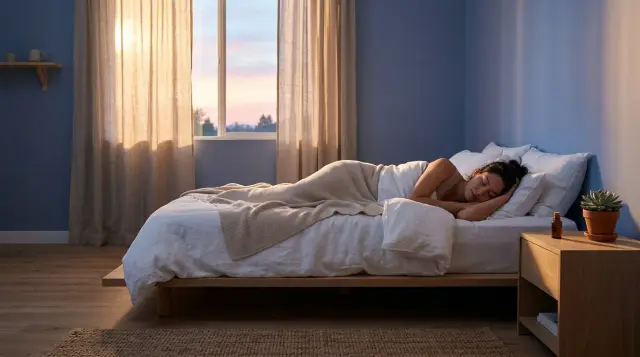
The real promise of biohacking isn't in expensive gadgets or exotic supplements. It's in the boring, consistent stuff: cool bedrooms, morning sunlight, consistent schedules, and the discipline to put your phone down before bed. The research has been saying this for years. We just weren't listening.
Why Is Sleep Optimization the Foundation of Every Biohacking Protocol?
Ask any serious biohacker for their top recommendation. Nine times out of ten, they'll say the same thing: fix your sleep first. There's good reason for that. Research from Matthew Walker's lab at UC Berkeley has shown that even a single night of poor rest reduces natural killer cell activity by about 70%, hammering your immune system before you even feel tired [2]. No supplement on earth makes up for that kind of hit.
Sleep optimization isn't just about logging more hours, though hours do matter. It's about improving the quality and architecture of your rest. Deep sleep, specifically stages 3 and 4 of non-REM sleep, is when your body releases growth hormone, consolidates memories, and clears metabolic waste from the brain through the glymphatic system. If you're getting seven hours but spending most of it in light sleep, you're not getting the recovery you think you are.
Here's a concrete example. A friend of mine wore an Oura ring for three months without changing anything. His average deep sleep was 38 minutes per night, well below the 1.5 to 2 hours considered healthy. After adjusting his bedroom temperature, cutting alcohol on weekdays, and shifting his last meal earlier, his deep sleep nearly doubled within six weeks. Same bedtime. Same wake time. Dramatically different results.
The bottom line is straightforward: circadian rhythm hacking and better sleep hygiene practices form the foundation that every other biohack sits on. If you're spending money on supplements or gadgets but sleeping poorly, you're building on sand. Research from the National Sleep Foundation consistently reinforces that bedroom environment, schedule consistency, and pre-sleep routines matter more than any single product or pill.
How Does Light Exposure Affect Your Circadian Rhythm?
Your body doesn't just decide when to feel sleepy based on a clock. It relies on light signals hitting specialized cells in your retina called intrinsically photosensitive retinal ganglion cells. These cells communicate directly with the suprachiasmatic nucleus in your hypothalamus, which acts as your master circadian clock. When you mess with those light signals, you mess with everything downstream: melatonin production, cortisol timing, body temperature rhythms.
According to research from Harvard Medical School, blue light (the kind emitted by your phone, laptop, and LED bulbs) suppresses melatonin production roughly twice as much as green light and shifts circadian rhythms by about three hours [3]. That's not a minor effect. If you're scrolling through social media at 11 PM, your brain essentially thinks it's still mid-afternoon.
Quick Q&A
Q: When should you stop using screens to protect your sleep?
A: Harvard researchers recommend avoiding blue light exposure for at least 2-3 hours before bed, or using blue light blocking glasses and screen filters if you must use devices in the evening.
The flip side matters just as much. Getting bright light exposure during the day, especially in the first 30 to 60 minutes after waking, strengthens your circadian signal and makes your body more responsive to darkness later. Neuroscientist Andrew Huberman at Stanford has popularized the "morning sunlight protocol," recommending 10 minutes of outdoor light exposure on clear days and 20 to 30 minutes on overcast days. It costs nothing and works remarkably well.
If you're interested in reducing your exposure to electromagnetic fields from devices, especially in the hours before bed, that's where things like Faraday Health Collection apparel come in. Wearing EMF-shielding clothing isn't about paranoia. It's about reducing one more source of stimulation that can interfere with your body's transition to rest. For a deeper look at the digital side of this equation, check out our Digital Detox: The Complete Guide.
What's the Ideal Bedroom Environment for Better Rest?
Temperature is the most underrated sleep variable. Period. The National Sleep Foundation recommends keeping your bedroom between 60 and 67°F (15.5 to 19.4°C) for optimal rest. Your core body temperature needs to drop by about 2 to 3 degrees Fahrenheit to initiate sleep, and a warm room fights that process. This is why you sleep terribly in hotel rooms that are too warm, even when the bed itself is comfortable.
Dr. Christopher Winter, a neurologist and sleep specialist at Charlottesville Neurology and Sleep Medicine, has written extensively about the connection between ambient temperature and sleep architecture. His clinical observations show that patients who cool their sleeping environment often see improvements in deep sleep within the first week. Some biohackers use devices like the Eight Sleep Pod or ChiliPad to fine-tune mattress temperature, but honestly? A fan and lighter blankets get you 80% of the benefit at a fraction of the cost.
Beyond temperature, think about light and sound. Blackout curtains aren't a luxury. They're a sleep tool. Even small amounts of ambient light can suppress melatonin through your closed eyelids. A 2022 study published in the Proceedings of the National Academy of Sciences found that sleeping with moderate light exposure (around 100 lux, roughly a dim lamp) increased nighttime heart rate and impaired glucose metabolism the following morning.
Noise is the other factor worth paying attention to. White noise machines work for many people because they mask sudden changes in sound volume, which are what actually wake you up. It's not the constant hum of traffic that disrupts sleep. It's the random car horn or door slam. Consistent background sound smooths out those spikes. If you're looking for a more complete approach to your evening wind-down, our Digital Detox: The Honest Guide walks through practical steps for reducing stimulation before bed.
Does Cold Exposure Therapy Actually Have Research Behind It?
Cold exposure has become a biohacking favorite, largely thanks to Wim Hof's popularization and a growing body of clinical research. But does it hold up under scrutiny? Short answer: yes, for specific outcomes. A 2023 study published in Cell Reports Medicine found that deliberate cold water immersion (around 50°F/10°C for 11 minutes total per week, split across two or three sessions) significantly increased norepinephrine levels by 200 to 300%. That's a massive boost in a neurotransmitter tied to focus, mood, and alertness.
Dr. Susanna Søberg, a metabolism researcher at the University of Copenhagen, conducted the research behind these protocols and found that the benefits come primarily from the cold itself, not the duration. Put simply, a two-minute cold shower provides more of the norepinephrine response than most people realize. You don't need to sit in an ice bath for 20 minutes to see results.
Where the evidence gets thinner is with claims about fat loss and muscle recovery. Cold exposure does activate brown adipose tissue (a type of fat that burns calories to generate heat), but the caloric impact is modest. A study from the Garvan Institute of Medical Research in Sydney estimated that cold-activated brown fat might burn an extra 100 to 200 calories per day under sustained cold conditions. Meaningful, but not miraculous.
The practical takeaway? Cold exposure is a legitimate biohack for mood, alertness, and potentially inflammation. But it's not a replacement for the fundamentals. If your nightly recovery is still a mess, cold showers won't save you. Fix your sleep hygiene practices first, then layer on cold exposure as an amplifier.
Can Meditation Measurably Change Your Biology?
Meditation often gets lumped in with vague "wellness" advice, which is a shame, because the hard data is genuinely impressive. Researchers at UC Davis conducted a long-term study on intensive meditation retreats and found that experienced meditators had cortisol levels roughly 25% lower than matched controls. Cortisol is your primary stress hormone, and chronically elevated levels are linked to everything from belly fat to impaired immune function.
A 2014 meta-analysis led by Dr. Madhav Goyal at Johns Hopkins University, published in JAMA Internal Medicine, reviewed 47 randomized controlled trials and concluded that mindfulness meditation programs showed moderate evidence for improving anxiety, depression, and pain [4]. The effect sizes were comparable to antidepressants for mild to moderate symptoms. That's a striking finding for a practice that costs nothing.
Quick Q&A
Q: How long do you need to meditate daily to see measurable benefits?
A: According to the Johns Hopkins meta-analysis, most studies showing significant results used sessions of 30-40 minutes per day, though some research suggests benefits can begin with as little as 10-13 minutes daily over 8 weeks.
What I find most compelling is the impact on sleep. Meditation and sleep optimization work together in a feedback loop. A 2015 JAMA Internal Medicine study by Dr. David Black at USC found that older adults who participated in a standardized mindfulness program (Mindful Awareness Practices) showed clinically significant improvements in sleep quality compared to a control group that received standard sleep hygiene education. If you want to go deeper on this topic, we've covered it in detail in The Evidence Behind Meditation: What the Studies Actually Show.
The key is consistency, not intensity. You don't need a silent retreat in the mountains. Ten to fifteen minutes of focused breathing or body scan meditation, done daily, builds the neurological changes over time. Think of it like compound interest for your nervous system.
How Does EMF Exposure Relate to Sleep Quality?
This topic generates more debate than almost any other in the biohacking world, so let's stick to what the research actually says. A 2013 study published in the International Journal of Environmental Research and Public Health found that participants exposed to radiofrequency electromagnetic fields from mobile phones before sleep showed altered brain activity during subsequent sleep stages. The changes were modest but measurable, primarily affecting sleep spindles during stage 2 non-REM sleep.
The World Health Organization classifies radiofrequency electromagnetic fields as "possibly carcinogenic to humans" (Group 2B), which is the same category as pickled vegetables and talcum powder. That classification tells us there's enough signal to warrant continued research but not enough for definitive conclusions. What's less debated is the behavioral side: the devices emitting EMF are the same ones flooding your eyes with blue light and your brain with notifications. Separating the direct EMF effects from the behavioral effects is genuinely difficult.
That said, the precautionary approach makes sense for people who are serious about sleep optimization. Reducing electromagnetic exposure in your bedroom, whether by switching phones to airplane mode, moving routers out of bedrooms, or wearing EMF-shielding clothing, removes a variable from the equation. Proteck'd's Women's Wellness Collection and Faraday Health Collection use silver-infused Faraday fabric to attenuate electromagnetic fields. You can learn more about the science behind this at our EMF Health Benefits page.
Even if you're skeptical about direct biological effects of EMF, think of it this way: anything that gives you a reason to keep devices out of the bedroom is a win for your circadian rest. And that's a biohack with unambiguous benefits. For a broader framework on reducing digital exposure, our Integrative Wellness: The Beginner's Guide and Integrative Wellness: The Complete Guide are solid starting points.
What About Intermittent Fasting and Meal Timing?
Intermittent fasting (IF) has been one of the most studied biohacking approaches of the past decade. A 2019 review in the New England Journal of Medicine by Dr. Rafael de Cabo and Dr. Mark Mattson summarized the evidence: time-restricted eating and periodic fasting showed benefits for metabolic health markers including insulin sensitivity, inflammation, and cellular repair processes like autophagy.
But here's where meal timing intersects with sleep quality in a way most people miss. Eating large meals close to bedtime forces your digestive system into high gear right when your body is trying to wind down. Research from the University of Pennsylvania's Perelman School of Medicine found that late eating (finishing meals after 7 PM versus before) led to higher respiratory quotient during sleep, meaning the body was burning more carbohydrates and fewer fats. Subjects also reported worse sleep quality.
A practical approach that many biohackers use is to finish eating 2 to 3 hours before bed. This isn't about strict calorie timing. It's about giving your body a metabolic runway to transition into rest mode. Some people do well with a 16:8 fasting window (eating between noon and 8 PM), which naturally creates this buffer.
One caveat worth mentioning: fasting isn't for everyone, and it can backfire for people with blood sugar dysregulation, a history of disordered eating, or women in certain phases of their menstrual cycle. Dr. Satchin Panda at the Salk Institute, who pioneered much of the time-restricted eating research, emphasizes that consistency matters more than the specific window. Pick a schedule that fits your life and stick with it.
How Do You Stack These Biohacks Into a Realistic Daily Routine?
The mistake most people make with biohacking is trying to implement everything at once. They buy the cold plunge, the light-therapy glasses, the meditation app, and the sleep tracker on the same day. Two weeks later, they're overwhelmed and right back to old habits. I've seen it happen dozens of times.
A better approach looks something like this. Start with sleep optimization alone for two weeks. Get your bedroom cool (65°F), dark (blackout curtains or a mask), and device-free. Set a consistent wake time, even on weekends. Get outside for 10 minutes of morning sunlight. That's it. A 2019 meta-analysis in the British Journal of Sports Medicine found that adding regular exercise (which naturally follows from better rest and energy) improved sleep quality with an effect size of 0.22, reinforcing how these habits compound on each other.
After two weeks, add one thing. Maybe that's a daily 10-minute meditation practice. Maybe it's ending your eating window three hours before bed. Maybe it's two cold showers per week. The point is to isolate variables so you know what's actually working for your body, not someone else's.
By month two, you might have a morning routine that includes sunlight exposure, a cold shower, and a consistent eating window, paired with an evening routine that involves blue light blocking, a phone curfew, and a cool, dark bedroom. None of these individual pieces are complicated. But layered together, they produce results that feel way out of proportion to the effort. That's the real promise of evidence-based biohacking: small, consistent inputs that compound over time into genuinely better health.
- Sleep optimization is the single highest-return biohack, and it's mostly free: consistent schedule, cool bedroom (60-67°F), and morning light exposure.
- Blue light from screens suppresses melatonin roughly twice as much as other light wavelengths, so a 2-3 hour pre-bed screen curfew pays major dividends.
- Cold exposure therapy (11 minutes per week at around 50°F) can increase norepinephrine by 200-300%, improving mood and alertness.
- Meditation shows measurable effects on cortisol, anxiety, and sleep quality, with benefits starting at around 10-13 minutes per day.
- Stack biohacks gradually, starting with sleep, and add one new practice every two weeks to identify what works for your body.
Frequently Asked Questions
Sleep optimization is the best starting point. It requires no equipment, costs nothing, and produces measurable improvements in energy, focus, and mood within one to two weeks. Start with a consistent wake time, a cool bedroom, and morning sunlight exposure.
Most research supports 7 to 9 hours for adults, but quality matters as much as quantity. The CDC and the National Sleep Foundation both recommend a minimum of 7 hours. Tracking your deep sleep percentage with a wearable can tell you more than total hours alone.
Cold exposure is best done earlier in the day, not right before bed. While it causes an eventual drop in core body temperature (which can aid sleep onset), the initial stress response and norepinephrine spike can be too stimulating close to bedtime. Most protocols recommend morning or afternoon sessions.
Yes. Harvard Medical School research confirms that blue wavelengths suppress melatonin more powerfully than other types of visible light. Wearing blue light blocking glasses or using screen filters in the 2 to 3 hours before bed can preserve your melatonin production and improve sleep onset.
The National Sleep Foundation recommends 60 to 67°F (15.5 to 19.4°C). Your core body temperature needs to drop by 2 to 3°F to initiate sleep, and a cooler room supports this process. If you tend to sleep hot, even a fan can make a noticeable difference.
It can, primarily by preventing large meals close to bedtime. Finishing your last meal 2 to 3 hours before sleep gives your digestive system time to wind down. Research from the University of Pennsylvania found that late eating worsened sleep quality and altered metabolism during sleep.
Sleep environment changes (temperature, darkness, noise) often produce noticeable results within the first week. Meditation benefits typically become measurable after 4 to 8 weeks of consistent practice. Cold exposure can boost mood and alertness from the very first session, though longer-term benefits build over several weeks.
The direct biological effects of EMF on sleep are still debated in the research community. Some studies show measurable changes in sleep architecture from radiofrequency exposure, while others don't. What's clear is that the behavioral effects of having a phone in your bedroom, including blue light, notifications, and late-night scrolling, unambiguously impair sleep quality.
Melatonin supplements can help with jet lag and short-term sleep schedule adjustments. Research suggests that lower doses (0.3 to 1 mg) are often more effective than the 5 to 10 mg doses commonly sold. It's better used as a timing signal than a sedative, and it's not a long-term fix for chronic sleep problems.
Sleep hygiene refers to the basic behavioral and environmental practices that promote good sleep, like keeping a dark room and avoiding caffeine. Sleep optimization goes further, incorporating circadian rhythm timing, strategic light exposure, temperature manipulation, and wearable data to fine-tune your rest for maximum recovery.
References
- Centers for Disease Control and Prevention – 1 in 3 American adults does not get the recommended 7 or more hours of sleep per night
- National Institutes of Health (Sleep deprivation and immunity) – Poor sleep significantly impairs immune function including natural killer cell activity
- Harvard Health Publishing (Blue light and sleep) – Blue light suppresses melatonin production roughly twice as much as green light and shifts circadian rhythms by about 3 hours
- JAMA Internal Medicine (Meditation meta-analysis by Goyal et al., 2014) – Mindfulness meditation programs show moderate evidence for improving anxiety, depression, and pain across 47 randomized controlled trials
About the Author
Proteck'd EMF Apparel
Health & EMF Specialists
The Proteck'd team covers EMF protection, silver-fiber apparel, and practical ways to reduce everyday radiation exposure. Every piece Proteck'd ships is designed, tested, and worn by the people who build it.
Protect Yourself Today
Proteck'd Faraday and silver fiber apparel is engineered to shield your body from everyday EMF exposure. Built for real life, tested for real results.
Shop EMF Protection →✓30-day returns✓Free shipping✓Free returns✓Silver fiber shielding


Leave a comment