


Phone Addiction: How to Take Back Control

Here's a number that stopped me cold: 144. That's how many times the average American checks their phone every single day, according to a 2023 Gallup survey. Not 14. Not 40. A hundred and forty-four. If you're reading this, you've probably already searched for how to block phone addiction solutions because you feel that pull yourself. Maybe you pick up your phone without thinking. Maybe you've lost entire evenings to scrolling and couldn't tell anyone what you actually saw. You're not broken. You're responding exactly the way the technology was designed to make you respond.
The good news? There are real, concrete strategies that work. Not vague advice like "just use your phone less" or "try being more mindful." We're talking actual tools, environmental tweaks, and behavioral shifts backed by neuroscience research from places like the University of Texas at Austin and the National Institutes of Health.
I've spent months testing these approaches, reading the studies, and talking to people who've genuinely changed their relationship with their devices. What follows is the best of what I found, organized so you can start making changes today.
This isn't about becoming a Luddite or throwing your phone in a lake. It's about reclaiming the hours that are quietly slipping away from you. And maybe sleeping better and feeling calmer in the process.

Why Can't You Put Your Phone Down? The Neuroscience of Screen Addiction
Let's start with the uncomfortable truth: your phone is engineered to be addictive. Not metaphorically. Literally. Former Google design ethicist Tristan Harris has spoken extensively about how Silicon Valley designers use the same variable-ratio reinforcement schedules that make slot machines so compelling. Every time you pull to refresh, you're pulling a lever. Sometimes you get something interesting. Sometimes nothing. That unpredictability is precisely what keeps you coming back.
The mechanism is dopamine, but not the way most people think. Dopamine isn't a "pleasure chemical." According to research from Stanford University neuroscientist Dr. Andrew Huberman, dopamine is primarily about anticipation and seeking behavior. Your brain releases dopamine before the reward, not after. So that buzz you feel reaching for your phone? That's your brain anticipating something good might be there. The notification sound is the trigger. The check is the habit. The variable payoff keeps the loop spinning.
A 2024 meta-analysis published in Reviews in Neuroscience found that problematic smartphone use is associated with measurable reductions in gray matter volume in the prefrontal cortex, the brain region responsible for impulse control and decision-making [1]. Heavy compulsive phone use doesn't just feel like a willpower problem. Over time, it can actually change the brain structures you need to exercise willpower.
Quick Q&A
Q: Is phone addiction a real addiction or just a bad habit?
A: The American Psychological Association recognizes problematic smartphone use as a behavioral pattern that shares neural pathways with substance addiction, including dopamine dysregulation and reduced prefrontal cortex activity.
This is why "just put it down" doesn't work for most people. You're fighting against billions of dollars of behavioral design and, potentially, against neurological changes that have already taken root. The solution has to go deeper than willpower. It has to change the environment itself.
How Do You Know If You're Actually Addicted to Your Smartphone?
There's a difference between heavy phone use and problematic phone use, and it matters. A surgeon who spends six hours on their phone for work and communication is in a different category than someone who can't eat dinner without checking Instagram three times. The distinction isn't about minutes. It's about control.
Researchers at the University of Heidelberg developed the Smartphone Addiction Scale (SAS), which measures things like tolerance (needing more screen time to feel satisfied), withdrawal (anxiety when separated from your device), and functional impairment (phone use interfering with work, sleep, or relationships). The American Psychological Association's 2023 Stress in America survey found that 65% of adults report feeling uneasy when separated from their phone [2]. That's not a fringe problem. That's a majority of the country.
Ask yourself a few honest questions. Do you check your phone within five minutes of waking up? Do you reach for it during conversations, even when you know it's rude? Have you ever felt phantom vibrations, that sensation your phone buzzed when it actually didn't? Do you feel a low-grade anxiety when your battery drops below 20%? If you're nodding along, you're dealing with some degree of smartphone dependency. And you're far from alone.
One researcher I found particularly compelling is Dr. David Greenfield at the Center for Internet and Technology Addiction at the University of Connecticut. He compares the smartphone to a "portable dopamine pump" and argues that the device's always-on, always-available nature makes it uniquely difficult to moderate compared to other technologies. His Smartphone Compulsion Test is free online and takes about two minutes. I'd recommend starting there if you want a baseline before trying any of the strategies below.
Your phone was designed by thousands of engineers to be as compelling as possible. Reclaiming your attention isn't a willpower problem. It's a design problem, and the fix starts with redesigning your environment, not punishing yourself for being human.
What Are the Best Strategies to Block Phone Addiction?
Here's where we get practical. If you've been searching for how to block phone addiction solutions, you've probably seen plenty of tip lists. Most of them are fine on their own, but research suggests the real power comes from stacking multiple strategies at once. A 2021 study from the London School of Economics found that participants who used three or more behavior-change techniques simultaneously were significantly more likely to reduce their screen time than those who tried just one approach.
Grayscale mode. This is the single easiest change you can make, and it's surprisingly effective. Turning your phone's display to grayscale strips out the color cues that apps use to grab your attention (think: the red notification badge). On iPhone, it's under Settings > Accessibility > Display & Text Size > Color Filters. On Android, it's under Digital Wellbeing. App designers use color psychology deliberately. Remove the color, and the pull weakens.
App rearrangement and deletion. Move your most tempting apps off your home screen entirely. Better yet, delete the ones you can access through a browser instead (Instagram, Twitter/X, Reddit all work in mobile browsers, just with slightly more friction). Research from the University of Texas at Austin, led by Dr. Adrian Ward, showed that simply having your smartphone visible on a desk reduced available cognitive capacity by up to 10%, even when the phone was face down and silenced [3]. The mere presence of the device drains brainpower. Adding even a few seconds of friction before you can open a tempting app makes a measurable difference.
Notification culling. Go into your settings right now and turn off every notification except calls and texts from real humans. Every single one. The news alerts, the social media pings, the app reminders you never asked for. I did this two years ago and the difference in my stress levels was noticeable within days. Each notification is a tiny interruption. According to a 2015 study from Florida State University published in the Journal of Experimental Psychology, even unanswered notifications significantly disrupt focus and task performance.
If you want a more structured approach to all of this, we wrote a full walkthrough in our guide to Break Your Phone Addiction Step By Step that covers the first 30 days in detail.
Do Phone-Free Zones and Timed Lock Boxes Actually Work?
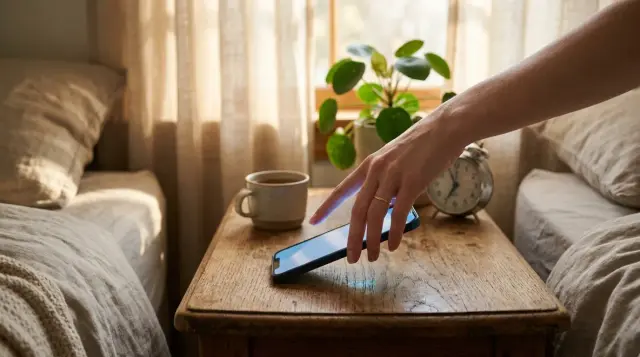
Short answer: yes, but only if you treat them as rules, not suggestions. The most effective digital detox methods I've come across involve physical separation from the device. Not airplane mode. Not "I'll just put it in my pocket." Actual, physical distance.
Timed phone lock boxes have exploded in popularity over the past two years. Companies like Mindsight and kSafe sell containers that lock your phone inside for a set period. You physically cannot get to it. Sounds extreme, right? But the psychology is sound. You're removing the decision entirely, and willpower is a resource that runs out. Why burn it saying no to your phone 50 times in an evening when you can say no once, lock the box, and be done?
Phone-free zones are the gentler version. The bedroom is the most important one. According to a 2019 study published in PLOS ONE, participants who kept their smartphones out of the bedroom reported better sleep quality and higher life satisfaction within just one week. If you only do one thing from this article, make the bedroom a phone-free zone. For more on improving your sleep through these kinds of environmental changes, check out our Getting Better Sleep: The Complete Guide.
Other strong candidates for device-free spaces: the dining table, the bathroom (you know you do it), and the first 30 minutes after you wake up. That morning window matters. When you reach for your phone first thing, you're handing your attention and your agenda to whoever posted, messaged, or emailed overnight. Starting the day on your own terms is a small act of rebellion against smartphone dependency. And it compounds over time.

How Does Excessive Screen Time Affect Your Physical Health?
We talk a lot about the mental health effects of phone addiction: the anxiety, the fractured attention, the comparison traps of social media. But the physical toll is real too, and it often gets overlooked.
"Text neck" isn't just a catchy phrase. Research from Dr. Kenneth Hansraj published in Surgical Technology International calculated that tilting your head forward 60 degrees to look at a phone puts roughly 60 pounds of force on your cervical spine. Do that for hours every day and you're looking at chronic neck pain, headaches, and potential nerve issues. Then there's the impact on your eyes. The American Academy of Ophthalmology has noted that rates of myopia have increased dramatically in recent decades, with extended near-focus work on screens as a contributing factor.
And then there's the EMF question. Every time you hold your phone against your body, you're exposing yourself to radiofrequency electromagnetic fields. The research on long-term health effects is still evolving, but many people are choosing to take a precautionary approach. If that's something you think about, it's worth exploring the EMF Health Benefits of shielding products. Proteck'd's Faraday Health Collection uses silver-infused fabrics that can help reduce your body's EMF exposure during the hours when you do need your phone nearby.
For women specifically, Proteck'd's Women's Wellness Collection offers pieces designed to be worn daily without looking like you're wearing a tinfoil hat. It's a practical, wearable layer of protection that fits into a broader screen time reduction strategy.
What Should You Replace Phone Time With?
This might be the most important section in the whole article. Here's why: if you just create a vacuum by removing your phone, you'll fill it with your phone again. Every time. The research is clear on this. Successful behavior change requires substitution, not just elimination.
Dr. Anna Lembke, Chief of the Stanford Addiction Medicine Dual Diagnosis Clinic and author of "Dopamine Nation," emphasizes that the brain needs alternative sources of dopamine that are slower-burning and more sustainable. Exercise is the obvious one, and for good reason. A 2023 meta-analysis in the British Journal of Sports Medicine found that physical activity was 1.5 times more effective than counseling or medication for reducing symptoms of depression and anxiety. But it doesn't have to be a gym session. A 20-minute walk works. So does gardening, cooking, or playing with your dog.
The key is to identify what you were actually seeking from your phone. Were you bored? You need stimulation. Try a puzzle, a new recipe, a musical instrument. Were you lonely? You need connection. Call someone instead of texting. Better yet, see them in person. Were you anxious? You need regulation. Try breathwork, a cold shower, or a genuine mindfulness practice. We wrote a whole piece on How to Make Mindfulness Stick: Without the Woo for people who find meditation off-putting.
Quick Q&A
Q: What's the best replacement activity for compulsive phone checking?
A: According to Stanford's Dr. Anna Lembke, any activity that produces slow, sustained dopamine, like exercise, hands-on hobbies, or face-to-face social interaction, is more effective than simply restricting phone access without a substitute.
One concrete example: a friend of mine replaced her evening Instagram scroll with jigsaw puzzles. Sounds ridiculous, I know. But within two weeks, she was falling asleep 45 minutes earlier, felt noticeably less anxious before bed, and actually looked forward to her evenings. The phone wasn't gone from her life. It just wasn't the default anymore.
Can You Do a Full Digital Detox Without Losing Your Mind?
The idea of a full digital detox sounds terrifying to most people. And honestly, a cold-turkey approach isn't necessary or even advisable for everyone. But structured breaks from your devices, even short ones, can reset your baseline and show you just how much mental bandwidth your phone has been eating up.
Start small. A "mini detox" might mean putting your phone in a drawer from 7 PM Friday to 9 AM Saturday. That's 14 hours. You can do 14 hours. The first time will feel weird. You'll reach for it reflexively and grab air instead. That reflex itself is instructive. Notice it. That's your brain running a habit loop that no longer has a payoff.
For a more comprehensive approach, our Digital Detox: How to Actually Do It guide walks through weekend and week-long detox protocols with specific schedules. And if you want the full picture, including the research on what happens to your brain chemistry during extended breaks from devices, the Digital Detox: The Complete Guide covers everything.
One thing I've noticed personally: after even a 24-hour phone detox, colors look brighter. Conversations feel richer. I'm more patient. These aren't vague wellness platitudes. Researchers at the University of Bath conducted a 2022 study that found a one-week break from social media significantly improved well-being, depression, and anxiety scores compared to a control group [4]. The effect was measurable and statistically significant. Your brain genuinely recalibrates when you give it space.
How Do You Build Lasting Habits Around Phone Addiction Solutions?
Here's the part most guides skip: how to make it stick. Anyone can white-knuckle through a weekend without their phone. The question is whether you're still managing your digital habits six months from now.
James Clear, author of "Atomic Habits," frames habit change through four laws: make the desired behavior obvious, attractive, easy, and satisfying. For phone addiction recovery, this means making phone-free time obvious (set specific hours), attractive (pair it with something you enjoy, like a great podcast during your phone-free walk), easy (use physical barriers like lock boxes or leaving your phone in another room), and satisfying (track your progress and notice how much better you feel).
The two-day rule is a practical guardrail I've found useful. Never skip your phone-free routines two days in a row. One day off? Fine, life happens. Two days in a row and you're building a new habit in the wrong direction. This comes from habit research by Dr. Phillippa Lally at University College London, whose 2009 study in the European Journal of Social Psychology found that habits take an average of 66 days to become automatic, not the "21 days" myth you've probably heard.
Be specific with your commitments. "I'll use my phone less" is a wish. "I will not look at my phone during meals or for the first hour after waking" is a plan. Write it down. Tell someone. The act of spelling out your how to block phone addiction solutions makes them concrete instead of aspirational. And when you slip, because you will, don't spiral. Just pick up where you left off.
Remember that this is an ongoing practice, not a one-time fix. The apps will keep getting more sophisticated. New features will be designed to pull you back. But each strategy you layer into your life, from grayscale to device-free zones to replacement activities, builds a system that's stronger than any single moment of temptation. You're not fighting your phone. You're redesigning your relationship with it.
Key Takeaways
Frequently Asked Questions
How many hours of phone use per day is considered addictive?
There's no universal cutoff, but researchers generally flag more than 4 to 5 hours of non-work screen time per day as problematic. That said, the real indicator isn't hours but loss of control. If you repeatedly use your phone more than you intended, or if it's interfering with sleep, work, or relationships, that pattern matters more than the raw number.
Does grayscale mode actually reduce phone addiction?
It helps more than you'd expect. Grayscale removes the color cues that app designers use to capture your attention, particularly the red notification badges that trigger urgency responses. Users consistently report that their phones feel "boring" in grayscale, which reduces the impulse to pick them up. It's not a cure on its own, but it's one of the easiest and most effective first steps.
What apps are best for blocking phone addiction?
Built-in tools like Apple's Screen Time and Android's Digital Wellbeing are solid starting points. Third-party apps like One Sec (which adds a breathing pause before opening selected apps), Freedom (which blocks distracting sites across devices), and Opal are well-regarded. The best app is the one you'll actually use, so experiment and find what matches your habits.
Is phone addiction a clinically recognized disorder?
Not yet as a standalone diagnosis in the DSM-5, but it shares significant neurological overlap with recognized behavioral addictions like gambling disorder. The WHO has recognized gaming disorder, and many researchers expect problematic smartphone use to follow a similar path toward formal recognition as the evidence base grows.
Can children develop phone addiction faster than adults?
Yes. Children's prefrontal cortexes are still developing, which means they have less capacity for impulse control. The American Academy of Pediatrics has issued guidelines recommending strict screen time limits for children, and studies consistently show that earlier and heavier smartphone use in adolescence correlates with higher rates of anxiety and depression.
How long does it take to break a phone addiction?
Based on research from Dr. Phillippa Lally at University College London, new habits take an average of 66 days to become automatic. Most people start noticing meaningful changes in their phone behavior within two to four weeks of consistent strategy use. Because phones are omnipresent, though, maintaining new habits requires ongoing attention, unlike quitting a substance you can completely avoid.
Do phone lock boxes work for reducing screen time?
They're surprisingly effective. By removing the decision entirely, lock boxes eliminate the willpower drain of repeatedly saying no to your phone. The key is using them consistently during specific windows, like evening hours or sleep time, rather than sporadically. Many users report that the relief of not having access is actually greater than the initial anxiety.
What are the physical health effects of excessive phone use?
Extended phone use contributes to "text neck" (chronic cervical spine strain from forward head posture), digital eye strain, disrupted sleep from blue light exposure, and increased sedentary behavior. There are also ongoing questions about long-term radiofrequency EMF exposure from holding devices against the body, which is why some people choose EMF-shielding clothing as a precautionary measure.
Does turning off notifications really help with phone addiction?
Absolutely. A 2015 Florida State University study published in the Journal of Experimental Psychology found that even unanswered notifications significantly disrupt focus and increase error rates on tasks. Turning off all non-essential notifications removes the most frequent trigger for phone checking. Most people find that nothing bad happens when they stop getting push alerts, which itself is a pretty revealing realization.
Can you be addicted to your phone without using social media?
Yes. While social media is a common driver, phone addiction can center on news apps, email, games, shopping, or even habitual web browsing. The underlying mechanism is the same: the phone provides variable, unpredictable rewards that keep the dopamine-seeking loop active. If you feel compelled to check your phone regardless of what's on it, the compulsion is tied to the device behavior itself, not just one app.
References
- National Institutes of Health (Reviews in Neuroscience) – Problematic smartphone use is associated with reduced gray matter volume in the prefrontal cortex
- University of Bath / Cyberpsychology, Behavior, and Social Networking – A one-week break from social media significantly improved well-being, depression, and anxiety scores compared to a control group
About the Author
Proteck'd EMF Apparel
Health & EMF Specialists
The Proteck'd team covers EMF protection, silver-fiber apparel, and practical ways to reduce everyday radiation exposure. Every piece Proteck'd ships is designed, tested, and worn by the people who build it.
Get the Free EMF Home Audit Checklist
A room-by-room PDF that walks you through the biggest EMF sources in your house and what to do about each one. No cost, no fluff.
Download the Checklist →✓30-day returns✓Free shipping✓Free returns✓Silver fiber shielding


Leave a comment