


Can AI Predict Health Problems?: What the Research Shows

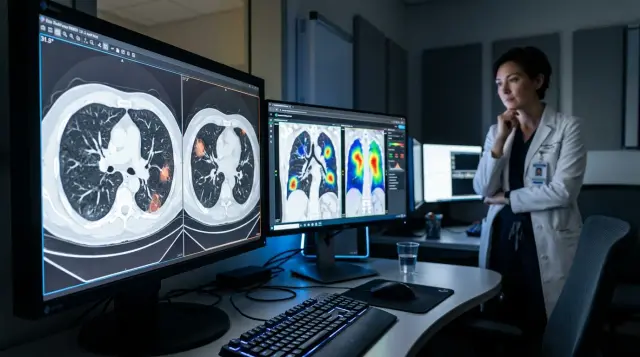
Here's a number that made me do a double take: a Google AI system detected lung cancer from CT scans with 94.4% accuracy, outperforming six board-certified radiologists in a direct comparison [1]. That was 2019. The tech has only gotten sharper since.
Artificial intelligence isn't just sorting your inbox or recommending movies anymore. It's reading medical images, flagging cardiac events before they happen, and now, increasingly, monitoring the invisible electromagnetic fields we're surrounded by every day. The rise of ai-powered emf detection sits at one of the more fascinating crossroads of health tech and environmental monitoring I've come across.
But can AI actually predict health problems? Not just catch them after the fact, but see them coming? Researchers at Stanford, the NIH, and the Mayo Clinic are actively chasing that question. The answer is complicated, promising, and honestly a little unsettling all at once.
In this piece, I'm going to walk through what the research actually shows. Not the hype. Not the marketing copy. The peer-reviewed findings and real-world deployments that tell us where AI health prediction stands right now. We'll cover everything from diagnostic imaging to smart EMF sensors, and I'll be upfront about what works, what doesn't, and what's still a question mark.
If you've been wondering how machine intelligence is reshaping healthcare and environmental safety, or if you just want to understand what those new "smart" radiation detectors actually do, stick around. There's a lot here worth your time.
Key Takeaways
How Is AI Currently Used to Predict Health Problems?
Let's start where AI has made the most dramatic entrance: medical diagnostics. Back in 2017, Stanford University's CheXNet algorithm analyzed chest X-rays and matched or exceeded radiologist-level performance in detecting 14 different pathologies, including pneumonia and cardiomegaly [2]. A couple years later, Google Health published a study in Nature Medicine showing their deep learning model caught lung cancer on low-dose CT scans more accurately than experienced radiologists, with a 94.4% success rate [1].
These aren't fringe experiments. The FDA has now cleared over 900 AI-enabled medical devices, with the majority focused on radiology. Mayo Clinic researchers built an AI tool that can detect a weak heart pump from a standard 12-lead ECG, something cardiologists can't reliably spot with the naked eye. The algorithm identified patients with asymptomatic left ventricular dysfunction with an area under the curve of 0.93. In diagnostic terms, that's excellent.
Beyond imaging, AI is making real headway in predicting sepsis in hospitals, flagging diabetic retinopathy from eye scans, and even forecasting Alzheimer's disease progression from brain MRIs years before symptoms show up. Johns Hopkins developed a machine learning model that predicts sepsis onset up to 12 hours in advance. That kind of lead time can literally mean the difference between life and death in an ICU.
For a broader overview of how artificial intelligence is reshaping medicine, check out our piece on AI in Healthcare: Everything You Need to Know. The pace of change is staggering.
What Is AI-Powered EMF Detection and How Does It Work?
Now for the piece that ties environmental health to all of this: ai-powered emf detection. Traditional EMF meters like the Trifield TF2 or the GQ EMF-390 measure electromagnetic radiation at a single point in time. You hold the device near a router or a power line, get a reading, and then interpret that number against published safety thresholds. Useful, but limited. You're getting a snapshot, not a movie.
AI-powered EMF detection works differently. It layers machine learning algorithms on top of sensor data. Instead of just showing you a milligauss reading, these systems continuously log exposure data, identify patterns over time, and flag anomalies that would be invisible in a single measurement. Think of it like the difference between checking your blood pressure once at the doctor's office versus wearing a 24-hour ambulatory monitor. One gives you a number. The other tells a story.
Quick Q&A
Q: How is AI-powered EMF detection different from a regular EMF meter?
A: Traditional meters give you a single-point reading, while AI-enhanced systems continuously log data, identify exposure patterns over time, and can flag anomalies that a one-time measurement would completely miss.
According to a 2026 market research report, the EMF radiation detector market was valued at $14.26 billion in 2025, with AI integration identified as the primary driver of growth projected at a 15% compound annual growth rate through 2033. Companies are building smart sensors for homes, offices, and wearables that use algorithms to map electromagnetic field exposure across an entire living space, not just a single hotspot. Some of these systems can even correlate your exposure data with sleep quality, headache frequency, or other self-reported health metrics.
The technology isn't perfect yet. Smartphone-based EMF detector apps like Physics Toolbox Sensor Suite and Metal Detector EMF can give you a rough idea of magnetic fields using your phone's built-in magnetometer, but they can't measure radiofrequency radiation from cell towers or Wi-Fi. That's a hardware limitation, not a software one. Real AI-driven electromagnetic radiation monitoring still requires dedicated sensor hardware paired with smart software. But the gap between consumer-grade and professional-grade tools is closing fast.
Does EMF Exposure Actually Pose Health Risks?
This is where things get genuinely contentious. I want to be straight with you about the science rather than picking a side for dramatic effect.
The World Health Organization's International Agency for Research on Cancer (IARC) classified radiofrequency electromagnetic fields as Group 2B in 2011, meaning "possibly carcinogenic to humans" [3]. That's the same category as pickled vegetables and talcum powder. It's not nothing, but it's not a definitive guilty verdict either.
The National Toxicology Program (NTP) in the United States published results from a $30 million, decade-long study in 2018 that found "clear evidence" of heart tumors in male rats exposed to high levels of radiofrequency radiation similar to 2G and 3G cell phone emissions [4]. The exposure levels were significantly higher than what most humans encounter daily, which makes direct extrapolation tricky. But the findings were notable enough that even skeptics paid attention.
On the other side, large-scale epidemiological studies like the Danish Cohort Study, which followed over 420,000 cell phone users, found no increased cancer risk. The scientific community remains genuinely split. The FCC maintains its specific absorption rate (SAR) limit of 1.6 W/kg averaged over 1 gram of tissue, a standard that hasn't been updated since 1996. That alone has drawn criticism from researchers who argue the guidelines don't account for long-term, low-level exposure or the sheer number of devices we now carry.
This uncertainty is exactly why many people are taking a precautionary approach. If the science isn't settled, reducing exposure where you can seems reasonable. That's the thinking behind products like Proteck'd's Faraday Protection Collection, which uses silver-infused fabrics to shield the body from electromagnetic radiation. You can learn more about how this shielding works on the EMF Protection Benefits page. It's the same precautionary logic that led people to wear sunscreen before we had ironclad proof about UV and melanoma.
AI-powered EMF detection doesn't just give you a number on a screen. It tells you the story of your exposure over time, identifying patterns you'd never catch with a single measurement. That shift from snapshot to narrative is what makes this technology genuinely useful.

Can Machine Learning Identify EMF Exposure Patterns Linked to Symptoms?
Here's where things get really interesting. One of the biggest limitations of EMF health research has always been measurement. People move around. Exposure varies wildly depending on whether you're standing next to a microwave or sitting in a park. Self-reported exposure is notoriously unreliable. Machine learning health monitoring offers a way around this problem by continuously collecting objective data.
Researchers at the University of Melbourne published work on using wearable sensors combined with AI algorithms to track individual electromagnetic field exposure over days and weeks, creating what they called a personal "exposure profile." These profiles capture cumulative exposure data that one-off measurements simply can't. The AI component identifies clusters and correlations. Maybe your highest RF exposure consistently happens during your commute on the train. Maybe your magnetic field exposure spikes every evening when three appliances run simultaneously in your kitchen.
Some startups are already running pilot programs where users wear smart EMF sensors and log symptoms like headaches, fatigue, or sleep disruption. The AI looks for statistically significant correlations between exposure events and symptom reports. Early results are suggestive but not conclusive. Correlation, as every stats professor loves to remind us, is not causation. But the datasets are growing, and the algorithms are getting better at filtering noise from signal.
Quick Q&A
Q: Can AI prove that EMF exposure causes specific health symptoms?
A: Not yet. AI can identify correlations between exposure patterns and reported symptoms, but proving causation requires controlled studies. What AI does is generate far better data for researchers to work with than traditional methods allowed.
If you're interested in the broader world of AI tools and how different platforms handle health data analysis, our comparison of ChatGPT vs Claude vs Gemini: An Honest Breakdown covers how these models differ in their analytical capabilities. For finding the right AI tool for personal health tracking, see The Best AI Assistants: Which One Is Right for You?.
What Are Smart EMF Sensors and Why Are They Growing So Fast?
The smart EMF sensor market is booming. That $14.26 billion valuation in 2025 is expected to roughly triple by 2033 if the projected 15% CAGR holds. What's driving this? Three things: the spread of 5G infrastructure, growing public concern about EM radiation, and AI integration that makes these devices actually useful to regular people.
Traditional meters like the Acoustimeter AM-10 or the HF35C RF Analyzer by Gigahertz Solutions are excellent professional tools. I've seen building biologists use the HF35C to identify specific RF sources in homes with astonishing precision. But they cost hundreds of dollars and require training to read properly. Smart sensors aim to put that capability in more hands by pairing simpler hardware with intelligent software that handles the interpretation for you.
Companies are now building whole-home electromagnetic radiation monitoring systems that work like smart thermostats for EMF. You place sensors around your house, they map your exposure continuously, and the AI backend sends you alerts when readings spike above thresholds you've set. Some systems tie into smart home platforms so they can automatically power down Wi-Fi routers at night or alert you when a specific appliance is generating unexpectedly high fields.
For people who prefer a physical layer of protection alongside digital monitoring, wearable shielding has come a long way. Proteck'd's Men's Faraday Tech Wear line integrates silver-fiber shielding into everyday clothing. It's the intersection of fashion and functional protection, and honestly, the fact that it doesn't look like a tinfoil hat is kind of the whole point. When you combine wearable radiation detection data with physical shielding, you're covering both the knowledge side and the action side of the equation.
Where Does AI Health Prediction Fall Short?
I don't want to paint this as an uncritical celebration. AI health prediction has real limitations, and being upfront about them matters if we want to use these tools wisely.
First, the bias problem. AI models are only as good as their training data. A landmark 2019 study published in Science by Ziad Obermeyer and colleagues at UC Berkeley found that a widely used healthcare algorithm systematically discriminated against Black patients, assigning them lower risk scores than equally sick white patients. The algorithm used healthcare spending as a proxy for health needs. Because Black patients historically had less access to care, they spent less, so the AI concluded they were healthier. This kind of embedded bias is a systemic issue, not a one-off glitch.
Second, overdiagnosis. AI systems optimized to catch every possible abnormality can flag things that would never have become clinically significant. A study from Brigham and Women's Hospital showed that AI-assisted mammography screening increased recall rates, meaning more women were called back for additional testing, many of whom turned out to be perfectly fine. More detection isn't always better detection. It can mean more anxiety, more unnecessary biopsies, and higher costs.
Third, in the EMF space specifically, consumer-grade AI diagnostics still lack standardization. There's no FDA-cleared wearable radiation detection device that claims to predict health outcomes from EMF exposure. We're in early days. The technology shows enormous promise, but regulatory frameworks and validation studies haven't caught up yet. For context on how digital safety standards more broadly are evolving, take a look at our Cybersecurity in 2026: The Complete Guide.
How Should You Think About AI-Powered EMF Detection in Your Daily Life?
So what does all of this mean for you, practically? Here's how I think about it.
AI-powered EMF detection is a tool, not an oracle. It can give you better information about your electromagnetic field exposure than you've ever had before. It can show you which rooms in your house have the highest readings, which times of day your exposure peaks, and which devices contribute the most. That's genuinely valuable, especially if you experience symptoms you suspect might be related to EM radiation.
But don't expect any app or sensor to hand you a definitive diagnosis. The science connecting EMF exposure to specific health outcomes is still evolving. What AI does is give you data to make informed decisions. Maybe that data leads you to move your router out of the bedroom. Maybe you start switching off devices at night. Maybe you invest in shielding for your home office where you spend eight hours a day next to multiple wireless devices.
The precautionary principle isn't paranoia. It's pragmatism. We didn't wait for perfect evidence to start wearing seatbelts. Combining smart monitoring with practical shielding, like the products in the Faraday Protection Collection, gives you a two-pronged approach: know your exposure, and reduce it where it's easiest. That's a strategy even the most cautious scientist would call reasonable.
The field of AI health diagnostics, including ai-powered emf detection, is moving faster than the regulatory frameworks designed to govern it. Stay curious. Stay skeptical of miracle claims. And pay attention to the actual research. The tools are getting better every year. The question isn't whether AI will play a major role in health prediction. It already does. The question is how wisely we'll use it.
Frequently Asked Questions
Q: Can AI really predict health problems before symptoms appear?
In several specific areas, yes. Mayo Clinic's AI tool detects asymptomatic heart dysfunction from routine ECGs, and Google's AI caught lung cancer earlier than radiologists in a 2019 Nature Medicine study. These tools are approved for clinical use in growing numbers. That said, they work best as aids to human doctors, not replacements.
Q: What is ai-powered emf detection?
AI-powered EMF detection refers to systems that combine electromagnetic field sensors with machine learning algorithms to continuously monitor, analyze, and interpret radiation exposure data. Unlike traditional EMF meters that give single-point readings, these systems track exposure over time and identify patterns, anomalies, and cumulative exposure levels that manual measurements would miss.
Q: Are EMF detector apps on smartphones accurate?
Smartphone EMF detector apps can measure magnetic fields using your phone's built-in magnetometer with reasonable accuracy for that specific type of EMF. However, they can't measure radiofrequency radiation from Wi-Fi, cell towers, or Bluetooth because phones lack the dedicated RF sensor hardware. For full electromagnetic field monitoring, you still need dedicated meters or smart sensor systems.
Q: Does the WHO consider EMF exposure dangerous?
The WHO's International Agency for Research on Cancer classifies radiofrequency electromagnetic fields as Group 2B, meaning possibly carcinogenic to humans. This is based on limited evidence from human studies and animal research. It's not a confirmation of danger, but it's not a clean bill of health either. That's why many researchers recommend a precautionary approach to reducing exposure.
Q: What is the best EMF meter for home use in 2025?
The Trifield TF2 remains one of the most popular and versatile options for home use, measuring electric fields, magnetic fields, and RF radiation in a single device. The GQ EMF-390 is another solid choice with data logging capabilities. If you want AI-enhanced features, newer smart sensor systems are emerging that pair simpler hardware with app-based machine learning analysis, though they tend to cost more.
Q: How much EMF does a Wi-Fi router emit?
A typical home Wi-Fi router emits radiofrequency radiation in the range of 0.1 to 1.0 milliwatts per square centimeter at about one foot away, well below FCC exposure limits. Exposure drops quickly with distance, following the inverse square law. At six feet, the power density is roughly 1/36th of the reading at one foot. That's why many experts suggest simply putting some distance between you and your router rather than getting rid of it.
Q: Can silver fabric actually block EMF radiation?
Yes. Silver is an excellent conductor and highly effective at shielding against electromagnetic radiation. Lab testing shows that silver-infused fabrics can block 99% or more of RF radiation depending on the weave density and silver content. This is the same principle behind Faraday cages, which use conductive materials to block electromagnetic fields. Companies like Proteck'd incorporate silver fiber into wearable clothing for everyday EMF shielding.
Q: What are the limitations of AI in healthcare?
AI healthcare tools face several real limitations, including training data bias that can lead to unequal care across demographics, and overdiagnosis from systems built to flag every possible abnormality. A 2019 Science study found a major healthcare algorithm discriminated against Black patients due to biased proxy data. Most AI diagnostic tools are also cleared for specific, narrow tasks and still require physician oversight for clinical decisions.
Q: Is 5G more dangerous than 4G in terms of EMF exposure?
5G uses a wider range of frequencies than 4G, including millimeter waves in the 24 to 100 GHz range, which are higher frequency but have lower penetration. The FCC and ICNIRP maintain that 5G operates within established safety limits. However, critics point out that long-term exposure studies for these specific frequencies are limited. The IARC classification of RF fields as Group 2B was made before widespread 5G deployment, so ongoing research matters a great deal.
Q: How accurate is AI at detecting cancer compared to human doctors?
In specific controlled studies, AI has matched or outperformed human specialists. Google's lung cancer detection model achieved 94.4% accuracy, beating six radiologists in a 2019 trial. Stanford's CheXNet matched radiologist performance across 14 chest pathologies. That said, these results come from controlled research settings. Real-world clinical performance can vary based on image quality, patient populations, and how well the tool fits into existing workflows.
References
- Nature Medicine (Google Health lung cancer study) – Google's AI system detected lung cancer from CT scans with 94.4% accuracy, outperforming six radiologists in a head-to-head comparison.
- IARC/WHO classification of radiofrequency electromagnetic fields – The WHO's International Agency for Research on Cancer classified radiofrequency electromagnetic fields as Group 2B, possibly carcinogenic to humans, in 2011.
- National Toxicology Program (NTP) cell phone radiation studies – The NTP found 'clear evidence' of heart tumors in male rats exposed to high levels of radiofrequency radiation similar to 2G and 3G cell phone emissions.
About the Author
Proteck'd EMF Apparel
Health & EMF Specialists
The Proteck'd team covers EMF protection, silver-fiber apparel, and practical ways to reduce everyday radiation exposure. Every piece Proteck'd ships is designed, tested, and worn by the people who build it.
Protect Yourself Today
Proteck'd Faraday and silver fiber apparel is engineered to shield your body from everyday EMF exposure. Built for real life, tested for real results.
Shop EMF Protection →✓30-day returns✓Free shipping✓Free returns✓Silver fiber shielding


