


Is AI Able to Predict Health Problems?: What the Research Shows

Here's something worth thinking about before bed tonight. The average American home now has more than 20 wirelessly connected devices. Every single one of them is emitting radiofrequency radiation while you sleep, eat, and go about your day. That smart thermostat? Broadcasting. Your voice assistant? Listening and transmitting. The baby monitor in the nursery? Pulsing signals around the clock. Understanding smart home radiation risks isn't about fear. It's about making informed choices as our homes get more connected month after month.
At the same time, artificial intelligence is making remarkable progress in predicting health problems before they show up on any traditional test. AI models can now spot early signs of heart disease from a photograph of your eye. They can detect infections from a smartwatch's heart rate data before you even feel a sniffle. A growing number of researchers are asking the obvious next question: can AI also help us understand what all this electromagnetic radiation is doing to our bodies?
I've spent a lot of time reading the studies, following the debates, and talking to people who build these technologies. The honest answer is complicated. AI health prediction is real and accelerating. The science around EMF exposure from connected devices is real but still evolving. And the intersection of those two fields? Brand new, exciting, and occasionally overhyped.
So let's break it all down. What can AI actually predict? What do we know about the health effects of living in an RF-saturated home? And what practical steps make sense right now, while the research catches up to our lifestyles?
Key Takeaways
How Is AI Being Used to Predict Health Problems Right Now?
AI in healthcare isn't some far-off fantasy. It's already showing up in hospitals, research labs, and on your wrist. Back in 2019, researchers at Stanford University showed that data from consumer wearables like smartwatches could detect the onset of illness, including infections and even Lyme disease, before users noticed any symptoms [1]. The model analyzed resting heart rate, skin temperature, and activity patterns to flag abnormal deviations. That's not science fiction. That's a peer-reviewed study.
Google Health pushed things even further with a deep-learning algorithm published in Nature Biomedical Engineering in 2018. The model could predict cardiovascular risk factors (age, blood pressure, smoking status) from a single retinal photograph [2]. No blood draw. No questionnaire. Just an image of the back of your eye. Think about what that means for early screening in underserved areas where basic diagnostics are hard to come by.
Then there's the work happening with electronic health records. Machine learning systems trained on millions of patient records at places like Mount Sinai and the Mayo Clinic can now flag patients at risk of sepsis, cardiac arrest, or hospital readmission hours before human clinicians would catch the warning signs. A 2020 review published by the National Institutes of Health found that AI prediction models for cardiovascular disease achieved area-under-the-curve scores above 0.80 in multiple validation studies [3].
Quick Q&A
Q: Can AI predict health problems before symptoms appear?
A: Yes. Stanford and Google Health studies have demonstrated AI models detecting infections, cardiovascular risk, and other conditions before patients report symptoms, using wearable data and medical imaging.
The common thread here? AI excels at finding patterns in massive datasets that human eyes simply can't process. It doesn't diagnose in the traditional sense. It flags risk. That distinction matters a lot once we start talking about environmental exposures like electromagnetic radiation from all those connected devices filling our homes.
What Are the Actual Health Concerns with Smart Home EMF Exposure?
Before we connect AI prediction to EMF, let's be honest about what the science actually says on radiofrequency radiation and health. The World Health Organization's International Agency for Research on Cancer (IARC) classified RF electromagnetic fields as Group 2B in 2011, meaning "possibly carcinogenic to humans" [4]. That puts RF-EMF in the same category as pickled vegetables and talcum powder. Not a definitive cancer link. But not a clean bill of health either.
The concern with smart homes specifically is cumulative exposure. A single WiFi router or smart plug emits low-level RF. But stack 22 devices in a 1,500-square-foot house, all transmitting on 2.4 GHz or 5 GHz bands throughout the day and night, and you've created an environment our grandparents never came close to experiencing. According to Deloitte's 2023 Connectivity and Mobile Trends survey, the average American household crossed the 20-device threshold for the first time that year. That's a lot of simultaneous electromagnetic fields bouncing around your walls.
The FCC sets RF exposure limits at a specific absorption rate of 1.6 W/kg, but those standards were established in 1996. They were based largely on thermal effects (does the radiation heat tissue?). Critics, including the BioInitiative Working Group and researchers at the Ramazzini Institute in Italy, argue that non-thermal biological effects like oxidative stress, disrupted sleep patterns, and altered gene expression aren't captured by those outdated standards. A 2018 study from the U.S. National Toxicology Program found "clear evidence" of heart tumors in male rats exposed to high levels of cell phone radiation [3].
I'm not saying your smart speaker is giving you cancer. The NTP study used exposure levels well above typical consumer device output. But the broader question, what does chronic low-level exposure do over decades, remains genuinely unanswered. That's the gap AI might eventually help fill. For a deeper look at whether a connected home is worth the tradeoffs, check out The Connected Home: Is It Worth It?.
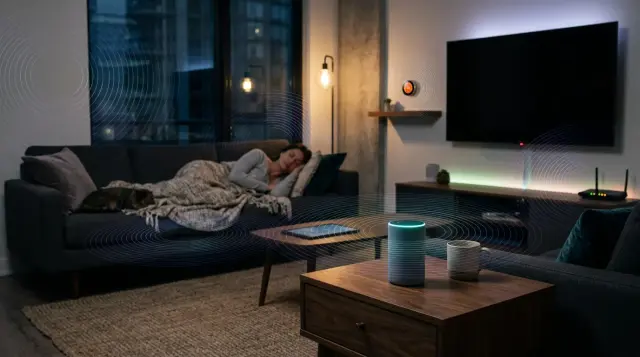
Can Artificial Intelligence Help Us Understand Smart Home Radiation Risks?
This is where things get genuinely interesting. Traditional epidemiology struggles with EMF research because there are so many confounding variables. People who use lots of smart devices also tend to have different sleep habits, stress levels, and exercise patterns than people who don't. Trying to isolate the effect of RF exposure from everything else in someone's life? It's a statistical nightmare.
AI is uniquely suited to untangle those variables. Machine learning models can process hundreds of inputs at once: device proximity, duration of exposure, body position relative to antennas, individual biomarkers, genetics, lifestyle factors. Researchers at MIT's Computer Science and Artificial Intelligence Laboratory (CSAIL) have already built models that use wireless signals bouncing around a room to monitor breathing rate, heart rate, and sleep stages. If AI can read your vital signs from WiFi reflections, it can also, theoretically, correlate exposure patterns with health changes over time.
The challenge is data. We don't yet have large-scale longitudinal datasets that pair individual EMF exposure logs with health outcomes. That's starting to change. The Global EMF Monitoring Project and studies funded by the European Commission's Horizon program are beginning to collect exactly this kind of data. But we're still years away from definitive AI-driven conclusions about smart home radiation risks and specific diseases.
Quick Q&A
Q: Can AI currently tell you whether your smart home devices are harming your health?
A: Not yet with certainty. AI can model exposure patterns and correlate them with biomarker changes, but large-scale validated studies specifically linking smart home EMF to diagnosed conditions haven't been completed.
What AI can do right now is help individuals track and reduce their own exposure. Apps paired with EMF meters can map the radiation hotspots in your home, suggest better device placement, and flag when exposure levels spike. It's not a diagnosis. It's a data-driven precaution. And honestly, that pragmatic middle ground makes the most sense while we wait for the bigger studies. If you want to understand the full picture of living in a connected home, The Connected Home: The Honest Guide is a solid starting point.
Your health doesn't wait for consensus statements. Making small, informed changes now, based on the best available evidence, is the smartest thing you can do while the science catches up to our increasingly wireless lives.
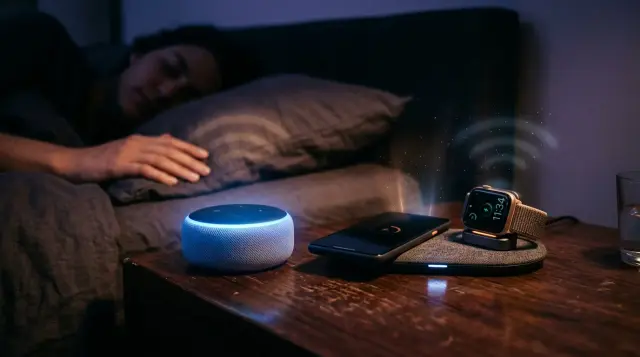
Who Is Most Vulnerable to EMF Exposure at Home?
Not everyone faces the same level of risk. Children absorb more radiofrequency radiation per unit body mass than adults because their skulls are thinner and their tissues contain more water. A study published by the Environmental Health Trust, citing modeling work from researchers at the University of Utah, showed that a child's brain can absorb up to twice the RF energy of an adult brain from the same device at the same distance.
Pregnant women are another group where extra caution makes sense. Research from the Kaiser Permanente Division of Research in Oakland, published in 2017, found that pregnant women with higher measured magnetic field exposure had a 48% higher rate of miscarriage compared to those with lower exposure. That study measured actual field levels with a monitoring device, not self-reported phone use, which makes the data harder to wave away.
People with electromagnetic hypersensitivity (EHS) report symptoms like headaches, fatigue, difficulty concentrating, and skin tingling when near wireless devices. The WHO acknowledges EHS as a real symptom set but notes that blinded studies haven't consistently shown sufferers can detect EMF presence. Still, if you experience those symptoms around your smart devices, the experience is real to you regardless of the mechanism.
For those who spend a lot of time around devices, whether at home or at work, wearable protection has become a practical option. Proteck'd's Faraday Protection Collection uses silver-infused fabrics that block a significant percentage of RF radiation. Their Men's Faraday Tech Wear line integrates this shielding into everyday clothing that actually looks good. You don't have to choose between protection and style. For details on how this technology works, visit the EMF Protection Benefits page.
What Are the Hidden EMF Sources Most People Miss?
When people think about electromagnetic field sources at home, they picture their WiFi router and maybe their phone. Fair enough. But smart homes have hidden emitters that most people overlook completely. Smart meters, those digital utility meters on the side of your house, transmit usage data via RF signals. They typically pulse thousands of times per day, even though the utility might claim they only communicate a few times an hour. The transmission schedule varies by provider, and residents have almost no control over it.
Then there's dirty electricity. When smart devices, LED dimmer switches, and solar inverters chop up the standard 60 Hz electrical sine wave, they create high-frequency voltage transients that ride along your home's wiring. These transients, typically in the 4 kHz to 100 kHz range, turn every wire in your walls into a low-level antenna. Researcher Samuel Milham, MD, MPH, documented correlations between dirty electricity exposure and cancer clusters in schools in his published work.
Baby monitors are another sneaky one. Many modern video baby monitors transmit continuously on 2.4 GHz, the same frequency as your WiFi router, positioned inches from an infant's head for 8 to 12 hours a night. Smart TVs, gaming consoles, and even smart refrigerators also maintain persistent wireless connections. The thing is, the aggregate load matters. No single device is the problem. It's the total electromagnetic environment your body sits in for hours on end.
The broader security and privacy implications of all these connected devices deserve attention too. You can read more about that in Digital Security: The Threats and the Solutions and Digital Privacy: The Complete Guide. The radiation piece is one part of a much bigger conversation about what we're trading for convenience.
How Can You Reduce EMF Exposure Without Ditching Your Smart Home?
You don't have to go off the grid. Practical, evidence-based steps can significantly cut your exposure without turning your house into a technology-free bunker. Start with distance. The inverse square law means that doubling your distance from an RF source cuts your exposure to roughly one-quarter. Move your WiFi router out of the bedroom. Don't sleep with your phone on the nightstand. Position smart speakers away from spots where you sit or sleep for hours.
Switch to wired connections where you can. Ethernet cables carry data without any RF emission. A wired connection to your computer or streaming device eliminates one source entirely. You can also put your router on a timer so it shuts off during sleeping hours. Eight hours of zero WiFi exposure every night adds up over a lifetime.
For personal protection, EMF-shielding fabrics have come a long way from the tinfoil-hat stereotype. Proteck'd makes clothing with lab-tested silver-fiber technology that blocks radiofrequency radiation while looking like normal, well-made apparel. Whether you work from home surrounded by devices or just want a layer of precaution during your day, Smart Wearables: The Complete Guide covers how wearable protection fits into a modern tech lifestyle.
Finally, measure what you're dealing with. A basic RF meter costs under $200 and lets you map the hotspots in your home. You might be surprised. Sometimes the highest readings come from a device you barely use, like a smart plug behind the couch or a Bluetooth speaker you forgot was even on. Knowledge is the first step. Reducing smart home radiation risks doesn't require paranoia. Just a little intention.
Why Do Some Studies on RF Radiation Conflict with Each Other?
If you've read conflicting headlines about wireless radiation, you're not imagining things. One study says cell phone radiation causes tumors in rats. Another says there's no measurable health effect in humans. How can both be true?
It comes down to methodology, funding, and the sheer difficulty of studying long-term, low-level exposures. The U.S. National Toxicology Program's $30 million study (completed in 2018) exposed rats to whole-body RF radiation for nine hours a day over two years. It found "clear evidence" of malignant schwannomas in the hearts of male rats [3]. But the exposure levels were far higher than what a human would encounter from normal device use. Critics argue the results don't translate to real-world conditions. Supporters counter that the study identified a biological mechanism that warrants more investigation.
Meanwhile, large epidemiological studies like the Danish Cohort Study (420,000 cell phone subscribers followed since 1982) found no increased cancer risk among users. But that study relied on subscription records, not actual usage data. It didn't distinguish between heavy and light users. Methodology matters enormously in this field, and many of the "no effect" studies have significant limitations that get glossed over in press coverage.
This is exactly why AI-driven analysis holds so much promise. Machine intelligence can integrate data from multiple study designs, account for dosimetry differences, and model exposure-response curves that no single human study could capture alone. We're not there yet. But the tools are being built. The real question is whether we'll have the large, well-designed datasets to feed them.
What Does the Future of AI Health Prediction and EMF Research Look Like?
The convergence of artificial intelligence and environmental health monitoring is closer than most people realize. The European Commission's BERENIS project (run through the Swiss Federal Office for the Environment) already uses systematic review methods that could be enhanced by AI to assess the EMF bioeffects literature. As wearable sensor data becomes more granular, think continuous blood oxygen, heart rate variability, sleep staging, and skin conductance, AI models will have richer datasets to work with.
Picture this. Your smartwatch not only tracks your heart rate but also logs the RF environment you're in throughout the day. An AI model then correlates your sleep quality, stress markers, and immune function with your cumulative electromagnetic field exposure. That future isn't decades away. The hardware exists. The AI frameworks exist. What's missing is the coordinated effort to bring them together at scale.
In the meantime, the precautionary principle makes sense. You don't need to wait for a 20-year longitudinal study to take simple steps that reduce your exposure to connected home radiation. Buy an EMF meter. Use ethernet when you can. Put distance between you and your devices when you're not actively using them. And if you want wearable protection that doesn't look like a science experiment, Proteck'd's Faraday Protection Collection is designed for exactly that purpose.
The research will keep evolving. AI will keep getting better at finding patterns. But your health doesn't wait for consensus statements. Making small, informed changes now, based on the best available evidence, is the smartest thing you can do while the science catches up to our increasingly wireless lives.
Frequently Asked Questions
Q: Can AI predict health problems caused by EMF radiation?
Not yet with clinical certainty, but the groundwork is being laid. AI is great at finding correlations in complex datasets, and researchers are starting to combine wearable health data with EMF exposure measurements. Within the next decade, we may see validated AI models that can flag individualized health risks from chronic RF exposure.
Q: How much EMF radiation does a typical smart home produce?
It varies a lot based on the number and type of devices, but a home with 20-plus connected gadgets creates a continuous RF environment across multiple frequencies (typically 2.4 GHz and 5 GHz for WiFi). Individual device emissions are usually well below FCC limits. The cumulative effect of all devices operating simultaneously, though, is what concerns researchers.
Q: Are smart home devices more dangerous than cell phones?
Not individually. A cell phone pressed to your head delivers more localized RF energy than most smart home devices. However, smart home devices create ambient, whole-body exposure that lasts 24 hours a day. That's a different exposure pattern, and existing safety standards don't fully address it.
Q: What is the safest distance to keep from a WiFi router?
Most experts recommend at least 10 to 15 feet, especially in rooms where you spend a lot of time. RF energy drops off rapidly with distance following the inverse square law. Moving a router from 3 feet away to 10 feet away can reduce your exposure by more than 90%.
Q: Does turning off WiFi at night reduce health risks?
It reduces your cumulative RF exposure by eliminating roughly 8 hours of continuous WiFi radiation. Whether that translates to measurable health benefits hasn't been proven in large studies, but it's a low-cost precaution with zero downside. Some people report sleeping better after making this change.
Q: Are children more affected by smart home radiation than adults?
Research suggests yes. Children have thinner skulls, higher tissue water content, and developing nervous systems, all of which may increase RF absorption. Modeling studies from the University of Utah showed that a child's brain can absorb roughly twice the RF energy of an adult's from the same source at the same distance.
Q: Do EMF-shielding clothes actually work?
Quality EMF-shielding clothing made with silver-infused fabrics can block a significant percentage of radiofrequency radiation. The key is the fabric's conductivity and weave density. Proteck'd's Faraday line uses lab-tested silver-fiber technology designed to provide measurable RF attenuation while functioning as normal, wearable clothing.
Q: What is dirty electricity and does it come from smart devices?
Dirty electricity refers to high-frequency voltage transients that ride along your home's wiring, created when devices chop up the standard 60 Hz sine wave. Smart dimmers, solar inverters, and many smart home gadgets can generate dirty electricity in the 4 kHz to 100 kHz range. That effectively turns your home's wiring into a low-level antenna.
Q: Has the WHO confirmed that WiFi or smart home radiation causes cancer?
No. The WHO's IARC classified RF electromagnetic fields as Group 2B, meaning "possibly carcinogenic to humans," in 2011. That's not a confirmed cancer link. It means there's enough evidence to warrant concern and further study, but not enough to establish a definitive cause-and-effect relationship.
Q: What's the most effective way to reduce smart home EMF exposure?
The single most effective step is putting more distance between yourself and your devices, especially during sleep. Beyond that, using wired ethernet connections, putting your router on a timer, and wearing EMF-shielding clothing all provide layered protection. Measuring your home with an RF meter helps you figure out which changes will make the biggest difference.
References
- Stanford University / Nature Medicine – Stanford researchers demonstrated that wearable sensor data analyzed by AI could detect infections and physiological changes before symptom onset.
- Google Health / Nature Biomedical Engineering – A deep-learning algorithm predicted cardiovascular risk factors including age, blood pressure, and smoking status from retinal fundus photographs.
- National Toxicology Program / National Institutes of Health – The NTP study found clear evidence of heart tumors (malignant schwannomas) in male rats exposed to high levels of radiofrequency radiation, and AI models for cardiovascular disease prediction achieved strong validation m
- International Agency for Research on Cancer (IARC) / WHO – IARC classified radiofrequency electromagnetic fields as Group 2B, possibly carcinogenic to humans, in 2011.
About the Author
Proteck'd EMF Apparel
Health & EMF Specialists
The Proteck'd team covers EMF protection, silver-fiber apparel, and practical ways to reduce everyday radiation exposure. Every piece Proteck'd ships is designed, tested, and worn by the people who build it.
Get the Free EMF Home Audit Checklist
A room-by-room PDF that walks you through the biggest EMF sources in your house and what to do about each one. No cost, no fluff.
Download the Checklist →✓30-day returns✓Free shipping✓Free returns✓Silver fiber shielding


