


Faraday Shielding and EMP: Why the Same Principle Protects Against Multiple Threats

Here's something that might surprise you: the same physics that protects a nuclear command bunker from an electromagnetic pulse also explains why a silver-threaded hoodie can reduce your Wi-Fi exposure. That's not marketing spin. It's a 187-year-old principle that Michael Faraday first demonstrated in 1836, and it still sits at the center of every serious conversation about how EMF protection work actually functions.
Most people think of electromagnetic threats as separate categories. There's the low-level stuff: your router, your phone, the smart meter bolted to the side of your house. Then there's the catastrophic stuff: a high-altitude nuclear detonation or a weaponized EMP that could fry the power grid. These feel like completely different problems. But the solution to both starts in exactly the same place.
That place is a conductive barrier. Whether you're wrapping a server room in copper mesh or wearing a shirt woven with silver fiber, you're applying the Faraday effect. Electromagnetic waves hit the conductive surface, induce currents in it, and those currents generate an opposing field that cancels the incoming radiation. The wave gets reflected, absorbed, or both. Whatever's on the other side stays protected.
In this article, I'm going to walk you through exactly how that principle scales from an 1836 laboratory demo to the shielding challenges of 2025. We'll cover the physics without drowning in equations, look at how different threat types compare on the electromagnetic spectrum, and talk honestly about what wearable Faraday clothing can and can't do. If you've ever wondered whether the same technology really handles both your bedroom router and a worst-case EMP scenario, you're in the right place.
Key Takeaways
What Is Faraday Shielding and How Does It Actually Work?
Let's start with the basics. A Faraday cage, named after English scientist Michael Faraday, is any enclosure made of conductive material that redistributes electromagnetic charges along its exterior surface. When an external electromagnetic field hits the cage, free electrons in the conductor shift in response, creating a secondary field that opposes and cancels the external one inside the enclosure. Faraday demonstrated this at London's Royal Institution in 1836 by stepping inside a large metal-coated room and showing that a sensitive electroscope inside detected no charge, even while sparks flew outside [1].
The principle doesn't require a solid metal box. Mesh works too, as long as the openings are significantly smaller than the wavelength of the radiation you're trying to block. Your microwave oven is a perfect everyday example. That little metal grid on the door? Its holes are small enough to block 2.45 GHz microwaves (wavelength about 12 cm) while letting visible light pass right through (wavelengths measured in hundreds of nanometers). Same principle, just tuned to a specific frequency range.
This is why understanding how EMF protection work always starts with two questions: what's the material's conductivity, and what frequency are you dealing with? A copper screen with 1 mm openings will easily block a 900 MHz cell signal (wavelength ~33 cm) but might struggle with 28 GHz mmWave 5G (wavelength ~10.7 mm). The tighter the weave, the higher the frequency you can attenuate.
Quick Q&A
Q: Does a Faraday shield have to be a complete enclosure to work?
A: No, partial coverage still provides partial attenuation; a Faraday fabric draped over one side of your body reduces exposure from that direction, though full enclosures provide the strongest shielding.
For wearable applications, the "cage" becomes a textile. Companies weave silver or stainless steel fibers into fabric, creating a flexible conductive layer. Silver is the standout here because it has the highest electrical conductivity of any element at 6.3 × 10^7 siemens per meter, making it remarkably efficient at reflecting RF energy even in thin fiber form. If you're curious about how that translates to real-world garment performance, Proteck'd has a detailed breakdown in their guide on what attenuation means for you.
How Does Everyday EMF Compare to an EMP Threat?
This is where things get interesting. Most conversations about electromagnetic shielding stay in one lane. Either you're talking about protecting yourself from your Wi-Fi router, or you're talking about doomsday EMP scenarios. Rarely do people connect the two. But the electromagnetic spectrum doesn't care about your categories.
Everyday sources of EM radiation occupy relatively narrow frequency bands. Your phone uses frequencies between roughly 700 MHz and 2.7 GHz for 4G LTE, and up to 39 GHz for millimeter-wave 5G. Your Wi-Fi router broadcasts at 2.4 GHz or 5 GHz. Smart meters typically operate around 900 MHz. Power lines emit extremely low frequency (ELF) fields at 50 or 60 Hz. These are continuous, low-power signals.
An electromagnetic pulse is a completely different animal. According to the Congressional EMP Commission's 2008 report, a high-altitude nuclear EMP produces energy across a massive swath of the spectrum, from below 1 MHz up into the hundreds of megahertz, delivered in a single intense burst measured in nanoseconds. The E1 component of a nuclear EMP peaks in roughly 5 nanoseconds and can produce field strengths of 50,000 volts per meter at ground level [2]. That's not a gentle Wi-Fi signal. That's a sledgehammer.
But here's the thing: Faraday shielding doesn't distinguish between a gentle 2.4 GHz Wi-Fi signal and a violent broadband EMP pulse. Both are electromagnetic waves. Both consist of oscillating electric and magnetic fields. The conductive barrier reflects and absorbs them using the same mechanism. The difference is just intensity and bandwidth. A shield effective against a 900 MHz smart meter signal is also doing meaningful work against the portion of an EMP that occupies that same frequency range.
So when people ask how does EMF protection work against such wildly different threats, the answer is elegantly simple. It's one principle applied across the spectrum. The challenge isn't the physics. It's engineering materials that cover enough bandwidth and provide enough attenuation to matter.
Does Silver Fabric Actually Block EMF Radiation?
Yes. And not in a hand-wavy, "energy healing" kind of way. In a measurable, testable, IEEE-standard kind of way.
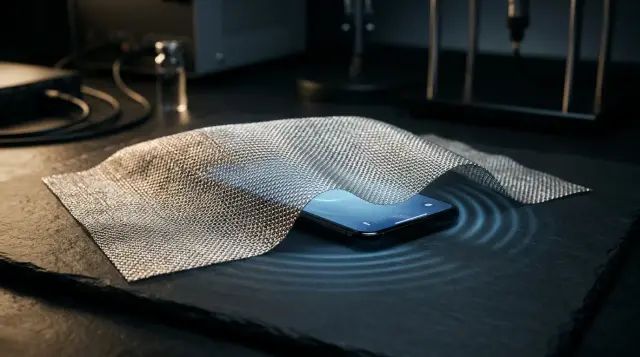
Silver-fiber fabrics are tested using methods like IEEE Standard 299, which measures the shielding effectiveness of enclosures in decibels (dB). Independent lab tests on quality silver-woven textiles routinely show attenuation values of 40 dB and above. That means they block over 99.99% of incident RF energy in their effective frequency range.
How does that compare to what the military uses? The U.S. Department of Defense standard MIL-STD-188-125-1 requires EMP-hardened facilities to achieve a minimum of 80 dB shielding effectiveness across specific frequency bands. That's a dramatically higher bar, designed for infrastructure that absolutely cannot fail during a nuclear event. Wearable fabrics aren't trying to hit that benchmark, and anyone who claims a shirt provides 80 dB of whole-body shielding is misleading you.
What wearable Faraday fabrics do provide is meaningful, measurable reduction in the electromagnetic radiation reaching your body from common sources. Sitting two feet from your laptop? A silver-fiber shirt can cut the RF power density reaching your torso by 99% or more. That's significant. Proteck'd offers a range of options in their Faraday EMF Collection, and the fabrics are tested for real attenuation numbers, not vague promises.
For those who want to understand what specific numbers mean in practice, here's a quick way to think about it. Every 10 dB of attenuation cuts the transmitted power by a factor of 10. So 20 dB means 1/100th gets through. 30 dB means 1/1,000th. 40 dB means 1/10,000th. The relationship is logarithmic, which is why those numbers matter a lot more than they might seem at first glance.
The same physics that shields a Pentagon bunker from an electromagnetic pulse also explains why a silver-fiber shirt reduces your Wi-Fi exposure. It's not two different technologies. It's one principle, applied at two different scales.

Why Do People Confuse EMF Shielding with Pseudoscience?
I get it. The EMF protection space has a credibility problem. Search for "EMF protection" online and you'll find stickers that claim to "harmonize" your phone's radiation, pendants that supposedly neutralize electromagnetic fields through quantum resonance (whatever that means), and crystals marketed as RF shields. None of these have any basis in physics. None of them will register on a spectrum analyzer. And they've poisoned the well for products that actually do something measurable.
The difference between a Faraday shielding product and a pseudoscientific gimmick is straightforward: can you test it with an RF meter? According to the World Health Organization's guidance on electromagnetic fields and public health, shielding effectiveness is a measurable physical quantity [3]. You can verify it with equipment that costs a few hundred dollars. If a product claims to reduce RF exposure, an RF power meter or spectrum analyzer will confirm or deny that claim in seconds.
This is exactly why reputable companies publish their attenuation data and explain their testing methodology. When you're evaluating what to look for in EMF-shielding apparel, start with the numbers. Ask for dB ratings. Ask what frequency range was tested. Ask what test standard was used. If a company can't answer those questions, that tells you everything you need to know.
Quick Q&A
Q: Can you test EMF-shielding clothing at home?
A: Yes, a basic RF meter like the Trifield TF2 (around $180) can measure the difference in power density with and without the fabric between you and the source, giving you a rough but real attenuation reading.
Here's the bottom line. Faraday shielding is 19th-century physics. It's been validated by nearly two centuries of engineering. Confusing it with crystal pendants is like confusing a seatbelt with a lucky charm. One has a mechanism of action grounded in physical law. The other doesn't.
What Are the Practical Applications for Wearable Faraday Clothing?
So the science is solid. But when does wearing shielding fabric actually make sense in daily life? Let me walk through a few scenarios where the math really adds up.
First, sleep. If you've ever measured the RF environment in a typical bedroom, you know it's not quiet. Between the router downstairs, the neighbor's Wi-Fi bleeding through the walls, and whatever smart home devices sit on your nightstand, you might be sleeping in a low-level bath of radiofrequency energy all night long. A 2014 study published in the International Journal of Environmental Research and Public Health found that even low-intensity RF exposure during sleep was associated with changes in EEG patterns and sleep architecture [4]. Wearing shielding sleepwear or using Faraday-rated blankets can meaningfully reduce that exposure during the 7 to 8 hours you're most stationary. For a full breakdown of strategies, check out the guide on EMF blocking for better sleep.
Second, pregnancy and infants. This is an area where even cautious health organizations lean toward the precautionary principle. The American Academy of Pediatrics sent a letter to the FCC in 2013 urging reassessment of RF exposure limits, particularly for children and pregnant women, noting that children's thinner skulls and developing nervous systems may make them more vulnerable. Parents setting up nurseries are right to think about reducing exposure, and designing a lower-EMF nursery is a practical step that doesn't require paranoia. Just physics.
Third, occupational exposure. If you work near cell towers, in data centers, or around industrial RF equipment, your cumulative daily exposure is considerably higher than average. Electricians, network engineers, and broadcast technicians don't need convincing that electromagnetic fields are real. They can feel the warmth from a high-power transmitter. For these professionals, the Men's Faraday Collection and Women's Faraday Collection from Proteck'd offer garments that integrate shielding into normal-looking, wearable clothing rather than requiring bulky industrial gear.
Can Faraday Clothing Protect Against an Actual EMP Event?
Let's be honest about this one. If a nuclear EMP detonates at high altitude and produces 50 kV/m at ground level, a silver-fiber t-shirt is not going to save the power grid. That's not what wearable Faraday clothing is designed for, and any company suggesting otherwise isn't being straight with you.
There is an important nuance here, though. An EMP event doesn't just threaten electronics with a single instantaneous blast. The E1 component (the fast nanosecond pulse) is the one that fries circuits. But the E3 component behaves more like a geomagnetic storm, inducing lower-frequency currents over minutes. And between those extremes, the E2 component resembles a lightning electromagnetic pulse. Wearable conductive fabrics can provide partial attenuation across portions of this spectrum, particularly in the E2 range where frequencies overlap with common RF bands.
The real value of understanding how EMF protection work in an EMP context is this: the same habits, the same materials, and the same design principles that reduce your daily wireless exposure also give you a head start on EMP preparedness. If you've already designed a low-EMF home with shielded walls and thoughtful device placement, you've incidentally created a space with better EMP resilience than a standard home. The overlap is real.
For personal electronics, a proper Faraday bag (a fully enclosed conductive pouch) rated to military specifications can protect small devices from the E1 component. For your body, the concern during an EMP isn't the electromagnetic wave itself, which passes through biological tissue without the same damage it causes to semiconductor circuits, but the secondary chaos: grid failure, communication loss, societal disruption. In that context, your shielding investment is better directed at protecting your devices and infrastructure.
How Do You Measure Whether EMF Shielding Is Really Working?
Measurement is everything. Without it, you're just guessing. The good news? You don't need a physics lab to get useful data.
The most accessible tool is a broadband RF meter. Models like the Acoustimeter AM-11 or the Trifield TF2 cost between $150 and $400 and measure power density in microwatts per square meter. To test a piece of shielding fabric, place the meter behind the fabric, point it at a known source (your router works fine), and compare the reading with and without the fabric in between. The ratio, converted to decibels, gives you the fabric's attenuation at that frequency.
For more rigorous testing, the IEEE 299 standard defines how to measure the shielding effectiveness of an enclosure using calibrated antennas and signal generators across a range of frequencies from 9 kHz to 18 GHz. This is how professional shielding products are validated, and it's the kind of data you should expect from any company selling electromagnetic shielding fabric.
One practical tip I always share: measure your environment first, before you buy anything. You might discover that your biggest source of RF exposure isn't your phone but the smart meter 10 feet from your bedroom wall. Or that turning off your router at night cuts your nighttime exposure by 90% for free. Shielding products work best when you've already handled the easy behavioral changes. Understanding your baseline makes every subsequent investment more targeted and effective.
What Should You Look for When Choosing EMF-Shielding Products?
After years of watching this market evolve, I've landed on four non-negotiable criteria. If a product doesn't meet all four, I pass.
First, published attenuation data with a specified frequency range. A product claiming "blocks EMF" without specifying decibels and frequencies is like a sunscreen claiming "blocks UV" without an SPF number. Meaningless. Look for at least 30 dB attenuation in the frequency range you care about, which for most people is 800 MHz to 6 GHz, covering cell signals and Wi-Fi.
Second, identified conductive material. Silver fiber, copper-nickel blends, stainless steel thread. These are real, established shielding materials. If the product description is vague about what's actually doing the blocking, be skeptical. The highest-performing wearable fabrics use silver because of its superior conductivity and antimicrobial properties.
Third, washability and durability data. Shielding fabric that loses half its effectiveness after three washes isn't practical. Quality silver-fiber garments from companies like Proteck'd maintain their attenuation through dozens of wash cycles when cared for properly. This is a real engineering consideration, not a minor detail.
Fourth, independent testing or certification. That can be a third-party lab report, compliance with a recognized standard like IEEE 299 or ASTM D4935, or testing by an accredited facility. The Faraday EMF Collection from Proteck'd meets this bar, which is why I'm comfortable recommending it. Understanding how EMF protection work in practice means insisting on evidence, not anecdotes.
Frequently Asked Questions
Q: How does EMF protection actually work?
EMF protection works by placing a conductive material between you and the source of electromagnetic radiation. The conductive layer reflects and absorbs the incoming waves through the Faraday effect, reducing the field strength on the other side. This is the same principle used in microwave oven doors, MRI rooms, and military EMP shelters.
Q: Can the same fabric that blocks Wi-Fi also protect against an EMP?
Partially, yes. A silver-fiber fabric that attenuates 2.4 GHz Wi-Fi will also attenuate any EMP energy in that same frequency band. But a nuclear EMP produces a massive broadband pulse across many frequencies simultaneously and at extreme intensity, so a wearable garment provides only partial protection against the full EMP spectrum. It's not the same as the complete hardening you'd get from a sealed Faraday enclosure.
Q: What is the best material for EMF-shielding clothing?
Silver fiber is widely considered the best material for wearable EMF shielding because of silver's unmatched electrical conductivity of 6.3 × 10^7 S/m. It's also lightweight, flexible, and naturally antimicrobial. Copper-nickel blends and stainless steel threads are used too, but they generally offer lower conductivity per weight.
Q: How many decibels of shielding do I need?
For everyday RF protection from sources like phones, routers, and cell towers, 20 to 40 dB of attenuation is meaningful. 20 dB blocks 99% of incoming power, and 40 dB blocks 99.99%. Military EMP standards like MIL-STD-188-125 require 80 dB, but that level is designed for hardened facilities, not wearable clothing.
Q: Do EMF protection stickers and pendants work?
No. Stickers, pendants, and crystals that claim to "harmonize" or "neutralize" EMF have no measurable effect on electromagnetic field strength. Put an RF meter behind one of these products and you'll see zero change in readings. Real EMF shielding requires a conductive material barrier. Period.
Q: Does Faraday clothing lose effectiveness after washing?
High-quality silver-fiber garments can maintain their shielding effectiveness through dozens of washes when cared for properly, typically by hand-washing or using a gentle machine cycle with mild detergent. Lower-quality products may degrade faster. Always check the manufacturer's care instructions and look for published washability data.
Q: Is EMF radiation from Wi-Fi and cell phones actually dangerous?
This is still debated. The International Agency for Research on Cancer (IARC), part of the WHO, classified radiofrequency electromagnetic fields as "possibly carcinogenic to humans" (Group 2B) in 2011. Some studies, like the 2018 National Toxicology Program study, found evidence of tumors in rats exposed to high levels of cell phone radiation. Many health organizations recommend precautionary measures, especially for children.
Q: Can I test EMF-shielding fabric at home without expensive equipment?
Yes. A consumer RF meter like the Trifield TF2 (around $180) lets you take before-and-after readings with the fabric placed between the meter and a source like your router. The difference gives you a rough attenuation value. For more precise results you'd need a calibrated spectrum analyzer, but a consumer meter is a solid starting point.
Q: What frequencies does Faraday clothing typically block?
Most quality silver-fiber Faraday clothing is effective from about 10 MHz up to 10 GHz, which covers FM radio, cell signals (700 MHz to 2.7 GHz), Wi-Fi (2.4 and 5 GHz), and sub-6 GHz 5G. Effectiveness at higher millimeter-wave frequencies (28 GHz and above) depends on the tightness of the weave and the specific fabric construction.
Q: Is a Faraday cage the same as a Faraday bag?
They use the same principle but differ in form. A Faraday cage is typically a rigid enclosure, like a metal room or mesh box. A Faraday bag is a flexible pouch made from conductive fabric or metalized layers that fully wraps around a device. Both work by surrounding the contents with a conductive barrier. Faraday bags are commonly used to shield phones, key fobs, and small electronics.
References
- National Institute of Environmental Health Sciences (NIEHS) – Overview of electromagnetic fields, their sources, and current scientific understanding of health effects from EMF exposure.
- National Academies of Sciences / Congressional EMP Commission – A high-altitude nuclear EMP E1 component can produce field strengths of approximately 50,000 volts per meter at ground level.
- World Health Organization (WHO) – Shielding effectiveness is a measurable physical quantity, and RF electromagnetic fields were classified as possibly carcinogenic (Group 2B) by IARC in 2011.
- National Institutes of Health / PubMed – Low-intensity RF exposure during sleep has been associated with changes in EEG patterns and sleep architecture in controlled studies.
About the Author
Proteck'd EMF Apparel
Health & EMF Specialists
The Proteck'd team covers EMF protection, silver-fiber apparel, and practical ways to reduce everyday radiation exposure. Every piece Proteck'd ships is designed, tested, and worn by the people who build it.
Get the Free EMF Home Audit Checklist
A room-by-room PDF that walks you through the biggest EMF sources in your house and what to do about each one. No cost, no fluff.
Download the Checklist →✓30-day returns✓Free shipping✓Free returns✓Silver fiber shielding


Leave a comment