


Reducing EMF in Every Room: The Highest-Impact Changes You Can Make

Here's something most people don't think about: the average home has somewhere between 25 and 50 devices pumping out electromagnetic radiation. Routers. Smart speakers. Baby monitors. Microwave ovens, dimmer switches, that phone you leave charging on your nightstand. They're all quietly broadcasting, and for a growing number of people looking into electromagnetic sensitivity treatment, the combined weight of all that exposure is getting harder to brush off.
I'm not going to tell you to ditch every appliance and move to a cabin in the woods. That's not realistic, and frankly, it's not the point. What matters is knowing which EMF sources in your home pack the biggest punch, and which changes actually make a real difference in your daily exposure.
Whether you've been diagnosed with electromagnetic hypersensitivity (EHS), you have a hunch that your headaches and fatigue might trace back to your devices, or you're simply a parent who wants to lower risk for your kids, this guide is for you. We'll go room by room, source by source, and rank the changes by how much they actually matter.
Because here's the thing: not all EMF sources are equal. Some rooms expose you to far more electromagnetic radiation than others. And some fixes take five minutes and cost nothing. Let's start where the science says it counts most.
You don't need to live in a Faraday cage to make a real difference. Most of your EMF exposure comes from a handful of sources, and fixing the top three or four will do more than obsessing over every outlet and appliance in your house.
- The bedroom offers the highest-impact opportunity for EMF reduction because you spend 7 to 9 continuous hours there during critical biological repair processes.
- Distance is your most powerful free tool. Doubling your distance from an EMF source cuts exposure by roughly 75% due to the inverse square law.
- Hardwiring your internet connection and disabling WiFi on devices eliminates the single largest RF source in most homes.
- Effective electromagnetic sensitivity treatment typically combines environmental changes, wearable shielding, stress management, and nutritional support.
- Children absorb more RF energy per kilogram of body weight than adults, making their bedrooms a priority for EMF reduction.
Why Does the Bedroom Have the Biggest Impact on EMF Exposure?
You spend roughly a third of your life in your bedroom. That's 7 to 9 hours of uninterrupted exposure every night, and your body is doing its heaviest repair work during that window. Melatonin production, cellular repair, immune function. All of it happens while you sleep. And there's research suggesting that electromagnetic fields can disrupt these processes.
A 2013 study in the International Journal of Environmental Research and Public Health found that exposure to radiofrequency EMFs during sleep was linked to reduced melatonin metabolite levels in participants [1]. Melatonin isn't just a sleep hormone. It's one of the body's most potent antioxidants.
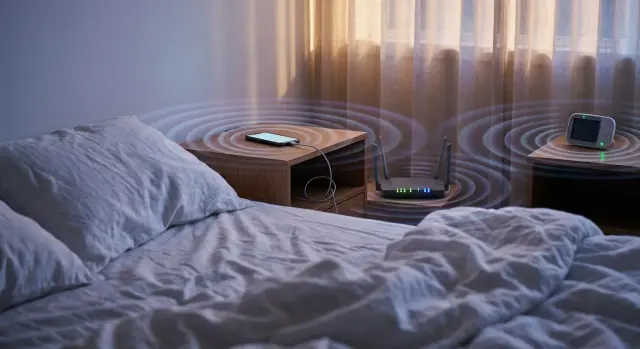
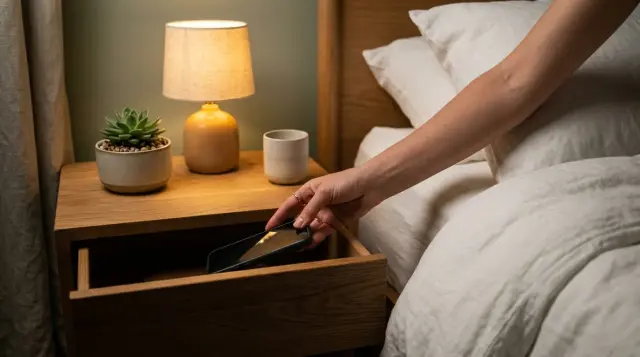
So what do you do? Start with the obvious. Get your phone out of the room. Not on airplane mode sitting on your nightstand. Out of the room entirely. If you need an alarm, grab a $10 battery-powered clock. Move wireless chargers, Bluetooth speakers, and smart home gadgets somewhere else. If your router is close by, either hardwire your connection and shut off the WiFi radio at night, or plug it into a simple outlet timer that kills power from 10 PM to 6 AM.
Quick Q&A
Q: Should I turn off the WiFi router at night to reduce EMF?
A: Yes, turning off your router at night eliminates a constant source of 2.4 GHz or 5 GHz RF radiation during the 7 to 9 hours your body is most focused on cellular repair and melatonin production.
For people actively pursuing electromagnetic sensitivity treatment, the bedroom is where you start. Check out our full EMF Blocking for Better Sleep: The Complete Guide for a thorough breakdown of sleep-specific strategies, including shielding fabrics and circuit-level shutoffs. The payoff here is enormous because you're not just cutting exposure for an hour. You're cleaning up the environment for the longest unbroken stretch of your day.
What Are the Worst EMF Sources in Your Kitchen and Living Room?
Kitchens are packed with high-draw appliances, and some of them throw off surprisingly strong electromagnetic fields at close range. Microwave ovens are the classic example. A working microwave can leak small amounts of RF radiation, though the FDA requires that leakage not exceed 5 milliwatts per square centimeter at roughly 2 inches from the surface [2]. That number drops quickly with distance, but if you're standing right in front of the door while your lunch heats, you're getting a dose you simply don't need.
The fix is almost embarrassingly simple: step back. Electromagnetic radiation follows the inverse square law. Double your distance from the source and you cut your exposure by about 75%. Stand 4 feet from the microwave instead of 2 inches. Distance is your single most powerful tool against EM radiation, and it's completely free.
In the living room, the main offenders are smart TVs, gaming consoles with always-on WiFi, and smart speakers like Amazon Echo or Google Home sitting on tables at head height, constantly listening and constantly transmitting. If you've got a baby or toddler playing on the floor near a router tucked behind the TV stand, that deserves your attention. We wrote specifically about this in Infant EMF Sensitivity: Why Babies Are More Vulnerable.
Consider hardwiring your smart TV with an Ethernet cable and turning off its WiFi. Same with gaming consoles. You'll often get a faster, more stable connection anyway. For smart speakers, ask yourself whether the convenience is worth having a 24/7 RF-emitting device at arm's length. For many people exploring treatment for electrosensitivity, pulling just two or three always-on wireless devices from shared living spaces makes a noticeable difference.
How Much EMF Does a Smart Meter or Electrical Panel Really Emit?
Smart meters are one of those things people worry about. And the worry isn't entirely unfounded. A smart meter communicates with your utility company using RF signals, typically in the 900 MHz to 2.4 GHz range. According to the California Council on Science and Technology (CCST), a smart meter transmits for a total of roughly 45 seconds per day in short bursts [3]. Compared to a WiFi router broadcasting nonstop, that's not much.
But here's the catch. Smart meters are often mounted on bedroom walls. Those short bursts can hit surprisingly high peak power levels. If your bed sits on the other side of the wall from your smart meter, you're getting pulsed RF radiation at head level during sleep. Moving the bed to the opposite wall, or even just 6 feet away, can dramatically cut your exposure.
Electrical panels are a different animal. They emit low-frequency magnetic fields (ELF), not RF. These fields don't diminish as quickly with shielding materials the way RF does, but they do drop off with distance. The general guideline from building biologists is to keep sleeping and sitting areas at least 6 to 8 feet from the electrical panel.
For a full map of where electromagnetic fields run hottest in a typical home, read Where EMF Is Strongest: How to Fix Each One. If you want to measure things yourself, an inexpensive Trifield meter (around $150) will give you real numbers for both RF and magnetic fields. Measuring always beats guessing.
Is Electromagnetic Hypersensitivity a Real Medical Condition?
This question sparks more debate than any other, and I want to be straight with you about it. The World Health Organization acknowledges that electromagnetic hypersensitivity (EHS) symptoms are real and sometimes disabling. But they also state that the scientific literature does not confirm a causal relationship between EMF exposure and the reported symptoms [1]. Provocation studies, where people who report EHS are exposed to real and sham EMF fields, have generally not shown that sufferers can detect the fields at rates above chance.
That said, Sweden recognized EHS as a functional impairment back in 2000. This means affected individuals can receive workplace accommodations and support, regardless of the debated mechanism. And anecdotally, the number of people reporting symptoms like headaches, brain fog, tinnitus, and fatigue that line up with electromagnetic field exposure keeps growing. The WHO estimates prevalence ranges from a few cases per million up to about 5% of certain populations [1].
So what does this mean in practice? If you experience symptoms and you've noticed they get worse around electronic devices, the approach most functional medicine practitioners take is to treat the symptoms seriously while also investigating other possible causes. That might mean screening for anxiety, checking for chemical sensitivities, and ruling out other environmental triggers. We explored this nuance in our article EMF Sensitivity: Real Condition or Myth?.
The bottom line for anyone researching electromagnetic sensitivity treatment: whether the mechanism turns out to be direct biological damage from EM radiation or a sensitization response involving the nervous system, reducing exposure consistently helps people feel better. That's a practical outcome worth chasing regardless of how the science eventually settles.
What Does Effective Electromagnetic Sensitivity Treatment Look Like?
Effective electromagnetic sensitivity treatment almost never comes down to one single fix. It's a combination of environmental cleanup, lifestyle shifts, and sometimes targeted therapies. Here's what that looks like in the real world.
Environmental changes come first. Those are the strategies we've been covering room by room: removing or distancing yourself from EMF sources, hardwiring your internet, turning off circuits at night, and using shielding materials where they make sense. For wearable protection throughout the day, Proteck'd's Faraday EMF Collection uses silver-infused fabric that attenuates RF radiation. This is especially useful in environments you can't control, like an office or a commuter train. You can learn more about how the fabrics work on the EMF Protection Benefits page.
Quick Q&A
Q: Does EMF-shielding clothing actually reduce exposure?
A: Yes, garments woven with silver or copper fibers can attenuate RF radiation by 30 dB or more, which blocks over 99% of specific frequency ranges depending on the fabric construction and coverage area.
Beyond the environment, some practitioners recommend cognitive behavioral therapy (CBT) to address the anxiety and hypervigilance that often go hand in hand with EHS. A 2017 review in the journal Bioelectromagnetics noted that CBT helped reduce symptom severity in several case series, even when EMF levels stayed the same. This isn't about dismissing the condition. It's about acknowledging that the nervous system plays a role in how symptoms are felt and amplified.
Nutritional support also shows up in protocols from integrative medicine doctors. Antioxidants like glutathione, magnesium supplementation, and anti-inflammatory diets are commonly recommended for people dealing with electrosensitivity symptoms. Dr. Dietrich Klinghardt, a well-known integrative practitioner based in Washington state, has written extensively about supporting detoxification pathways as part of an EHS management plan. None of these have been validated in large randomized trials, but many patients report meaningful improvement.
How Should You Approach Your Home Office and Kids' Rooms?
If you work from home, your office might be your highest-exposure room after the bedroom. Think about what's in there: a laptop on your lap (RF, magnetic fields, and heat all at once), a WiFi router on the desk, a Bluetooth keyboard and mouse, maybe a wireless headset, and a phone sitting on a wireless charger. That's a lot of electromagnetic radiation packed into one small space for 8 or more hours a day.
The single best change you can make? Hardwire your laptop with an Ethernet adapter and turn off WiFi and Bluetooth in your system settings. Use a wired keyboard, wired mouse, and wired headphones. This wipes out the majority of RF radiation in the room. It costs maybe $30 in cables and adapters, and your internet connection will be faster and more reliable too.
For kids' rooms, the math changes. Children's skulls are thinner and their brains are still developing. According to research from the National Institute of Environmental Health Sciences (NIEHS), children may absorb more RF energy per kilogram of body weight than adults [4]. A tablet streaming content over WiFi in a child's bedroom overnight is a higher-risk scenario than the same device in an adult's office.
Remove tablets and phones from kids' rooms at bedtime. If your child uses a laptop for schoolwork, hardwire it. If there's a baby monitor in the nursery, consider a wired model, or at least place the transmitter at maximum distance from the crib. Our guide to Low-EMF Home Design: A Complete Guide covers structural strategies for families who want to build or renovate with reduced EM radiation in mind.
Can You Reduce EMF Without Giving Up Modern Convenience?
Absolutely. And honestly, this is the question that matters most. Nobody's going back to 1985. The goal isn't to wipe out all electromagnetic fields from your life (you can't, the Earth itself has a magnetic field). It's to cut unnecessary chronic exposure, especially during sleep and in the rooms where you spend the most hours.
Think of it like noise pollution. You don't need a soundproofed bunker to sleep better. You just close the windows, maybe hang some curtains, move the subwoofer to the other room. Same logic applies here. Small, targeted changes punch way above their weight because most of your exposure comes from a handful of sources.
A practical example: one family I know dropped their RF readings by over 80% with three changes. They put the router on a timer, swapped their cordless DECT phones for corded models, and moved the bed that shared a wall with the smart meter. Total cost: about $40. Total inconvenience: barely noticeable. They kept their streaming services, their phones, their laptops. They just got smarter about proximity and duration.
For the exposures you truly can't control, like a cell tower near your workplace or a neighbor's smart meter on a shared wall, that's where EMF-protective clothing becomes practical. Proteck'd makes apparel with integrated shielding that looks like normal clothing, not a tinfoil suit. And right now, there are solid deals in the Proteck'd Sale section if you want to try a piece without a full-price commitment. Combining environmental cleanup at home with wearable protection when you're out is really the most thorough approach to electromagnetic sensitivity treatment you can take.
Frequently Asked Questions
Electromagnetic sensitivity treatment refers to a mix of strategies designed to reduce symptoms tied to electromagnetic hypersensitivity (EHS). These typically include environmental changes like removing wireless devices, putting more distance between you and EMF sources, using shielding materials, and sometimes cognitive behavioral therapy or nutritional supplementation. There's no single FDA-approved treatment, so most approaches are precautionary and tailored to the individual.
Yes. Turning off your WiFi router at night eliminates a continuous source of RF radiation during the hours your body is focused on cellular repair and melatonin production. A simple outlet timer that cuts power from 10 PM to 6 AM is an easy, inexpensive solution. It's one of the highest-impact changes you can make for your bedroom.
Ideally, keep it out of the bedroom entirely. If that's not possible, place it at least 6 feet away and switch it to airplane mode. Even in airplane mode, most phones still give off some low-level electromagnetic fields from their internal electronics, so distance still matters.
It depends on where you live. Sweden recognized EHS as a functional impairment in 2000, providing workplace accommodations. The WHO acknowledges the symptoms are real and can be disabling but hasn't established a confirmed causal link between EMF exposure and the reported symptoms. Most provocation studies have not shown that affected individuals can detect EMF fields at rates above chance.
Yes. Garments made with silver or copper-infused fibers can attenuate RF radiation by 30 dB or more, which translates to blocking over 99% of certain frequency ranges. Effectiveness depends on fabric construction, thread density, and how much of the body is covered. Proteck'd's Faraday Collection uses silver-threaded fabrics tested for RF shielding effectiveness.
The inverse square law says that the intensity of radiation decreases proportionally to the square of the distance from the source. In plain terms, doubling your distance from a WiFi router or smart meter cuts your exposure by about 75%. This makes distance your most powerful, free, and immediately effective tool for reducing EMF.
Research suggests children may absorb more RF energy per kilogram of body weight than adults because their skulls are thinner and their brains are still developing. The NIEHS and several European health agencies recommend precautionary measures for children's EMF exposure. Keeping wireless devices out of children's bedrooms during sleep is one of the most commonly recommended steps.
Smart meters transmit RF signals in short bursts totaling roughly 45 seconds per day, according to the California Council on Science and Technology. While total transmission time is low, peak power levels during those bursts can be significant, especially if the meter is mounted on a bedroom wall. Moving your bed away from the shared wall is a simple, practical precaution.
Common symptoms include headaches, fatigue, difficulty concentrating, sleep disturbances, tinnitus, skin tingling or burning, and heart palpitations. These symptoms overlap with many other conditions, which is why thorough medical evaluation is recommended alongside environmental changes. The WHO notes that symptom severity varies widely among affected individuals.
Yes. Hardwiring with Ethernet cables eliminates RF radiation from your WiFi router entirely and is widely considered the single most effective EMF reduction step for most homes. You can disable WiFi on your router's settings page once all devices are plugged in via cable. As a bonus, Ethernet connections are typically faster and more stable than wireless.
References
- World Health Organization – WHO states that EHS symptoms are real and sometimes disabling, that prevalence estimates range from a few per million to about 5%, and that scientific literature does not confirm a causal relationship between EMF exposur
- U.S. Food and Drug Administration – The FDA requires that microwave oven radiation leakage not exceed 5 milliwatts per square centimeter at approximately 2 inches from the oven surface.
- National Institute of Environmental Health Sciences – Children may absorb more RF energy per kilogram of body weight than adults due to their thinner skulls and developing nervous systems.
About the Author
Proteck'd EMF Apparel
Health & EMF Specialists
The Proteck'd team covers EMF protection, silver-fiber apparel, and practical ways to reduce everyday radiation exposure. Every piece Proteck'd ships is designed, tested, and worn by the people who build it.
Get the Free EMF Home Audit Checklist
A room-by-room PDF that walks you through the biggest EMF sources in your house and what to do about each one. No cost, no fluff.
Download the Checklist →✓30-day returns✓Free shipping✓Free returns✓Silver fiber shielding


Leave a comment