


Human Performance: What It Is, What Works, What Doesn't

Here's a number that should bother you: the average American spends over $1,200 a year on supplements, yet chronic disease rates keep climbing. We've got more health data strapped to our wrists than a 1990s hospital had in its entire lab. And yet most of us feel tired, foggy, and older than we should. So how does best biohacks science backed work, really? The answer is simpler, and more uncomfortable, than most influencers want to admit.
It doesn't start with a $400 red light panel or a subscription nootropic stack. It starts with the boring stuff your grandmother already knew: sleep, sunlight, movement, real food. The twist? Modern science has finally explained why those things work at the cellular level. And that understanding lets us do them better.
I've spent the last few years reading the actual research behind popular biohacks. Not blog summaries. Not podcast takeaways. The published trials. What I found is that about 80% of what gets labeled "biohacking" has weak or no evidence behind it. The remaining 20% is genuinely powerful. Almost all of it is free or cheap.
This guide is my attempt to separate the signal from the noise. We'll go through the interventions that actually shift biomarkers, explain the mechanisms, call out what's overhyped, and give you a practical framework. Whether you're a total beginner or someone who's already tracking HRV and fasting windows, there's something here for you.
The best biohacks aren't the ones that cost the most or sound the most futuristic. They're the ones your body already knows how to use: sunlight, sleep, movement, cold, and real food. Science hasn't invented anything better than those foundations. It's just finally explained why they work.
- Morning sunlight for 10 to 30 minutes is the single cheapest, highest-impact biohack for circadian rhythm, sleep quality, and daytime energy.
- Cold exposure at 50 to 59°F increases dopamine by 250% and norepinephrine by 530%, with effects lasting hours, but timing matters if you also strength train.
- Sleep is not just rest. It's active brain detoxification, hormonal recovery, and immune repair, and one in three Americans aren't getting enough.
- Strength training 30 to 60 minutes per week reduces all-cause mortality by 10 to 17%, independent of cardio, making it a non-negotiable for longevity.
- Most supplements and nootropics lack strong human evidence. Magnesium, vitamin D3, and creatine are the notable exceptions with solid data.
What Does Biohacking Actually Mean in 2024?
The word "biohacking" gets thrown around so loosely that it's practically meaningless. It was originally coined in the DIY biology community, referring to citizen scientists tinkering with genetics in garage labs. Today it describes everything from drinking lemon water in the morning to implanting magnets under your skin. That range is absurd. It makes honest conversation nearly impossible.
A more useful definition: biohacking is any deliberate intervention aimed at improving your body's performance, resilience, or longevity, ideally guided by data. The key word is "deliberate." You're not just hoping for the best. You make a change, measure the outcome, and adjust. That's what separates biohacking from generic wellness advice.
The problem? Most people skip the measurement part entirely. They buy a supplement because a podcast host got paid to recommend it, take it for two weeks, feel vaguely "better," and call it a win. That's not evidence-based health optimization. That's placebo plus confirmation bias. If you want to know how does best biohacks science backed work for your specific body, you need to track something real. Sleep scores. Blood panels. Resting heart rate. Grip strength. Mood logs. Something.
For a deeper ranking of what's worth trying, check out The Best Biohacks: Ranked by Evidence, where we scored popular interventions by their published research quality.
Does Morning Sunlight Really Improve Your Sleep and Energy?
Yes. And the mechanism is well understood. When photons from natural sunlight hit specialized cells in your retina called intrinsically photosensitive retinal ganglion cells (ipRGCs), they send a signal directly to the suprachiasmatic nucleus in your hypothalamus. That signal sets your master circadian clock, triggering a morning cortisol pulse and telling your brain to start the 12 to 14 hour countdown to melatonin release [1].
Stanford neuroscientist Andrew Huberman has popularized this idea, and the underlying science holds up. A 2017 study published in Sleep Health found that office workers with more morning light exposure fell asleep faster and reported better sleep quality. The dose is surprisingly small. Ten to thirty minutes of outdoor light within an hour of waking is enough, even on a cloudy day. Cloud cover still delivers 10,000 to 25,000 lux, while indoor lighting typically maxes out around 500 lux.
Here's the practical part that people miss: sunglasses block the very wavelengths your ipRGCs need. So that morning walk with shades on? Great exercise. Not doing much for your circadian rhythm, though. Prescription glasses and contacts are fine. Just lose the tinted lenses for those first 10 minutes outside.
Quick Q&A
Q: How long do I need to be outside in the morning for circadian benefits?
A: Ten minutes of direct outdoor light on a sunny day, or 20 to 30 minutes on a cloudy day, is enough to set your circadian clock according to circadian biology research.
This is one of those interventions where the cost to benefit ratio is almost laughable. Zero dollars. Ten minutes. And the downstream effects touch sleep quality, daytime alertness, mood regulation, and even metabolic health. If you want to go deeper on the sleep side, we covered the full protocol in Sleep Optimization: The Science-Backed Guide.
How Does Cold Exposure Affect Dopamine and Recovery?
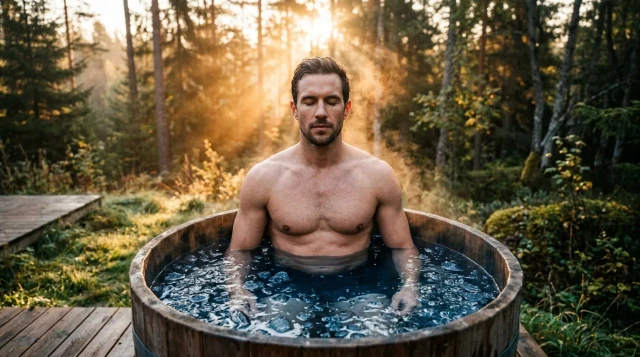
Cold exposure is one of the few biohacks where the human data is genuinely impressive. A frequently cited study from the European Journal of Applied Physiology (2000) submerged healthy subjects in 14°C (57°F) water for one hour and measured a 250% increase in plasma dopamine and a 530% increase in norepinephrine [2]. Those are not small numbers. For reference, cocaine raises dopamine by about 250% too, though through a completely different and far more destructive mechanism.
What makes the dopamine elevation from cold water interesting is that it's gradual, not a spike. It rises slowly and stays elevated for hours after the exposure ends. That's why people report sustained focus and mood improvements after a cold plunge rather than a brief high followed by a crash. The norepinephrine boost also explains the alertness effect. Your body reads cold as a mild stressor and responds by ramping up sympathetic nervous system activity.
Now here's the nuance that most cold plunge enthusiasts skip over. If you're using cold exposure for muscle recovery after strength training, timing matters a lot. A 2015 study in the Journal of Physiology found that cold water immersion immediately after resistance exercise blunted muscle protein synthesis and long-term strength gains. So if your goal is hypertrophy, save the cold plunge for non-training days or wait at least four to six hours after lifting.
You don't need a $5,000 cold plunge tub either. A cold shower at the lowest setting for two to five minutes works. The key is that the water needs to be uncomfortably cold for you, specifically. If you've adapted to it and you're scrolling your phone while standing in the stream, it's not cold enough anymore to trigger the stress response that drives the benefits.
Is Sleep Really the Most Underrated Biohack?
Without question. I know that sounds like a cliché, but the research backing sleep's importance is so overwhelming that calling it a "biohack" almost feels insulting. It's more like a biological requirement that most of us are failing at. The CDC reports that one in three American adults doesn't get the recommended seven or more hours per night. And "seven hours" is the floor, not the target.
During deep sleep (stages 3 and 4 of non-REM), your brain activates the glymphatic system, which clears metabolic waste including beta-amyloid, one of the proteins associated with Alzheimer's disease. A 2019 study in Science showed that this cleaning process requires specific slow-wave oscillations in brain activity that only occur during deep sleep [3]. You cannot supplement your way around this. No nootropic replaces it. Nothing does.
On the performance side, a well-known Stanford study found that basketball players who extended sleep to 10 hours per night improved sprint times, free-throw accuracy, and reaction time significantly. A 2023 meta-analysis showed that even one night of partial sleep restriction (sleeping 4 to 6 hours) reduces next-day testosterone levels by 10 to 15% in men. Sleep is hormonal recovery, cognitive maintenance, and immune system repair all happening at once.
If you want a full, actionable protocol, we built one in How to Sleep Better Tonight: The Complete Checklist. And for the deeper science of why rest matters at the cellular level, Sleep: The Science-Backed Guide covers everything from circadian rhythm disruption to adenosine signaling.
Why Is Strength Training Still the Gold Standard for Longevity?
Aerobic exercise gets the headlines. But resistance training might matter more for long-term healthspan. A 2022 meta-analysis published in The British Journal of Sports Medicine analyzed data from over 1.5 million participants and found that muscle-strengthening activities were associated with a 10 to 17% lower risk of all-cause mortality, cardiovascular disease, cancer, and diabetes, independent of aerobic exercise [4].
The mechanism is partly about muscle itself. Skeletal muscle is now understood to be an endocrine organ. When you contract muscles under load, they release myokines, signaling molecules that reduce inflammation, improve insulin sensitivity, and even cross the blood-brain barrier to support neuroplasticity. A 2023 study in Nature Aging found that grip strength, a simple proxy for overall muscle mass and function, independently predicts biological age across populations.
Here's what surprised me when I started digging into this: the dose needed for longevity benefits is lower than most people think. According to a 2022 analysis in the British Journal of Sports Medicine, 30 to 60 minutes of resistance training per week was the sweet spot for mortality reduction. That's two or three short sessions. You don't need to become a powerlifter. You just need to load your muscles consistently.
Quick Q&A
Q: How much strength training do you need for longevity benefits?
A: According to a 2022 British Journal of Sports Medicine meta-analysis, 30 to 60 minutes per week of resistance training is associated with significantly lower all-cause mortality risk.
If you're already lifting, great. If you're not, start with bodyweight movements: push-ups, squats, lunges, rows with a band. Progression over months matters far more than intensity in any single session.
Do Supplements and Nootropics Actually Work?
Mostly, no. I know that stings, especially if you've built a morning stack that takes fifteen minutes to swallow. But the honest truth is that the supplement industry is largely unregulated, and most products are solving problems you don't have or can fix with food. The exceptions are worth knowing, though.
Magnesium is the most defensible supplement for most people. According to a 2018 review in Nutrients, an estimated 50% of Americans consume less than the estimated average requirement for magnesium. Magnesium glycinate or bisglycinate taken before bed can improve sleep onset and deep sleep duration. Vitamin D3 is another reasonable addition if your blood levels are below 40 ng/mL, which is common in people who work indoors. The Endocrine Society recommends supplementation for adults with levels below 30 ng/mL.
Nootropics are a different animal. Most of the popular "cognitive enhancement" compounds, from racetams to lion's mane, have either animal-only data, tiny human trials, or conflicting results. The one notable exception is creatine monohydrate, which has strong evidence for both physical and cognitive performance. A 2018 meta-analysis in Experimental Gerontology found that creatine improved short-term memory and reasoning, particularly under conditions of sleep deprivation or stress.
The bigger conversation around science-backed health optimization involves your gut microbiome. We wrote a full breakdown of how digestive health affects mood, immunity, and even neurotransmitter production in Gut Health: The Complete Guide. Before you add another pill to your stack, fix the ecosystem that absorbs everything you eat.
What About EMF Exposure and Environmental Stressors?
This is where biohacking conversations tend to split into two camps: people who dismiss environmental concerns entirely, and people who wrap their house in tin foil. The truth, predictably, sits somewhere in the middle. We're surrounded by more electromagnetic radiation than any previous generation, from Wi-Fi routers, smartphones, Bluetooth devices, smart meters, and cell towers. The question isn't whether the exposure exists. It's whether it matters for human performance and long-term health.
The International Agency for Research on Cancer (IARC), a branch of the WHO, classified radiofrequency electromagnetic fields as "possibly carcinogenic to humans" (Group 2B) back in 2011. That classification is based on limited evidence linking cell phone use to glioma. More recently, a 2018 study by the U.S. National Toxicology Program found "clear evidence" of heart tumors in male rats exposed to high levels of RF radiation, though the relevance to everyday human exposure levels is debated.
Regardless of where you land on the cancer question, there's a separate conversation about sleep and recovery. Multiple studies have examined the effects of RF exposure on sleep architecture. Results are mixed, but some research suggests that nighttime EMF exposure may reduce time spent in deep sleep. If you're already optimizing your sleep environment (cool room, dark, no screens), reducing your electromagnetic field exposure during rest is a logical next step.
That's part of why Proteck'd built their Faraday Health Collection, which uses silver-fiber fabric to shield against a range of EMF frequencies. It's a practical, wearable approach rather than a lifestyle overhaul. They also have a dedicated Women's Wellness Collection designed with the same shielding technology. For the science behind how this works, their EMF Health Benefits page breaks down the frequencies blocked and the testing behind the claims.
What's the Best Way to Start Biohacking If You're a Beginner?
Start with the highest-return, lowest-cost interventions and build from there. I'd suggest this order, and I'm not being cute about it: fix your sleep, get morning sunlight, move your body with resistance, and eat enough protein. That foundation alone puts you ahead of 90% of people spending hundreds on gadgets and supplements.
Here's how a realistic first week might look. Day one: set a consistent wake time and get outside within 30 minutes of waking, no sunglasses. Same day: set a "screens off" time 60 minutes before bed. Day three: add two bodyweight workouts to your week, even just 20 minutes each. Day five: try a two-minute cold shower at the end of your regular shower. That's it. No purchases necessary.
After two weeks, you'll have a baseline. You'll know if your sleep is improving (use a free app like Sleep Cycle to track), if your morning energy has shifted, and if the cold exposure feels sustainable. Only then should you consider layering in supplements like magnesium or vitamin D3, based on actual blood work, not guesswork.
The people who understand how does best biohacks science backed work in practice don't start with the exotic stuff. They master the fundamentals first, then ask: what's the next small improvement I can make? They also pay attention to their environment. Reducing blue light at night, managing EMF exposure during sleep, eating whole foods. None of it is sexy. All of it is effective.
The question you should keep asking yourself is simple: does this intervention have human data, is the effect size meaningful, and can I sustain it? If you can answer yes to all three, it's worth trying. Everything else is entertainment.
Frequently Asked Questions
The most evidence-backed approach combines morning sunlight exposure, consistent sleep timing, and regular exercise. These three interventions regulate cortisol rhythms, improve mitochondrial function, and stabilize blood sugar throughout the day. They work because they target the root biological systems that produce sustained energy rather than masking fatigue with stimulants.
Morning sunlight exposure. It costs nothing, takes 10 minutes, and has solid research showing it resets your circadian clock, improves sleep quality, boosts daytime alertness, and supports healthy cortisol rhythms. All you need to do is step outside within an hour of waking without sunglasses.
Cold exposure is generally safe for healthy adults when done gradually. Start with 30 seconds of cold water at the end of a warm shower and build up over weeks. People with cardiovascular conditions, uncontrolled hypertension, or Raynaud's disease should consult a doctor first, as the cold shock response raises blood pressure and heart rate rapidly.
Most nootropics lack strong human evidence. The major exception is creatine monohydrate, which has multiple studies showing improvements in short-term memory and reasoning, especially under stress or sleep deprivation. Caffeine also has solid data for alertness and focus. Beyond those two, the evidence for popular compounds like racetams and lion's mane is preliminary at best.
Most adults need 7 to 9 hours per night, with 8 hours being a reasonable target for performance. Research from the Stanford sleep extension study showed measurable improvements in athletic performance at 10 hours. The CDC notes that sleeping fewer than 7 hours is associated with increased risk of obesity, diabetes, heart disease, and depression.
Some research suggests that radiofrequency electromagnetic fields may affect sleep architecture, particularly time spent in deep sleep. The evidence is mixed, but minimizing EMF exposure during sleep is a low-cost precaution. Simple steps include keeping your phone in airplane mode, moving routers out of the bedroom, or wearing EMF-shielding clothing from brands like Proteck'd.
Intermittent fasting has solid evidence for improving insulin sensitivity, reducing inflammation, and supporting cellular autophagy. A 2019 New England Journal of Medicine review by Dr. Mark Mattson found benefits for metabolic health and possibly brain health. That said, it's not superior to standard caloric restriction for weight loss, and it's not appropriate for everyone, particularly pregnant women or people with eating disorder histories.
Magnesium, vitamin D3, and creatine monohydrate are the three supplements with the most consistent human evidence. About 50% of Americans are estimated to be deficient in magnesium, and vitamin D deficiency is similarly widespread among indoor workers. Creatine has decades of research supporting both physical and cognitive benefits. Beyond these, omega-3 fatty acids have reasonable evidence for cardiovascular and brain health.
Red light therapy, or photobiomodulation, has targeted evidence for skin health, wound healing, and joint pain. A 2014 review in Seminars in Cutaneous Medicine and Surgery found benefits for skin rejuvenation. Broader claims about fat loss, cognitive enhancement, and systemic anti-aging are not well supported by current human research. Results also depend heavily on wavelength, dosage, and device quality.
Track something measurable before and after starting. For sleep interventions, use a wearable or sleep app to monitor duration and quality scores over two weeks. For energy and mood, keep a simple 1 to 10 daily log. For supplements, get baseline blood work and retest after 90 days. Subjective feelings alone are unreliable because the placebo effect is surprisingly strong for wellness interventions.
References
- National Institutes of Health (PubMed) – Morning light exposure improves sleep quality and circadian alignment in office workers, as published in Sleep Health (2017).
- European Journal of Applied Physiology (PubMed) – Cold water immersion at 14°C increased plasma dopamine concentrations by 250% and norepinephrine by 530% in healthy subjects.
- National Institutes of Health (PubMed) – The glymphatic system's waste-clearance activity during deep sleep requires coupled slow oscillations, as demonstrated in a 2019 Science study.
- British Journal of Sports Medicine (PubMed) – Muscle-strengthening activities are associated with a 10 to 17% lower risk of all-cause mortality, cardiovascular disease, and cancer, independent of aerobic exercise.
About the Author
Proteck'd EMF Apparel
Health & EMF Specialists
The Proteck'd team covers EMF protection, silver-fiber apparel, and practical ways to reduce everyday radiation exposure. Every piece Proteck'd ships is designed, tested, and worn by the people who build it.
Get the Free EMF Home Audit Checklist
A room-by-room PDF that walks you through the biggest EMF sources in your house and what to do about each one. No cost, no fluff.
Download the Checklist →✓30-day returns✓Free shipping✓Free returns✓Silver fiber shielding


Leave a comment