


10 Surprising Facts About Electromagnetic Radiation: That Will Change How You See the World

Right now, billions of electromagnetic waves are passing through your body. Radio signals, Wi-Fi, cell tower transmissions, the visible light from your screen. You can't feel any of it. But it's all there, all the time. And most of us have no real idea how it works.
So how does electromagnetic radiation facts work in plain terms? At its core, electromagnetic radiation is energy traveling through space as waves. These waves are born from electric and magnetic fields oscillating at right angles to each other, racing along at the speed of light. No medium required. No air, no water, no wire. Just pure energy slicing through the vacuum of space at 299,792,458 meters per second [1].
Here's what most people don't realize: this stuff gets genuinely strange when you look closely. The same fundamental phenomenon lets you see a sunset, heats your leftovers in the microwave, delivers your favorite podcast, and powers the X-ray machine at your dentist's office. Same physics. Wildly different effects.
I've spent a lot of time reading through the research on EM radiation and its various forms, and I keep stumbling across things that genuinely surprise me. So I pulled together 10 of the most fascinating facts about electromagnetic radiation. The kind of stuff that makes you look at your phone, your light bulb, and even your own body a little differently.
Every electromagnetic wave you've ever produced is still traveling outward at the speed of light. Your phone call from 2003 is about 22 light-years away right now. The universe remembers every signal you've ever sent.
- All electromagnetic radiation, from radio waves to gamma rays, travels at exactly 299,792,458 m/s in a vacuum.
- Your body constantly emits infrared electromagnetic radiation equivalent to about 100 watts of power.
- Wi-Fi and microwave ovens both use the 2.4 GHz frequency, but Wi-Fi operates at roughly 10,000 times less power.
- Visible light is less than 0.0035% of the full electromagnetic spectrum, and some animals can see far beyond our range.
- The FCC's SAR limit of 1.6 W/kg for cell phones was established in 1996, and the long-term effects of chronic low-level RF exposure are still being studied.
How Fast Does Electromagnetic Radiation Actually Travel?
Every single form of electromagnetic radiation, from the lowest-frequency radio wave to the highest-energy gamma ray, travels at exactly the same speed in a vacuum: 299,792,458 meters per second. That's roughly 186,282 miles per second. James Clerk Maxwell first predicted this mathematically in 1865, and Heinrich Hertz confirmed it experimentally in 1887 [1].
Think about how strange that is for a second. A lazy FM radio wave with a 3-meter wavelength and a lethal gamma ray with a wavelength smaller than an atom? Moving at the exact same velocity. Speed isn't what separates them. Frequency and wavelength are. And those two properties determine everything about how the radiation interacts with matter.
Try this thought experiment. Light from the sun takes about 8 minutes and 20 seconds to reach Earth. That same speed applies to the radio signals we beam into deep space. When NASA communicates with Voyager 1, now over 15 billion miles away, those radio signals take more than 22 hours to arrive. Same speed as visible light. Same speed as X-rays. It's one of the universe's strangest constants.
Quick Q&A
Q: Do all types of electromagnetic radiation travel at the same speed?
A: Yes, in a vacuum all electromagnetic radiation travels at exactly 299,792,458 meters per second, regardless of frequency or wavelength.
Does Your Body Actually Emit Electromagnetic Radiation?
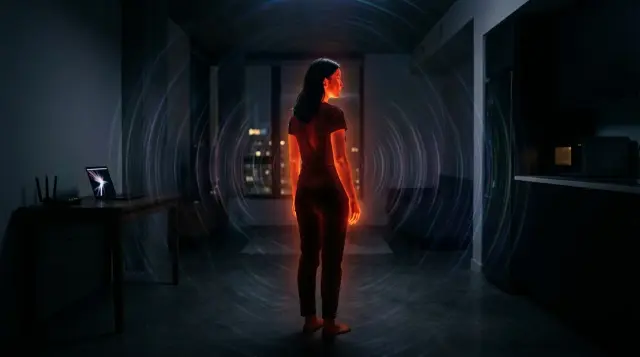
Yes. Right now, you are a source of electromagnetic radiation. Every warm object emits infrared EM radiation, and at roughly 37°C (98.6°F), your body radiates energy equivalent to about 100 watts. That's similar to an old incandescent light bulb. You're literally glowing, just not in wavelengths your eyes can pick up.
This is exactly how thermal imaging cameras work. Companies like FLIR Systems build cameras that detect infrared radiation between about 7.5 and 14 micrometers in wavelength. When firefighters search a burning building for survivors, they're detecting the electromagnetic waves your body naturally emits. That's not science fiction. It's basic physics, predicted by Planck's radiation law published in 1900.
Here's the bigger picture: every object above absolute zero (minus 273.15°C) emits some form of electromagnetic radiation. Even the cosmic microwave background, that faint glow left over from the Big Bang about 13.8 billion years ago, is electromagnetic radiation at a temperature of roughly 2.7 Kelvin. The universe itself is radiating. If you want to explore even more mind-bending science about our planet, check out 10 Fascinating Facts About Planet Earth: That Sound Too Strange to Be True.

Why Do Microwaves and Wi-Fi Use the Same Frequency?
This one catches people off guard. Your Wi-Fi router and your microwave oven both operate near the 2.4 GHz frequency. That's not a coincidence, and it's not as scary as it sounds. The 2.4 GHz band is part of the ISM (Industrial, Scientific, and Medical) bands designated by the International Telecommunication Union (ITU). It was originally reserved for industrial equipment, and microwave ovens were one of the first widespread uses.
When Wi-Fi was being developed in the late 1990s (the original IEEE 802.11 standard dropped in 1997), engineers chose the 2.4 GHz band partly because it was already designated for unlicensed use. The key difference? Power. A typical microwave oven blasts food with about 1,000 watts of energy. A Wi-Fi router puts out around 0.1 watts. That's a 10,000-fold difference. Understanding how electromagnetic radiation facts work means understanding that frequency alone doesn't tell the whole story. Power and exposure duration matter enormously.
This is also why some people wonder about daily EMF exposure from their devices. The FCC limits cell phone RF emissions to a specific absorption rate (SAR) of 1.6 W/kg averaged over 1 gram of tissue [2]. If you're curious about ways people reduce their exposure, you can Learn About EMF Protection and the science behind shielding materials.
What's the Difference Between Ionizing and Non-Ionizing Radiation?
This is the single most important distinction in understanding EM radiation. It's also the one most people get wrong. The electromagnetic spectrum splits into non-ionizing radiation (radio waves, microwaves, infrared, visible light) and ionizing radiation (ultraviolet at higher frequencies, X-rays, gamma rays). The dividing line sits roughly around 10^15 Hz, in the ultraviolet range.
Ionizing radiation has enough energy per photon to knock electrons off atoms, which can damage DNA. This is why the World Health Organization recommends limiting exposure to medical X-rays, and why prolonged UV exposure from the sun causes skin cancer [3]. Gamma rays, used in cancer radiotherapy, carry even more energy per photon.
Non-ionizing radiation, which includes everything from your phone's signal to your microwave, doesn't carry enough energy per photon to break chemical bonds. That said, the International Agency for Research on Cancer (IARC) classified radiofrequency electromagnetic fields as Group 2B (possibly carcinogenic) in 2011, based largely on studies examining long-term heavy cell phone use [4]. The ionizing vs. non-ionizing distinction is fundamental. But the conversation around non-ionizing radiation health effects is still evolving.
For those who prefer taking a precautionary approach, Proteck'd EMF Protection offers apparel designed with silver-threaded fabric that can attenuate RF electromagnetic fields. It's one practical way some people choose to reduce daily exposure.
Can You Actually See Electromagnetic Radiation?
You're doing it right now. Visible light is electromagnetic radiation. It's just a very narrow slice of the full spectrum. Human eyes detect wavelengths between roughly 380 nanometers (violet) and 700 nanometers (red). That's it. That tiny range is the entire portion of the universe you can perceive with your eyes, and it represents less than 0.0035% of the known electromagnetic spectrum.
Want some perspective? Imagine the full EM spectrum as a ruler stretching from New York to Los Angeles. The portion you can see? About the width of a pencil eraser. Everything else, radio, microwave, infrared, ultraviolet, X-rays, gamma rays, is completely invisible to you. According to NASA's introduction to the electromagnetic spectrum, different types of EM radiation are distinguished only by their wavelength and frequency, not by any fundamental difference in their nature [1].
Some animals do much better than us. Mantis shrimp have 12 to 16 types of color receptors (we have three). Pit vipers detect infrared EM radiation through specialized pit organs on their faces, essentially seeing heat. Bees see into the ultraviolet range, which is why flowers have UV patterns invisible to us but obvious to pollinators. For more wild animal facts, you might enjoy Interesting Facts About Lions: 20 Unique Traits.
Quick Q&A
Q: What percentage of the electromagnetic spectrum can humans see?
A: Less than 0.0035% of the known electromagnetic spectrum is visible to the human eye, covering wavelengths between approximately 380 and 700 nanometers.
How Does Wave-Particle Duality Change Everything We Know?
This is where electromagnetic radiation gets philosophically weird. Light, and all EM radiation, behaves as both a wave and a particle at the same time. That's not a metaphor. It's been demonstrated experimentally over and over, starting with the famous double-slit experiment first performed by Thomas Young in 1801 and refined by physicists throughout the 20th century.
In the wave model, Maxwell's equations (published in 1865) describe electromagnetic radiation as oscillating electric and magnetic fields that move through space. This model beautifully explains interference, diffraction, and polarization. But it completely falls apart when you try to explain certain phenomena, like the photoelectric effect.
Enter Albert Einstein. In 1905, he proposed that light is made of discrete packets of energy called photons. Each photon carries energy proportional to its frequency (E = hf, where h is Planck's constant, 6.626 × 10^-34 joule-seconds). This insight won Einstein the Nobel Prize in Physics in 1921 and laid the foundation of quantum mechanics. So when someone asks how does electromagnetic radiation facts work at the deepest level, the honest answer is: it depends on how you measure it. Wave or particle. Both. Neither. Physics is wild.
How Much EMF Exposure Do You Get From Everyday Devices?
Most people have no idea how much electromagnetic radiation they encounter in a typical day. A 2021 review published in Environmental Research found that average daily RF exposure in urban environments has increased significantly over the past two decades, driven mostly by the spread of Wi-Fi networks, cell towers, and personal devices. Your smartphone, your laptop, your Bluetooth earbuds, your smart thermostat, your baby monitor. They're all emitting RF electromagnetic fields.
According to the FCC, a typical cell phone emits RF energy with an SAR between 0.2 and 1.6 W/kg [2]. Most modern smartphones fall well below the 1.6 W/kg limit. But here's something worth thinking about: that limit was established in 1996, based on research into acute thermal effects, meaning whether RF energy could heat tissue. The question of whether chronic, low-level non-ionizing radiation has subtler biological effects is still being studied.
The internet infrastructure delivering content to all these devices is itself a massive source of EM radiation. If you're curious about the scale, The Most Surprising Facts About How the Internet Works: The Numbers gives a fascinating breakdown. And if you'd like to explore wearable options that provide a layer of RF shielding, the Faraday Collection from Proteck'd uses silver-infused fabrics tested for electromagnetic shielding effectiveness.
Is It True That Radio Waves Can Travel Forever?
In theory, yes. In a perfect vacuum with no obstacles, a radio wave, or any electromagnetic wave, would travel forever. It would never stop. EM radiation doesn't "run out of energy" the way a thrown ball eventually falls. In free space, electromagnetic waves keep going indefinitely, though their intensity decreases with distance according to the inverse-square law.
This means the first radio and television broadcasts ever made are still out there, somewhere. The earliest commercial radio broadcasts from the 1920s have now traveled roughly 100 light-years from Earth. In principle, an alien civilization with a sensitive enough receiver within that radius could pick up those signals. SETI, the Search for Extraterrestrial Intelligence, operates on exactly this premise, using radio telescopes like the Allen Telescope Array in California to listen for EM signals from other civilizations.
Of course, in practice those signals get incredibly faint. By the time they've traveled even a few light-years, the signal strength has dropped far below cosmic background noise. But the waves themselves don't disappear. They just become undetectable. That's a profound thought when you consider how electromagnetic radiation facts work over cosmic distances. Every electromagnetic wave you've ever produced is still traveling outward at the speed of light. That phone call you made in 2003? It's about 22 light-years away right now.
What Did Maxwell's Equations Actually Prove About EM Radiation?
James Clerk Maxwell didn't just describe electromagnetic radiation. He unified electricity and magnetism into a single framework. His four equations, published in their final form in 1865 in a paper titled "A Dynamical Theory of the Electromagnetic Field," showed that a changing electric field creates a magnetic field, and a changing magnetic field creates an electric field. Together, these fields regenerate each other and move through space as a wave.
What's remarkable is that Maxwell predicted the speed of these waves using only known electrical and magnetic constants. His calculated speed matched the known speed of light almost exactly. This led him to make one of the boldest claims in the history of physics: light itself is an electromagnetic wave. He was right. And it took another 22 years before Heinrich Hertz experimentally generated and detected radio waves in 1887, confirming Maxwell's prediction.
Today, Maxwell's equations remain the foundation of classical electrodynamics. Every antenna, every fiber optic cable, every radar system, every piece of wireless technology you use is engineered based on these four equations. They're as relevant now as they were 160 years ago, which tells you just how right Maxwell got it. For more on EM radiation science, check out 10 Surprising Facts About Electromagnetic Radiation: You Won't Believe Are True.
Why Should You Care About Electromagnetic Radiation in 2024 and Beyond?
We're living through the most electromagnetically saturated period in human history. The rollout of 5G networks, which operate at frequencies ranging from about 600 MHz to 39 GHz (and potentially up to 300 GHz for mmWave), has added new bands of RF electromagnetic radiation to our daily environment. According to the WHO, over 10 billion mobile phone subscriptions existed globally as of 2023 [3]. More phones than people on Earth.
The question isn't whether electromagnetic radiation exists around you. It absolutely does. The question is whether you want to be informed about it and take whatever steps feel right for you. Some people choose to limit screen time. Others keep their phone out of the bedroom. And some choose products specifically designed to attenuate RF exposure, like EMF-shielding apparel.
Understanding how electromagnetic radiation facts work isn't just academic. It's practical. It helps you evaluate claims, separate fear-mongering from genuine science, and make choices based on actual physics rather than internet panic. Whether you're a physics enthusiast or just someone who wondered why your microwave messes with your Wi-Fi, knowing the basics of EM radiation makes you more informed. And that's always a good thing.
The science is real. The spectrum is vast. And you're soaking in it every single day.
Frequently Asked Questions
Electromagnetic radiation is energy that moves through space as waves made of oscillating electric and magnetic fields. It includes everything from radio waves and visible light to X-rays. All forms travel at the speed of light and differ only in frequency and wavelength.
Cell phones emit non-ionizing RF radiation, which doesn't carry enough energy to directly damage DNA. The FCC limits phone emissions to 1.6 W/kg SAR. The IARC classified RF fields as Group 2B (possibly carcinogenic) in 2011, meaning the evidence is limited but warrants more study. Most health agencies say current exposure levels from phones fall within safety guidelines.
Sound waves are mechanical vibrations that need a physical medium like air or water to travel. Electromagnetic radiation doesn't need any medium and travels through the vacuum of space. Sound moves at roughly 343 m/s in air, while EM radiation moves at about 300,000,000 m/s.
From lowest to highest frequency: radio waves, microwaves, infrared, visible light, ultraviolet, X-rays, and gamma rays. They're all the same fundamental phenomenon, differing only in wavelength and frequency. The boundaries between them aren't sharp lines but gradual transitions.
Some types can, some can't. Radio waves and microwaves pass through most walls, which is why your Wi-Fi works in the next room. Visible light can't pass through opaque walls. X-rays pass through soft tissue but get blocked by bone and lead. It all depends on frequency and the material's properties.
Yes, clothing woven with conductive materials like silver thread can attenuate RF electromagnetic radiation. The principle is similar to a Faraday cage, where conductive material reflects or absorbs EM waves. Effectiveness depends on the fabric's conductivity, weave density, and the frequency of the radiation being shielded.
Visible light behaves identically to other forms of electromagnetic radiation, traveling as oscillating electric and magnetic fields at the speed of light. Maxwell proved this mathematically in 1865. The only thing special about visible light is that human eyes evolved photoreceptor cells tuned to wavelengths between 380 and 700 nanometers.
The inverse-square law says the intensity of electromagnetic radiation drops proportionally to the square of the distance from the source. Double your distance from a radio antenna, and the signal strength drops to one-quarter. This is why moving even a small distance from an EMF source can significantly reduce your exposure.
5G uses a broader range of frequencies than 4G, including higher-frequency mmWave bands up to about 39 GHz. Higher frequencies carry more data but have shorter range and are more easily blocked by obstacles. Power levels per base station are generally lower, but there are more base stations in a given area to maintain coverage.
You can feel infrared electromagnetic radiation as heat, which is why you feel warmth from the sun or a fire. You can also detect visible light through your eyes. But most other forms of EM radiation, like radio waves and microwaves at normal environmental levels, are completely imperceptible. Your body simply doesn't have sensory receptors for those frequencies.
References
- Federal Communications Commission (FCC) - Specific Absorption Rate (SAR) for Cell Phones – The FCC limits cell phone RF emissions to a SAR of 1.6 W/kg averaged over 1 gram of tissue.
- World Health Organization - Electromagnetic Fields and Public Health: Mobile Phones – The WHO provides guidance on mobile phone EMF exposure and notes over 10 billion mobile subscriptions globally.
- IARC WHO - Non-ionizing Radiation, Part 2: Radiofrequency Electromagnetic Fields – The IARC classified radiofrequency electromagnetic fields as Group 2B (possibly carcinogenic to humans) in 2011.
About the Author
Proteck'd EMF Apparel
Health & EMF Specialists
The Proteck'd team covers EMF protection, silver-fiber apparel, and practical ways to reduce everyday radiation exposure. Every piece Proteck'd ships is designed, tested, and worn by the people who build it.
Protect Yourself Today
Proteck'd Faraday and silver fiber apparel is engineered to shield your body from everyday EMF exposure. Built for real life, tested for real results.
Shop EMF Protection →✓30-day returns✓Free shipping✓Free returns✓Silver fiber shielding


Leave a comment