


Wearable Faraday Cages: How It Protects You

Can your shirt block radiation? Twenty years ago, the question would've gotten you laughed out of a room. But the answer is yes. The same physics that lets a metal box kill a cell phone signal can be woven into fabric, turning everyday apparel into protecting clothes that shield your body from electromagnetic fields. This isn't science fiction. It's textile engineering that's been quietly advancing for over a decade.
We're surrounded by wireless signals. Wi-Fi routers, Bluetooth devices, 5G cell towers, smart meters, baby monitors. The average person in a developed country is now exposed to radiofrequency radiation levels that are orders of magnitude higher than what their grandparents ever experienced. The World Health Organization has acknowledged this growing exposure as an area warranting continued research [4].
Traditional personal protective equipment has long focused on chemical splashes, biohazards, and physical impacts. Think coveralls, boot covers, cleanroom aprons. But a new category of protecting clothes is showing up, designed not for the chemistry lab but for the electromagnetic environment of daily life. These garments use conductive fibers to create what amounts to a wearable Faraday cage around your body.
Full disclosure: when I first heard about EMF-shielding apparel, I rolled my eyes. Then I started reading the engineering papers and testing specifications. The physics checks out. The materials are real. The measurements are verifiable. So let's break down how this technology actually works, what it can and can't do, and why it matters for your health.
What Exactly Is a Faraday Cage and How Does It Work?
A Faraday cage is a conductive enclosure that blocks external electromagnetic fields from reaching its interior. Named after English scientist Michael Faraday, who first demonstrated the concept in 1836, the principle is beautifully simple. When an electromagnetic wave hits a conductive surface, the free electrons in that surface rearrange themselves to cancel the incoming field. The wave's energy gets reflected or absorbed instead of passing through.
You've probably been inside a Faraday cage without knowing it. Your car. Your microwave oven. That metal mesh on the microwave door. They all use this principle. The IEEE defines the performance of such enclosures using "shielding effectiveness" (SE), measured in decibels. A shielding effectiveness of 20 dB means 99% of radiation is blocked. At 40 dB, you're blocking 99.99% [1].
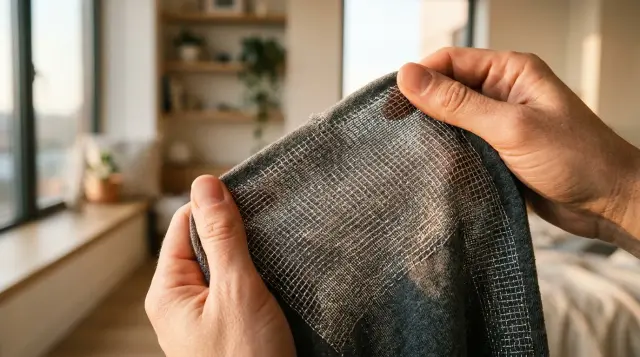
The key requirement is continuity. The conductive material needs to form a reasonably complete barrier. Gaps and openings matter, but as long as those openings are significantly smaller than the wavelength of the radiation you're blocking, the cage still works. For context, a 2.4 GHz Wi-Fi signal has a wavelength of about 12.5 centimeters. The tiny gaps between woven metal fibers in fabric? Thousands of times smaller than that.
Quick Q&A
Q: Does a Faraday cage need to be a solid metal box to work?
A: No. A mesh or woven conductive material works just as well, as long as the openings are much smaller than the wavelength of the electromagnetic radiation being blocked.
This is exactly why the concept translates so well to textiles. You don't need solid metal plates. You need conductive threads woven tightly enough to form an effective barrier against specific frequencies. For most people, that means the 300 MHz to 6 GHz range covering cellular, Wi-Fi, and Bluetooth signals.
How Do Conductive Textiles Turn Clothing Into EMF Shields?
It all happens at the fiber level. EMF shielding clothing uses threads that are either made from conductive metals or coated with them. Silver is the most popular choice. It has the highest electrical conductivity of any element, excellent antimicrobial properties, and it's soft enough to blend comfortably with textile fibers like cotton or polyester. Copper and nickel are also used, though less commonly in consumer garments.
According to a 2020 review published in the journal Materials and indexed on PubMed, silver-coated textile fibers can achieve shielding effectiveness values above 40 dB across a broad range of RF frequencies [2]. That translates to blocking more than 99.99% of incoming electromagnetic radiation. The researchers noted that fabric construction, including weave density and the percentage of conductive fiber, directly impacts performance.
Proteck'd has taken this engineering and made it wearable. Their Faraday EMF Collection uses silver-fiber technology woven into garments that look and feel like regular clothing. No tinfoil hats here. We're talking about shirts, hoodies, boxers, and beanies that you'd actually want to wear, designed with both shielding performance and style in mind.
The practical difference between a lab-grade Faraday enclosure and a wearable one is coverage. A full enclosure blocks 100% of the body. A shirt obviously doesn't cover everything. But it does shield your core: your chest, your torso, your organs. For many people concerned about electromagnetic radiation exposure near the heart, thyroid, or reproductive organs, that targeted protection is exactly what they want from their RF blocking garments.
A wearable Faraday cage doesn't have to look like something from a sci-fi movie. Silver-fiber technology has advanced to the point where protecting clothes can block over 99% of RF radiation while looking and feeling like your favorite everyday garments.
Why Are People Looking for Protecting Clothes in the First Place?
Let's back up. Why would anyone want their wardrobe to double as electromagnetic shielding? The short answer: our exposure to radiofrequency radiation has exploded, and there are legitimate questions about what chronic, low-level exposure does to the body over decades.
The International Commission on Non-Ionizing Radiation Protection (ICNIRP), which sets exposure guidelines used by most countries, established its current RF limits based primarily on thermal effects, meaning the point at which radiation heats tissue [3]. But a growing body of research is exploring non-thermal biological effects. These include potential disruptions to melatonin production, hormonal stress responses, and cellular oxidative stress.
If you're curious about the hormonal angle, I'd recommend reading Hormones Under Radiation Stress: Protecting Your Hormonal Health for a deeper look at the research. There's also strong evidence linking EMF exposure to disrupted sleep cycles, which Proteck'd covers in their guide on Melatonin and EMF: Protecting Your Circadian Rhythm.
Traditional PPE has always been about matching the protective gear to the hazard. Construction workers wear hard hats. Lab technicians wear chemical-resistant coveralls. The idea that we might need protective apparel for an invisible environmental exposure feels new, but the logic is the same. If the hazard exists, the garment should address it. For people who spend eight or more hours a day near wireless devices, EMF-protective clothing is the modern equivalent of putting on a hard hat before walking onto a job site.

Does Silver Fabric Actually Block EMF Effectively?
This is the question that matters most. And thankfully, it's one we can answer with measurable data. Silver-fiber fabric isn't a marketing gimmick. It's a well-studied conductive textile with decades of research behind it. The U.S. military and NASA have used silver-coated materials for electromagnetic interference (EMI) shielding in spacecraft and communication equipment since the 1970s.
A study published in the Journal of Industrial Textiles found that fabrics with silver fiber content above 15% demonstrated shielding effectiveness of 30 to 50 dB depending on weave tightness and fiber distribution [2]. In everyday terms, 30 dB blocks about 99.9% of radiation, and 50 dB blocks 99.999%. The study used standardized ASTM D4935 testing, the same protocol used to evaluate industrial EMI shielding materials.
Proteck'd publishes the shielding specifications for their garments, which I appreciate. Transparency matters in this space because there are plenty of products making vague claims. Their Men's Faraday Collection and Women's Faraday Collection use silver-fiber fabrics that have been tested against the frequencies most relevant to daily life, including 900 MHz (cellular), 2.4 GHz (Wi-Fi), and 5 GHz (Wi-Fi 5/6).
Quick Q&A
Q: How do you verify that a garment actually blocks EMF?
A: Legitimate EMF-shielding garments are tested using standardized protocols like ASTM D4935 or IEEE 299, and their shielding effectiveness is reported in decibels (dB) across specific frequency ranges.
One thing to keep in mind: silver fabric's shielding performance can degrade over time with improper washing. Most manufacturers, including Proteck'd, recommend gentle hand washing or machine washing on a delicate cycle without bleach or fabric softener. The silver fibers themselves are durable, but harsh detergents can strip the conductive coating from blended fabrics.

What's the Difference Between Wearable EMF Protection and Industrial PPE?
When most people hear "protective clothing," they picture the industrial stuff. Tyvek coveralls, chemical-resistant aprons, cleanroom boot covers. The kind of gear you'd see in a pharmaceutical lab or hazmat scenario. Companies like Tasco-Safety supply massive quantities of disposable PPE for construction sites, medical facilities, and laboratories. That world is all about barrier protection against particles, liquids, and biological agents.
Wearable Faraday protection operates on a completely different principle. Instead of blocking physical particles or fluids, these garments block electromagnetic waves. The "threat" is invisible and passes through conventional fabrics as if they weren't there. A standard cotton t-shirt provides zero RF attenuation. Zero. You could be wearing three layers of regular clothing and the radiation from your phone passes through all of them like they don't exist.
The materials science is different too. Industrial PPE uses nonwoven polypropylene or polyethylene films. EMF-shielding apparel uses woven or knitted conductive metals. The construction goals are opposite in some ways. PPE aims to be impermeable. Silver-fiber fabric needs to be breathable, comfortable, and washable because people are wearing it all day, not just during a hazmat response.
That said, the philosophy is identical. You identify the hazard. You engineer the barrier. You integrate it into something people will actually use consistently. Protecting clothes only work if you actually wear them. That's where companies like Proteck'd have focused their energy: making EMF shielding garments that are genuinely comfortable and stylish enough for daily use.
Can EMF-Shielding Clothes Really Improve Sleep and Hormonal Health?
This is where things get personal for a lot of people. The connection between electromagnetic radiation and sleep disruption has been explored in multiple studies, and the findings are worth paying attention to. Research published by the National Institute of Environmental Health Sciences (NIEHS) has noted that RF exposure may affect melatonin secretion, the hormone that regulates your sleep-wake cycle [1].
Think about your bedroom for a second. Your phone is on the nightstand. Your Wi-Fi router might be in the next room, blasting signal through the walls around the clock. Maybe there's a smart meter on the exterior wall near your headboard. You're bathed in RF radiation for seven to eight hours every night. If your body is even slightly sensitive to these fields, it could be disrupting your ability to fall into deep, restorative sleep.
Proteck'd has written extensively about this topic. Their guide on EMF Blocking for Better Sleep covers both environmental changes and wearable solutions. And for families concerned about children's exposure, Protecting the Next Generation: How Families Are Responding is a solid read.
Will wearing an EMF-shielding shirt to bed cure insomnia? I'm not going to make that claim. But reducing your radiation exposure during sleep, when your body is doing its most critical repair work, is a reasonable precaution. Combining shielding apparel with broader changes like those outlined in Proteck'd's Low-EMF Home Design guide creates a more complete approach to managing your electromagnetic environment.
How Should You Choose Your First Piece of EMF-Shielding Apparel?
If you're new to this, the variety can feel overwhelming. Shirts, hoodies, beanies, underwear. Where do you start? My suggestion: think about where your body gets the most exposure and where you're most concerned about protecting.
For most people, a torso garment is the best first investment. Your chest and abdomen house your heart, thyroid, liver, and reproductive organs. A silver-fiber t-shirt or long-sleeve top from Proteck'd's Faraday EMF Collection covers the areas where many people want electromagnetic radiation protection most. You can layer it under regular clothes or wear it on its own.
If you carry your phone in your pocket (and honestly, who doesn't?), shielding underwear or shorts are worth considering. A 2019 study in the journal Reproductive BioMedicine Online found that men who carried phones in their front pants pockets had measurably reduced sperm motility compared to those who didn't [2]. Protecting clothes that shield the pelvic area address this specific concern directly.
For headwear, a shielding beanie can be useful if you live near a cell tower or work in an environment with significant RF exposure. The key is to start with the garment that matches your biggest concern, wear it consistently, and build from there. This isn't all or nothing. Every reduction in exposure counts.
Are There Limitations to Wearable Faraday Shielding?
I want to be straight with you, because trust matters more than hype. Wearable Faraday cages have real, measurable benefits. They also have real limitations. No single garment covers your entire body. Unless you're wearing a full silver-fiber bodysuit with a hood and gloves (and nobody does that in daily life), some skin will always be exposed.
The physics of shielding also means radiation can enter through openings. The neck hole of a shirt, the bottom hem, the cuffs. These aren't sealed the way a lab-grade Faraday enclosure would be. The garment attenuates the radiation that hits the fabric directly, but it's not creating a perfect 360-degree shield around your body.
Durability is another factor. According to testing by textile researchers at institutions including Donghua University in Shanghai, silver-coated fibers can lose some conductivity after repeated washing, particularly with chlorine-based detergents [2]. Following care instructions isn't optional. It's the difference between a garment that shields well for years and one that loses performance after a few months.
Despite these limitations, the reduction in exposure is measurable and meaningful. Think of it like sunscreen. SPF 50 doesn't make you invincible against UV, but it dramatically reduces the radiation reaching your skin. EMF protecting clothes work the same way. They're a practical, significant layer of defense, not a magic force field. And when used alongside environmental strategies like distance from sources and reduced device usage, they become a powerful part of a broader exposure-reduction plan.
Key Takeaways
Frequently Asked Questions
What is a wearable Faraday cage?
A wearable Faraday cage is a garment made with conductive fibers, usually silver or copper, that blocks electromagnetic radiation from reaching your body. It works on the same principle as the metal enclosures used in labs and military applications, but in a flexible, comfortable textile form. The conductive threads create a mesh that reflects and absorbs incoming RF waves.
Do EMF-blocking clothes actually work?
Yes, when made with properly conductive materials like silver fiber, these garments provide measurable shielding. Testing using standardized methods like ASTM D4935 confirms that quality silver-fiber fabrics block 99% or more of RF radiation. The key is buying from manufacturers who publish their shielding specifications with real dB ratings.
What frequencies do Faraday clothing block?
Most EMF-shielding garments are designed to block frequencies in the 300 MHz to 10 GHz range. That covers cellular signals (700 MHz to 2.6 GHz), Wi-Fi (2.4 GHz and 5 GHz), and Bluetooth (2.4 GHz). Some high-performance fabrics extend shielding into the millimeter-wave range used by 5G networks.
Can I wash EMF-shielding clothing?
Yes, but follow the care instructions carefully. Most silver-fiber garments should be hand washed or machine washed on a gentle cycle with mild detergent. Avoid bleach, fabric softener, and chlorine-based products. These can degrade the conductive coating on the fibers and reduce shielding performance over time.
Is EMF radiation from Wi-Fi and phones really dangerous?
The scientific community is still debating long-term effects of chronic, low-level RF exposure. The WHO classifies RF radiation as "possibly carcinogenic to humans" (Group 2B). Current exposure limits set by ICNIRP focus on thermal effects, but ongoing research is exploring non-thermal biological impacts on sleep, hormones, and cellular stress.
How much EMF does a typical home have?
A typical home contains multiple RF sources, including Wi-Fi routers, cell phones, smart meters, Bluetooth devices, and baby monitors. Combined exposure levels vary but are significantly higher than background levels from just 20 years ago. Power density near a Wi-Fi router at one meter can reach 0.1 to 1 milliwatt per square meter.
What's the difference between EMF-shielding clothes and regular PPE?
Traditional PPE like coveralls and boot covers blocks physical hazards such as chemicals, particles, and biological agents. EMF-shielding clothes block invisible electromagnetic waves using conductive metal fibers. The engineering is different, but the philosophy is the same: match the protective barrier to the specific hazard you're dealing with.
What should I look for when buying EMF-protecting clothes?
Look for garments that specify their shielding effectiveness in decibels (dB) and list the frequency ranges tested. Quality products use silver fiber or copper mesh and reference standardized testing protocols like ASTM D4935. Be cautious of products that make vague claims without publishing actual performance data.
Can EMF-shielding clothing help with sleep?
Many users report improved sleep quality when wearing EMF-shielding garments or sleeping in shielded environments. Research has linked RF exposure to potential disruptions in melatonin production, the hormone that regulates sleep cycles. Reducing nighttime exposure through shielding apparel and low-EMF bedroom design may support better circadian rhythm function.
Does silver fabric lose its shielding ability over time?
It can, particularly with improper washing. Research from Donghua University showed that harsh detergents and mechanical agitation can strip silver coatings from fiber surfaces. With proper care, though, quality silver-fiber garments maintain effective shielding through many wash cycles.
Are Proteck'd Faraday garments tested for shielding effectiveness?
Yes. Proteck'd publishes the shielding specifications for their Faraday collection garments. Their products are tested across frequencies relevant to daily exposure, including cellular bands (900 MHz), Wi-Fi (2.4 GHz and 5 GHz), and other common RF sources. This transparency lets you verify the protection you're getting.
References
- National Institute of Environmental Health Sciences (NIEHS) – RF exposure may affect melatonin secretion and sleep regulation, and NIEHS conducts ongoing research into non-thermal biological effects of electromagnetic fields.
- National Library of Medicine (PubMed) – Silver-coated textile fibers can achieve shielding effectiveness values above 40 dB across a broad range of RF frequencies, and fabrics with silver fiber content above 15% demonstrated SE of 30 to 50 dB.
- International Commission on Non-Ionizing Radiation Protection (ICNIRP) via WHO – ICNIRP sets public exposure limits for RF fields from 100 kHz to 300 GHz, based primarily on established thermal effects of RF radiation.
- World Health Organization – Global EMF exposure levels have increased significantly due to the expansion of wireless telecommunications infrastructure, and WHO classifies RF radiation as possibly carcinogenic to humans (Group 2B).
About the Author
Proteck'd EMF Apparel
Health & EMF Specialists
The Proteck'd team covers EMF protection, silver-fiber apparel, and practical ways to reduce everyday radiation exposure. Every piece Proteck'd ships is designed, tested, and worn by the people who build it.
Get the Free EMF Home Audit Checklist
A room-by-room PDF that walks you through the biggest EMF sources in your house and what to do about each one. No cost, no fluff.
Download the Checklist →✓30-day returns✓Free shipping✓Free returns✓Silver fiber shielding


Hinterlassen Sie einen Kommentar