


Present-Moment Awareness: The Science-Backed Guide

Here's something that might surprise you: you could sleep a full eight hours tonight and still wake up feeling awful. The problem isn't always how long you sleep. It's how deeply you sleep. If you've ever searched for how to optimise deep sleep, good instinct, because deep sleep is the specific phase where your brain flushes toxins, your muscles repair, and your immune system recharges. Without enough of it, no amount of time in bed will rescue you.
Most adults spend only about 15 to 25 percent of the night in deep sleep, also called slow-wave sleep. That works out to roughly 60 to 110 minutes out of a full night [1]. And that percentage tends to shrink with age. By the time you're 60, you may be getting half the deep sleep you got at 25.
So what determines whether you sink into those restorative slow-wave cycles or spend the night skimming the surface? It comes down to a combination of factors: body temperature, stress hormones, what you ate, what you drank, how much light hit your eyes after sunset, and yes, whether you practiced any form of present-moment awareness before bed.
I've spent a lot of time reading sleep research, and the pattern is consistent. The people who reliably get more deep sleep aren't doing one magic thing. They're stacking small habits that all push in the same direction. This guide covers the strategies that actually have evidence behind them, along with some connections you might not expect, like the link between gut health and sleep architecture.
What Exactly Is Deep Sleep and Why Does It Matter?
Deep sleep, technically called NREM Stage 3 or slow-wave sleep, is the phase where your brain produces large, slow delta waves. Your heart rate drops. Your breathing becomes very regular. Your muscles go completely slack. It's extremely difficult to wake someone during this stage, and if you manage to, they'll feel groggy and confused for several minutes.
This is when human growth hormone gets released in its biggest pulse of the day. According to research published by the National Institutes of Health, roughly 75 percent of daily growth hormone secretion happens during slow-wave sleep [1]. That hormone drives tissue repair, muscle recovery, and cellular regeneration. Athletes who lose deep sleep recover slower. Full stop.
Deep sleep is also when your brain's glymphatic system ramps up. A 2013 study from the University of Rochester, published in Science, showed that the brain's waste-clearance system is up to 10 times more active during sleep than during waking hours. The primary target? Beta-amyloid, the protein associated with Alzheimer's disease. Less deep sleep means less cleanup.
Quick Q&A
Q: How much deep sleep should I get per night?
A: Healthy adults typically need 1 to 2 hours of slow-wave sleep per night, which represents about 15 to 25 percent of total sleep time.
Memory consolidation is the other major job happening here. During deep sleep, your hippocampus replays the day's experiences and transfers them into long-term storage in the neocortex. A 2010 study by Harvard Medical School researchers showed that participants who got adequate slow-wave sleep performed significantly better on memory tasks the next day compared to those whose deep sleep was disrupted. If you're studying for an exam or learning a new skill, your deep sleep is doing half the work for you.
What's Actually Blocking Your Deep Sleep?
Before we talk solutions, let's talk sabotage. Most people who aren't getting enough restorative sleep aren't missing some exotic supplement. They're doing something that actively suppresses their slow-wave cycles.
Cortisol is the number one offender. Your cortisol should follow a predictable arc: highest in the morning, gradually declining through the day, bottoming out around midnight. But chronic stress, late-night work emails, doomscrolling, and even intense evening exercise can keep cortisol elevated well past sundown. When cortisol stays high, your nervous system stays in a sympathetic (fight-or-flight) state, and your brain simply won't drop into deep delta-wave territory. A 2015 review in Sleep Medicine Reviews confirmed that elevated evening cortisol is directly correlated with reduced slow-wave sleep duration.
Alcohol is the sneaky one. A nightcap might help you fall asleep faster, but it fragments the second half of your night and dramatically cuts deep sleep. Research from the London Sleep Centre found that even moderate alcohol consumption (two drinks) decreased restorative sleep by nearly 24 percent. You feel like you slept. Your brain missed its repair window.
Temperature matters more than most people realize. The National Sleep Foundation recommends keeping your bedroom between 60 and 67 degrees Fahrenheit for optimal sleep architecture [2]. When your core body temperature can't drop enough, your body struggles to initiate and maintain slow-wave sleep. Think about the last time you tried to sleep in a stuffy hotel room. You probably tossed, turned, and woke up feeling wrecked. That's disrupted deep sleep in action.
Then there's screen exposure. Blue light from phones and laptops suppresses melatonin, which delays sleep onset and compresses your early sleep cycles, right when deep sleep is most concentrated. If you're looking for practical ways to manage this, I'd recommend checking out How to Reduce Screen Time: Step by Step for a realistic approach that doesn't require going full Luddite.
Deep sleep isn't a luxury or a nice-to-have. It's the phase where your brain clears toxins, your muscles rebuild, and your immune system reloads. Every strategy in this guide points to the same goal: getting your body calm enough, cool enough, and undisturbed enough to sink into those slow delta waves.
How Does Mindfulness Meditation Improve Deep Sleep?
Here's where present-moment awareness enters the picture, and the evidence is surprisingly solid. A landmark 2015 study published in JAMA Internal Medicine randomly assigned 49 older adults to either a mindfulness meditation program or a sleep hygiene education class. The mindfulness group showed significantly greater improvements in sleep quality, measured by the Pittsburgh Sleep Quality Index, with reductions in insomnia, fatigue, and depression symptoms [3].
Why would sitting quietly and paying attention to your breath improve something as physiological as slow-wave sleep? It comes back to cortisol and the autonomic nervous system. Mindfulness practice activates the parasympathetic (rest-and-digest) branch of your nervous system. According to research from Johns Hopkins University, consistent meditation practice reduces overall cortisol levels, creating the exact hormonal environment your brain needs to enter deep sleep.
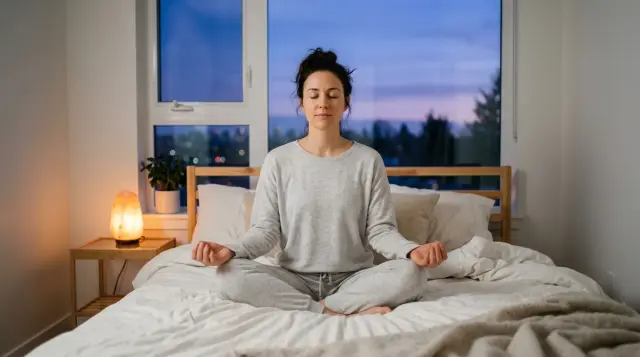
You don't need to meditate for an hour. Even 10 to 15 minutes of guided body-scan meditation or focused breathing before bed can shift your nervous system out of that wired-but-tired state. Personally, I've found the most effective approach is doing it in bed, lights off, as the very last thing before sleep. No phone afterward. No "one more thing" to check.
What's interesting is that the benefits compound. Occasional meditation helps, but the 2015 JAMA study participants practiced for six weeks before the biggest differences showed up [3]. Think of it as training your nervous system to downshift on command. The more you practice, the faster and more reliably you drop into that calm, parasympathetic state at bedtime. If you want a broader checklist for your entire nighttime routine, How to Sleep Better Tonight: The Complete Checklist puts it all together.

Can Your Bedroom Environment Make or Break Slow-Wave Sleep?
Yes. And this is one of the easiest places to start if you're trying to optimise deep sleep. Your bedroom environment sends signals to your brain about whether it's safe to fully power down. Noise, light, temperature, and even electromagnetic fields all play a role.
Let's start with temperature, since it has the biggest impact. Dr. Matthew Walker, neuroscientist and author of "Why We Sleep," has stated repeatedly that your body needs to drop its core temperature by about 2 to 3 degrees Fahrenheit to initiate sleep. A cool room (65 to 68°F) helps this happen naturally. If you run hot, consider breathable bedding and moisture-wicking sleepwear. The Proteck'd Faraday Health Collection uses silver-infused fabric that's naturally temperature-regulating and antimicrobial, which is a smart choice for people who tend to overheat at night.
Light pollution is the next big factor. Even a small amount of ambient light can suppress melatonin production and lighten your sleep architecture. A 2022 study from Northwestern University, published in the Proceedings of the National Academy of Sciences, found that sleeping with even moderate light exposure increased heart rate, reduced heart rate variability, and impaired glucose metabolism the next morning. Blackout curtains or a quality sleep mask aren't optional if you live in a city.
Electromagnetic fields are a less obvious concern, but growing research suggests they can affect sleep quality. A 2019 review in the International Journal of Environmental Research and Public Health examined studies linking EMF exposure from electronics to disrupted circadian rhythms. If you're curious about the mechanisms, the EMF Health Benefits page breaks it down clearly. At minimum, keeping your phone out of the bedroom (or at least on airplane mode) is a free upgrade to your sleep environment.

Does What You Eat Affect How Deeply You Sleep?
More than you'd think. Your gut and your brain are in constant communication through the vagus nerve, and the health of your microbiome directly influences neurotransmitter production, including serotonin, which is a precursor to melatonin. According to the American Academy of Sleep Medicine, roughly 95 percent of the body's serotonin is produced in the gut. If your gut is inflamed or out of balance, your sleep chemistry takes a hit.
A 2019 study from Nova Southeastern University, published in PLOS ONE, found that greater microbiome diversity was positively correlated with better sleep efficiency and longer total sleep time. Participants with less diverse gut bacteria had more fragmented sleep and less time in restorative stages. If you haven't given your gut much thought, Gut Health: The Complete Guide is a solid starting point.
Specific nutrients matter too. Magnesium plays a role in activating the parasympathetic nervous system and regulating melatonin. A 2012 study published in the Journal of Research in Medical Sciences found that magnesium supplementation (500 mg daily) significantly improved sleep quality, sleep time, and melatonin levels in elderly participants with insomnia. Good food sources include pumpkin seeds, dark chocolate, spinach, and almonds.
Quick Q&A
Q: Should I avoid eating before bed to get more deep sleep?
A: You don't need to fast, but avoid large, heavy meals within 2 to 3 hours of bedtime, as active digestion raises core body temperature and can reduce time spent in slow-wave sleep.
Caffeine deserves its own mention. According to a 2013 study published in the Journal of Clinical Sleep Medicine by researchers at Wayne State University, caffeine consumed even six hours before bedtime reduced total sleep by more than one hour [4]. And here's the kicker: participants weren't always aware of the disruption. They felt like they slept fine, but their sleep monitors told a different story. If you're serious about increasing restorative sleep, a hard caffeine cutoff by 2 p.m. is one of the simplest changes you can make.
How Does Exercise Timing Affect Deep Sleep Cycles?
Exercise is one of the most reliably effective ways to increase deep sleep, but timing matters. A 2017 meta-analysis published in Sports Medicine reviewed 66 studies and concluded that regular exercise, particularly aerobic exercise, significantly increased slow-wave sleep duration in adults. The effect was strongest for people who exercised consistently over several weeks, not just occasionally.
Morning and afternoon workouts tend to produce the best results for nightly recovery. Why? Vigorous exercise raises cortisol and core body temperature, both of which need to fall before you can enter deep sleep. Working out within two to three hours of bedtime can delay the temperature drop your body needs. That said, a 2018 study in Sports Medicine found that low-to-moderate evening exercise didn't significantly impair sleep quality for most people. So a gentle yoga session or a walk after dinner is probably fine. A high-intensity CrossFit class at 9 p.m.? Not so much.
Here's a real-world example. I know a guy who switched his gym sessions from 7 p.m. to 7 a.m. and tracked his sleep with an Oura ring for three months. His deep sleep percentage went from around 12 percent to consistently hitting 18 to 20 percent. Same workouts, same duration, wildly different results. His circadian rhythm finally had room to do its thing.
If you're exercising outdoors, you're getting a bonus: natural light exposure in the morning or midday helps anchor your circadian rhythm, which further supports healthy sleep architecture. Pair that outdoor workout with clothing that supports your body rather than working against it. The Women's Wellness Collection from Proteck'd, for instance, combines EMF-shielding silver fabric with athletic comfort, so you're not just protecting your skin from the sun but also reducing ambient electromagnetic radiation exposure during your workout.
Why Does Unplugging in the Evening Change Sleep Architecture?
We've touched on blue light and screens, but the issue goes deeper than melatonin suppression alone. The content you consume matters as much as the light source delivering it. Scrolling social media triggers dopamine micro-hits that keep your brain in a reward-seeking state. Reading stressful news elevates cortisol. Even watching an exciting TV show raises physiological arousal markers.
A 2014 study from Brigham and Women's Hospital, published in the Proceedings of the National Academy of Sciences, compared participants who read on an iPad before bed with those who read a printed book. The iPad group took longer to fall asleep, had reduced evening melatonin secretion, delayed circadian rhythm timing, and reported feeling sleepier the next morning despite the same time in bed. Their REM sleep was reduced, and their overall sleep quality suffered.
The practical solution isn't to throw your phone in a lake. It's to create a buffer zone. An hour of low-stimulation activity before bed, reading a physical book, doing some gentle stretching, journaling, or practicing that mindfulness meditation we talked about, gives your nervous system time to transition. For a step-by-step approach to building this habit, Unplugging: How to Actually Do It walks you through realistic strategies.
If you genuinely need to use devices in the evening for work, at minimum use a blue-light filter (Night Shift on iPhone, Night Light on Windows), reduce screen brightness, and switch to dark mode. These won't eliminate the problem, but they blunt the worst of the melatonin suppression. And keep the phone out of the bedroom entirely when you finally go to sleep. That single change can improve your ability to optimise deep sleep more than most people expect.
How to Optimise Deep Sleep: A Practical Nightly Protocol
Let's pull this all together into something you can actually use tonight. This isn't about perfection. It's about stacking the habits with the strongest evidence behind them. Think of each one as a dial you can turn, not a switch you have to flip.
First, set a consistent bedtime and stick to it within a 30-minute window, even on weekends. Your circadian clock rewards consistency. A study from Harvard's Division of Sleep Medicine found that irregular sleep schedules were associated with lower academic performance and worse metabolic health, independent of total sleep duration. Your body can't optimise its rest cycles if it doesn't know when rest is coming.
Second, cut caffeine by early afternoon. Remember the Wayne State University finding: six hours isn't enough buffer for some people [4]. If you're sensitive, noon might be your cutoff. Third, cool your bedroom to 65 to 68°F. Fourth, dim lights in your home starting about an hour before bed. Use warm-toned bulbs or candles if you want to go all in.
Fifth, practice 10 to 15 minutes of mindfulness before sleep. A body-scan meditation or a simple breath-counting exercise works well. Sixth, get your phone out of the bedroom. If you use it as an alarm, buy a $10 alarm clock. Seventh, eat your last meal at least two to three hours before bed, and include magnesium-rich foods when you can.
You don't have to do all seven at once. Pick two or three that feel most relevant, try them for two weeks, and track how you feel. If you want to go deeper on the full picture, including sleep posture, mattress considerations, and napping strategy, How to Sleep Better Tonight: The Complete Checklist covers everything in one place.
Key Takeaways
Frequently Asked Questions
How much deep sleep do I need each night?
Most healthy adults need about 1 to 2 hours of deep sleep per night, roughly 15 to 25 percent of total sleep time. The exact amount varies by age and individual physiology. If you're consistently waking up feeling unrested despite sleeping 7 to 8 hours, low deep sleep duration is a likely culprit.
How can I tell if I'm not getting enough deep sleep?
Common signs include waking up groggy despite adequate sleep time, difficulty concentrating, increased cravings for sugary or high-carb foods, and slow recovery from workouts. Wearable sleep trackers like Oura Ring, Whoop, or Fitbit can estimate your deep sleep percentage, though they're not as accurate as a clinical polysomnography test.
Does alcohol help or hurt deep sleep?
It hurts deep sleep significantly. While it can make you fall asleep faster, it fragments your sleep cycles during the second half of the night and reduces slow-wave sleep by up to 24 percent even at moderate doses. If you're trying to optimise deep sleep, limiting alcohol, especially within 3 hours of bedtime, is one of the most impactful changes you can make.
Can mindfulness meditation really improve sleep quality?
Yes, and the research backs it up. A 2015 randomized controlled trial published in JAMA Internal Medicine found that a six-week mindfulness meditation program significantly improved sleep quality in older adults compared to a sleep hygiene education group. Mindfulness works by lowering cortisol and activating the parasympathetic nervous system, both of which your body needs to enter slow-wave sleep.
What is the best bedroom temperature for deep sleep?
The National Sleep Foundation recommends 60 to 67°F (15.5 to 19.4°C) for optimal sleep. Your body needs to drop its core temperature by 2 to 3 degrees Fahrenheit to initiate and maintain deep sleep, and a cool room makes that process easier. If your bedroom runs warmer than 70°F, that alone could be cutting into your deep sleep percentage.
Does magnesium supplementation help with deep sleep?
Research suggests it can, especially for people with low magnesium levels. A 2012 study in the Journal of Research in Medical Sciences found that 500 mg of magnesium supplementation improved sleep quality, sleep time, and melatonin levels in elderly insomnia patients. Magnesium glycinate and magnesium threonate are the forms most commonly recommended for sleep.
How does caffeine affect deep sleep specifically?
Caffeine blocks adenosine receptors in the brain, which disrupts your body's natural sleep pressure. A 2013 study from Wayne State University found that caffeine consumed six hours before bed reduced total sleep time by over an hour and significantly decreased slow-wave sleep. Many people don't feel the impact subjectively, but their sleep trackers show clear disruption.
Is it possible to get too much deep sleep?
It's extremely rare in healthy adults and usually not something to worry about. If you're consistently spending more than 25 percent of sleep time in slow-wave stages, it could mean your body is compensating for previous sleep debt or recovering from illness or intense physical training. Persistently excessive deep sleep paired with ongoing fatigue warrants a conversation with a sleep medicine specialist.
Can EMF exposure from electronics affect my sleep?
Emerging research suggests it can. Several studies have linked nighttime EMF exposure from phones, Wi-Fi routers, and other electronics to disrupted melatonin production and altered sleep architecture. The research is still evolving, but keeping electronics out of the bedroom or using EMF-shielding products is a low-cost, low-risk strategy that many people report benefits from.
Does deep sleep decrease with age?
Yes, and significantly. Deep sleep starts declining in your late 20s, and by age 60, many people get 50 percent or less of the deep sleep they got as young adults. This decline is associated with reduced growth hormone secretion, slower recovery, and increased risk of neurodegenerative diseases. The strategies in this guide, particularly consistent bedtime, cool temperature, and mindfulness, become even more important as you get older.
References
- National Institutes of Health (National Library of Medicine) – Deep sleep comprises approximately 15 to 25 percent of total sleep time and is associated with the largest pulse of daily growth hormone secretion.
- National Sleep Foundation via Mayo Clinic – The ideal bedroom temperature for sleep is between 60 and 67 degrees Fahrenheit.
- JAMA Internal Medicine – A 2015 randomized trial found that mindfulness meditation significantly improved sleep quality compared to a sleep hygiene education control group.
- Journal of Clinical Sleep Medicine (PubMed) – Caffeine consumed six hours before bedtime significantly reduced total sleep time by more than one hour.
About the Author
Proteck'd EMF Apparel
Health & EMF Specialists
The Proteck'd team covers EMF protection, silver-fiber apparel, and practical ways to reduce everyday radiation exposure. Every piece Proteck'd ships is designed, tested, and worn by the people who build it.
Protect Yourself Today
Proteck'd Faraday and silver fiber apparel is engineered to shield your body from everyday EMF exposure. Built for real life, tested for real results.
Shop EMF Protection →✓30-day returns✓Free shipping✓Free returns✓Silver fiber shielding


Hinterlassen Sie einen Kommentar