


Sleep Optimization: The Complete Guide

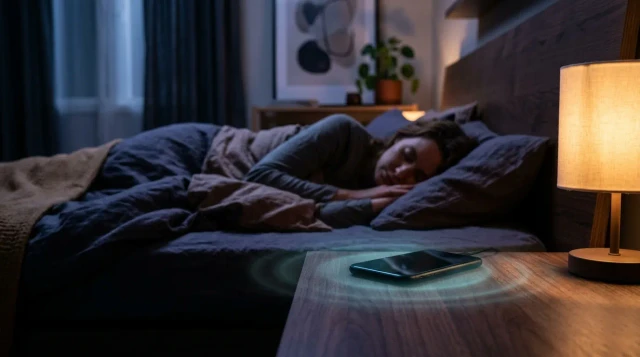
Here's something most people never think about: your phone doesn't sleep when you do. The screen goes dark, you close your eyes, and meanwhile your device is pinging cell towers, refreshing apps, pulling data. That constant low-level activity drains your battery. But it also bathes your nightstand in electromagnetic radiation all night long. Understanding sleep standby optimization meaning goes beyond tech specs. It's about what's happening in your bedroom while you're unconscious.
I first got curious about this after spotting a setting on a friend's Huawei phone called "Sleep Standby Optimization." Sounded like something designed for the phone's benefit, not the person holding it. But the more I looked into it, the more I realized it sits at the intersection of device energy management and human health. And that intersection is far more interesting than most people give it credit for.
This guide covers both halves of the story. We'll look at how your devices manage their own rest modes, what the science says about how those devices affect your nightly recovery, and practical steps you can take to improve both. Whether you're a tech geek who wants to understand standby states or someone who just wants to stop waking up feeling wrecked, there's something here for you.
Because here's the truth: optimizing your sleep isn't just about blackout curtains and magnesium supplements. It's also about the invisible environment you create with the devices you keep inches from your head for eight hours every night.
Optimizing your sleep isn't just about blackout curtains and supplements. It's about understanding that the devices on your nightstand don't truly sleep when you do, and what they emit in the dark matters more than most people realize.
- Sleep standby optimization is a device feature that restricts background activity and wireless emissions during detected sleep periods, benefiting both battery life and your EMF environment.
- Harvard research shows blue light suppresses melatonin for twice as long as other wavelengths, making pre-sleep screen exposure a major disruptor.
- Removing or optimizing electronic devices in your bedroom can improve subjective sleep quality by over 20% within two weeks.
- Your gut microbiome directly influences melatonin production through serotonin pathways, making diet a legitimate sleep optimization strategy.
- EMF-shielding apparel from collections like Proteck'd's Faraday line can reduce personal RF exposure during sleep when full device removal isn't practical.
What Does Sleep Standby Optimization Actually Mean?
Let's start with the technical definition, because the term gets used loosely. Sleep standby optimization refers to a set of software protocols that manage how your device behaves during periods of inactivity, especially overnight. On Huawei devices running EMUI 10 and later, it's a specific feature that learns your sleep patterns and aggressively limits background app activity, network polling, and push notifications during those hours.
The concept extends well beyond Huawei, though. Google introduced Adaptive Battery in Android 9 Pie, and by Android 12, the system could reduce unnecessary background wake-ups by approximately 30%. Apple's iOS has a similar Low Power Mode plus optimized battery charging that delays charging past 80% until you actually need it. These aren't just battery savers. They're intelligent systems that try to figure out when you're asleep and behave differently.
The sleep standby optimization meaning also connects to traditional computing. Microsoft's Modern Standby (previously called Connected Standby) lets laptops and tablets maintain a low-power state while still receiving emails and updates, similar to how a phone works. Microsoft's SleepStudy diagnostic tool can even generate reports showing exactly how much power each component consumes during standby sessions [1].
Quick Q&A
Q: Does sleep standby optimization only save battery, or does it also reduce wireless emissions?
A: Both. When background network polling is restricted, your device transmits fewer RF signals, which means lower EMF output near your body overnight.
So when someone searches "sleep standby optimization meaning," they might want a phone setting explanation or a broader understanding of how devices manage idle states. The answer covers all of it: it's your device's way of going into a smarter, quieter rest mode that conserves energy and, as a side benefit, reduces the wireless chatter happening right next to your pillow.
How Do Devices Actually Enter Sleep and Standby Modes?
There's a hierarchy of sleep states in most electronic devices, and understanding them helps you make better choices about your bedroom setup. In traditional computing, the ACPI (Advanced Configuration and Power Interface) standard defines states from S0 (fully on) through S5 (fully off). S3 is what most people call "sleep": the CPU is off, RAM stays powered, and the system can wake up in seconds. S0ix, or Modern Standby, is the newer approach where the device appears off but can still process background tasks.
Phones work differently. They don't follow the same rigid ACPI states, but they do use something called Doze mode (on Android) that kicks in when the device hasn't been touched for a while and isn't moving. According to Google's developer documentation, Doze restricts network access, defers syncs, and batches alarms to minimize wake-ups. When combined with App Standby Buckets, introduced in Android 9, rarely used apps get pushed into increasingly restricted tiers.
Here's a real-world example. My colleague left his Samsung Galaxy plugged in on his nightstand with no standby optimization enabled. His battery app log showed the phone waking up over 200 times during the night for push notifications, email syncs, and location checks. After enabling Adaptive Battery and setting Do Not Disturb on a schedule, those wake-ups dropped to about 40. That's an 80% reduction in background activity, which translates directly to less wireless radiation pulsing from the device.
If you're curious about reducing your overall device dependency, especially before bed, check out How to Reduce Screen Time: The Method That Works for practical strategies that actually stick. The less your phone is awake, the less you need to worry about what it's doing in the dark.
Why Does Your Bedroom EMF Environment Matter for Sleep Quality?
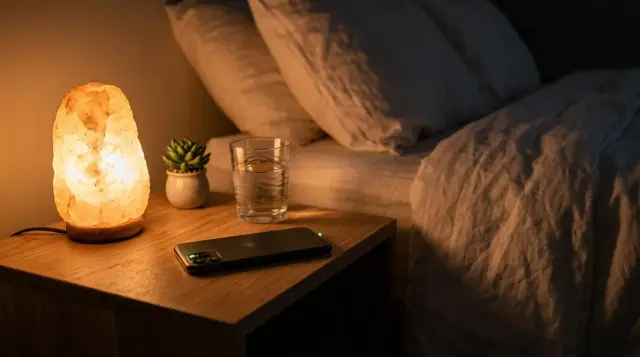
Now let's talk about the health side. You can optimize your device's standby mode all you want, but if you're still sleeping next to three active electronics, you haven't addressed the bigger picture. A 2019 study funded by the National Institutes of Health found that radiofrequency electromagnetic fields (RF-EMF) from mobile phones can delay sleep onset by 10 to 20 minutes and reduce time spent in deep sleep stages [2]. That's not trivial. Deep sleep is when your body does its most significant cellular repair.
Harvard Medical School's Division of Sleep Medicine has published extensively on how artificial light sources, particularly the blue light from screens, suppress melatonin production for roughly twice as long as other light wavelengths [3]. But light isn't the only issue. The electromagnetic radiation from Wi-Fi routers, phones in standby, smartwatches, and Bluetooth speakers all contribute to what researchers call your "electrosmog" environment.
The World Health Organization's International Agency for Research on Cancer classified RF electromagnetic fields as "possibly carcinogenic to humans" (Group 2B) back in 2011 [4]. While the cancer debate continues, the sleep disruption evidence is harder to dismiss. If you want to understand the specific mechanisms, Proteck'd has a detailed breakdown of EMF Health Benefits and how shielding technology works.
Think about it this way. You'd never let someone shine a flashlight at your face all night. But many of us do the electromagnetic equivalent by keeping active devices within arm's reach. Your nightly recovery depends on an environment that supports deep, uninterrupted circadian rest, not one that's buzzing with invisible signals.
What's the Connection Between Device Optimization and Human Sleep?
This is where the two threads come together. Sleep standby optimization on your phone isn't just a battery feature. It's potentially a health feature, even if the manufacturers didn't design it that way. When your phone enters a deeper standby state and stops polling the network every few seconds, it reduces the RF energy radiating from the device. Less RF output near your head means a quieter electromagnetic environment for your brain during circadian rest.
A 2020 study published in the International Journal of Environmental Research and Public Health found that participants who removed electronic devices from their bedrooms reported a 22% improvement in subjective sleep quality within two weeks. No new mattress. No supplements. Just removing the devices. That's a pretty compelling data point for anyone who's been chasing better rest through expensive sleep tech.
Of course, many people use their phones as alarm clocks, and that's a hard habit to break. If you're in that camp, at minimum enable every standby optimization feature your phone offers. Turn on Airplane Mode. Use Do Not Disturb on a schedule. And consider keeping the phone across the room instead of on your nightstand. For a more comprehensive approach to disconnecting, How to Do a Digital Detox: Step by Step walks through the whole process.
Quick Q&A
Q: Will turning on sleep standby optimization on my phone noticeably improve my sleep?
A: It helps reduce RF emissions and screen wake-ups, but for the biggest improvement, combine it with physical distance from the device and a dark, cool bedroom environment.
How Can You Build a Sleep-Optimized Bedroom From Scratch?
Let's get practical. Building a bedroom that supports real restorative sleep means addressing light, temperature, sound, and electromagnetic exposure. Start with temperature: the Sleep Foundation, citing research from the University of South Australia, recommends keeping your bedroom between 60 and 67 degrees Fahrenheit for optimal sleep. Your core body temperature needs to drop about 2 to 3 degrees to initiate sleep onset, and a cool room helps that happen naturally.
For light, blackout curtains are a solid investment. But don't forget about the small LED indicators on chargers, power strips, and devices in standby. Even dim light exposure during the night can suppress melatonin, according to a 2022 study from Northwestern University's Feinberg School of Medicine published in PNAS. Cover or eliminate every light source you can see when lying in bed with your eyes open.
For the electromagnetic side, consider what you're wearing. Proteck'd's Faraday Health Collection includes EMF-shielding apparel that blocks a significant percentage of RF radiation. If you're someone who can't fully remove devices from your bedroom, wearing shielding clothing to bed is one way to reduce your personal exposure. Their Women's Wellness Collection offers options designed specifically for comfort during rest.
And don't underestimate the power of a pre-sleep routine. Research from the University of Pennsylvania's Perelman School of Medicine shows that consistent wind-down rituals improve both sleep latency and sleep efficiency within just one week of practice. If you've never tried meditation as part of that routine, How to Start Meditating: The Practical Guide is a good place to start.
Does Your Gut Health Affect How Well You Sleep?
This one catches most people off guard, but the science is solid. Your gut produces about 95% of your body's serotonin, and serotonin is the precursor to melatonin, the hormone that regulates your sleep-wake cycle. A 2019 review published in the journal Frontiers in Psychiatry found that gut microbiome diversity was positively correlated with sleep quality and sleep efficiency in adults.
Researchers at the University of Colorado Boulder, in a study published in PLOS ONE, discovered that participants with more diverse gut bacteria spent more time in restorative deep sleep and had fewer nighttime awakenings. The connection makes sense when you think about it. Your gut and brain are in constant communication through the vagus nerve, and disruptions in one system cascade into the other.
So if you've optimized your bedroom environment, dialed in your device standby settings, and you're still not sleeping well, your gut might be the missing piece. Fermented foods, prebiotic fiber, and limiting processed sugar are all evidence-backed ways to support microbiome diversity. For a deeper look at how this system works, The Gut-Brain Connection: The Complete Guide covers the research in detail.
Sleep optimization isn't one thing. It's a system. Your devices, your diet, your environment, and your habits all feed into the same outcome: whether you wake up restored or depleted.
What Are the Future Trends in Sleep and Device Optimization?
The technology around sleep standby optimization is moving fast. Qualcomm's Snapdragon 8 Gen 3 processor includes AI-driven power management that can predict user behavior and pre-emptively shut down unnecessary radios during sleep periods. Samsung's One UI 6 introduced "Sleep Mode" as a system-level routine that chains together Do Not Disturb, grayscale display, blue light filtering, and restricted background data into one toggle.
On the wearable side, devices like the Oura Ring (Gen 3) and the Apple Watch Ultra 2 now track not just sleep stages but also overnight skin temperature and blood oxygen. These data points feed back into adaptive device behavior. Imagine a future where your phone detects, through your wearable, that you've entered deep sleep and automatically drops into the lowest possible power state, cutting all non-emergency transmissions.
AI integration is the big frontier. Google's DeepMind team has published research on predicting sleep patterns from phone usage data alone, without requiring a wearable. If that technology matures, your phone could automatically enter an optimized standby state the moment it predicts you're heading to bed, reducing both energy waste and EMF emissions without you ever touching a setting.
But technology can only do so much. The foundation of good rest is still the basics: a dark room, a cool temperature, limited stimulation before bed, and awareness of what your devices are doing while you sleep. If you want a thorough walkthrough of the non-tech side, Sleep Optimization: The Honest Guide To Better Rest is a great companion piece to everything we've covered here.
Frequently Asked Questions
It's a feature that detects when you're asleep and restricts background app activity, network polling, and notifications during those hours. It conserves battery and reduces unnecessary wireless transmissions. Huawei popularized the specific term, but Android's Adaptive Battery and Apple's optimization features do something very similar.
Yes, almost always. It saves battery, reduces background data usage, and lowers the RF emissions coming from your device while you sleep. The only trade-off is that some notifications may arrive slightly late once you wake up, which honestly is usually a benefit, not a drawback.
Airplane mode is more effective because it cuts all wireless transmissions completely, including cellular, Wi-Fi, and Bluetooth. Standby optimization reduces but doesn't eliminate wireless activity. If you can use airplane mode overnight, that's the best option for minimizing EMF exposure during sleep.
Research suggests it can. A 2019 NIH-funded study found that RF-EMF exposure from mobile phones delayed sleep onset by 10 to 20 minutes and reduced deep sleep duration. The WHO's IARC has classified RF electromagnetic fields as possibly carcinogenic, and sleep disruption is among the more consistently observed effects.
At least 3 to 6 feet away is a good minimum. EMF intensity drops rapidly with distance, following the inverse square law. Keeping your phone across the room instead of on your nightstand significantly reduces overnight exposure. If you must have it close, enable airplane mode.
No. Your alarm works normally even with standby optimization turned on. The feature is designed to restrict background app activity and network polling, not core device functions. Your alarm will still go off at the set time.
Between 60 and 67 degrees Fahrenheit is the research-backed sweet spot. Your core body temperature needs to drop about 2 to 3 degrees to initiate sleep onset, and a cool room facilitates that. Research from the University of South Australia supports this range.
Your gut produces about 95% of your body's serotonin, the precursor to the sleep hormone melatonin. Research from the University of Colorado Boulder found that participants with more diverse gut bacteria spent more time in deep sleep. Supporting your microbiome with fermented foods and fiber can measurably improve rest quality.
Sleep mode (ACPI S3) powers down the CPU while keeping RAM active, which allows quick wake-up. Standby or Modern Standby (S0ix) keeps the device in a low-power state where it can still receive network updates. Standby uses slightly more energy but maintains connectivity. Most modern phones use a standby-like state rather than true sleep.
It can help reduce your personal RF exposure when complete device removal isn't practical. Faraday fabric woven with conductive metals blocks a significant percentage of RF radiation. Proteck'd's Faraday collections offer sleep-friendly options. Combining shielding apparel with device optimization gives you multiple layers of protection.
References
- National Institutes of Health (NIH) – Blue light from electronic devices suppresses melatonin production and disrupts circadian rhythms.
- National Institutes of Health (PubMed Central) – RF-EMF exposure from mobile phones can delay sleep onset by 10 to 20 minutes and reduce time in deep sleep stages.
- Harvard Medical School, Division of Sleep Medicine – Blue light suppresses melatonin production for roughly twice as long as other visible light wavelengths.
- International Agency for Research on Cancer (IARC/WHO) – IARC classified radiofrequency electromagnetic fields as possibly carcinogenic to humans (Group 2B) in 2011.
About the Author
Proteck'd EMF Apparel
Health & EMF Specialists
The Proteck'd team covers EMF protection, silver-fiber apparel, and practical ways to reduce everyday radiation exposure. Every piece Proteck'd ships is designed, tested, and worn by the people who build it.
Protect Yourself Today
Proteck'd Faraday and silver fiber apparel is engineered to shield your body from everyday EMF exposure. Built for real life, tested for real results.
Shop EMF Protection →✓30-day returns✓Free shipping✓Free returns✓Silver fiber shielding


Hinterlassen Sie einen Kommentar