


The Best Biohacks: Ranked by Evidence

Here's a question I hear all the time: is best biohacks science backed dangerous, or can you actually upgrade your biology without putting your health on the line? The honest answer is both. Some biohacking strategies have decades of solid research behind them. Others could land you in the emergency room. Knowing the difference is everything, and that's exactly what this guide is for.
The biohacking movement has grown from a handful of Silicon Valley tinkerers into a global wellness phenomenon worth over $25 billion. CEOs, college students, weekend warriors. They're all tracking their sleep, stacking supplements, and sitting in ice baths. But popularity doesn't equal proof.
I've spent a lot of time sorting through the actual research. Not Instagram testimonials or podcaster anecdotes. The peer-reviewed studies, the randomized controlled trials, the long-term cohort data. What I found surprised me. The flashiest biohacks tend to have the weakest evidence, while the boring ones keep winning.
So let's rank these strategies honestly. From the evidence-backed health optimization techniques your doctor would happily endorse to the experimental fringe stuff that might genuinely hurt you, here's your no-nonsense guide to what works, what's hype, and what's flat-out risky.
Key Takeaways
What Counts as a Biohack in 2025?
Before we rank anything, let's define what we're actually talking about. Biohacking is a broad term covering any deliberate intervention designed to change your body's biology for better performance, health, or longevity. That's a huge umbrella. It includes everything from adjusting your bedtime to injecting unregulated peptides in your garage.
The National Institutes of Health doesn't use the word "biohacking" in its official literature, but researchers increasingly study the practices that fall under it. According to a 2023 survey published in Frontiers in Public Health, self-optimization strategies like sleep tracking, fasting protocols, and cold exposure are now practiced by over 20% of American adults under 45.
There are roughly five categories worth knowing. Lifestyle biohacks include sleep, exercise, and stress management. Nutritional biohacks cover fasting, elimination diets, and nutrigenomics. Supplement biohacks involve nootropics, adaptogens, and peptides. Technology biohacks use wearables, neurofeedback, and light therapy. And then there's the extreme end: DIY gene editing, blood transfusions, and implantable devices.
Quick Q&A
Q: Is biohacking just another word for healthy living?
A: Not exactly. Biohacking includes conventional healthy habits but extends into experimental territory like nootropic stacking, genetic self-experimentation, and wearable neurostimulation. Those go well beyond standard wellness advice.
The key distinction is intentionality and measurement. A biohacker doesn't just go for a run. They track HRV, measure lactate thresholds, and adjust training zones based on data. That obsession with quantification is what separates biohacking from simply "taking care of yourself." Whether that extra layer actually produces better outcomes is one of the questions we'll answer below.
Which Biohacks Have the Strongest Scientific Evidence?
Let's start at the top of the ranking with the self-optimization strategies backed by the most research. These are the interventions where the science isn't just promising. It's settled. And honestly? They're the ones most people skip because they sound too simple.
Sleep optimization sits at number one, and it's not close. According to the NIH, chronic sleep deprivation (fewer than 7 hours) is independently associated with higher rates of obesity, type 2 diabetes, cardiovascular disease, and depression [1]. One bad night of sleep measurably impairs glucose metabolism and immune function. If you're taking a dozen supplements but only sleeping six hours, you're building on a cracked foundation. For a deep look at this, check out our Sleep Optimization: The Science-Backed Guide.
Exercise and strength training come in as a very close second. A 2022 meta-analysis published in the British Journal of Sports Medicine, analyzing data from over 196,000 participants, found that 150 minutes of moderate physical activity per week reduces all-cause mortality risk by up to 31% [2]. Resistance training specifically preserves muscle mass, bone density, and metabolic health as you age. No pill, supplement, or gadget has ever come close to replicating those effects.
Time-restricted eating (often called intermittent fasting) earns a solid third place. A landmark 2019 review by Dr. Rafael de Cabo and Dr. Mark Mattson published in the New England Journal of Medicine documented benefits including improved insulin sensitivity, reduced inflammation, and enhanced cellular autophagy [3]. The 16:8 protocol (eating within an 8-hour window) is the most studied and shows consistent metabolic improvements across multiple populations. If you want more detail on the research, we covered it in The Best Biohacks: What the Research Shows.
These three form what I call the "boring trifecta" of biohacking. They're free, accessible, and have more evidence behind them than everything else on this list combined. If you're wondering whether best biohacks are science backed, these are the proof that yes, the most effective ones absolutely are.
Does Cold Exposure Actually Improve Your Health?
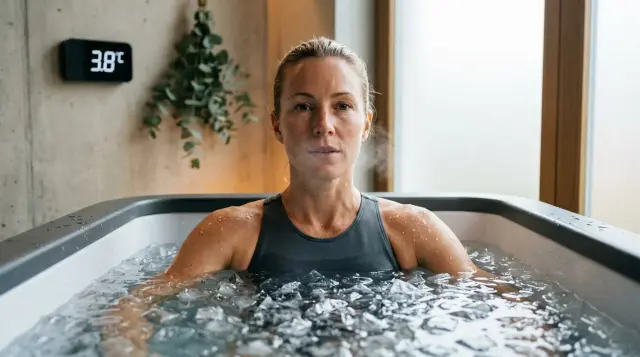
Cold exposure has become the poster child of modern biohacking, largely thanks to Wim Hof and the explosion of cold plunge culture. But does dunking yourself in 40-degree water actually do anything measurable? The answer: probably yes, though the evidence is more nuanced than the hype suggests.
Research from Dr. Susanna Søberg at the University of Copenhagen, published in 2021, found that regular cold water immersion increased brown adipose tissue activation and improved metabolic markers in healthy adults. A separate 2022 review in the International Journal of Circumpolar Health noted that habitual cold swimmers showed lower rates of upper respiratory infections compared to controls. These are real findings, not just anecdotes.
That said, the effect sizes are modest. Cold exposure doesn't burn as many calories as social media claims. The brown fat activation adds perhaps 100 to 200 extra calories per day under optimal conditions. And the risks are real for certain populations. People with cardiovascular conditions, Raynaud's syndrome, or undiagnosed arrhythmias face genuine danger from sudden cold immersion. The dose matters too. Two to three minutes at 50 to 59 degrees Fahrenheit seems to capture most of the benefits without excessive stress.
Heat exposure through sauna use actually has stronger long-term data. Research from Dr. Jari Laukkanen at the University of Eastern Finland, following over 2,300 men for 20 years, found that sauna use 4 to 7 times per week was associated with a 40% lower risk of all-cause mortality compared to once-per-week use [4]. That's a staggering number. If you had a pill that did that, everyone would take it.
The flashiest biohacks tend to have the weakest evidence, while the boring ones keep winning. Sleep, exercise, and smart nutrition have more research behind them than every trendy supplement and gadget combined.

Are Nootropics and Supplements Worth Taking?
This is where things get murky. The supplement and nootropic corner of biohacking is enormous, covering everything from basic vitamin D to exotic compounds like lion's mane mushroom extract and racetams. The evidence varies wildly depending on what you're taking.
Let's be clear about one thing first: the FDA has not approved any nootropic supplement for cognitive enhancement in healthy adults. That doesn't mean they're all useless, but it does mean the marketing often outpaces the science. Creatine monohydrate, for example, has surprisingly good evidence for both physical and cognitive performance. A 2018 review in Experimental Gerontology found it improved short-term memory and reasoning in healthy adults, particularly during sleep deprivation or stress.
Omega-3 fatty acids (EPA and DHA) have solid data supporting cardiovascular and brain health, with the American Heart Association recommending them based on multiple large-scale trials. Vitamin D supplementation makes sense for the estimated 42% of American adults who are deficient, according to data from the National Health and Nutrition Examination Survey. Magnesium glycinate has growing evidence for sleep quality improvement.
On the other hand, many trendy nootropic stacks combine ingredients with little to no human trial data, sometimes at doses that haven't been studied for safety. The gut health connection is also worth thinking about here. Many supplements affect your microbiome in ways we're only beginning to understand. For a fuller picture, our Gut Health: The Complete Guide covers the research on how your digestive system influences everything from mood to immunity.
How Do Wearables and Tech Biohacks Stack Up?
Wearable technology has become the gateway drug of biohacking. Devices like the Oura Ring, Whoop strap, and Apple Watch give you real-time data on heart rate variability, sleep stages, blood oxygen saturation, and recovery scores. But does having more data actually lead to better health outcomes?
A 2023 study from Stanford University's Snyder Lab found that wearable devices could detect early signs of illness (including COVID-19) up to nine days before symptoms appeared by monitoring resting heart rate and skin temperature deviations. That's genuinely useful. Continuous glucose monitors (CGMs), originally designed for diabetics, are now used by non-diabetic biohackers to understand their glycemic responses to specific foods. Research from Weizmann Institute of Science showed that glycemic responses are highly individual, meaning the same banana might spike one person's blood sugar while barely affecting another's.
The downside? Data overload can create anxiety. Some researchers have coined the term "orthosomnia" to describe people sleeping worse because they're so stressed about their sleep scores. If tracking becomes a source of stress rather than insight, it's counterproductive. The tech should serve you, not the other way around.
Quick Q&A
Q: Can wearable tech actually improve my health, or does it just generate data?
A: Wearables improve health outcomes only when you act on the data. Studies show that people who use wearable insights to adjust sleep timing, exercise intensity, or stress management see measurable benefits. But passive tracking without behavioral change produces negligible results.
One often overlooked tech consideration is EMF exposure. As we surround ourselves with more wireless devices, wearables, and smart home tech, the question of electromagnetic radiation exposure becomes more relevant. This isn't fringe science. The World Health Organization classifies radiofrequency electromagnetic fields as "possibly carcinogenic to humans" (Group 2B). If you're curious about practical steps to reduce exposure, the team at Proteck'd has put together a solid overview of EMF Health Benefits that's worth reading.
What About EMF Shielding as a Biohack?
EMF reduction is one of those health performance hacks gaining real traction in biohacking circles, and the reasoning is straightforward. We're exposed to more electromagnetic radiation now than at any point in human history. Between smartphones, Wi-Fi routers, Bluetooth devices, and 5G towers, our daily exposure levels would be unrecognizable to someone living even 30 years ago.
The research is still evolving, but there's enough signal in the data to take it seriously. A 2018 study from the National Toxicology Program (a U.S. government research program) found "clear evidence" of tumor development in male rats exposed to high levels of radiofrequency radiation similar to 2G and 3G cell phone emissions. The International Agency for Research on Cancer classified RF-EMF as Group 2B, meaning possibly carcinogenic, back in 2011, and the data has only accumulated since then.
You don't have to go off-grid to address this. Simple steps like keeping your phone out of your bedroom (which also helps your sleep, as we discuss in How to Sleep Better Tonight: The Complete Checklist) or using wired headphones instead of Bluetooth make a measurable difference. For people who want a more integrated approach, Proteck'd's Faraday Health Collection uses silver-infused fabrics that physically block a portion of EMF exposure while you go about your day.
What I like about EMF-shielding clothing is that it fits neatly into the "low risk, reasonable upside" category. The Women's Wellness Collection from Proteck'd, for example, looks like normal athleisure but incorporates Faraday-cage-inspired technology. You don't have to believe the worst-case EMF scenarios to appreciate the precautionary logic. Reducing ambient electromagnetic exposure, particularly during sleep, aligns with the broader evidence-based health optimization goal of minimizing unnecessary environmental stressors.
Which Biohacks Are Actually Dangerous?
Now for the part of the ranking nobody wants to hear. Some popular biohacks aren't just unproven. They're genuinely dangerous. And the line between bold self-experimentation and reckless behavior is thinner than most biohacking influencers admit.
DIY gene editing tops the danger list. The CRISPR-Cas9 system is powerful, but using it outside a controlled laboratory setting is enormously risky. In 2017, biohacker Josiah Zayner injected himself with CRISPR on a livestream. The FDA subsequently issued a statement warning that self-administration of gene therapy products is illegal and poses serious safety concerns, including infection, immune reactions, and off-target genetic mutations.
Unregulated peptide injections are another growing concern. Peptides like BPC-157 (for tissue healing) and various growth hormone secretagogues are widely available online, but most haven't completed Phase III human clinical trials. In 2024, the FDA sent warning letters to multiple companies selling unapproved peptides, noting potential risks including tumor growth stimulation and hormonal disruption. The question of whether best biohacks science backed or dangerous hinges exactly here: the compounds might have real biological activity, but without proper safety testing, you're running an uncontrolled experiment on yourself.
Young blood transfusions (parabiosis) captured headlines after startup Ambrosia charged $8,000 per treatment. The FDA issued a safety communication in 2019 stating there was "no proven clinical benefit" and warning of risks including allergic reactions, blood-borne infections, and transfusion-associated circulatory overload. The company shut down shortly after. The longevity hacks that actually work aren't the flashy ones. They're the consistent, evidence-based fundamentals we covered above.
How Should You Start Biohacking Safely?
If you've read this far, you might be wondering where to actually begin. My honest recommendation? Start boring. Get your sleep dialed in before you buy a single supplement. Master the basics of movement and nutrition before you invest in a $500 red light panel.
Here's a practical starting framework. First, track your sleep for two weeks using a free app or a basic wearable. Most people are shocked to discover how little quality sleep they're actually getting. Second, establish a consistent exercise routine that includes both cardiovascular work and resistance training. You don't need anything fancy. Dr. Peter Attia, one of the most respected voices in longevity medicine, emphasizes that zone 2 cardio (conversational pace) combined with heavy strength training forms the foundation of every serious health performance protocol.
Third, clean up your environment. This means reducing processed food intake, getting natural light exposure in the morning (which Dr. Andrew Huberman at Stanford has shown resets circadian rhythm), and minimizing exposure to unnecessary environmental stressors like excessive screen time and EMF. Our guide on Present-Moment Awareness: The Science-Backed Guide is a great companion resource for the stress management side of things.
Only after those foundations are solid should you experiment with supplements, fasting protocols, or temperature therapy. Think of biohacking like building a house. Nobody installs a skylight before pouring the foundation. And always, always consult a healthcare provider before adding anything that has systemic biological effects. The is best biohacks science backed dangerous question has a clear answer: the safest and most effective biohacks are the ones grounded in research, not hype.
Frequently Asked Questions
Q: Is biohacking safe for beginners?
Yes, as long as you start with lifestyle-based biohacks like sleep optimization, exercise, and time-restricted eating. These carry virtually no risk and have decades of clinical evidence. The danger comes from jumping to advanced interventions like unregulated peptides or DIY gene editing before you've mastered the fundamentals.
Q: What is the most science-backed biohack?
Consistent exercise. A 2022 British Journal of Sports Medicine meta-analysis found it reduces all-cause mortality by up to 31%. Sleep optimization is a very close second, with the NIH documenting clear links between sleep deprivation and cardiovascular disease, diabetes, and depression.
Q: Are nootropics safe to take every day?
It depends entirely on the specific compound. Well-studied options like creatine and omega-3 fatty acids have strong safety profiles for daily use. However, many marketed nootropic stacks contain ingredients that lack long-term human safety data. The FDA has not approved any nootropic supplement for cognitive enhancement in healthy adults.
Q: Does intermittent fasting actually work?
Yes, based on a comprehensive 2019 review published in the New England Journal of Medicine. Intermittent fasting, particularly the 16:8 protocol, has been shown to improve insulin sensitivity, reduce inflammation, and trigger cellular autophagy. That said, it's not suitable for everyone, including pregnant women, people with a history of eating disorders, or those on certain medications.
Q: Is cold exposure dangerous?
Cold exposure carries real risks for people with cardiovascular conditions, Raynaud's syndrome, or undiagnosed heart arrhythmias. For healthy individuals, brief cold immersion (2 to 3 minutes at 50 to 59 degrees Fahrenheit) appears safe and may offer modest metabolic and immune benefits. Always start gradually and never practice cold water immersion alone.
Q: Can EMF-shielding clothing actually block electromagnetic radiation?
Yes. Clothing made with silver-infused or metallic fabrics can measurably reduce electromagnetic radiation. The principle is based on Faraday cage technology, where conductive materials block or weaken the passage of electromagnetic fields. How well it works depends on fabric composition, weave density, and coverage area.
Q: What biohacks should I avoid?
Steer clear of DIY gene editing, unregulated peptide injections, and young blood transfusions. The FDA has explicitly warned against self-administered gene therapy and issued safety communications about unproven plasma transfusion services. Any biohack that bypasses clinical testing and involves introducing foreign substances into your body carries risks that haven't been properly measured.
Q: How much does biohacking cost?
The most effective biohacks are free or nearly free. Optimizing sleep, exercising regularly, practicing time-restricted eating, and managing stress cost nothing. Wearable tech ranges from $100 to $400. Supplement costs vary widely. Expensive interventions like hyperbaric oxygen therapy or IV nutrient infusions can run hundreds of dollars per session with far less evidence supporting them.
Q: Do wearable fitness trackers actually improve health outcomes?
They can, but only if you act on the data. Research from Stanford's Snyder Lab shows wearables can detect early illness markers, and studies indicate that people who adjust behavior based on wearable feedback see measurable improvements. Passive tracking without behavioral change produces negligible benefits and can even cause anxiety about metrics.
Q: Is sauna use a legitimate biohack for longevity?
Yes, and the evidence is strong. A 20-year Finnish study led by Dr. Jari Laukkanen, following over 2,300 men, found that sauna use 4 to 7 times per week was associated with a 40% lower risk of all-cause mortality compared to once-weekly use. The cardiovascular benefits are thought to come from improved endothelial function and reduced blood pressure.
References
- National Institutes of Health (National Heart, Lung, and Blood Institute) – Chronic sleep deprivation (fewer than 7 hours) is associated with higher rates of obesity, type 2 diabetes, cardiovascular disease, and depression.
- British Journal of Sports Medicine (BMJ) – A 2022 meta-analysis found that 150 minutes of moderate weekly physical activity reduces all-cause mortality risk by up to 31%.
- New England Journal of Medicine – A 2019 review by de Cabo and Mattson documented intermittent fasting benefits including improved insulin sensitivity, reduced inflammation, and enhanced autophagy.
- JAMA Internal Medicine (via Harvard T.H. Chan School of Public Health) – Sauna use 4-7 times per week was associated with a 40% reduction in all-cause mortality compared to once-per-week use in a 20-year Finnish cohort study.
About the Author
Proteck'd EMF Apparel
Health & EMF Specialists
The Proteck'd team covers EMF protection, silver-fiber apparel, and practical ways to reduce everyday radiation exposure. Every piece Proteck'd ships is designed, tested, and worn by the people who build it.
Get the Free EMF Home Audit Checklist
A room-by-room PDF that walks you through the biggest EMF sources in your house and what to do about each one. No cost, no fluff.
Download the Checklist →✓30-day returns✓Free shipping✓Free returns✓Silver fiber shielding


Hinterlassen Sie einen Kommentar