


The Perfect Sleep Environment: The Complete Checklist

Here's a stat that should make you pause: the CDC reports that one in three American adults doesn't get enough sleep. Not once in a while. Regularly. And most of us already know something's off, which is why "how to improve my sleep" remains one of the most searched health queries on the internet, year after year. You've probably tried a few things. A new pillow. Melatonin gummies. Maybe you downloaded a white noise app. And yet you still wake up feeling like you ran a marathon in your dreams.
The problem isn't a lack of good advice. There's plenty. The problem is that it comes in pieces. One article tells you to keep your room cool. Another says cut caffeine. A third talks about blue light. Nobody puts it all together into something you can follow from start to finish. That's what this how to reduce sleep optimization guide is built to do.
I spent weeks pulling together research from the National Institutes of Health, Harvard Medical School, and the World Health Organization to create one single checklist. Think of it as a protocol, not a pile of random tips. Each section builds on the last. By the time you're done reading, you'll have a clear picture of what your perfect sleep environment looks like and exactly how to build it.
We're going to cover sleep architecture (what's actually happening in your brain at night), circadian rhythm alignment, the environmental factors that matter most, behavioral protocols backed by strong science, and a few wildcards like EMF exposure that most guides skip entirely. Whether you're a shift worker, a new parent, or just someone who stares at the ceiling at 2 a.m. wondering why sleep feels so hard, this one's for you.
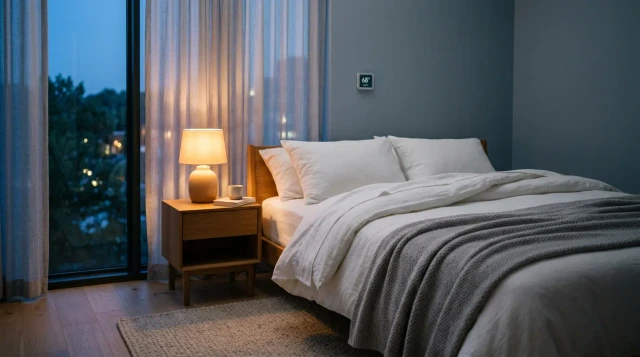
Your bedroom should be a cave: cool, dark, and quiet. If you can see your hand in front of your face, it's too bright. If you can hear the street, it's too loud. If you're kicking off the covers, it's too warm. Fix those three things before you buy a single supplement.
What Actually Happens When You Sleep? Understanding Sleep Architecture
Before you can fix something, you need to understand how it works. Sleep isn't one flat, continuous state. It's a cycle of distinct stages that repeat roughly every 90 minutes through the night. According to the National Institute of Neurological Disorders and Stroke, a healthy adult cycles through four stages: three stages of non-REM sleep, followed by one stage of REM sleep [1].
The first two non-REM stages are relatively light. Your heart rate drops. Your body temperature falls. Your brain starts producing sleep spindles, short bursts of electrical activity that researchers at UC Berkeley have connected to memory consolidation. Stage 3 is deep sleep, sometimes called slow-wave sleep, and this is where real physical restoration takes place. Human growth hormone is released. Tissue repair kicks in. Your immune system gets a serious boost.
Then comes REM sleep. Your brain is nearly as active as when you're awake, and this is where most vivid dreaming happens. REM is tied to emotional regulation and creative problem-solving. A 2017 study published in Nature Reviews Neuroscience confirmed that people deprived of REM sleep showed significant deficits in emotional processing and cognitive flexibility.
Quick Q&A
Q: How many sleep cycles does a healthy adult go through per night?
A: Most adults complete 4 to 6 full sleep cycles per night, each lasting approximately 90 minutes, for a total of 7 to 9 hours of rest.
Here's the part most people miss: the ratio of deep sleep to REM sleep shifts as the night goes on. You get the most deep sleep in the first half and the most REM in the second half. This is why going to bed at 3 a.m. and waking at 11 a.m. doesn't feel the same as sleeping from 10 p.m. to 6 a.m., even though both add up to eight hours. Timing matters. We'll get into that next.
Why Does the Timing of Sleep Matter as Much as Duration?
Your body runs on an internal clock called the circadian rhythm, controlled by a tiny cluster of neurons in the hypothalamus called the suprachiasmatic nucleus (SCN). This master clock regulates not just when you feel sleepy, but when hormones get released, when your body temperature peaks and dips, and even when your digestive system is most active. According to the National Institute of General Medical Sciences, the SCN responds primarily to light cues from the environment [1].
This is why circadian rhythm alignment is such a powerful tool for improving sleep quality. When your sleep schedule matches your body's natural rhythm, you fall asleep faster, spend more time in restorative deep sleep, and wake up feeling genuinely refreshed. When it's misaligned, say because you scroll your phone until midnight and then sleep in until 10, your body never fully drops into the deepest stages of nightly recovery.
Here's a concrete example. Dr. Matthew Walker's research at UC Berkeley showed that people who maintained a consistent bedtime (within a 30-minute window) had markedly better sleep efficiency than those with irregular schedules, even when total sleep time was identical. Sleep efficiency, in case you haven't heard the term, is the percentage of time in bed that you're actually asleep. Above 85% is considered good. Below 75% is a red flag.
So what does this mean practically? Pick a bedtime. Stick to it. Yes, even on weekends. I know nobody wants to hear that, but the research from Harvard's Division of Sleep Medicine is clear: "social jet lag," the shift between weekday and weekend sleep schedules, is associated with increased risk of metabolic disorders and cardiovascular disease [2]. Your circadian rest cycle needs consistency the way a plant needs regular watering. Sporadic attention just doesn't work.
If you're interested in the broader picture of how circadian alignment fits into a bigger wellness framework, our Holistic Health: The Complete Guide connects these dots between sleep, stress, inflammation, and overall vitality.
What's the Ideal Bedroom Temperature for Sleep?
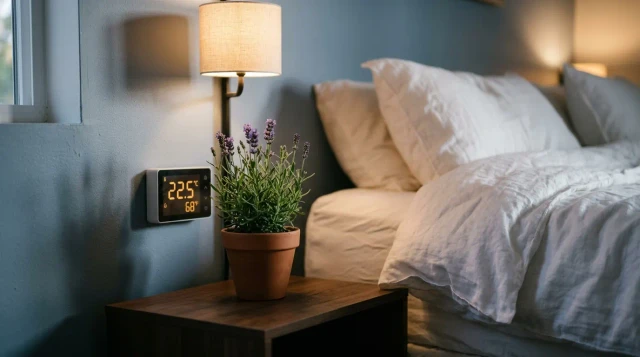
Let's talk about your bedroom environment, starting with the single most impactful factor people consistently get wrong: temperature. Your core body temperature needs to drop by about 2 to 3 degrees Fahrenheit to initiate sleep. If your bedroom is too warm, your body simply can't make this transition well. According to the Cleveland Clinic, the ideal sleeping temperature falls between 60°F and 67°F (15.5°C to 19.4°C) [3].
A 2022 study published in Current Biology tracked over 11,000 nights of sleep across 765 older adults and found that ambient temperatures between 64°F and 68°F were associated with the highest amounts of restful, efficient sleep. Outside that window, quality dropped noticeably. The researchers, based at Harvard's Brigham and Women's Hospital, noted that even a slight increase above the ideal range reduced slow-wave sleep duration.
Quick story that might sound familiar. A friend of mine spent months chasing better sleep with supplements, meditation apps, the whole toolkit. Then she bought a $30 fan, cracked her window at night, and dropped her thermostat to 65°F. Within a week, her sleep tracker showed a 22% increase in deep sleep. Sometimes the simplest fix is the best one.
A couple of practical tips: if you tend to sleep hot, consider breathable bedding made from natural fibers. Wearing the right sleepwear matters too. Proteck'd's Faraday Health Collection offers options designed with both comfort and EMF shielding in mind, which brings us to an often overlooked factor in the modern bedroom. But temperature first. Get that dialed in before you touch anything else.
How Does Light Exposure Affect Sleep Quality?
Light is the single strongest signal your circadian clock receives. When light hits specialized cells in your retina called intrinsically photosensitive retinal ganglion cells (ipRGCs), it sends a direct message to the SCN: stay awake. That's why bright light in the morning helps you feel alert, and why light at night is so destructive to sleep. According to research from Harvard Medical School, even dim light of around 5 lux (roughly the brightness of a candle a few feet away) can suppress melatonin production by more than 50% [2].
Blue light, the kind emitted by phones, tablets, laptops, and LED bulbs, is especially disruptive. A 2014 study published in the Proceedings of the National Academy of Sciences (PNAS) found that participants who read on an iPad before bed took an average of 10 minutes longer to fall asleep, had reduced REM sleep, and felt sleepier the next morning compared to those who read a printed book [4]. Ten minutes might not sound like a lot. But over weeks and months, those losses stack up.
The fix has two parts. First, get bright light exposure in the morning. Dr. Andrew Huberman at Stanford recommends 10 minutes of outdoor sunlight within the first hour of waking to properly set your circadian clock. Second, cut light exposure hard in the two hours before bed. Dim your lights. Use warm-toned bulbs. And if you're going to use screens, turn on a blue-light filter, or better yet, put the device down entirely.
Your bedroom itself should be pitch dark. No standby LEDs on the TV. No glowing charger lights. No streetlight creeping around the curtain edges. Blackout curtains are an inexpensive upgrade that makes a huge difference. If total darkness isn't doable, a well-fitted sleep mask works as a solid backup.
Does Noise Really Disrupt Sleep, Even If You Don't Wake Up?
Yes. And this surprises a lot of people. You don't have to consciously wake up for noise to damage your sleep quality. The World Health Organization published guidelines in 2018 stating that nighttime noise above 40 decibels is associated with adverse health effects including cardiovascular problems and impaired cognitive function. For reference, 40 decibels is about the volume of a quiet library.
Research from the European Centre for Environment and Health found that traffic noise during sleep increases cortisol levels even when sleepers report not waking up. Your brain is still processing those sounds and triggering micro-arousals, brief moments where you shift from deep sleep to a lighter stage. You won't remember them in the morning. But your body will feel them.
The goal is to get your bedroom below 30 decibels if possible. White noise machines or brown noise apps can help mask intermittent sounds like traffic, barking dogs, or a snoring partner. The key is consistency: a steady hum is far less disruptive than sudden volume spikes. If you live in a particularly noisy area, earplugs rated at 30+ NRR (Noise Reduction Rating) can make an enormous difference. I've used foam earplugs for years when traveling, and the improvement in unfamiliar environments is immediate.
Quick Q&A
Q: What decibel level should my bedroom be for optimal sleep?
A: Aim for under 30 decibels, which is quieter than a whisper; the WHO considers sustained nighttime noise above 40 decibels a health risk.
How Do Caffeine and Alcohol Actually Affect Your Sleep?
Let's talk about the two substances most adults consume daily without thinking twice about what they do to rest. Caffeine has a half-life of approximately 5 to 6 hours, according to the American Academy of Sleep Medicine. That means if you drink a 200mg coffee at 2 p.m., about 100mg is still circulating at 7 or 8 p.m. That's roughly the same as a full cup of green tea, still enough to interfere with falling asleep.
The practical rule I follow: no caffeine after noon, or at minimum 8 hours before your target bedtime. Dr. Matthew Walker has shared data showing that consuming caffeine even 6 hours before bed reduced total sleep time by over an hour. An hour! And the sleeper often doesn't realize it because caffeine doesn't always prevent you from falling asleep. Instead, it reduces the depth of sleep, particularly the slow-wave stages where physical restoration happens.
Alcohol is trickier because it actually does help you fall asleep faster. But here's the catch. According to a 2018 review in the journal JMIR Mental Health analyzing data from over 4,000 individuals, even moderate alcohol consumption (two drinks) reduced sleep quality by 24%. Alcohol fragments REM sleep in the second half of the night, which is exactly when your brain needs it most for emotional processing and memory consolidation.
If you drink, try to stop at least 3 hours before bed and limit yourself to one serving. And if better sleep is your goal, consider cutting alcohol entirely for two weeks and tracking how your rest changes. Most people who try this are genuinely surprised by how much better they feel. For more on how lifestyle factors cascade through your health, check out our piece on Inflammation: How to Reduce It, because poor sleep and chronic inflammation feed each other in a vicious loop.
What Role Does EMF Play in Sleep Disruption?
This is where most sleep guides stop. This one keeps going. Your bedroom is probably full of electromagnetic field (EMF) sources you've never thought about: your phone on the nightstand, a Wi-Fi router down the hall, a smart speaker, maybe even a baby monitor. Whether or not you're concerned about EMF as a broader health topic, there's growing research on how electromagnetic radiation in the sleep environment may affect melatonin production and sleep quality.
A 2013 study published in the International Journal of Environmental Research and Public Health found that exposure to radiofrequency electromagnetic fields from mobile phones before sleep was associated with changes in brain activity during subsequent non-REM sleep. The National Institute of Environmental Health Sciences (NIEHS) continues to fund research into the biological effects of non-ionizing radiation, acknowledging that more data is needed but that the question is scientifically legitimate.
What can you do? Simple steps include putting your phone in airplane mode before bed (or better yet, charging it in another room), using a wired alarm clock instead of your phone's alarm, and unplugging any devices you don't need running overnight. For people who want to go further, EMF-shielding garments offer a passive way to reduce exposure while you sleep. Proteck'd's Women's Wellness Collection and Faraday Health Collection use silver-infused fabrics that provide measurable shielding from common household EMF sources. You can read more about the science behind these materials on our EMF Health Benefits page.
Is EMF the biggest factor in your sleep? Probably not. Temperature, light, and consistency are almost certainly more impactful. But if you've already dialed those in and still aren't sleeping well, reducing electromagnetic exposure in your bedroom is a reasonable next step. Our Biohacking: The Complete Guide covers this and other advanced strategies in more detail.
How Should You Wind Down Before Bed?
You can have the perfect bedroom. 65°F, pitch dark, dead quiet. And still lie awake if your nervous system is running hot. This is where behavioral protocols come in, and they're backed by some of the strongest evidence in sleep medicine. Cognitive Behavioral Therapy for Insomnia (CBT-I) is considered the gold standard treatment for chronic insomnia by the American College of Physicians, outperforming sleeping pills in long-term outcomes.
You don't need a therapist to borrow some of CBT-I's principles. The most accessible one is the wind-down routine. Starting 60 to 90 minutes before bed, you deliberately shift activities from stimulating to calming. No work emails. No intense TV shows. No arguments about whose turn it is to do the dishes. Instead, you read, stretch, take a warm shower (the subsequent cooling of your body actually promotes sleep onset), or practice breathing exercises.
I've personally found that a 10-minute body scan meditation before bed cuts my time-to-sleep almost in half. If you're curious about building that habit, our How to Build a Meditation Practice: The Practical Guide is a great starting point. It doesn't have to be complicated. Even something as simple as five slow breaths, inhaling for four counts and exhaling for eight, activates the parasympathetic nervous system and signals your body that it's safe to rest.
Another CBT-I principle worth stealing: stimulus control. Use your bed only for sleep and intimacy. Don't work in bed. Don't eat in bed. Don't doomscroll in bed. Over time, your brain creates an automatic association between getting into bed and falling asleep. Dr. Jack Edinger, a researcher at National Jewish Health in Denver, has published extensive work showing that stimulus control alone can improve sleep efficiency by 15 to 20% within a few weeks.
Do Sleep Supplements Actually Work?
Supplements are one of the most searched topics in any sleep optimization guide, and the evidence is a mixed bag. Let's separate what actually works from what's mostly marketing.
Magnesium, specifically magnesium glycinate or magnesium threonate, has the strongest evidence base. A 2012 randomized, double-blind, placebo-controlled trial published in the Journal of Research in Medical Sciences found that magnesium supplementation (500mg daily) significantly improved subjective sleep quality in elderly subjects with insomnia. Magnesium plays a role in over 300 enzymatic reactions in the body, including those involved in GABA signaling, the brain's primary inhibitory neurotransmitter.
Melatonin is effective but widely misunderstood. It's not a sleeping pill. It's a timing signal to your circadian clock that darkness has arrived. According to the Mayo Clinic, doses of 0.5 to 3mg taken 30 to 60 minutes before bed are effective for most people. Higher doses (10mg+) aren't more effective and may cause grogginess. Melatonin works best for circadian realignment, like jet lag or shift work, rather than as a nightly sleep aid.
Glycine, an amino acid, showed promise in a small Japanese study published in Sleep and Biological Rhythms. Participants taking 3 grams before bed reported improved subjective sleep quality and less daytime sleepiness. Apigenin, a compound found in chamomile tea, is popular in biohacking circles but has less rigorous clinical data behind it. It may help, but the evidence is early.
My general advice: don't start with supplements. Start with the environmental and behavioral changes outlined in this guide. If you've done all of that and still struggle, then experiment with magnesium or low-dose melatonin. Supplements are the cherry on top, not the sundae itself. For more on how inflammation and recovery tie into sleep quality, Chronic Inflammation: How to Reduce It connects those dots.
How Can Sleep Tracking Help You Improve Your Rest?
Wearable sleep trackers have gotten surprisingly accurate. Devices like the Oura Ring (Gen 3) and the Whoop 4.0 now correlate reasonably well with polysomnography, the clinical gold standard for sleep measurement. A 2022 validation study from West Virginia University found that the Oura Ring detected sleep stages with about 79% accuracy compared to clinical PSG. That's good enough for trend tracking, even if individual nights might be off.
The real value of sleep tracking isn't the nightly score. It's the patterns. After two weeks of consistent tracking, you can start spotting what actually moves the needle for you personally. Maybe you notice that alcohol consistently tanks your deep sleep. Maybe you see that your best nights happen when you're in bed by 10:15. Maybe you discover that morning workouts help you sleep better than evening ones. These personalized insights are worth more than any generic advice list.
Here's a practical framework for using your data. Pick one variable to change for one week. Maybe it's cutting caffeine after noon. Track the results. Then layer in the next change. This systematic approach is what separates people who genuinely improve their rest from people who just collect data and never act on it. It's exactly the kind of experimentation we explore in our Biohacking: The Complete Guide.
One caution: don't let tracking make you anxious about sleep. There's a condition researchers at Northwestern Medicine have coined "orthosomnia," where people get so obsessed with their sleep scores that the anxiety itself causes insomnia. Use the data as a tool, not a verdict. If checking your sleep score first thing in the morning ruins your day, delete the app and trust how you feel instead.
- Keep your bedroom between 60°F and 67°F to allow your core body temperature to drop and initiate deep sleep.
- Eliminate all light sources from your bedroom and get bright morning sunlight within the first hour of waking to anchor your circadian rhythm.
- Cut caffeine at least 8 hours before bed and stop alcohol at least 3 hours before bed for measurably better sleep quality.
- Start a 60 to 90 minute wind-down routine before bed that excludes screens, work, and stimulating activities.
- Reduce EMF exposure in the bedroom by putting your phone on airplane mode, using wired alarm clocks, and considering shielding garments for sleep.
Frequently Asked Questions
The ideal bedroom temperature for sleep is between 60°F and 67°F (15.5°C to 19.4°C). The Cleveland Clinic recommends this range because your core body temperature needs to drop by 2 to 3 degrees to start and maintain deep sleep. If your room is much warmer than 68°F, you're likely losing slow-wave sleep without realizing it.
At least 8 hours. Caffeine has a half-life of 5 to 6 hours, so it takes that long for just half of it to clear your system. A 2 p.m. coffee still has significant active caffeine at 8 p.m., enough to reduce the depth and quality of your sleep even if you don't feel it.
Yes, significantly. A 2014 PNAS study found that reading on a light-emitting device before bed delayed sleep onset by about 10 minutes, reduced REM sleep, and increased next-day sleepiness. Blue light suppresses melatonin production more than other wavelengths, so using screens in the 2 hours before bed directly interferes with your body's sleep signals.
Short-term use is generally considered safe for most adults, according to the Mayo Clinic. But it works best as a circadian timing signal for jet lag or schedule shifts, not as a nightly sleep aid. Effective doses are typically 0.5 to 3mg, much lower than what's in many store-bought products. Taking 10mg+ isn't more effective and can cause grogginess.
There's evidence suggesting it might. A study in the International Journal of Environmental Research and Public Health found that pre-sleep mobile phone EMF exposure was linked to altered brain activity during non-REM sleep. More research is needed, but putting your phone on airplane mode or charging it in another room is a simple, zero-risk way to reduce exposure.
Sleep efficiency is the percentage of time in bed that you're actually asleep. Above 85% is considered good by most sleep specialists. Below 75% is usually clinically significant and may point to insomnia. You can improve it by keeping consistent sleep and wake times and by using your bed only for sleep.
It helps you fall asleep faster but hurts overall quality significantly. A 2018 review in JMIR Mental Health found that even moderate intake (2 drinks) reduced sleep quality by 24%. Alcohol breaks up REM sleep in the second half of the night, exactly when your brain does its most important emotional and memory processing work.
CBT-I stands for Cognitive Behavioral Therapy for Insomnia. It's a structured program that targets the thoughts and behaviors preventing good sleep. The American College of Physicians recommends it as the first-line treatment for chronic insomnia, ahead of medication. Unlike sleeping pills, CBT-I addresses root causes and its benefits last long after treatment ends.
Magnesium supports sleep mainly through its role in GABA signaling, your brain's primary inhibitory neurotransmitter. A 2012 randomized controlled trial in the Journal of Research in Medical Sciences found that 500mg of magnesium daily improved subjective sleep quality in elderly subjects with insomnia. Magnesium glycinate and magnesium threonate are the forms most commonly recommended for sleep.
Modern wearable trackers are reasonably accurate for spotting trends. A 2022 validation study from West Virginia University found the Oura Ring detected sleep stages with about 79% accuracy compared to clinical polysomnography. They're best used to find patterns over weeks rather than to judge any single night. If tracking causes anxiety about your scores, it may do more harm than good.
References
- National Institute of Neurological Disorders and Stroke (NINDS) – Sleep consists of four repeating stages including three non-REM stages and one REM stage, regulated by the suprachiasmatic nucleus (SCN)
- Harvard Medical School Division of Sleep Medicine – Even dim light exposure of approximately 5 lux can suppress melatonin production by more than 50%, and social jet lag is associated with metabolic and cardiovascular risks
- Cleveland Clinic – The ideal sleeping temperature is between 60°F and 67°F to support the body's natural core temperature drop during sleep
- Proceedings of the National Academy of Sciences (PNAS) – Reading on a light-emitting device before bed delayed sleep onset, reduced REM sleep, and increased next-morning sleepiness compared to reading a printed book
About the Author
Proteck'd EMF Apparel
Health & EMF Specialists
The Proteck'd team covers EMF protection, silver-fiber apparel, and practical ways to reduce everyday radiation exposure. Every piece Proteck'd ships is designed, tested, and worn by the people who build it.
Get the Free EMF Home Audit Checklist
A room-by-room PDF that walks you through the biggest EMF sources in your house and what to do about each one. No cost, no fluff.
Download the Checklist →✓30-day returns✓Free shipping✓Free returns✓Silver fiber shielding


Hinterlassen Sie einen Kommentar