


Is AI Able to Diagnose Disease?: The Honest Answer

Here's a number that stopped me mid-scroll: the FDA has now cleared more than 950 AI-enabled medical devices, and roughly three out of four of them are built for radiology [1]. That's not some prototype gathering dust in a university lab. That's real software reading real scans in real hospitals, right now. So when people ask, "Is AI actually able to diagnose disease?" the short answer is yes. Sometimes. With some serious caveats.
The longer answer is what this whole article is about. Because understanding why does health tech AI guide matter isn't just an academic exercise. It affects how your next doctor's appointment might go, what your insurance covers, and whether an algorithm catches something a human eye might miss.
I spent weeks sorting through the hype and the skepticism so I could give you something in between. An honest picture. No cheerleading. No fear-mongering. Just the facts about what artificial intelligence can and can't do when it comes to identifying illness.
We'll look at the diseases AI detects best, the blind spots nobody mentions in press releases, and what all of this means for you as a patient or a health-conscious person trying to make sense of the technology. Let's get into it.
AI can spot a tumor on a scan with remarkable precision. But it can't hold your hand, ask about your family history over coffee, or weigh the intangible factors that make medicine an art as much as a science. The future isn't AI versus doctors. It's AI plus doctors, with informed patients completing the triangle.
- AI can diagnose certain diseases, especially in imaging-heavy fields like radiology and ophthalmology, with accuracy rivaling or exceeding specialists.
- The FDA has cleared over 950 AI-enabled medical devices, but most are clinical support tools, not standalone diagnostic replacements.
- Bias in training data, the 'black box' problem, and unresolved liability questions are real risks that patients should know about.
- Early detection is AI's most promising healthcare application, with studies showing it can flag pancreatic cancer risk years before traditional diagnosis.
- Patients should ask their providers about AI-assisted tools and critically evaluate consumer health apps, which are far less reliable than clinical-grade systems.
What Can AI Actually Diagnose Right Now?
Let's start with the wins, because they're genuinely impressive. In 2018, Google's DeepMind partnered with Moorfields Eye Hospital in London and showed that its machine learning system could detect over 50 eye diseases with 94% accuracy, performing on par with world-leading ophthalmologists [2]. We're talking about conditions like diabetic retinopathy and age-related macular degeneration. Diseases where catching them early can save someone's sight.
Cancer detection is another area where AI disease detection accuracy has been remarkable. A landmark 2020 study published in Nature showed that a Google Health AI system matched or outperformed six radiologists in reading mammograms, cutting false positives by 5.7% in the US cohort and 1.2% in the UK cohort [3]. Fewer false positives means fewer unnecessary biopsies. Fewer terrifying phone calls. Less wasted money.
Skin cancer is in the mix too. Back in 2017, Stanford University researchers trained a deep learning algorithm on 129,450 clinical images and found it could classify skin cancer at dermatologist-level accuracy. The algorithm handled both the most common and the most deadly skin cancers without breaking a sweat.
Quick Q&A
Q: Which diseases can AI diagnose most reliably today?
A: AI performs best in image-based diagnoses like diabetic retinopathy, breast cancer screening via mammography, skin cancer classification, and certain cardiac arrhythmias detected through ECG analysis.
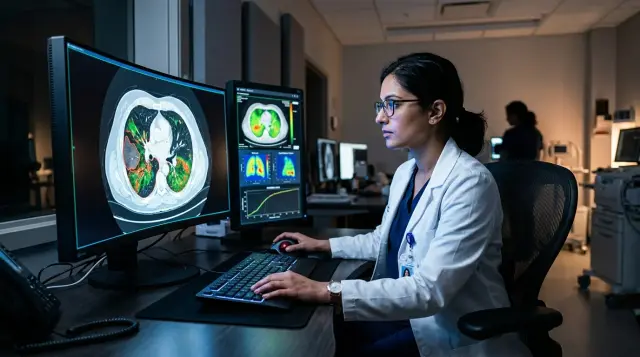
Beyond imaging, AI-powered clinical decision support is making inroads with heart disease. The Mayo Clinic has used an AI algorithm that analyzes standard ECGs to detect atrial fibrillation even when the heart rhythm appears normal at the time of the test. That's not just matching a doctor's ability. That's doing something a doctor literally cannot do with the naked eye.
Why Does Health Tech AI Guide Matter for Everyday Patients?
You might be thinking: "Cool, AI can read scans. But I'm not a radiologist, so why should I care?" Fair question. Here's the thing. These tools don't just affect specialists in white coats. They're starting to touch your experience as a patient in ways you might not even notice.
Think about wait times. In the UK's National Health Service, some patients wait weeks for imaging results. AI-powered triage systems can flag urgent findings in minutes, bumping critical cases to the front of the queue. According to a 2023 report from the American Hospital Association, hospitals using AI-driven workflow optimization saw measurable reductions in diagnostic turnaround times and improvements in patient throughput.
Accessibility is another huge piece. Not everyone lives near a teaching hospital with top specialists. Machine intelligence embedded in a smartphone app can bring screening capabilities to rural clinics, developing countries, and underserved communities. That's why does health tech AI guide matter beyond the obvious. It's a potential equalizer, if we build it right.
And here's something closer to home for the health-conscious crowd. As we integrate more smart devices into our daily lives, from home automation systems to wearable health monitors, understanding how AI processes health data becomes personal. Your Apple Watch's irregular heart rhythm notification? That's an AI algorithm running on your wrist. The more connected we get, the more this stuff matters.
If you're already thinking about how technology interacts with your body and wellbeing, you might also want to understand the EMF Protection Benefits of shielding products, especially as wireless health devices multiply in our homes and on our bodies.
How Accurate Is AI Compared to Human Doctors?
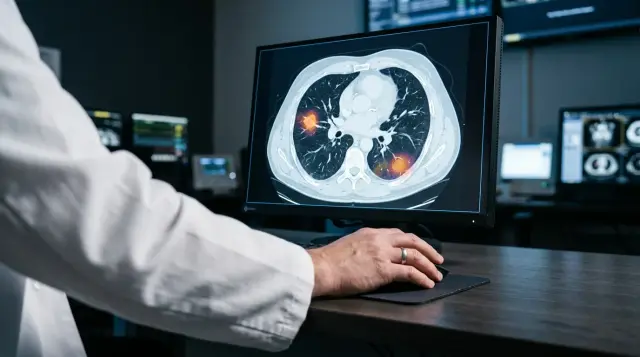
This is the million-dollar question. And the answer depends entirely on context. In narrow, well-defined tasks with large datasets, AI can be stunningly accurate. In complex, ambiguous clinical situations? It still struggles. A lot.
Let me give you a concrete comparison. In breast cancer screening, that 2020 Nature study showed AI reduced false negatives (missed cancers) by 9.4% in the US dataset [3]. That's significant. But the AI was reading mammograms in a controlled research setting with high-quality images. In a busy community hospital with older equipment and varied image quality, performance can drop.
The World Health Organization addressed this directly in its 2021 guidance on AI ethics in health. WHO cautioned that many AI systems are trained predominantly on data from high-income countries, which means they can perform poorly on patients with different demographics, skin tones, or disease presentations [4]. An algorithm trained mostly on light-skinned patients might miss melanoma on darker skin. That's not a theoretical concern. It's a documented one.
Quick Q&A
Q: Can AI replace my doctor for diagnosis?
A: No. AI works best as a second set of eyes that augments a physician's judgment, not as a standalone replacement, especially for complex or multi-system conditions.
There's also what researchers call the "black box" problem. Many deep learning models can't explain why they reached a particular diagnosis. A radiologist can point to a specific shadow on an image and say, "That's suspicious because of its shape and density." A neural network might flag the same area but can't articulate its reasoning. For a field built on evidence-based practice, that opacity is a real barrier to trust.
So the honest summary: in specific, image-heavy tasks, machine learning medical diagnosis can match specialists. For the full complexity of doctoring, which involves patient history, gut instinct, empathy, and managing uncertainty, AI isn't close. Not yet.
What Are the Real Risks of AI in Healthcare?
Every breathless headline about AI saving lives deserves a counterweight. Here it is. The risks are real, tangible, and not always obvious.
Bias tops the list. If you train an algorithm on data that underrepresents certain populations, it will underperform for those populations. Full stop. A 2019 study published in Science found that a widely used commercial healthcare algorithm in the US exhibited significant racial bias, systematically underestimating the health needs of Black patients. The algorithm used healthcare spending as a proxy for health needs. Because Black patients historically had less spent on their care due to systemic inequities, the algorithm rated them as healthier than equally sick white patients.
Data privacy is another concern that keeps growing. AI health systems need enormous datasets to train on, and those datasets contain some of the most sensitive information imaginable. If you're already thinking about digital privacy and how your data moves through connected systems, our Cybersecurity in 2026: The Complete Guide covers the broader picture of data protection in an AI-saturated world.
Then there's the liability question. If an AI system misses a diagnosis and a patient is harmed, who's responsible? The hospital that deployed it? The company that built it? The doctor who relied on it? Legal frameworks haven't caught up. The FDA regulates AI medical devices, but post-market surveillance for algorithms that continuously learn and change is still an evolving challenge [1].
Over-reliance is a subtler risk, and maybe the scariest one. When radiologists know an AI has already reviewed a scan, they may unconsciously defer to it. Researchers call this "automation bias." If the AI missed something, the human might miss it too. We've seen this pattern in aviation and other fields. It's not new, but it's newly relevant to your health.
How Is AI Used for Early Detection and Prevention?
Early detection is where AI health technology arguably shines brightest. Catching a disease months or years before symptoms appear can be the difference between a simple treatment and a devastating prognosis.
Take pancreatic cancer. It's one of the deadliest cancers precisely because it's usually caught late. In 2023, researchers at Harvard Medical School and the University of Copenhagen published findings showing that an AI model could identify individuals at elevated risk of pancreatic cancer up to three years before traditional diagnosis. And it did this using only existing medical records. No new tests. No expensive screenings. Just smarter analysis of data hospitals already collect.
Wearable technology is another frontier worth watching. Apple's collaboration with Stanford Medicine on the Apple Heart Study enrolled over 400,000 participants and found that the Apple Watch's AI-driven irregular pulse notification had a 34% positive predictive value for atrial fibrillation. That might sound modest on paper. But for a consumer device on someone's wrist catching a potentially stroke-causing arrhythmia? It's genuinely meaningful.
This convergence of wearable tech and artificial intelligence raises an interesting personal health question, too. As we strap more wireless, radio-frequency-emitting devices to our bodies, some people are paying closer attention to their daily EMF exposure. Proteck'd's Faraday Protection Collection and Men's Faraday Tech Wear are designed for people who want the benefits of connected technology without ignoring the question of electromagnetic radiation exposure.
For a deeper look at AI's broader role in medicine, including telemedicine, drug discovery, and robotic surgery, check out our full AI in Healthcare: The Honest Guide.
Will AI-Powered Diagnosis Get Better Over Time?
Almost certainly yes. And the pace of improvement is accelerating. But "better" doesn't mean "perfect," and understanding the trajectory matters if you're trying to make sense of health tech AI in your own life.
One major development is multimodal AI. These are systems that don't just look at an image but combine imaging data with genetic information, lab results, patient history, and even lifestyle data. Google's Med-PaLM 2, introduced in 2023, demonstrated expert-level performance on medical licensing exam questions and showed the ability to reason across multiple data types. It's still a research model, not a deployed clinical tool. But it signals where things are headed.
Federated learning is another promising approach. Instead of shipping sensitive patient data to a central server, the AI model travels to the data. It learns from hospital records at each location without the data ever leaving. This addresses both privacy concerns and the bias problem, because the model trains on more diverse populations. Researchers at institutions including the University of Pennsylvania's Perelman School of Medicine have shown this approach works for brain tumor segmentation across 71 global sites.
Regulation is evolving too. The FDA's Digital Health Center of Excellence, established in 2020, is specifically focused on creating clearer pathways for AI-based diagnostics. In Europe, the EU's AI Act, which entered into force in 2024, classifies medical AI as "high-risk" and imposes strict requirements for transparency, data quality, and human oversight.
So why does health tech AI guide matter looking forward? Because the technology is moving faster than most people's understanding of it. Staying informed isn't optional if you want to be an active participant in your own healthcare. The gap between what AI can do and what patients know about it keeps widening. Closing that gap is part of why guides like this one exist.
What Should You Actually Do With This Information?
Knowledge without action is trivia. So here's how to actually use what you've just read.
First, ask questions at your next medical appointment. If your provider uses AI-assisted tools, ask which ones and what they do. You have every right to know if an algorithm played a role in your diagnosis. Most patients never think to ask. Most providers don't volunteer the information.
Second, be a critical consumer of health tech. That AI symptom-checker app on your phone is not the same as the FDA-cleared systems being used in clinical settings. Some consumer apps have been shown to be alarmingly inaccurate. A 2020 study in the BMJ found that symptom-checker apps listed the correct diagnosis first only 36% of the time. Use them as a starting point, not a verdict.
Third, think about your overall digital health posture. How much data are you sharing with health apps? How secure are the connected devices in your home? This health tech AI guide matters because it sits at the intersection of technology, privacy, and personal wellbeing. These aren't separate conversations anymore. They're the same conversation.
And if you're someone who takes a proactive approach to how technology interacts with your body, from the wireless signals around you to the AI analyzing your health data, that mindset is exactly what brands like Proteck'd build for. Being tech-forward and health-conscious aren't contradictions. They're the same impulse, pointed in the right direction.
Frequently Asked Questions
Yes, but with important caveats. AI has shown specialist-level accuracy in diagnosing conditions like diabetic retinopathy, breast cancer, and skin cancer when working with high-quality imaging data. However, accuracy drops in complex, multi-system conditions and when training data doesn't represent diverse patient populations.
Because AI is already influencing your care, whether you realize it or not. From flagging abnormalities on scans to triaging emergency cases, these tools affect wait times, diagnosis speed, and treatment recommendations. Understanding the technology helps you ask better questions and make more informed decisions.
The FDA has authorized more than 950 AI-enabled medical devices as of October 2024, with approximately 75% focused on radiology. These go through various regulatory pathways depending on risk level. "Authorized" is actually more precise than "approved," since many go through the 510(k) clearance process.
No. AI works best as a decision-support tool that adds to a physician's judgment. It can process data faster and spot patterns in images, but it can't conduct physical exams, interpret nuanced patient histories, offer empathy, or manage the uncertainty that comes with complex medical cases.
AI excels at image-based diagnoses. Its strongest performances have been in detecting diabetic retinopathy, breast cancer via mammography, skin cancer from dermatoscopic images, lung nodules on CT scans, and cardiac arrhythmias from ECG data. These areas all share large, well-labeled training datasets.
Yes, bias is a documented problem. AI systems trained on non-representative datasets can underperform for underrepresented populations. A prominent 2019 study in Science found racial bias in a widely used US healthcare algorithm that systematically underestimated the health needs of Black patients.
Consumer symptom-checker apps are significantly less reliable than clinical-grade AI systems. A 2020 BMJ study found these apps listed the correct diagnosis first only 36% of the time. They can be useful as a starting point for research, but they should never replace a professional medical evaluation.
AI detects cancer early primarily through image analysis, scanning mammograms, CT scans, pathology slides, and dermatoscopic images for subtle patterns that may indicate malignancy. Some newer models also analyze existing medical records and lab data to flag patients at elevated risk before symptoms appear, as Harvard researchers demonstrated for pancreatic cancer.
The black box problem refers to the fact that many deep learning models can't explain how they arrived at a specific diagnosis. Unlike a human doctor who can point to evidence and walk through their reasoning, a neural network's decision-making process is opaque. This lack of transparency creates real challenges for clinical trust and accountability.
AI is being explored for mental health applications, including analyzing speech patterns, facial expressions, and social media activity for signs of depression or anxiety. But mental health diagnosis is inherently more subjective and context-dependent than image-based diagnosis, so these tools are much earlier in development and far less validated.
Wearable devices like the Apple Watch use onboard AI algorithms to continuously monitor biometric signals such as heart rate, rhythm irregularities, blood oxygen levels, and activity patterns. The Apple Heart Study, conducted with Stanford Medicine and enrolling over 400,000 participants, validated the Watch's ability to detect potential atrial fibrillation through its irregular pulse notification feature.
In the US, the FDA's Digital Health Center of Excellence oversees AI-enabled medical devices through various clearance pathways. In Europe, the EU's AI Act classifies medical AI as high-risk and mandates strict transparency and data quality requirements. The WHO issued global guidance on AI ethics in health in 2021, emphasizing inclusivity, transparency, and human oversight.
References
- U.S. Food and Drug Administration – The FDA has authorized more than 950 AI/ML-enabled medical devices, with approximately 75% focused on radiology.
- Nature Medicine (DeepMind / Moorfields Eye Hospital) – Google DeepMind's AI system detected over 50 eye diseases with 94% accuracy, matching world-leading ophthalmologists.
- Nature (Google Health mammography study) – An AI system matched or outperformed radiologists in breast cancer screening, reducing false positives by 5.7% in the US cohort and false negatives by 9.4%.
- World Health Organization – WHO's 2021 guidance on ethics and governance of AI for health emphasizes the need for transparent algorithms, inclusive training data, and regulatory oversight to prevent bias.
About the Author
Proteck'd EMF Apparel
Health & EMF Specialists
The Proteck'd team covers EMF protection, silver-fiber apparel, and practical ways to reduce everyday radiation exposure. Every piece Proteck'd ships is designed, tested, and worn by the people who build it.
Get the Free EMF Home Audit Checklist
A room-by-room PDF that walks you through the biggest EMF sources in your house and what to do about each one. No cost, no fluff.
Download the Checklist →✓30-day returns✓Free shipping✓Free returns✓Silver fiber shielding


