


The Strange Science of Electromagnetic Waves: Explained Simply

Right now, as you read this, electromagnetic radiation is hitting you from every direction. Light from your screen. Wi-Fi bouncing off the walls. Infrared heat radiating from your own body. It's all the same basic phenomenon, just at different frequencies. So how does electromagnetic radiation facts work in a way that actually makes sense if you're not a physicist? Let's break it down, no jargon required.
Here's the short version. Electromagnetic radiation is energy that moves through space as waves of electric and magnetic fields. These two fields work together, each one spawning the other, leapfrogging forward at the speed of light. No wires. No medium. Just pure energy rippling through the universe.
That probably raises more questions than it answers. What makes radio waves different from X-rays? Why can some EM radiation pass through walls while visible light can't? And why should any of this matter to you on a random Wednesday?
I spent a frankly unreasonable amount of time reading physics textbooks, NASA resources, and WHO reports to put this together. The goal is simple: give you a genuinely useful understanding of electromagnetic waves without making your eyes glaze over. Whether you're just science-curious or actively concerned about EMF exposure at home, this one's for you.
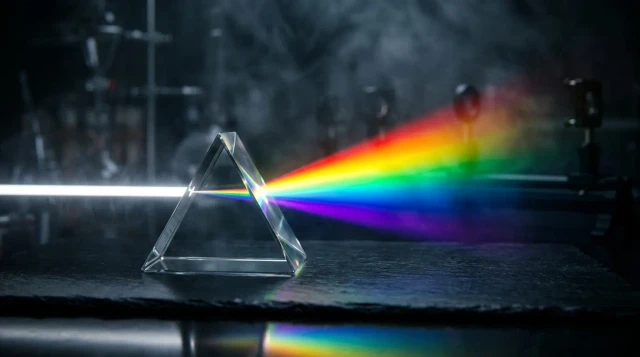
Electromagnetic radiation is the same fundamental phenomenon whether it's sunlight warming your face or Wi-Fi carrying your email. The only difference is frequency. Understanding that single variable unlocks the entire spectrum, from radio waves longer than a building to gamma rays smaller than an atom.
What Exactly Is Electromagnetic Radiation?
Electromagnetic radiation is a form of energy that travels through space as synchronized, oscillating electric and magnetic fields. These fields sit perpendicular to each other and to the direction the wave is moving. Picture a snake slithering forward, except instead of one body there are two interlocked waves, one electric and one magnetic, pushing each other along.
Unlike sound waves, which need air or water to travel through, EM radiation doesn't need any medium at all. It moves just fine through the vacuum of space. That's how sunlight reaches Earth after traveling 93 million miles through absolutely nothing. According to NIST (the National Institute of Standards and Technology), all electromagnetic waves in a vacuum travel at precisely 299,792,458 meters per second [1].
The concept was first unified mathematically by Scottish physicist James Clerk Maxwell in 1865. His famous set of four equations showed that electricity and magnetism weren't separate forces. They were two faces of the same coin. Maxwell's equations predicted that changing electric fields would create magnetic fields, and vice versa, producing a self-propagating wave. It was one of the most elegant predictions in the history of physics.
Quick Q&A
Q: Does electromagnetic radiation need a medium like air or water to travel?
A: No. Unlike sound, EM radiation is self-sustaining and propagates through a perfect vacuum at the speed of light.
Then in 1887, German physicist Heinrich Hertz at the University of Karlsruhe proved Maxwell right. He generated and detected radio waves in his laboratory using a spark gap transmitter and a loop antenna receiver, showing that these invisible waves traveled at the speed of light and could be reflected and refracted just like visible light [2]. That experiment basically launched the entire era of wireless communication. If you've ever connected to Wi-Fi or made a phone call, you owe Hertz a thank-you note.
How Does the Electromagnetic Spectrum Actually Work?
The electromagnetic spectrum is the full range of EM radiation organized by wavelength and frequency. On one end, radio waves with wavelengths longer than a football field. On the other end, gamma rays with wavelengths smaller than an atom. Everything in between, microwaves, infrared, visible light, ultraviolet, X-rays, is the same type of energy. It's just vibrating at different speeds.
Frequency and wavelength are inversely related. As frequency goes up, wavelength goes down, and the energy of the wave increases. The relationship is beautifully simple: energy equals Planck's constant times frequency, or E = hf. Max Planck proposed this in 1900, and it was revolutionary. It meant energy isn't continuous. It comes in tiny packets called photons.
Here's a concrete example. Your microwave oven operates at about 2.45 GHz. Your home Wi-Fi router? Typically 2.4 GHz or 5 GHz. Visible light? That's around 430 to 770 terahertz, roughly 100,000 times higher in frequency. And medical X-rays operate in the range of 30 petahertz to 30 exahertz. Same fundamental phenomenon. Wildly different effects. NASA's electromagnetic spectrum educational series does a great job illustrating how each band has unique properties and applications [3].
If you've been reading about how does electromagnetic radiation facts work and wondering why some types are dangerous while others aren't, frequency is the answer. The dividing line falls roughly at ultraviolet. Below UV (visible light, infrared, microwaves, radio waves), the photon energy is too low to knock electrons off atoms. Above UV (X-rays, gamma rays), photons carry enough energy to ionize atoms and damage DNA. That's why your doctor puts a lead apron on you during an X-ray but doesn't think twice about the overhead fluorescent lights. If you want to explore how this connects to everyday EMF concerns, you can Learn About EMF Protection and what different types of radiation actually mean for your health.
What Is Wave-Particle Duality and Why Does It Matter?
This is where things get genuinely weird. Electromagnetic radiation behaves as both a wave and a particle, depending on how you observe it. When light passes through a narrow slit, it creates an interference pattern. Clear wave behavior. But when light hits a metal surface and ejects electrons (the photoelectric effect), it behaves like a stream of particles. Both descriptions are correct. Neither is complete on its own.
Albert Einstein explained the photoelectric effect in 1905, showing that light comes in discrete energy packets (photons), each carrying energy proportional to its frequency. This work, not relativity, actually won him the Nobel Prize in Physics in 1921. The photoelectric effect is also the principle behind solar panels. When photons with sufficient energy strike a semiconductor material, they knock electrons loose, generating electric current.
Wave-particle duality isn't just a curiosity. It's fundamental to understanding how does electromagnetic radiation facts work at every scale. Radio engineers designing antennas think in terms of waves. Physicists studying nuclear reactions think in terms of photons. Medical researchers developing cancer treatments with gamma rays need both perspectives. Our companion article on The Strange Science of Electromagnetic Waves: What Nobody Taught You in School goes deeper into some of the stranger implications of this dual nature.
Quick Q&A
Q: Is light a wave or a particle?
A: Both. Light exhibits wave behavior (interference, diffraction) and particle behavior (photoelectric effect), a concept called wave-particle duality confirmed by decades of experiments.

How Do Electromagnetic Waves Interact with Matter?
When EM radiation hits matter, one of several things happens. The energy can be absorbed, reflected, transmitted, or scattered. What actually occurs depends on the frequency of the radiation and the properties of the material. This is why glass is transparent to visible light but opaque to most UV. It's why your body absorbs microwaves as heat but is mostly transparent to radio waves.
Absorption matters a lot for understanding biological effects. When your skin absorbs infrared radiation, you feel warmth. When UV-B radiation hits your skin, it can cause sunburn by damaging DNA in skin cells. According to the World Health Organization, ultraviolet radiation is classified as a Group 1 carcinogen, meaning there's sufficient evidence that it causes cancer in humans [4]. That's the same classification as tobacco smoke. Let that sink in for a moment.
At lower frequencies, the picture changes. The radio frequency radiation from your phone or router is non-ionizing, meaning individual photons don't carry enough energy to break molecular bonds. The primary known biological effect at these frequencies is tissue heating, similar to a microwave oven but at vastly lower power levels. The FCC limits cellphone RF emissions to a specific absorption rate (SAR) of 1.6 watts per kilogram averaged over 1 gram of tissue. Your phone emits a tiny fraction of the energy your microwave does.
Still, plenty of people prefer to minimize their daily exposure to EM radiation from personal devices, especially given that long-term research is ongoing. If that sounds like you, take a look at the Faraday Collection from Proteck'd EMF Protection, which uses silver-infused fabrics designed to attenuate radio frequency radiation. It's a practical approach to managing exposure without going off the grid.
What's the Difference Between Near-Field and Far-Field Radiation?
Most explainers skip this topic, but it genuinely matters if you care about EMF exposure. Close to an antenna or source, the electromagnetic field doesn't behave like a clean, organized wave. It's messy. The electric and magnetic components don't have a fixed ratio, and they can vary dramatically with small changes in distance. This is the near field, and it typically extends to about one wavelength from the source.
Beyond that boundary, you're in the far field, where the radiation settles into a well-behaved wave with the electric and magnetic fields locked in a constant ratio. This is where standard formulas for signal strength and exposure calculations work properly. For your phone held against your head, you're squarely in the near field at some frequencies. That's part of why SAR testing uses specific measurement protocols rather than simple distance calculations.
A practical example. 5G millimeter-wave antennas operate at frequencies around 28 to 39 GHz, with wavelengths of roughly 8 to 11 millimeters. The near-field boundary for these is very small, just centimeters away. But for an AM radio station broadcasting at 1 MHz (wavelength of 300 meters), the near field extends hundreds of meters. Understanding electromagnetic wave propagation in these different regimes explains why different sources require different safety guidelines.
If the interplay between biology and EM fields fascinates you, our post on 15 Surprising Facts About the Human Body: That Science Just Discovered covers some related territory on how the body responds to environmental signals.
Why Do Maxwell's Equations Still Matter Today?
Maxwell's four equations, published in their final form in 1865, are still the foundation of everything we know about electromagnetism. Every antenna, every fiber optic cable, every MRI machine, every satellite dish is designed using math that's over 150 years old. That's extraordinary. Very few scientific frameworks have held up this well.
In simplified terms, the equations say: electric charges produce electric fields (Gauss's law). There are no magnetic monopoles (Gauss's law for magnetism). A changing magnetic field creates an electric field (Faraday's law). And a changing electric field plus electric current creates a magnetic field (Ampère's law with Maxwell's addition). Together, they predict exactly how electromagnetic radiation propagates, its speed, its behavior at boundaries between materials, and how it carries energy.
Here's something most people don't realize. When Maxwell solved his equations and calculated the speed of his predicted electromagnetic waves, the number he got was 310,740,000 meters per second. The known speed of light at the time was very close to that. Maxwell wrote, "We can scarcely avoid the inference that light consists in the transverse undulations of the same medium which is the cause of electric and magnetic phenomena." In other words, he figured out that light itself is an electromagnetic wave. Absolute mic-drop moment.
Understanding how does electromagnetic radiation facts work always leads back to Maxwell. If you enjoy this kind of science, you might also like 10 Surprising Facts About Nature: That Sound Too Strange to Be True, which covers equally mind-bending natural phenomena.
How Does EM Radiation Affect Your Everyday Life?
Let's bring this back to your Tuesday morning. You wake up and check your phone. That screen emits visible light (EM radiation around 400 to 700 nanometers). The phone connects to a cell tower using radio frequency radiation (typically 700 MHz to 2.5 GHz for 4G LTE). You walk past your Wi-Fi router, which broadcasts at 2.4 or 5 GHz. You warm up coffee in the microwave (2.45 GHz). You step outside and the sun hits your face with a broadband blast of UV, visible, and infrared radiation.
All of that is EM radiation. The difference comes down to power density and frequency. NASA's educational resources emphasize that the electromagnetic spectrum is a single continuum, and the labels we give different regions (radio, microwave, infrared, visible, UV, X-ray, gamma) are human conventions based on how they interact with our technology and biology [3].
For most of us, the practical question isn't "is EM radiation real?" It's "how much am I getting, and should I care?" The WHO's International EMF Project, established in 1996, continues to assess health effects from exposure across the spectrum. Their position is that current evidence doesn't confirm health effects from low-level RF exposure, but they've classified radiofrequency EM fields as "possibly carcinogenic to humans" (Group 2B) based on limited evidence from some studies [4].
That "possibly" keeps a lot of researchers busy and a lot of people interested in practical exposure reduction. Things like keeping your phone away from your body, using wired headphones, and wearing EMF-shielding clothing are straightforward steps. The Faraday Collection offers garments built around this principle, incorporating conductive fibers to attenuate RF radiation from everyday sources. For more on how these and other environmental factors connect to your body, check out Amazon Rainforest Facts And Biodiversity Guide, which explores how ecosystems (including our own internal ones) respond to invisible environmental signals.
Can You Actually Shield Yourself from Electromagnetic Radiation?
Yes. And the physics isn't complicated. Electromagnetic shielding works by using conductive or magnetic materials to absorb or reflect EM waves. A Faraday cage, named after Michael Faraday who invented it in 1836, is the classic example. It's an enclosure made of conductive material that blocks external electromagnetic fields. Your microwave oven is basically a Faraday cage in reverse, keeping the radiation inside.
How well shielding works depends on the material's conductivity, its thickness, and the frequency of the radiation you're trying to block. Silver, copper, and nickel are excellent conductors and very effective at attenuating RF radiation. Silver, in particular, is the most electrically conductive element on the periodic table. That's why it shows up so often in EMF shielding textiles.
Modern applications have made this technology wearable. Silver-infused fabrics can attenuate a significant portion of incoming RF radiation when worn against the body. This isn't fringe science. It's straightforward electrical engineering applied to textiles. If you're curious about how does electromagnetic radiation facts work in relation to personal shielding, it comes down to the same principles Maxwell described: conductive materials redirect and absorb electromagnetic energy before it reaches your skin.
Quick Q&A
Q: Does silver fabric actually block electromagnetic radiation?
A: Yes. Silver is the most electrically conductive element, and when woven into fabric, it can reflect and absorb RF radiation, functioning as a flexible Faraday shield.
Proteck'd builds its Faraday Collection around these principles, using silver-fiber textiles to create everyday clothing that doubles as EMF shielding. It's one of the more practical ways to reduce your RF exposure without changing your lifestyle or ditching your devices.
- All electromagnetic radiation, from radio waves to gamma rays, consists of oscillating electric and magnetic fields traveling at the speed of light
- The electromagnetic spectrum is a single continuum: frequency determines whether radiation is harmless radio, visible light, or dangerous gamma rays
- Wave-particle duality means EM radiation behaves as both waves and photon particles, depending on how it's observed
- Non-ionizing radiation (below UV frequencies) doesn't have enough photon energy to break molecular bonds, but the WHO classifies RF fields as 'possibly carcinogenic' (Group 2B)
- Silver-infused fabrics and Faraday-cage principles provide practical, physics-based approaches to reducing personal RF exposure
Frequently Asked Questions
EM radiation travels as self-sustaining waves of coupled electric and magnetic fields. Each field generates the other as they move forward together. Unlike sound, these waves don't need any medium and move through a vacuum at 299,792,458 m/s. This self-propagating behavior was predicted by Maxwell's equations back in 1865.
It comes down to photon energy. Ionizing radiation (UV, X-rays, gamma rays) carries enough energy per photon to knock electrons off atoms and damage DNA. Non-ionizing radiation (radio, microwave, infrared, visible light) doesn't pack enough energy to break molecular bonds. The WHO classifies UV radiation as a Group 1 carcinogen based on this distinction.
The current scientific consensus, based on reviews by the WHO and ICNIRP, is that Wi-Fi at standard power levels has not been confirmed to cause health effects. That said, the WHO's International Agency for Research on Cancer classifies radiofrequency fields as Group 2B ("possibly carcinogenic"). Many people choose to minimize exposure as a precaution.
Visible light oscillates at roughly 430 to 770 terahertz (THz), while common radio frequencies range from about 3 kHz to 300 GHz. That means visible light is roughly 100,000 to a million times higher in frequency than typical radio signals. Both are electromagnetic radiation, just sitting at very different points on the spectrum.
Depends on the frequency and the wall material. Lower-frequency radio waves (like FM radio at around 100 MHz) pass through most walls easily. Higher frequencies, like millimeter-wave 5G around 28 GHz, get mostly blocked. Visible light can't pass through opaque walls at all. The interaction depends on wavelength relative to the material's properties.
A Faraday cage is an enclosure made of conductive material (like copper or silver mesh) that redistributes electromagnetic energy around its surface, preventing it from passing through. Michael Faraday came up with the concept in 1836. Your microwave oven uses this principle to contain radiation, and the same physics applies to EMF-shielding clothing made with conductive fibers.
Silver is the most electrically conductive element on the periodic table, which makes it exceptionally effective at reflecting and absorbing RF radiation. When woven into textile fibers, silver creates a flexible conductive mesh that works similarly to a Faraday cage. It also happens to have antimicrobial properties, which is a nice bonus for wearable applications.
Maxwell's equations, published in 1865, unified electricity and magnetism and predicted the existence of self-propagating electromagnetic waves. When Maxwell calculated the speed of these waves, the result closely matched the known speed of light. This proved that light itself is an electromagnetic wave. It remains one of the most important discoveries in physics.
When light shines on a metal surface, electrons only get ejected if the light's frequency is above a certain threshold, regardless of intensity. Einstein explained in 1905 that light arrives in discrete energy packets (photons) with energy E = hf. Only photons with sufficient energy can knock an electron free. This proved the particle nature of light and earned Einstein the 1921 Nobel Prize.
Yes, whenever your phone is powered on and connected to a network, it emits RF radiation to communicate with cell towers. The emission level varies. It's highest during calls and data transmission, and lower in standby mode. The FCC requires all phones sold in the US to have an SAR (specific absorption rate) below 1.6 W/kg.
The FCC limits the SAR for cell phones to 1.6 watts per kilogram, averaged over 1 gram of tissue. In Europe, ICNIRP sets the limit at 2.0 W/kg averaged over 10 grams of tissue. These limits are designed to prevent thermal effects from RF radiation exposure during normal use.
References
- Nature - Heinrich Hertz and Electromagnetic Waves – Heinrich Hertz experimentally confirmed the existence of electromagnetic waves in 1887 at the University of Karlsruhe, validating Maxwell's theoretical predictions.
- World Health Organization - International EMF Project – The WHO classifies radiofrequency electromagnetic fields as Group 2B (possibly carcinogenic to humans), and UV radiation is classified as a Group 1 carcinogen.
About the Author
Proteck'd EMF Apparel
Health & EMF Specialists
The Proteck'd team covers EMF protection, silver-fiber apparel, and practical ways to reduce everyday radiation exposure. Every piece Proteck'd ships is designed, tested, and worn by the people who build it.
Get the Free EMF Home Audit Checklist
A room-by-room PDF that walks you through the biggest EMF sources in your house and what to do about each one. No cost, no fluff.
Download the Checklist →✓30-day returns✓Free shipping✓Free returns✓Silver fiber shielding


Leave a comment