


10 Fascinating Facts About the Human Body: You Probably Didn't Know

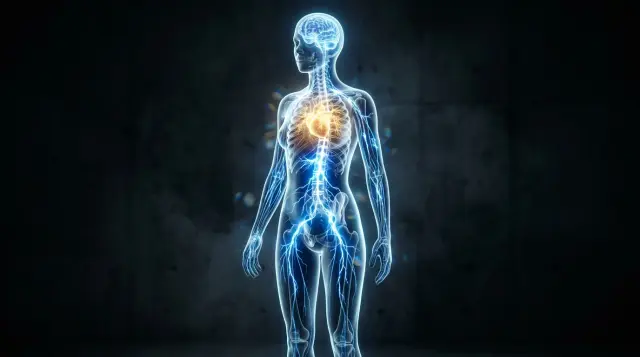
Right now, as you read this sentence, your body is generating enough electricity to power a light bulb. Not metaphorically. Literally. The roughly 37.2 trillion cells in your body are firing electrical signals, pumping ions across membranes, and producing measurable voltage that keeps your heart beating, your brain thinking, and your muscles contracting. You are, in the most real sense, an electrical being.
So why should any of this matter to someone who isn't wearing a lab coat? Because it's practical. Once you understand that your body runs on electrical signals, you start to see why things like sleep quality, EMF exposure, and even the clothes you wear can affect how you feel at the cellular level.
I've spent a lot of time reading through anatomy research, physiology papers, and some frankly wild biology journals. What I keep finding is a collection of facts most people never hear about, even though these processes are happening inside their own skin every single second. The human body is stranger, more resilient, and more electrically active than most of us ever realize.
What follows are 10 facts about the body's electrical and biological nature that range from genuinely surprising to borderline unbelievable. Some of them might change how you think about your health. All of them will remind you that you're walking around in the most sophisticated machine ever built.
How Much Electricity Does the Human Body Actually Produce?
Here's a number that catches people off guard: your body produces approximately 100 watts of power at rest. That's enough to run a standard incandescent light bulb. During intense exercise, that number can spike to around 2,000 watts in short bursts. The energy comes from ATP (adenosine triphosphate), the molecule your mitochondria churn out by the billions every second.
According to research from the Smithsonian Institution, the human body generates about 11 million joules of energy per day through normal metabolic processes. Your cells maintain an electrical potential across their membranes of about -70 millivolts. That doesn't sound like much. Then you remember it's happening across trillions of cells simultaneously.
This is part of why body science matters on a personal level. If your body is an electrical system, it responds to electrical environments. The bioelectricity coursing through your nerves and organs isn't isolated from the world around you. It interacts with external electromagnetic fields, which is exactly why companies like Proteck'd EMF Protection have developed clothing designed to shield against ambient EMF exposure.
Quick Q&A
Q: Can the human body's electricity be measured with standard instruments?
A: Yes, tools like EEG machines measure brain electrical activity and ECG/EKG machines measure the heart's electrical signals, both relying on the body's natural bioelectricity.
Think about it this way. Your body is a battery that recharges through food, sleep, and oxygen. Every time you eat a meal, you're not just "fueling up" in some vague sense. You're providing raw materials for electron transport chains inside your mitochondria. Physiology trivia doesn't get much more real than that.
Is It True That Your Skeleton Completely Replaces Itself?
Yes. Your skeleton is not the static framework most people imagine. According to the National Institutes of Health, bone is living tissue that undergoes continuous remodeling throughout your life. Osteoclasts break down old bone while osteoblasts build new bone, and the entire adult skeleton is replaced roughly every 10 years [1].
Your skeleton weighs only about 21 pounds on average for an adult male. Surprisingly light, considering it supports your entire body weight. And here's the engineering angle: bone is, pound for pound, stronger than steel. A cubic inch of bone can bear a load of about 19,000 pounds. The femur, your thigh bone, is the strongest and longest bone in the body and can withstand forces of up to 1,700 pounds before fracturing.
A quarter of all the bones in your body are in your feet. Each foot contains 26 bones, 33 joints, and over 100 muscles, tendons, and ligaments. That's more structural complexity than most buildings. Ever wondered why foot injuries can be so debilitating? It's because you're dealing with an incredibly intricate system of interlocking parts.
For more surprising facts about the physical world that sound made up but aren't, check out 12 Mind-Blowing Facts About Nature: That Sound Too Strange to Be True. The natural world, including the one inside your own body, is wilder than fiction.
Your body produces 100 watts of power at rest, fires nerve signals at 268 mph, replaces 330 billion cells every day, and emits light too faint for your eyes to see. You are not just alive. You are electric.
How Fast Do Nerve Signals Actually Travel?
The speed depends on the type of neuron. The fastest ones, called alpha motor neurons, transmit signals at up to 268 mph (about 120 meters per second). That's faster than a Formula 1 car. These myelinated nerve fibers are insulated by a fatty sheath that allows electrical impulses to jump between gaps called nodes of Ranvier, which dramatically increases transmission speed [2].
Not all signals move that fast, though. Pain signals from your skin travel at a comparatively slow 2 mph along unmyelinated C fibers. That's why when you stub your toe, you feel the pressure instantly but the pain arrives a beat later. Your body literally has a two-speed communication system.
The brain itself contains roughly 86 billion neurons, according to research published by neuroscientist Suzana Herculano-Houzel at Vanderbilt University. Each of those neurons can form thousands of connections, creating a network with more potential pathways than there are stars in the Milky Way. This is your body's electrical wiring, and it's more complex than any circuit board humans have ever designed.
Understanding how your body's electricity works at the nerve level is part of why this stuff matters for everyday decisions. Your nervous system is exquisitely sensitive to its environment, and that includes the electromagnetic radiation from your phone, your laptop, and your Wi-Fi router. If you're curious about how that radiation works, 7 Fascinating Facts About Electromagnetic Radiation: That Will Change How You See the World is a solid place to start.
Does Your Heart Really Generate Its Own Electromagnetic Field?
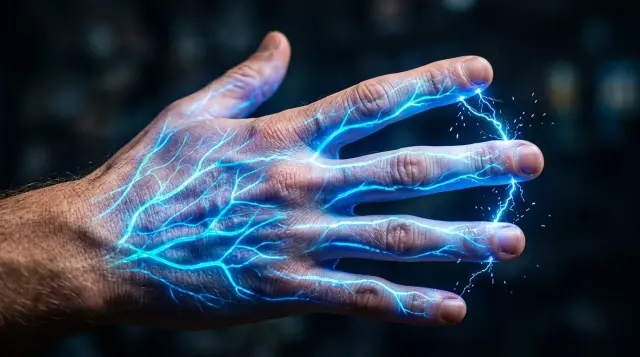
Your heart doesn't just pump blood. It generates the strongest electromagnetic field of any organ in your body. Research from the HeartMath Institute has shown that the heart's electrical field can be detected and measured up to 3 feet away from the body using sensitive magnetometers. The heart produces an electrical signal about 60 times greater in amplitude than the brain's.
The sinoatrial node, a small cluster of cells in the right atrium, acts as the heart's natural pacemaker. It generates the bioelectric impulse that triggers each heartbeat, roughly 100,000 times per day. That's about 2.5 billion beats over an average lifetime. And it does this entirely on its own. Even if you removed the heart from the body (and kept it supplied with oxygen), it would continue beating because it generates its own electrical rhythm.
This is one of the most fascinating examples of anatomy and bioelectricity working together. The heart is both a mechanical pump and an electrical generator. An ECG machine doesn't measure blood flow. It measures the electrical signals that coordinate each contraction. When cardiologists talk about arrhythmia, they're talking about an electrical problem, not a plumbing one.
Quick Q&A
Q: Can external electromagnetic fields interfere with the heart's natural rhythm?
A: Yes, the FDA has warned that strong electromagnetic fields can interfere with pacemakers and implantable cardiac devices, which is why EMF awareness matters for people with heart conditions.
Given how electrically active the heart is, it makes sense to be thoughtful about the electromagnetic fields you're exposed to daily. The Faraday Collection from Proteck'd was designed with exactly this kind of awareness in mind, using silver-infused fabric to create a layer of EMF shielding you can actually wear.
Why Does Your Body Replace 330 Billion Cells Every Single Day?
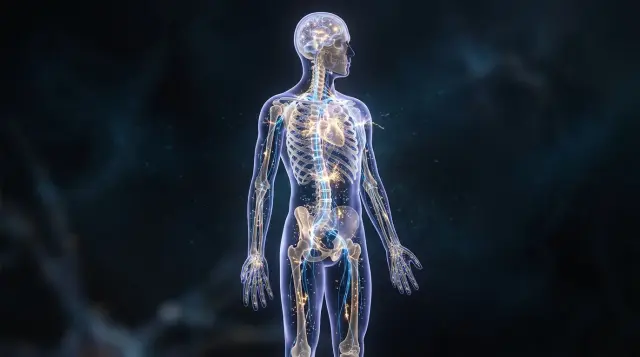
According to a 2021 study published in Nature Medicine, the human body replaces approximately 330 billion cells per day, with the vast majority being blood cells and gut lining cells [3]. That means roughly 1% of all your cells are swapped out daily. Over the course of about 7 to 10 years, almost every cell in your body has been replaced with a new one.
The exceptions are notable. Neurons in your cerebral cortex, the lens cells in your eyes, and certain muscle cells in the heart stick around for life. They don't divide and regenerate the way other cells do. That's why brain injuries and certain types of heart damage can be so permanent.
Your gut lining is one of the fastest-regenerating tissues. It replaces itself entirely every 3 to 5 days, according to research from Harvard Medical School. Your skin replaces itself roughly every 2 to 3 weeks. Your red blood cells live about 120 days before being recycled in the spleen and liver. The body is in a constant state of demolition and reconstruction.
This relentless cellular turnover is why nutrition, sleep, and environmental factors matter so much. Every new cell your body builds is constructed from the raw materials you provide it. And the electrical signals that coordinate all of this regeneration are part of the bioelectricity picture that doesn't get enough attention. Your body is literally rebuilding itself right now, and understanding how that works gives you an edge in supporting it.
What Weird Things Does Your Body Do That Are Actually Normal?
Ever had your eye twitch for no apparent reason? Or gotten hiccups that just won't stop? These quirks are your nervous system doing things that are usually harmless, even if they feel strange. Eye twitching, or myokymia, is typically caused by fatigue, caffeine, or stress. According to the Mayo Clinic, it's almost never a sign of a serious neurological condition [4].
Hiccups are involuntary contractions of the diaphragm followed by a sudden closure of the vocal cords. They're controlled by the phrenic nerve and the vagus nerve. Most hiccup episodes resolve on their own, but in rare cases, hiccups lasting more than 48 hours can indicate an underlying issue and should be checked out by a doctor.
Then there's the mystery of pruney fingers. Your fingers wrinkle in water not because of osmosis, as many people assume, but because of an autonomic nervous system response. Researchers at Newcastle University published a 2013 study suggesting wrinkled fingers improve grip on wet objects, which may have been an evolutionary advantage. Your body's electrical signaling system literally reshapes your skin for better function.
These body "glitches" are actually features, not bugs. They're examples of your physiology responding to environmental inputs in real time. For a collection of similarly surprising facts about the tech world, take a look at 10 Surprising Tech Facts That Sound Too Weird to Be True: The Complete List.
How Strong Are Your Muscles Compared to Machines?
The strongest muscle in the body based on its size is the masseter, your jaw muscle. According to the Library of Congress, the masseter can generate a bite force of up to 200 pounds on the molars. That's enough to crack a walnut without trying. Some people have been measured generating bite forces exceeding 900 pounds in clinical settings, though that's extreme.
Your muscles, all 600-plus of them, are activated by electrical signals from motor neurons. Every time you pick up a coffee cup, thousands of muscle fibers receive coordinated electrical impulses through neuromuscular junctions. The precision is staggering. You can apply enough force to crush an aluminum can or gentle enough pressure to hold a raw egg without breaking it. The difference is entirely electrical signaling.
Here's something most people don't know: your muscles are actually much stronger than you can consciously access. Your brain deliberately limits the percentage of muscle fibers you can recruit at any given time to prevent you from damaging your own tendons and bones. Under extreme adrenaline, like those stories of people lifting cars off trapped children, those governors get partially overridden. The electrical surge from your adrenal system temporarily removes the safety limits.
The interplay between your body's electricity and muscular force is a reminder that we're not just biological. We're bioelectrical. And the electromagnetic environment we live in is worth paying attention to. If you want to Learn About EMF Protection and how it relates to daily bioelectric health, Proteck'd has a solid FAQ section that breaks it all down.
Can Your Body Detect Electromagnetic Fields?
This one gets debated, but the science is getting more interesting every year. A 2019 study led by geoscientist Joseph Kirschvink at Caltech found evidence that the human brain responds to changes in Earth-strength magnetic fields. Using EEG measurements inside a Faraday cage, Kirschvink's team observed reproducible drops in alpha brain wave activity when the ambient magnetic field was rotated. The implication? Humans may have a latent magnetoreception ability, similar to birds and sea turtles.
We already know that certain cells in the body contain trace amounts of magnetite, a naturally magnetic mineral. Magnetite crystals have been found in human brain tissue, according to research published in the Proceedings of the National Academy of Sciences (PNAS). Whether these crystals play a functional role in sensing electromagnetic fields is still being studied, but their presence is confirmed.
This connects directly to why body science matters in a modern context. We live surrounded by artificial electromagnetic fields from cell towers, Wi-Fi routers, Bluetooth devices, and smart meters. If our bodies have some sensitivity to magnetic fields, even a latent one, the question of EMF exposure becomes much more personal. For more on the surprising tech behind the devices we use every day, check out 12 Surprising Tech Facts You Didn't Know: The Complete List.
While more research is needed, the cautious approach is to reduce unnecessary exposure where you can. That's the philosophy behind products like the Faraday Collection, which uses conductive silver fabric to attenuate electromagnetic radiation without requiring you to change your lifestyle.
Why Do We Produce Light We Can't See?
Here's one that sounds like science fiction: your body emits visible light. Not enough for your eyes to detect, but real, measurable photons. A 2009 study by Japanese researchers at Tohoku Institute of Technology, published in the journal PLOS ONE, used ultra-sensitive cameras to photograph the biophotons emitted by human skin. The glow fluctuated throughout the day, peaking in the afternoon and being strongest around the face.
These biophotons are produced by chemical reactions involving free radicals and the metabolic processes inside your cells. They're incredibly faint, about 1,000 times weaker than what the human eye can perceive. But they're real. Researchers are investigating whether biophoton emission patterns might eventually serve as diagnostic markers for certain health conditions.
This fact alone should reframe how you think about the human body. You're not just an electrical system. You're a light-emitting one, too. The body's bioelectricity, its chemical processes, and its photon emissions are all interconnected systems operating simultaneously. Human physiology is, at its core, a multi-spectrum energy phenomenon.
Understanding the body as an energy system, not just a mechanical one, is part of what makes these anatomy facts so much more than party tricks. It's science with real implications for how we interact with our environment, the devices we carry, and even the fabric against our skin.
What Should You Actually Do With All This Knowledge?
Knowing that your body is a bioelectric, light-emitting, self-regenerating system isn't just intellectually satisfying. It's actionable. If your cells communicate through electrical signals, then it matters what electrical environment you put yourself in. If your body replaces 330 billion cells a day, then the quality of your nutrition, sleep, and recovery directly shapes the body you'll be living in next month.
Why does any of this matter in practice? Because awareness leads to better choices. People who understand that their nervous system is electrically sensitive tend to be more thoughtful about screen time, more intentional about rest, and more curious about how everyday technologies interact with their bodies.
That curiosity is exactly what drives companies like Proteck'd EMF Protection to create wearable solutions that blend into normal life. You don't have to move off the grid or wrap your house in aluminum foil. You just have to be aware. And sometimes, wearing a shirt with silver-infused fabric is the most practical way to add a layer of protection between your bioelectric body and the electromagnetic world around it.
Your body is the most remarkable thing you'll ever own. The more you know about how it works, the better you can take care of it. And honestly? The facts alone are worth the read. Because once you know you glow in the dark (just barely), you never quite look at yourself the same way again.
Key Takeaways
Frequently Asked Questions
How much electricity does the human body produce?
The human body produces roughly 100 watts of electrical power at rest through normal metabolic processes. During intense physical activity, output can spike much higher. This energy comes from ATP production in the mitochondria and powers everything from nerve signaling to muscle contraction.
Can electromagnetic fields from devices affect the human body?
There's growing research suggesting that artificial EMFs can interact with the body's bioelectric systems. The FDA has noted that strong electromagnetic fields can interfere with implanted cardiac devices. While more long-term studies are needed, many health-conscious people are choosing to reduce unnecessary EMF exposure through shielding products and distance strategies.
How fast do nerve signals travel in the human body?
The fastest nerve signals travel at up to 268 mph along myelinated alpha motor neurons. Slower pain signals along unmyelinated C fibers move at only about 2 mph. This two-speed system explains why you feel pressure before pain when you stub your toe.
Is it true that the heart generates its own electromagnetic field?
Yes. The heart produces the strongest electromagnetic field of any organ, measurable up to 3 feet from the body using magnetometers. The sinoatrial node generates the electrical impulse for each heartbeat independently, which is why an isolated heart can continue beating if supplied with oxygen.
How many cells does the human body replace each day?
According to a 2021 study in Nature Medicine, the body replaces about 330 billion cells daily. Most of these are blood cells and cells lining the gut. Some cells, like cortical neurons and heart muscle cells, are rarely or never replaced.
Does the human body actually emit light?
Yes. The human body emits biophotons, which are real but ultra-faint photons of visible light. They're about 1,000 times too weak for the human eye to see. Japanese researchers at the Tohoku Institute of Technology documented this in a 2009 study using highly sensitive cameras.
What is the strongest muscle in the human body?
Based on its size, the masseter (jaw muscle) is considered the strongest. It can generate a bite force of up to 200 pounds on the molars during normal function. In clinical testing, some individuals have produced bite forces exceeding 900 pounds.
Can humans sense magnetic fields like birds do?
Possibly. A 2019 Caltech study led by Joseph Kirschvink found that human brains show measurable responses to changes in Earth-strength magnetic fields via EEG. Magnetite crystals have also been found in human brain tissue. This suggests a latent magnetoreception ability, though more research is needed to confirm its functional role.
How often does the human skeleton replace itself?
The adult skeleton fully regenerates approximately every 10 years through a process called bone remodeling. Osteoclasts break down old bone while osteoblasts build new bone tissue. That's why nutrition and physical activity remain important for bone health throughout life.
Why do fingers wrinkle in water?
Finger wrinkling in water isn't caused by osmosis. It's an active response by the autonomic nervous system. A 2013 Newcastle University study suggested wrinkled fingers improve grip on wet objects, potentially offering an evolutionary advantage. If the nerve to a finger is cut, it won't wrinkle in water.
What is EMF shielding clothing and how does it work?
EMF shielding clothing uses conductive materials, typically silver-infused fabric, woven into the garment to reduce electromagnetic radiation reaching the skin. The conductive fibers create a mesh that reflects or absorbs EMFs. Products like those in Proteck'd's Faraday Collection are designed for everyday wear while providing measurable shielding.
References
- National Institutes of Health (NIH) - Bone Remodeling – Bone is living tissue that undergoes continuous remodeling, with the adult skeleton replaced roughly every 10 years.
- Cleveland Clinic - Nerve Signal Transmission – Myelinated nerve fibers transmit electrical signals at speeds up to 120 meters per second (268 mph).
- Nature Medicine - Cell Turnover Study (2021) – The human body replaces approximately 330 billion cells per day, with the majority being blood cells and gut lining cells.
- Mayo Clinic - Eye Twitching (Myokymia) – Eye twitching (myokymia) is typically caused by fatigue, caffeine, or stress and is almost never a sign of a serious neurological condition.
About the Author
Proteck'd EMF Apparel
Health & EMF Specialists
The Proteck'd team covers EMF protection, silver-fiber apparel, and practical ways to reduce everyday radiation exposure. Every piece Proteck'd ships is designed, tested, and worn by the people who build it.
Protect Yourself Today
Proteck'd Faraday and silver fiber apparel is engineered to shield your body from everyday EMF exposure. Built for real life, tested for real results.
Shop EMF Protection →✓30-day returns✓Free shipping✓Free returns✓Silver fiber shielding


Leave a comment