


10 Fascinating Facts About Electromagnetic Radiation: You Won't Believe Are True

Right now, as you read this sentence, billions of photons are passing through your body. Radio waves from cell towers. Wi-Fi signals bouncing off your walls. Infrared radiation rising from your own skin. You can't see any of it. Can't feel it either. But it's as real as the chair you're sitting in.
When people bring up physics facts mind blowing enough to rethink reality, electromagnetic radiation rarely gets the spotlight. Quantum entanglement and black holes hog all the attention. But EM radiation is the backbone of, well, everything. It's how your eyes work. It's how your phone works. It's how stars announce themselves across billions of light-years of empty space.
I've spent a lot of time reading the research on this, and I keep stumbling on details that genuinely surprise me. Things that sound like science fiction but are backed by organizations like NASA, the World Health Organization, and research teams at MIT and CERN.
So let's get into it. These 10 facts about electromagnetic radiation aren't just trivia. They're windows into how the universe actually operates. And a few of them might change the way you think about the invisible energy surrounding you every single day.

Visible light is less than 0.0035% of the electromagnetic spectrum. Your body emits 100 watts of infrared radiation right now. And a gamma ray photon carries a billion times the energy of a radio wave. The universe is stranger than we're built to perceive.
How Fast Does Electromagnetic Radiation Actually Travel?
Every form of electromagnetic radiation, from the lowest-frequency radio wave to the highest-energy gamma ray, travels at exactly the same speed in a vacuum: 299,792,458 meters per second [1]. That's roughly 670 million miles per hour. Let that number sit for a second.
What makes this such an astonishing physics fact is how universal it is. Doesn't matter if it's a microwave heating your leftovers or a beam of ultraviolet light from the sun. In a vacuum, the speed is identical. Albert Einstein built his entire 1905 theory of special relativity on this single, stubborn constant. Nothing with mass can ever reach it. Nothing without mass can ever go slower.
Here's a concrete way to grasp it: a photon of light leaving the sun takes about 8 minutes and 20 seconds to reach Earth, covering 93 million miles. That same photon could circle our planet 7.5 times in a single second. According to NASA's Goddard Space Flight Center, this speed limit applies uniformly across the entire electromagnetic spectrum, which is why astronomers can use different wavelengths interchangeably to measure cosmic distances [1].
Quick Q&A
Q: Do all types of electromagnetic radiation travel at the same speed?
A: Yes, in a vacuum all electromagnetic radiation travels at exactly 299,792,458 meters per second, regardless of wavelength or frequency.
But here's the twist. Light slows down when it passes through matter. In water, it drops to about 75% of its vacuum speed. In diamond, roughly 41%. That's what creates the sparkle you see in a well-cut gem. The light bends and refracts because it's constantly changing speed as it enters and exits the crystal lattice. If you've ever wondered why nature facts and physics facts overlap so often, that's a perfect example. For more on how natural phenomena hide incredible science, check out 7 Mind-Blowing Facts About The Natural World: That Sound Too Strange to Be True.
Is It True That Light Is Both a Wave and a Particle?
Yes. And it's one of the most counterintuitive ideas in all of science. Light, and all electromagnetic radiation for that matter, exhibits wave-particle duality. It behaves like a wave when it diffracts through a slit. It behaves like a particle when it knocks electrons off a metal surface. Both behaviors are real. Neither is the "true" nature of light. It's both, depending on how you observe it.
The famous double-slit experiment, first performed by Thomas Young in 1801 and refined countless times since, shows this perfectly. When photons pass through two narrow slits, they create an interference pattern on a screen behind them. Exactly what waves do. But when scientists at the Weizmann Institute in Israel placed detectors at the slits in 1998, the interference pattern vanished. The photons started behaving like particles. The act of observation literally changed the outcome.
This is one of those mind blowing physics facts that even physicists find unsettling. Richard Feynman, the Nobel Prize-winning physicist from Caltech, once said the double-slit experiment contains "the only mystery" of quantum mechanics. He wasn't exaggerating. It applies to all forms of EM radiation across the spectrum, from radio frequency waves to X-rays.
If you're curious how these invisible forces shape everyday technology and health, 12 Mind-Blowing Facts About The Invisible Forces Around Us: You Won't Believe Are True goes deeper into the topic.
What Percentage of the Electromagnetic Spectrum Can Humans Actually See?
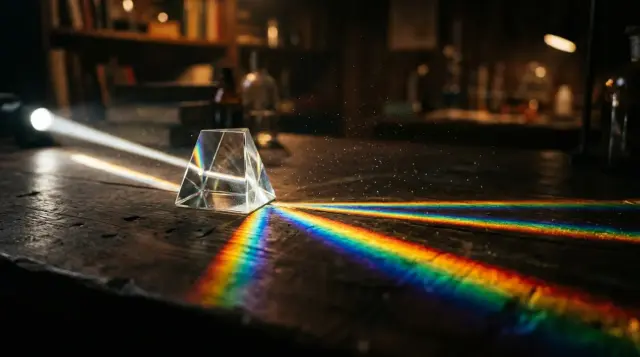
Almost none of it. Visible light, the rainbow of colors your eyes can detect, occupies a sliver so thin it's almost embarrassing. According to NASA, visible light spans wavelengths from roughly 380 nanometers (violet) to 700 nanometers (red). The full electromagnetic spectrum stretches from radio waves with wavelengths longer than a football field to gamma rays smaller than an atomic nucleus [1].
Do the math and visible light represents less than 0.0035% of the total spectrum. You're functionally blind to 99.99% of all the electromagnetic radiation around you right now. Radio waves from your Wi-Fi router. Infrared radiation from your body heat. Ultraviolet light from the sun. Microwave signals from cell towers. All invisible. All real.
Think about what that actually means. Mantis shrimp can see into the ultraviolet range that's completely invisible to us. Pit vipers detect infrared radiation to locate warm-blooded prey in total darkness. Our perception of reality is shaped by a tiny keyhole. For more examples of nature's hidden strangeness, check out 12 Mind-Blowing Facts About Nature: That Sound Too Strange to Be True.
This limited visibility is exactly why we've had to build instruments to "see" the rest. Radio telescopes like the Karl G. Jansky Very Large Array in New Mexico detect radio waves from distant galaxies. X-ray telescopes aboard NASA's Chandra Observatory image phenomena like black hole accretion disks. We engineered our way past evolution's limitations, one wavelength at a time.
Does Your Body Actually Emit Electromagnetic Radiation?
It does. Constantly. Your body is a source of infrared electromagnetic radiation, and at rest, you emit roughly 100 watts of it. That's about the same energy output as an old-school incandescent light bulb. The Stefan-Boltzmann law, named after physicists Josef Stefan and Ludwig Boltzmann in the 1880s, describes exactly how much thermal radiation any warm object produces based on its temperature.
At a core temperature of about 37°C (98.6°F), your body's peak emission falls around a wavelength of 10 micrometers, well into the infrared range. This is the principle behind thermal imaging cameras. When firefighters use FLIR (Forward Looking Infrared) cameras to find people in smoke-filled buildings, they're literally detecting the electromagnetic radiation your body naturally produces.
And it's not just heat. Research published in PLOS ONE in 2009 by a team from Tohoku Institute of Technology in Japan confirmed that the human body emits ultra-weak photon emissions, sometimes called biophotons, in the visible light range. The intensity is roughly 1,000 times lower than what the naked eye can perceive. So yes, you glow. Just not enough for anyone to notice without extremely sensitive photon-counting cameras.
Quick Q&A
Q: How much infrared radiation does the human body emit?
A: The average human body at rest emits approximately 100 watts of infrared electromagnetic radiation, peaking at a wavelength around 10 micrometers.
How Much More Energy Does a Gamma Ray Have Compared to a Radio Wave?
The energy difference between the two ends of the electromagnetic spectrum is staggering. A single gamma ray photon can carry roughly one billion times more energy than a single radio wave photon. That's not a rough estimate. It follows directly from Max Planck's equation, E = hf, where energy is proportional to frequency. Gamma rays have frequencies in the range of 10^19 hertz and above, while AM radio waves sit around 10^6 hertz.
This is why gamma radiation from sources like cobalt-60 can destroy cancer cells during radiation therapy, while radio waves pass through your body harmlessly all day long. Same fundamental phenomenon. Wildly different energy scales. The National Institute of Standards and Technology (NIST) maintains precise measurements of these energy levels, confirming that the spectrum spans more than 20 orders of magnitude in frequency.
Here's what makes this one of the most mind blowing physics facts around. A gamma ray photon from a distant supernova traveled for millions of years across space, and when it arrives at NASA's Fermi Gamma-ray Space Telescope, it carries enough energy to be individually counted. Meanwhile, detecting a single radio wave photon requires cooling equipment to near absolute zero because each photon carries so little energy. Same species of radiation. Astronomically different punch.
Can Everyday Devices Produce Electromagnetic Fields That Reach Your Body?
Absolutely. And this is where things get personal. Your smartphone, your Wi-Fi router, your laptop, your microwave oven, even the wiring in your walls. All of them generate electromagnetic fields that interact with your body. The question isn't whether these fields exist. The question is what, if anything, they do when they reach you.
According to the World Health Organization, the average person in a developed country is exposed to RF (radio frequency) electromagnetic fields from wireless devices at levels far below international safety guidelines set by ICNIRP (International Commission on Non-Ionizing Radiation Protection) [2]. In 2011, the WHO's International Agency for Research on Cancer (IARC) classified RF electromagnetic fields as Group 2B, meaning "possibly carcinogenic to humans," based on a review of epidemiological data including the Interphone study [3].
That classification sits in the same category as pickled vegetables and talcum powder. It doesn't mean RF radiation causes cancer. It means the evidence was considered sufficient to warrant further research but insufficient for a definitive conclusion. Still, a lot of people prefer taking a proactive approach to reducing their exposure. That's where products like EMF-shielding clothing come in. Proteck'd EMF Protection designs apparel with silver-threaded fabric specifically engineered to attenuate RF radiation before it reaches your skin.
If you want to understand how this technology works in practice, you can Learn About EMF Protection on Proteck'd's FAQ page. And if you're curious about the tech behind your everyday devices, 10 Surprising Tech Facts That Sound Too Weird to Be True: The Complete List covers some wild details.
What Is Quantum Entanglement and Why Does It Involve Electromagnetic Radiation?
Quantum entanglement is one of those concepts that even Albert Einstein couldn't stomach. He famously called it "spooky action at a distance." Here's the basic idea: two photons (particles of electromagnetic radiation) can become entangled so that measuring one instantly determines the state of the other, no matter how far apart they are. Not eventually. Instantly.
In 2015, a team led by physicist Ronald Hanson at Delft University of Technology in the Netherlands performed a loophole-free Bell test, proving once and for all that entanglement is real and not caused by hidden local variables [4]. The experiment measured entangled particles separated by 1.3 kilometers and confirmed correlations that classical physics simply cannot explain.
Entangled photons are now the foundation of quantum cryptography and quantum computing research at institutions like IBM, Google's Sycamore lab, and China's University of Science and Technology in Hefei. In 2017, the Chinese satellite Micius demonstrated entanglement-based quantum key distribution over 1,200 kilometers. That's EM radiation being used to build unhackable communication networks.
If you find this stuff as wild as I do, you might enjoy 12 Surprising Tech Facts You Didn't Know: The Complete List, which covers more of these science-meets-technology crossovers.
Why Does Time Slow Down for Light?
Here's a brain-bender. From a photon's perspective, time doesn't pass. At all. According to Einstein's special relativity, as an object approaches the speed of light, time dilates, meaning it slows down relative to a stationary observer. At exactly the speed of light, time stops completely.
So a photon emitted from a star 13 billion light-years away? From its own frame of reference, it arrives at your eye the instant it was created. The entire age of the universe, from that photon's "experience," is zero. Physicists at CERN have confirmed time dilation effects with extraordinary precision using particle accelerators, where muons traveling at 99.94% the speed of light last 29 times longer than stationary muons.
GPS satellites offer a more everyday example. The atomic clocks on board run about 38 microseconds faster per day than identical clocks on Earth's surface, thanks to a combination of special and general relativity effects. Without correcting for this, your GPS location would drift by roughly 10 kilometers per day. Time dilation isn't just a thought experiment. It's baked into the technology you use to find the nearest coffee shop.
Can You Actually Shield Yourself from Electromagnetic Radiation?
Yes, and the physics behind it is surprisingly straightforward. A Faraday cage, named after the English scientist Michael Faraday who built the first one in 1836, works by redistributing electric charges on its conductive surface to cancel out incoming electromagnetic fields. The key is using a conductive material with openings smaller than the wavelength of the radiation you want to block.
Your microwave oven is a Faraday cage. The mesh on the door has holes small enough to block microwaves (wavelength around 12 centimeters) while letting visible light through (wavelength around 500 nanometers). That's why you can watch your popcorn pop without getting cooked yourself.
This same principle scales down to wearable technology. Silver is one of the most electrically conductive elements on the periodic table, and when woven into fabric, it creates a flexible, wearable shield against RF electromagnetic radiation. The Faraday Collection from Proteck'd uses exactly this approach, integrating silver-threaded textiles into everyday clothing that looks like normal streetwear but attenuates radio frequency fields before they reach your body.
Research from the IEEE (Institute of Electrical and Electronics Engineers) has demonstrated that silver-coated textiles can achieve shielding effectiveness of 40 to 60 dB in the 1 to 10 GHz range, which covers most Wi-Fi and cellular frequencies. That translates to blocking 99% to 99.999% of RF energy in those bands. Not bad for a t-shirt.
Are We Really Made of the Same Stuff as Electromagnetic Radiation?
In a sense, yes. And this might be the most profound fact on this list. According to quantum field theory, the framework that unifies quantum mechanics and special relativity, photons and the particles that make up your body (electrons, quarks) are all excitations of underlying quantum fields. Matter and radiation are different expressions of the same fundamental reality.
The proof? Pair production. When a sufficiently energetic gamma ray photon passes near an atomic nucleus, it can spontaneously convert into an electron and a positron (an antimatter electron). Pure electromagnetic energy becomes matter. Patrick Blackett and Giuseppe Occhialini first observed this at Cambridge's Cavendish Laboratory in 1933, and it earned Blackett the 1948 Nobel Prize in Physics.
The reverse happens too. When an electron meets a positron, they annihilate and produce gamma ray photons. Matter becomes radiation. This process is the basis of PET (Positron Emission Tomography) scans used in hospitals worldwide. Every time a doctor images a patient's brain or heart using a PET scanner, they're watching matter-to-radiation conversion in real time, inside a living human body.
Among all the physics facts mind blowing enough to reshape your worldview, this one hits hardest. The boundary between "stuff" and "light" isn't a wall. It's a revolving door. And every atom in your body was forged in the nuclear furnace of a star that eventually scattered its material across space. You are, quite literally, recycled stardust held together by the same forces that govern electromagnetic radiation. For more on the strange realities hidden in the natural world, 7 Mind-Blowing Facts About The Natural World: That Sound Too Strange to Be True is a great next read.
- All electromagnetic radiation, from radio waves to gamma rays, travels at exactly 299,792,458 m/s in a vacuum.
- Visible light represents less than 0.0035% of the full electromagnetic spectrum, meaning humans are blind to over 99.99% of EM radiation.
- Your body constantly emits approximately 100 watts of infrared electromagnetic radiation and even ultra-weak visible biophotons.
- The WHO's IARC classified RF electromagnetic fields as Group 2B (possibly carcinogenic) in 2011, prompting ongoing research.
- Silver-threaded fabrics can achieve 40 to 60 dB shielding effectiveness against RF radiation in the 1 to 10 GHz range, blocking over 99% of energy.
Frequently Asked Questions
Electromagnetic radiation is energy that moves through space as waves of electric and magnetic fields. It includes everything from radio waves and microwaves to visible light, X-rays, and gamma rays. All types travel at the speed of light in a vacuum. They only differ in wavelength and frequency.
No. The vast majority of EM radiation you encounter daily, like visible light and radio waves, is non-ionizing and doesn't carry enough energy to damage DNA directly. Ionizing radiation like X-rays and gamma rays does carry that energy, which is why medical X-ray exposure is carefully controlled. The risk depends on frequency, intensity, and duration of exposure.
A Faraday cage redistributes electric charges across its conductive surface, creating an opposing field that cancels out incoming electromagnetic radiation. The openings in the cage must be smaller than the wavelength of the radiation being blocked. That's why your microwave's door mesh stops microwaves but still lets you see through it.
Yes. Your body constantly emits infrared radiation due to its temperature, roughly 100 watts at rest. Research from Tohoku Institute of Technology in 2009 also confirmed that humans emit ultra-weak visible light photons called biophotons, though at intensities far too low for the naked eye to detect.
Yes, if the clothing contains conductive materials like silver threading. Silver-threaded fabrics have been shown in IEEE research to achieve 40 to 60 dB of shielding effectiveness in the 1 to 10 GHz frequency range. That translates to blocking 99% or more of radio frequency energy. Brands like Proteck'd integrate this technology into everyday apparel.
In 2011, the WHO's International Agency for Research on Cancer (IARC) classified RF electromagnetic fields as Group 2B, meaning 'possibly carcinogenic to humans.' This classification was based on limited evidence from epidemiological studies, including the Interphone study. It doesn't mean RF fields definitively cause cancer, but that more research was warranted.
Human eyes evolved to detect only wavelengths between roughly 380 and 700 nanometers, which we perceive as visible light. This range is a tiny fraction, less than 0.0035%, of the full electromagnetic spectrum. We can't see radio waves, microwaves, infrared, ultraviolet, X-rays, or gamma rays because our retinal photoreceptors simply aren't sensitive to those wavelengths.
Several stand out: light travels at 299,792,458 meters per second, it behaves as both a wave and a particle simultaneously, and from a photon's own reference frame, zero time passes regardless of the distance traveled. On top of that, a single gamma ray photon carries roughly one billion times the energy of a radio wave photon, even though both are forms of the same phenomenon.
Photons, the particles of electromagnetic radiation, can become quantum entangled. When two photons are entangled, measuring the state of one instantly determines the state of the other regardless of distance. A 2015 loophole-free Bell test at Delft University confirmed this phenomenon. Entangled photons are now being used to develop quantum encryption and communication networks.
5G operates at higher frequencies than previous cellular generations, primarily in the sub-6 GHz range and, for some applications, in the millimeter wave range (24 to 39 GHz). These are still non-ionizing radio frequency emissions, fundamentally the same type of radiation as 4G, Wi-Fi, and FM radio. The FCC sets exposure limits to ensure that SAR values remain below 1.6 W/kg for all consumer devices, including 5G phones.
References
- World Health Organization - Electromagnetic Fields – The average person in a developed country is exposed to RF electromagnetic fields at levels far below international safety guidelines.
- IARC WHO - IARC Classifies Radiofrequency Electromagnetic Fields – In 2011, IARC classified RF electromagnetic fields as Group 2B, possibly carcinogenic to humans.
- Nature - Loophole-free Bell inequality violation – A 2015 loophole-free Bell test at Delft University definitively proved quantum entanglement is real and not caused by hidden local variables.
About the Author
Proteck'd EMF Apparel
Health & EMF Specialists
The Proteck'd team covers EMF protection, silver-fiber apparel, and practical ways to reduce everyday radiation exposure. Every piece Proteck'd ships is designed, tested, and worn by the people who build it.
Protect Yourself Today
Proteck'd Faraday and silver fiber apparel is engineered to shield your body from everyday EMF exposure. Built for real life, tested for real results.
Shop EMF Protection →✓30-day returns✓Free shipping✓Free returns✓Silver fiber shielding


Leave a comment