


How Radiation Disrupts Sleep Hormones: What Happens to Melatonin

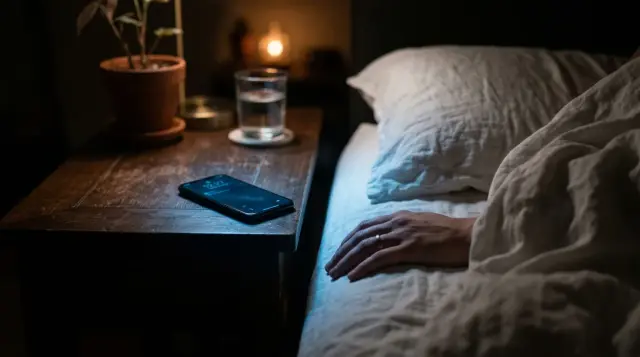
You turned off the lights an hour ago. Eyes closed. But your brain? Still buzzing, still wide awake. The melatonin that should be washing through your system is barely showing up. If sleep has felt harder lately, the culprit might be sitting on your nightstand right now, glowing faintly in the dark.
Here's something most people never think about when they ask how to become radiation protection advisor for their own health: the electromagnetic fields radiating from your phone, your Wi-Fi router, even your alarm clock may be actively suppressing the hormone your body needs to fall asleep and stay there. We're not talking about massive industrial exposure. We're talking about the quiet, low-level hum of ordinary life.
Melatonin isn't just a "sleepy" chemical, either. It's one of the most powerful antioxidants your body produces. It repairs cellular damage, supports your immune system, and keeps your entire circadian rhythm on track. When EMF exposure chips away at melatonin production night after night, the fallout goes way beyond morning grogginess.
I spent months reading the research on this, and honestly, what I found caught me off guard. The connection between electromagnetic radiation and sleep disruption isn't fringe science. It's published in peer-reviewed journals. It's acknowledged by agencies like the World Health Organization. So let's break down exactly what's happening inside your brain when you sleep next to your devices, and what you can actually do about it.

Your pineal gland doesn't need a perfect environment. It just needs less electromagnetic interference during the hours when melatonin production peaks. Even small reductions in nighttime EMF exposure can compound into meaningfully better sleep over weeks and months.
What Does Melatonin Actually Do While You Sleep?
Before we talk about how radiation interferes with melatonin, let's get clear on what melatonin does in the first place. Your pineal gland, a tiny pea-sized structure buried deep in your brain, starts producing melatonin when darkness falls. Production typically ramps up around 9 PM, peaks between 11 PM and 3 AM, and tapers off by dawn [1]. That cycle is your circadian rhythm doing its thing.
But melatonin isn't just a sleep switch. According to research published through the National Institutes of Health, melatonin functions as a free radical scavenger. It actively hunts down and neutralizes oxidative stress in your cells [1]. Think of it as your body's overnight repair crew. Without enough of it, cellular damage piles up, inflammation increases, and your immune defenses start to falter.
Here's a real-world example that makes this concrete. Shift workers, people who are awake during the hours when melatonin should peak, have significantly higher rates of cardiovascular disease, metabolic syndrome, and even certain cancers. The WHO's International Agency for Research on Cancer has actually classified night shift work as a Group 2A probable carcinogen, partly because of chronic melatonin suppression [2]. That tells you something about how seriously the scientific community takes this hormone.
So when something in your environment quietly interferes with melatonin production every single night, even by a small amount, the cumulative effect matters. A lot. For a broader look at the full picture, check out Understanding EMF Radiation: A Complete Guide.
How Does EMF Radiation Affect the Pineal Gland?
The pineal gland is uniquely sensitive to electromagnetic signals. That's actually its job. It reads light cues from your environment to decide when to produce melatonin. The problem? It doesn't just respond to visible light. Research suggests it also responds to radiofrequency (RF) and extremely low frequency (ELF) electromagnetic fields, the kind generated by phones, Wi-Fi routers, and household wiring.
A 2013 review published in the International Journal of Environmental Research and Public Health examined multiple studies on ELF magnetic field exposure and found statistically significant reductions in 6-OHMS, a primary melatonin metabolite measured in urine [1]. In plain terms: people exposed to more electromagnetic radiation at night produced less melatonin. The effect was particularly clear in residential studies where exposure came from power lines and household appliances.
Quick Q&A
Q: Can a Wi-Fi router in the bedroom really affect melatonin levels?
A: Yes, studies have shown that continuous RF exposure from devices like routers can contribute to reduced melatonin production, especially during the peak secretion hours of 11 PM to 3 AM.
One mechanism researchers have proposed involves calcium ion channels in cell membranes. Dr. Martin Pall at Washington State University published work suggesting that EMF exposure activates voltage-gated calcium channels (VGCCs), flooding cells with calcium ions and triggering a cascade of oxidative stress. The pineal gland, being small and metabolically active, may be especially vulnerable to this process.
If you want to understand how EMF affects more than just sleep, How EMF Affects Your Body's Defenses covers the broader immune implications.
Does Your Phone on the Nightstand Actually Disrupt Sleep?
Let me paint a picture. You're lying in bed, phone plugged in six inches from your head, Wi-Fi on, Bluetooth active. Your phone is transmitting RF signals to cell towers, pinging your router, possibly syncing with a smartwatch. All night long. Even in standby mode, a typical smartphone emits radiofrequency radiation that meets but stays within the FCC's specific absorption rate (SAR) limit of 1.6 W/kg averaged over 1 gram of tissue.
But "within limits" doesn't mean "without biological effect." The FCC's SAR standards were established in 1996. They were based largely on thermal effects, meaning they only accounted for radiation intense enough to heat tissue. They weren't designed to address non-thermal biological effects like melatonin suppression. The IARC's 2011 classification of RF fields as Group 2B, possibly carcinogenic, was based partly on evidence that non-thermal effects deserve more study [2].
A 2008 study funded by the Mobile Manufacturers Forum and conducted by researchers at the Karolinska Institute in Sweden and Wayne State University found that subjects exposed to 884 MHz RF signals (similar to cell phone frequencies) before bed took longer to reach deep sleep and spent less time in it. They also reported more headaches. That's not speculation. That's a funded, controlled experiment published in peer-reviewed literature.
So what do you actually do about it? The simplest step is putting your phone in airplane mode at night. If you need an alarm, airplane mode still allows the clock to function. For those who want to go further, Faraday EMF Collection products from Proteck'd offer shielding options designed specifically for sleep environments. Every small reduction in nighttime EM radiation exposure counts.
How to Become Radiation Protection Advisor for Your Own Bedroom
You don't need a degree in health physics to make meaningful changes. But thinking about this systematically, the way a radiation protection professional would, helps a lot. In the formal world of radiation safety, professionals like Radiation Protection Technologists certified through the National Registry of Radiation Protection Technologists (NRRPT) follow specific protocols to minimize exposure. The principles they use, time, distance, and shielding, apply directly to your bedroom.
Time means reducing the duration of exposure. Move your phone out of the room or switch it to airplane mode. Don't fall asleep with a laptop on your chest. Distance matters too. The intensity of electromagnetic fields drops dramatically with distance, following an inverse square law for many sources. Moving your router from the bedroom to a hallway can reduce RF exposure significantly.
Shielding is where things get interesting. Organizations like OSHA, which sets ionizing radiation exposure limits under 29 CFR 1910.1096 [3], understand that physical barriers are often the most effective protection strategy. The same principle applies to non-ionizing EMF. Silver-threaded fabrics, for instance, can reflect and absorb RF radiation. Silver EMF Clothing: Complete Guide To Protection explains exactly how these materials work.
Learning how to become radiation protection advisor for your household doesn't require formal certification. But borrowing principles from radiation safety training courses, like those offered by organizations such as Radiation Solutions and Westinghouse Nuclear for professional technicians, gives you a solid framework. Identify sources. Measure or estimate exposure. Apply controls. Same logic, just scaled to a bedroom instead of a nuclear facility.
Quick Q&A
Q: What are the three core principles of radiation protection?
A: Time, distance, and shielding. Reduce the time you're exposed, increase your distance from the source, and place shielding materials between you and the source.
Can EMF-Shielding Products Really Improve Sleep Quality?
This is where healthy skepticism is fair. Can a piece of clothing or a blanket actually make a difference in how you sleep? The honest answer: the evidence is encouraging but still developing. What we do know is that silver-based fabrics have been independently tested and shown to attenuate RF signals across a broad frequency range. The physics here isn't controversial at all. Silver is one of the most conductive elements on Earth, and conductive materials reflect electromagnetic waves. That's how Faraday cages work, and it's the same principle behind Proteck'd EMF Protection products.
Several users report subjective improvements in sleep quality, reduced nighttime waking, and feeling more rested. I'll be the first to say anecdotal evidence doesn't replace controlled trials. But when those anecdotes line up with the known science of EMF and melatonin suppression, they're worth paying attention to. Especially when the intervention is as low-risk as wearing a different shirt to bed.
Think about it this way. If your bedroom is a soup of RF signals from a router, a smart TV, two phones, and a baby monitor, every layer of shielding you add reduces the total electromagnetic radiation reaching your pineal gland during those critical overnight hours. You can read more about the specific EMF Protection Benefits on the Proteck'd FAQ page.
For families with kids, this matters even more. Children's thinner skulls and developing nervous systems may make them more susceptible to EMF effects. Protecting the Next Generation: How Families Are Responding covers how parents are taking action.
Why Do Some Studies Show No Effect While Others Do?
If you've ever Googled "does EMF affect health," you've probably noticed the research seems to contradict itself. Some studies find clear effects on melatonin and sleep. Others find nothing. So what's going on?
A big part of the inconsistency comes down to study design. Exposure parameters vary wildly. One study might test 900 MHz RF at a specific power density for 30 minutes. Another tests 50 Hz ELF fields over 24 hours. These are fundamentally different exposures, so comparing results directly is like comparing apples to engine parts. The WHO has acknowledged this heterogeneity as a challenge in its EMF Project, which has been running since 1996 [4].
Funding sources matter, too. A 2006 meta-analysis by Dr. Henry Lai at the University of Washington found that industry-funded studies were significantly less likely to report biological effects than independently funded research. That doesn't automatically invalidate industry studies. But it's a pattern worth knowing about when you're evaluating claims.
The bottom line? The absence of definitive proof isn't the same as proof of absence. The precautionary principle, which guides radiation safety organizations from OSHA to the WHO, suggests that when there's reasonable scientific basis for concern, taking practical steps to reduce exposure just makes sense. You don't have to wait for perfect consensus to turn off your Wi-Fi at night. And if you're struggling with both sleep and stress, EMF and Anxiety: How to Reduce Both is a good companion read.
What Practical Steps Can You Take Tonight?
I want to give you something actionable here, not just theory. So here's what the research and the principles of radiation protection suggest you can do starting tonight.
First, put your phone in airplane mode before bed. If you absolutely need it on for an alarm, at least disable Wi-Fi and Bluetooth. Move the phone at least three feet from your head. Second, consider putting your Wi-Fi router on a timer so it shuts off during sleeping hours. Most routers support scheduling. If yours doesn't, a simple outlet timer costs about five dollars.
Third, audit your bedroom for unnecessary EMF sources. That electric blanket? It generates ELF fields all night. The smart speaker on your nightstand? It's constantly listening, which means constantly transmitting. Swap the electric blanket for a weighted blanket. Move the smart speaker to another room.
Fourth, consider EMF-shielding sleepwear or bedding. Products from the Faraday EMF Collection use silver-threaded fabric to create a personal shielding layer. This isn't about paranoia. It's about applying the same time, distance, and shielding principles that professionals in the radiation protection field use every day. When you approach your sleep environment with the mindset of how to become radiation protection advisor for your family, you start making choices that compound over months and years.
Even small changes add up. Your pineal gland doesn't need perfection. It just needs less interference. Give it that, and you might be surprised how much better your mornings feel.
- EMF from phones, routers, and household devices can suppress melatonin production, particularly during the critical 11 PM to 3 AM window.
- The pineal gland responds to electromagnetic fields beyond just visible light, making it sensitive to RF and ELF radiation.
- The three principles of radiation protection, time, distance, and shielding, apply directly to optimizing your bedroom for better sleep.
- Silver-threaded EMF-shielding fabrics reflect radiofrequency radiation using the same physics as a Faraday cage.
- Putting your phone in airplane mode and moving your router out of the bedroom are free, immediate steps that reduce nighttime EMF exposure.
Frequently Asked Questions
Yes. Multiple studies have found a connection between EMF exposure and reduced melatonin. A 2013 review published through the NIH found statistically significant reductions in the melatonin metabolite 6-OHMS among people exposed to ELF magnetic fields. The evidence is stronger for ELF than for RF, but both are under active investigation.
You can apply the same three principles used by certified radiation protection professionals: reduce time of exposure, increase distance from sources, and add shielding. Start by auditing your bedroom for EMF sources, move devices away from your bed, and consider EMF-shielding products like silver-threaded fabrics.
Yes. Airplane mode disables the cellular, Wi-Fi, and Bluetooth radios in your phone, which are the primary sources of RF emissions. Your phone still works as a clock and alarm. This is one of the simplest and most effective steps you can take for your nighttime environment.
They can contribute. Routers emit continuous RF radiation at 2.4 GHz or 5 GHz, and keeping one in the bedroom means constant exposure during sleep hours. Moving the router to another room or putting it on a timer to shut off at night reduces RF exposure during melatonin's peak production window.
The pineal gland is a small endocrine gland in the center of your brain that produces melatonin. Its main job is to sense environmental light conditions, which makes it inherently responsive to electromagnetic signals. Researchers believe this sensitivity may extend to non-visible EM frequencies like those from electronics.
Potentially, yes. Children have thinner skulls and more water content in their brain tissue, which can result in deeper RF penetration. Their developing nervous systems may also be more sensitive to disruptions in melatonin production. Many families are now actively reducing EMF exposure in children's bedrooms.
Silver is one of the most electrically conductive elements, and fabrics woven with silver threads can reflect and absorb RF radiation across a broad frequency range. This is the same principle behind a Faraday cage. Independent testing has confirmed that quality silver-threaded fabrics provide measurable RF attenuation.
Ionizing radiation (like X-rays and gamma rays) has enough energy to break molecular bonds and damage DNA directly. Non-ionizing radiation (like RF from phones and ELF from power lines) doesn't break bonds but can still produce biological effects through mechanisms like calcium channel activation and oxidative stress. Most household EMF is non-ionizing.
There's no single definitive timeline, but many people report improved sleep quality within a few days to two weeks after reducing nighttime EMF exposure. Melatonin production follows a nightly cycle, so once the suppressing factor is removed, the pineal gland can resume more normal function relatively quickly.
No single standard exists specifically for sleep environments. The FCC's SAR limits address thermal effects of RF radiation, and OSHA sets limits for ionizing radiation in workplaces. Neither agency has established bedroom-specific EMF guidelines. The precautionary approach is to reduce exposure as much as practically possible during sleep.
References
- National Institutes of Health / PubMed – ELF magnetic field exposure is associated with statistically significant reductions in melatonin metabolite 6-OHMS, and melatonin functions as both a sleep regulator and free radical scavenger.
- WHO International Agency for Research on Cancer (IARC) – IARC classified radiofrequency electromagnetic fields as Group 2B (possibly carcinogenic to humans) in 2011, and night shift work as Group 2A partly due to chronic melatonin suppression.
- World Health Organization - EMF Project – The WHO has acknowledged study design heterogeneity as a major challenge in evaluating health effects of EMF exposure through its ongoing EMF Project established in 1996.
About the Author
Proteck'd EMF Apparel
Health & EMF Specialists
The Proteck'd team covers EMF protection, silver-fiber apparel, and practical ways to reduce everyday radiation exposure. Every piece Proteck'd ships is designed, tested, and worn by the people who build it.
Get the Free EMF Home Audit Checklist
A room-by-room PDF that walks you through the biggest EMF sources in your house and what to do about each one. No cost, no fluff.
Download the Checklist →✓30-day returns✓Free shipping✓Free returns✓Silver fiber shielding


Laissez un commentaire