


10 Mind-Blowing Facts About the How Your Body Works: That Science Just Discovered

Right now, as you read this sentence, your body is producing electricity. Not a metaphor. Actual, measurable electrical current. Your heart pumps out an electromagnetic field strong enough to be detected three feet from your chest. Your neurons fire at speeds up to 270 miles per hour. And every single one of your roughly 37 trillion cells maintains its own tiny voltage, like a battery that never got the memo to quit.
So how does biology facts mind blowing work when it comes to the electrical nature of your body? Short answer: your body runs on electricity just as much as it runs on food and oxygen. Scientists are only now starting to grasp how deep this goes.
For decades, biology was almost entirely focused on chemistry. DNA, proteins, hormones. The electrical side mostly got attention in neuroscience and cardiology, and that was about it. But a wave of recent research has blown that narrow view wide open.
What researchers at places like Tufts University, the HeartMath Institute, and labs across the NIH are finding is that bioelectricity isn't background noise. It's a primary control system. It tells your cells when to divide, when to stop, how to form organs, and how to heal wounds. When that electrical signaling breaks down, disease follows.
I spent weeks pulling together the most jaw-dropping discoveries about your body's electrical system. Some of these will genuinely change how you think about your own biology. Let's get into it.
Key Takeaways
Does Every Cell in Your Body Really Act Like a Battery?
Yes. And that's not even the wild part. Every cell in your body maintains a voltage difference across its membrane called the "membrane potential." In most healthy cells, this sits around negative 70 millivolts. Doesn't sound like much, right? But consider that the membrane is only about 5 nanometers thick. The electric field strength across it is enormous. We're talking roughly 14 million volts per meter, which is actually comparable to a bolt of lightning [1].
This voltage is maintained by ion channels, tiny protein gates that pump charged particles like sodium, potassium, and calcium in and out of the cell. The process burns a real chunk of your daily energy. According to research published through the National Institutes of Health, the sodium-potassium pump alone eats up about 20 to 40 percent of a cell's total energy budget [1].
Here's where the biology facts get genuinely mind blowing. Researcher Michael Levin at Tufts University has shown that this cellular voltage isn't just a side effect of being alive. It's an instruction manual. His lab demonstrated that by artificially changing the membrane voltage of cells in frog embryos, they could force eyes to grow in locations where eyes have absolutely no business being. The cells weren't genetically modified. Their voltage was simply changed, and that change carried information telling cells what to become.
Quick Q&A
Q: How much voltage does a single human cell produce?
A: A typical human cell maintains approximately negative 70 millivolts across its membrane, creating an electric field intensity of roughly 14 million volts per meter due to the membrane's extreme thinness.
Think about that for a second. Your body doesn't just use chemistry to build itself. It uses electricity as a blueprint. And we've only known this for about a decade. If you're curious about how external electromagnetic forces interact with your body's own electrical system, you might want to read about 12 Mind-Blowing Facts About Electromagnetic Radiation: That Will Change How You See the World.
How Powerful Is the Heart's Electromagnetic Field?
Your heart is the strongest electrical organ in your body. Not even close. The electrical signal produced by each heartbeat is what an EKG measures, but that's only scratching the surface. The heart generates a magnetic field roughly 100 times stronger than the brain's, and an electrical field about 60 times greater in amplitude [2].
According to research from the HeartMath Institute in Boulder Creek, California, the heart's electromagnetic field can be measured by sensitive magnetometers (called SQUIDs) at a distance of several feet from the body. That means your heart is literally broadcasting an electromagnetic signal into the space around you. Other people's nervous systems can potentially detect and respond to it. A 2015 study from HeartMath showed measurable changes in one person's brainwaves when they were in close proximity to another person's heart field [2].
This isn't mysticism. It's physics. Your heart produces a rhythmic electromagnetic pulse roughly 100,000 times per day. Over a lifetime, that's about 2.5 billion heartbeats generating a field that extends beyond your skin. The implications for understanding how bodies interact electrically are enormous, and most doctors still don't bring this up with patients.
Given that your body generates and responds to electromagnetic fields, it makes sense to think about what artificial EMF sources might be doing. That's part of the reason companies like Proteck'd EMF Protection are developing wearable shielding technology. When your own biology runs on delicate electrical signals, protecting that system from interference isn't paranoia. It's informed self-care.
Can Your Body's Electrical Signals Actually Heal Wounds?
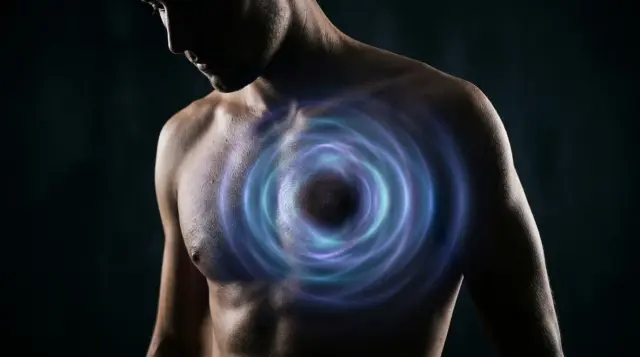
This one surprised me more than almost anything else I found. When you get a cut, your body doesn't just send blood cells and immune fighters to the scene. It sends electricity. Within seconds of an injury, the disrupted cells at the wound edge create what's called a "wound electric field," a small but measurable current that flows from intact tissue toward the damaged area.
Research published in the journal Nature in 2006 by Dr. Min Zhao at the University of California, Davis demonstrated that this electrical signal is what actually guides cells to the wound site. Not chemical signals, as scientists had assumed for a century. Electricity. When Zhao's team disrupted these electrical signals in animal models, wounds healed significantly slower. When they amplified the signals, healing sped up [3].
This discovery has spawned an entire field called electroceuticals, where doctors use tiny electrical currents to accelerate wound healing in diabetic patients and burn victims. The U.S. Department of Defense's Defense Advanced Research Projects Agency (DARPA) has invested millions in bioelectric medicine research since 2015, recognizing that manipulating the body's electrical signals could replace some pharmaceutical treatments entirely.
Understanding how does biology facts mind blowing work in this context means recognizing something pretty wild: your body has an entire healing communication system running on electricity that we basically ignored until this century. The body's bioelectric network is far more sophisticated than anyone guessed even twenty years ago.
Your body generates, transmits, and responds to electrical signals every second of your life. It's not a metaphor. It's measurable physics, and it controls everything from how your wounds heal to whether a cell becomes cancerous. We've spent centuries studying the chemistry of life while largely ignoring the electricity that orchestrates it.

What Does Bioelectricity Have to Do with Cancer?
Here's where things get both exciting and a little unsettling. Healthy cells maintain that steady negative 70 millivolt membrane potential we talked about earlier. Cancer cells? They're depolarized, meaning their voltage is significantly less negative, often sitting around negative 20 to negative 30 millivolts. This is no coincidence. According to research reviewed by the National Institutes of Health, the shift in membrane voltage appears to be one of the earliest detectable changes when a cell turns cancerous [1].
Michael Levin's lab at Tufts (yes, him again) published a remarkable paper showing they could induce tumor-like growths in frog embryos simply by depolarizing certain cells, changing their voltage without introducing any carcinogens or mutations. Even more stunning, they could suppress the formation of those tumors by restoring the normal membrane potential. The electricity was the switch.
Quick Q&A
Q: Do cancer cells have different electrical properties than healthy cells?
A: Yes. Cancer cells consistently show a depolarized membrane potential (around negative 20 to negative 30 millivolts) compared to healthy cells (around negative 70 millivolts), and restoring normal voltage has suppressed tumor growth in laboratory studies.
This line of research is still early, but the implications are huge. If cellular voltage is a meaningful factor in cancer development, then anything that consistently disrupts your cells' electrical environment deserves attention. That includes chronic exposure to external electromagnetic radiation. For a deeper look at this, check out 7 Mind-Blowing Facts About Electromagnetic Radiation: That Will Change How You See the World.
How Fast Do Electrical Signals Travel Through Your Nervous System?
You'd think the answer would be "speed of light" or something close. Nope. Nerve impulses travel at a comparatively modest 1 to 270 miles per hour, depending on the type of nerve fiber. Fast enough to keep you alive, but slow enough that you can actually notice the delay sometimes. Ever stubbed your toe and had that weird half-second gap before the pain hit? That's the signal traveling from your foot to your brain.
The fastest signals travel along thick, myelinated nerve fibers called A-alpha fibers, clocking in around 268 mph. According to research compiled through the National Library of Medicine, these are the ones handling motor control and spatial awareness. The slowest signals crawl along unmyelinated C fibers at roughly 1 to 2 mph. These carry dull, throbbing pain. That's why a sharp initial sting (fast fiber) is often followed by a slow aching sensation (slow fiber) [1].
Here's something most people never think about. The speed of these electrical impulses can be affected by your overall health. Demyelinating diseases like multiple sclerosis literally strip away the insulating sheath around nerves, slowing signal transmission and causing symptoms from numbness to loss of motor control. The electrical infrastructure of your body is something that can degrade, and protecting it matters.
This is one of the reasons the conversation around EMF exposure interests me. If your nervous system depends on precise electrical signaling, and that signaling can be disrupted by inflammation, nutritional deficiencies, or disease, it's reasonable to ask questions about external electromagnetic interference too. You can Learn About EMF Protection and decide for yourself whether it's worth taking precautions.
Is It True Your Brain Runs on Less Power Than a Light Bulb?
Absolutely true. This might be my favorite biology fact on the entire list. Your brain, the most complex known object in the universe, operates on roughly 12 to 20 watts of power. A standard incandescent light bulb uses 60 watts. Your brain is doing more computation than every supercomputer on Earth combined, and it's pulling it off on the electrical equivalent of a dim LED bulb.
According to a 2019 analysis published by researchers at Stanford University, the human brain contains approximately 86 billion neurons, each forming thousands of connections. The total number of synaptic connections is estimated at around 100 trillion. All of these are communicating through a combination of electrical impulses and chemical neurotransmitters, and the entire operation sips power like a device on battery saver mode.
For context, IBM's Watson supercomputer, which won Jeopardy! back in 2011, required about 85,000 watts of power to operate. Your brain outperforms it in most real-world cognitive tasks while using roughly 4,000 times less energy. That's not just efficient. It's almost impossible to wrap your head around.
The body's electrical efficiency is one of those how does biology facts mind blowing work moments that stops you cold. Evolution spent millions of years optimizing the bioelectric systems in your body, and modern technology still can't come close. For more surprising facts about the intersection of technology and the human body, take a look at 12 Fascinating Tech Facts That Sound Too Weird to Be True: The Complete List.
Do Your Bones Generate Electricity When You Move?
They do. This fact has been hiding in plain sight in orthopedic research for decades. When you apply mechanical stress to bone, the collagen and hydroxyapatite crystals in the bone matrix generate a small electrical charge. This is called the piezoelectric effect, the same principle used in some lighters and microphones. Your skeleton is literally converting physical force into electricity.
This phenomenon was first described by Dr. Iwao Yasuda in Japan in 1954, then expanded upon by Dr. Robert O. Becker and Dr. Andrew Bassett in the United States during the 1960s and 1970s. They discovered that the electrical signals generated by bone stress are what tell your body where to add more bone density. Compress a bone, and the negative charge on the compressed side attracts bone-building cells called osteoblasts.
This is why weight-bearing exercise strengthens bones. Not just because of the mechanical load, but because of the electrical signals that load generates. NASA has studied this extensively because astronauts in microgravity lose bone density fast. Without gravitational stress, the piezoelectric signaling stops, and bones begin to dissolve. According to NASA's Human Research Program data, astronauts can lose 1 to 2 percent of bone mass per month in space.
Your bones aren't passive scaffolding. They're electrically active sensors that respond to your environment in real time. The body's electrical intelligence extends into tissues you'd never think of as "electrical." If you want to go even deeper on what science has recently uncovered about the human body, 7 Mind-Blowing Facts About the Human Body: That Science Just Discovered is a great next read.
Can External Electromagnetic Fields Interfere with Your Body's Signals?
This is the question that connects all of the facts above and makes them personal. If your body runs on bioelectricity, if your cells maintain precise voltages, if your heart broadcasts an electromagnetic field, if your nerves depend on electrical timing, and if your bones use piezoelectric signals to rebuild themselves, then what happens when external electromagnetic fields from phones, Wi-Fi routers, smart meters, and power lines enter the picture?
The honest answer: science is still working this out. But we have data. A 2018 review published in Environmental Research compiled over 250 peer-reviewed studies and found that the majority reported biological effects from non-ionizing electromagnetic radiation at levels below current safety standards [4]. Effects included oxidative stress, changes in gene expression, and disrupted cellular signaling.
The World Health Organization's International Agency for Research on Cancer (IARC) classified radiofrequency electromagnetic fields as "possibly carcinogenic to humans" (Group 2B) back in 2011, based on an increased risk of glioma associated with wireless phone use. That classification hasn't been upgraded or downgraded since, though a re-evaluation has been called for by multiple research groups.
You don't have to be alarmist about this. But given everything we've just covered about how does biology facts mind blowing work in your body's electrical systems, taking reasonable precautions seems like common sense. The Faraday Collection from Proteck'd offers clothing with built-in EMF shielding that looks like normal everyday wear. It's protection that doesn't require you to change your lifestyle or wrap your house in tin foil.
The body electric isn't just a Walt Whitman poem. It's your actual biology, running on signals that evolved in an environment with virtually zero artificial electromagnetic noise. Now we live in a world saturated with it. Whether that matters a lot or a little, staying informed is the first step.
What Are Electroceuticals and Why Should You Care?
Electroceuticals are a new class of medical treatments that use electrical impulses instead of drugs to treat disease. Think of it as hacking the body's own bioelectric network. The term gained traction around 2013 when GlaxoSmithKline (GSK) announced a $50 million investment in bioelectronic medicine, signaling that big pharma was taking the field seriously.
One of the most successful examples is vagus nerve stimulation (VNS). A small device implanted near the vagus nerve delivers gentle electrical pulses that have been FDA-approved since 1997 for epilepsy and since 2005 for treatment-resistant depression. More recently, VNS is being studied for rheumatoid arthritis, Crohn's disease, and even Alzheimer's. A 2016 study published in the Proceedings of the National Academy of Sciences (PNAS) showed that vagus nerve stimulation reduced inflammation in rheumatoid arthritis patients by modulating the body's electrical control of the immune system.
The promise of electroceuticals rests on the same facts we've been exploring throughout this article. Your body's bioelectric signals aren't just byproducts of biological activity. They're control signals. Learning to speak that electrical language opens up treatment options that drugs simply can't match, with fewer side effects and more precision.
This is frontier medicine, and it reinforces something that should feel obvious by now: the electrical dimension of human biology is just as important as the chemical one. We ignored it for most of medical history. That's finally changing.
How Much of Your Body's Communication Is Electrical vs. Chemical?
For a long time, the textbook answer was that the nervous system is electrical and the endocrine system is chemical, and that's that. Clean division. Turns out, that tidy split has collapsed. We now know the two systems are deeply intertwined, with electrical signals triggering chemical releases and chemical changes altering electrical behavior.
Consider this: when a nerve impulse (electrical signal) reaches the end of a neuron, it triggers the release of neurotransmitters (chemical signals) across the synapse. Those chemicals bind to receptors on the next neuron, opening ion channels that create another electrical signal. The whole system is a constant feedback loop between electricity and chemistry.
Research from Columbia University's Zuckerman Institute published in 2020 showed that even glial cells, which make up about half of all brain cells and were long dismissed as mere structural support, communicate using calcium-based electrical waves. These waves influence neural activity and may play a role in memory and learning. We had an entire electrical communication network in the brain that we basically overlooked for a century.
The scope of the body's electrical activity is so much broader than most people realize. Your gut, your skin, your immune cells, they all use bioelectric signaling. The human electromagnetic field isn't generated by one organ. It's the collective output of trillions of cells, each maintaining its own voltage, each contributing to a system-wide electrical symphony that keeps you alive and functioning. Honestly, that's how does biology facts mind blowing work in a nutshell. It's not any single fact. It's the sheer scale of the electrical system that evolution quietly built inside every one of us.
Frequently Asked Questions
Q: Does the human body actually produce electricity?
Yes. Every cell in your body generates and maintains an electrical voltage across its membrane. Your nervous system transmits electrical impulses, your heart generates a measurable electromagnetic field, and even your bones produce small electrical charges when stressed. This bioelectricity is fundamental to how your body functions.
Q: How much electricity does the human body generate?
The human body generates roughly 100 watts of total power at rest, though most of that is thermal energy. The brain alone uses about 12 to 20 watts of electrical power. Individual cells maintain voltages around negative 70 millivolts, and the collective output of all your cells creates a measurable electromagnetic field around the body.
Q: Can you feel your body's electrical signals?
You experience them constantly but don't usually perceive them as "electrical." Every sensation, thought, muscle movement, and heartbeat involves electrical impulses. Some people can perceive abnormal electrical activity as tingling, numbness, or palpitations, which often indicates a disruption in normal bioelectric function.
Q: What is bioelectricity and why does it matter for health?
Bioelectricity refers to the electrical currents and voltage gradients naturally produced by your cells. It matters because these signals control wound healing, embryonic development, nerve communication, and cell growth. Disrupted bioelectric signals have been linked to cancer, slow wound healing, and neurological disorders.
Q: Can EMF from phones and Wi-Fi interfere with the body's bioelectricity?
The research is still evolving, but a significant body of peer-reviewed studies has found biological effects from non-ionizing EMF at levels below current safety standards. These effects include oxidative stress and altered gene expression. The WHO's IARC classified radiofrequency EMF as possibly carcinogenic in 2011. Taking reasonable precautions, like wearing EMF-shielding clothing, is a practical option.
Q: How do bones generate electricity?
Bones generate electricity through the piezoelectric effect. When mechanical stress is applied to bone, the collagen and mineral crystals in the bone matrix produce a small electrical charge. This charge signals bone-building cells (osteoblasts) to add density at the stressed site. It's a key reason why weight-bearing exercise strengthens bones.
Q: What are electroceuticals?
Electroceuticals are medical devices that treat diseases by delivering electrical impulses to specific nerves or tissues instead of using drugs. Vagus nerve stimulation is one well-known example, FDA-approved for epilepsy and depression. The field is expanding rapidly into treatments for inflammatory diseases, chronic pain, and neurodegenerative conditions.
Q: Do cancer cells have different electrical properties than normal cells?
Yes. Cancer cells consistently show a depolarized membrane potential, typically around negative 20 to negative 30 millivolts, compared to the negative 70 millivolts of healthy cells. Research at Tufts University has shown that artificially restoring normal voltage can suppress tumor-like growth in laboratory models. This is an active and growing area of cancer research.
Q: How fast do electrical signals travel in the human body?
Nerve signals travel between 1 and 270 miles per hour depending on the nerve fiber type. The fastest signals travel along thick, myelinated A-alpha fibers and handle motor control. The slowest travel along unmyelinated C fibers and carry dull pain sensations. Diseases like multiple sclerosis can significantly slow these transmission speeds.
Q: Is the heart's electromagnetic field really detectable outside the body?
Yes. The heart produces the body's strongest electromagnetic field, roughly 100 times more powerful than the brain's. Using sensitive magnetometers called SQUIDs, researchers at the HeartMath Institute have measured the heart's field at distances of several feet from the body. Some research suggests it may even influence the nervous systems of nearby people.
Q: What is membrane potential and why is it important?
Membrane potential is the voltage difference across a cell's outer membrane, maintained by ion pumps that move charged particles like sodium and potassium. In healthy cells, it's typically around negative 70 millivolts. This voltage drives nerve impulse transmission, muscle contraction, nutrient transport, and cellular communication. Disruptions in membrane potential are associated with multiple diseases.
References
- National Institutes of Health (National Library of Medicine) – Cells maintain approximately negative 70 millivolts across the membrane; the sodium-potassium pump consumes a large fraction of cellular energy.
- HeartMath Institute / National Institutes of Health – The heart's electromagnetic field is approximately 100 times stronger than the brain's and can be detected several feet from the body.
- Nature – Endogenous wound electric fields guide cell migration to wound sites, and disrupting these fields impairs healing (Zhao et al., 2006).
- National Institutes of Health (Environmental Research review) – A majority of peer-reviewed studies report biological effects from non-ionizing electromagnetic radiation at levels below current safety standards.
About the Author
Proteck'd EMF Apparel
Health & EMF Specialists
The Proteck'd team covers EMF protection, silver-fiber apparel, and practical ways to reduce everyday radiation exposure. Every piece Proteck'd ships is designed, tested, and worn by the people who build it.
Protect Yourself Today
Proteck'd Faraday and silver fiber apparel is engineered to shield your body from everyday EMF exposure. Built for real life, tested for real results.
Shop EMF Protection →✓30-day returns✓Free shipping✓Free returns✓Silver fiber shielding


Laissez un commentaire