


15 Fascinating Tech Facts You Didn't Know: With Sources

Your smartphone is basically a tiny microwave transmitter that you press against your skull. Comforting, right? If you've ever wondered whether is technology facts interesting dangerous, the honest answer is yes. On both counts. The gadgets we love are stuffed with bizarre trivia and hidden risks that most people never stop to consider.
I spent weeks pulling together the most surprising, well-sourced tech facts I could find. Some made me laugh. A few genuinely made me set my phone down for a while. And a handful changed how I think about the devices I use every single day.
This isn't a doom-and-gloom list meant to scare you off technology entirely. That would be pretty hypocritical, considering I'm publishing this on the internet. Think of it more as a reality check. A collection of verified facts that'll make you the most interesting person at your next dinner party, while also helping you make smarter choices about your digital life.
Whether you're a tech enthusiast who lives for geeky trivia or someone genuinely concerned about the health effects of living surrounded by electromagnetic radiation, there's something here for you. Let's get into it.
Key Takeaways
How Much Radiation Does Your Phone Actually Emit?
Here's Fact #1: your smartphone emits radiofrequency (RF) electromagnetic radiation every time it connects to a cell tower, Wi-Fi network, or Bluetooth device. The Federal Communications Commission (FCC) caps this at a specific absorption rate (SAR) of 1.6 watts per kilogram, averaged over 1 gram of tissue [1]. Every phone sold in the U.S. has to pass that test before it reaches shelves.
But here's where it gets interesting. Back in 2011, the World Health Organization's International Agency for Research on Cancer (IARC) classified RF electromagnetic fields as "possibly carcinogenic to humans," dropping them into Group 2B [2]. That's the same category as pickled vegetables and talcum powder. Not exactly terrifying. Not exactly reassuring, either.
Fact #2: the Chicago Tribune ran independent lab tests in 2019 and found that several popular phone models exceeded the FCC's SAR limits when tested at distances closer to the body than the manufacturer's recommended spacing. Some phones are designed to pass the test at 5 to 15 millimeters from the body. And who holds their phone 15 millimeters from their head during a call? Nobody does.
Quick Q&A
Q: Does my smartphone emit radiation even when I'm not making a call?
A: Yes, your phone continuously emits low-level RF radiation to maintain connections with cell towers, Wi-Fi, and Bluetooth, even when it's just sitting idle in your pocket.
If this concerns you, it's worth looking into wearable solutions designed to cut your exposure. Learn About EMF Protection to understand how shielding fabrics work. And if you want more phone-related tech trivia, check out our earlier piece on 7 Mind-Blowing Tech Facts You Didn't Know: With Sources.
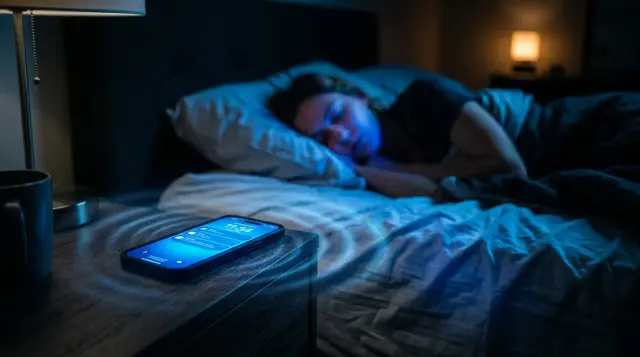
Is Blue Light from Screens Really Ruining Your Sleep?
Fact #3: Harvard Medical School researchers compared blue light exposure to green light exposure of similar brightness. The results were pretty clear. Blue light suppressed melatonin production for roughly twice as long and shifted circadian rhythms by twice as much, about 3 hours versus 1.5 hours [3]. That's not nothing. Your body literally thinks it's daytime when you're scrolling at midnight.
Fact #4: a 2019 survey from the National Sleep Foundation found that 90% of Americans use a tech device in the hour before bed. Ninety percent. And research published in the Proceedings of the National Academy of Sciences (PNAS) in 2014 showed that people who read on light-emitting e-readers before sleep took longer to fall asleep, got less REM sleep, and felt sleepier the next morning compared to people reading printed books.
The fix isn't complicated. Most phones now have a "night shift" or "blue light filter" mode. But here's what most people don't realize: the warm filter helps, but it doesn't eliminate the stimulation. The act of engaging with content, checking notifications, reading stressful news, that keeps your brain fired up regardless of the color temperature on your screen.
Fact #5: according to DataReportal's 2024 digital overview, the average person globally spends about 6 hours and 40 minutes per day looking at screens. In the U.S., it's closer to 7 hours. That's nearly half your waking life bathed in artificial light. Understanding what your body goes through matters, and we covered some surprising details in Your Body Is More Complex Than You Think: The Facts That Prove It.
What Are the Weirdest Tech Facts Most People Have Never Heard?
Fact #6: the first computer virus wasn't made by some shadowy hacker. It was written by a 15-year-old named Rich Skrenta in 1982 as a practical joke. Called "Elk Cloner," it spread via floppy disks on Apple II computers and displayed a poem every 50th boot. The entire cybersecurity industry, now worth over $180 billion according to Statista's 2024 report, basically traces its origins to a teenager messing around.
Fact #7: the entire internet weighs about the same as a strawberry. I'm serious. According to physicist Russell Seitz's calculations, all the electrons in motion that make up the internet's data collectively weigh approximately 50 grams. That's roughly one medium strawberry carrying the entirety of human knowledge, cat videos, and spam emails.
Fact #8: more people in the world own a mobile phone than a toothbrush. The United Nations reported this disparity back in 2013, and the gap has only widened since. There are now over 5.6 billion unique mobile phone users globally, according to GSMA Intelligence's 2024 data. Meanwhile, dental hygiene manufacturers estimate about 3.5 billion people use toothbrushes regularly.
Fact #9: your car's onboard computer has more processing power than the computers that sent Apollo 11 to the moon in 1969. NASA's Apollo Guidance Computer had about 74 KB of memory. The average modern vehicle runs on over 100 million lines of code. Your key fob, the thing you click to unlock your doors, has more computing power than the technology that landed humans on the lunar surface. If you're hungry for more facts like these, we've got a whole collection in 12 Fascinating Tech Facts That Sound Too Weird to Be True: The Complete List.
Your smartphone emits RF radiation every time it connects to a tower, your smart TV may be reporting your habits to data brokers, and the average person spends nearly 7 hours a day staring at screens. Technology facts aren't just interesting trivia. They're information you need to make real choices about your health and privacy.
Can Digital Eye Strain Cause Permanent Damage?
Fact #10: digital eye strain, sometimes called computer vision syndrome, affects about 50% of people who use computers regularly, according to the American Academy of Ophthalmology (AAO). Symptoms include dry eyes, headaches, blurred vision, and neck pain. The good news? The AAO says there's no evidence that screen use causes permanent eye damage. The bad news? Chronic discomfort still isn't a great time.
Fact #11: we blink about 66% less when staring at screens. Normal blink rate is roughly 15 to 20 times per minute. When you're focused on a display, that drops to about 5 to 7 times per minute. Researchers at Keio University in Japan documented this effect in a 2014 study. Less blinking means drier eyes, which means more irritation, which means more rubbing, which means more strain. It's a cascade.
The 20-20-20 rule is the simplest countermeasure: every 20 minutes, look at something 20 feet away for 20 seconds. It sounds almost too simple to work, but ophthalmologists at the Mayo Clinic specifically recommend it. I'll be honest, I forget to do it constantly. But on the days I actually remember, the difference by 5 PM is noticeable.
And here's a related question people keep asking: is technology facts interesting dangerous when it comes to our eyes specifically? The evidence says discomfort is very real, but long-term damage from normal screen use remains unproven. That said, the research on children's screen time and myopia progression tells a different, more worrying story. The British Medical Journal published a 2021 meta-analysis linking increased screen time in children with higher rates of myopia development.
How Does Social Media Affect Mental Health According to Research?
Fact #12: a landmark 2017 study published in the American Journal of Preventive Medicine surveyed 1,787 U.S. adults aged 19 to 32 and found that those in the highest quartile of social media use had 2.7 times the odds of experiencing depression compared to those in the lowest quartile. That's a big difference. The lead researcher, Dr. Brian Primack at the University of Pittsburgh, noted that the relationship held even after controlling for other factors.
Fact #13: Instagram was ranked the worst social media platform for young people's mental health in a 2017 survey by the Royal Society for Public Health in the UK. It scored especially poorly on body image, sleep quality, and FOMO (fear of missing out). YouTube was the only platform that scored net positive. This research came before the platform's big push into short-form video, so current results might look different, but the underlying dynamics of comparison and validation-seeking haven't really changed.
Quick Q&A
Q: Does limiting social media actually improve mental health?
A: Yes. A 2018 University of Pennsylvania study found that limiting social media to 30 minutes per day significantly reduced loneliness and depression over three weeks compared to a control group.
The conversation around tech and mental wellbeing is part of why so many people are rethinking their relationship with devices altogether. Questions like is technology facts interesting dangerous aren't just trivia anymore. They're deeply personal. If you're already thinking about cutting back on your digital exposure, our 12 Surprising Tech Facts You Didn't Know: The Complete List covers more angles on how tech shapes daily life.
Are Smart Home Devices Listening to Everything You Say?
Fact #14: in 2019, Bloomberg reported that Amazon employed thousands of workers worldwide to listen to voice recordings captured by Echo smart speakers. These workers transcribed, annotated, and reviewed audio clips to help improve Alexa's voice recognition. Amazon confirmed the practice but said the recordings were anonymized. Whether or not you're comfortable with that depends on your personal definition of "anonymized."
Google faced similar scrutiny. That same year, Belgian news outlet VRT NWS obtained and published over 1,000 audio recordings made by Google Assistant. Some of those recordings captured sensitive conversations, including bedroom discussions and what appeared to be a domestic disturbance. Google tightened its review practices afterward, but the incident exposed a fundamental tension: these devices need data to improve, and that data is your voice, in your home.
Fact #15: Northeastern University and Imperial College London researchers published a 2019 study analyzing 81 different smart devices, including smart TVs, speakers, and cameras. They found that many of these devices contacted third-party advertising and tracking services even when not actively being used. Your smart TV might be reporting your viewing habits to data brokers you've never heard of.
This is where the question of personal privacy protection becomes practical, not theoretical. For people who carry devices everywhere, Faraday Collection products from Proteck'd EMF Protection offer wearable shielding solutions that can block signals when you need real disconnection. It's one tangible step you can take when your devices are always transmitting.
What Can You Actually Do to Protect Yourself?
Knowing these tech facts is one thing. Doing something about them is another. Here are a few practical steps that don't require you to move off the grid or smash your phone with a hammer.
First, distance matters enormously with RF radiation. The FCC itself recommends keeping your phone away from your body when possible [1]. Use speakerphone or wired earbuds for calls. Don't sleep with your phone on your pillow (yes, people actually do this). Even moving it to a nightstand three feet away makes a meaningful difference in your exposure to electromagnetic radiation.
Second, audit your smart home devices. Check the privacy settings on your smart speakers, TVs, and cameras. Most of them let you delete stored voice recordings and opt out of human review programs. Amazon, Google, and Apple all offer these controls now, though they're often buried several menus deep. Actually go find them.
Third, consider what you're wearing. That might sound odd, but EMF-shielding apparel is a real, tested category of protection. Silver-fiber fabrics have been shown to attenuate electromagnetic fields, and companies like Proteck'd have built entire product lines around this technology. If the idea of tech facts being both interesting and dangerous resonates with you, wearing something that provides a layer of shielding is a concrete, daily action you can take.
Finally, manage screen time intentionally. Not obsessively. Intentionally. Use your phone's built-in screen time tracker. Set app limits. Try the 20-20-20 rule for your eyes. These small habits add up over weeks and months into a genuinely different relationship with your devices.
Frequently Asked Questions
Q: Is technology actually dangerous to your health?
Some aspects of technology do carry real health risks, though how serious they are varies a lot. The WHO classifies RF radiation from phones as possibly carcinogenic (Group 2B), and too much screen time is linked to sleep disruption and higher anxiety levels. That said, most risks can be reduced with simple habits: use speakerphone, limit screen time before bed, and keep devices at a distance from your body.
Q: How much radiation does a cell phone emit?
Cell phones emit radiofrequency electromagnetic radiation. The FCC caps the specific absorption rate (SAR) at 1.6 watts per kilogram averaged over 1 gram of tissue. The actual amount varies by phone model, signal strength, and how far you are from cell towers. Your phone actually emits more radiation when the signal is weak because it has to work harder to stay connected.
Q: Does blue light from screens cause permanent eye damage?
According to the American Academy of Ophthalmology, there's no scientific evidence right now that blue light from screens causes permanent eye damage. It does, however, contribute to digital eye strain symptoms like dry eyes and headaches. It also significantly suppresses melatonin production, which throws off your sleep. Using night mode filters and following the 20-20-20 rule can help.
Q: Are smart speakers always recording you?
Smart speakers like Amazon Echo and Google Home are designed to listen passively for a wake word and only start recording after they hear it. But investigations have shown that these devices sometimes activate by mistake, and companies have employed human reviewers to listen to captured recordings. You can delete stored recordings and tighten your privacy settings in each device's companion app.
Q: What is the 20-20-20 rule for screen time?
The 20-20-20 rule is simple: every 20 minutes of screen time, look at something 20 feet away for at least 20 seconds. The Mayo Clinic and other eye health organizations recommend it to reduce digital eye strain. That brief break lets your eye muscles relax and encourages you to blink more naturally.
Q: Can EMF-shielding clothing really block radiation?
Yes. Clothing made with conductive materials like silver fiber can reduce electromagnetic field exposure. How well it works depends on the fabric's composition, weave density, and the frequency range being targeted. Products like those in Proteck'd's Faraday Collection use tested silver-fiber technology specifically designed to cut EMF exposure from everyday wireless devices.
Q: How does social media affect mental health in young adults?
Research from the University of Pittsburgh found that young adults who used social media the most had 2.7 times greater odds of depression. The Royal Society for Public Health in the UK ranked Instagram as the worst platform for young people's mental wellbeing, especially around body image and FOMO. A separate study showed that limiting use to 30 minutes per day reduced loneliness and depression symptoms.
Q: What's the safest way to carry your phone?
The safest approach is to keep your phone away from direct contact with your body whenever you can. The FCC and most manufacturers recommend a small separation distance. Carrying your phone in a bag rather than a pocket, using wired earbuds instead of pressing it to your ear, and using EMF-shielding accessories are all practical ways to reduce your exposure.
Q: Do Wi-Fi routers pose a health risk?
Wi-Fi routers emit low-level RF radiation continuously, but the power levels are much lower than those from cell phones. The WHO says no adverse health effects have been established from exposure at the levels standard Wi-Fi equipment puts out. Still, placing your router away from bedrooms and workspaces where you spend long stretches of time is a sensible precaution.
Q: How many hours of screen time per day is considered too much?
There's no universally agreed-upon limit for adults, though the American Heart Association recommends no more than 2 hours of recreational screen time daily. For kids, the WHO recommends zero screen time for infants under 1 year and no more than 1 hour for children aged 2 to 4. The global average right now sits around 7 hours a day, which most health organizations consider excessive.
References
- Federal Communications Commission (FCC) – The FCC limits cell phone SAR to 1.6 W/kg averaged over 1 gram of tissue and recommends keeping phones at a distance from the body.
- International Agency for Research on Cancer (IARC), WHO – The WHO's IARC classified radiofrequency electromagnetic fields as possibly carcinogenic to humans (Group 2B) in 2011.
- Harvard Health Publishing, Harvard Medical School – Harvard researchers found that blue light suppresses melatonin for about twice as long as green light and shifts circadian rhythms by twice as much.
- National Institutes of Health (NIH), National Library of Medicine – Young adults in the highest quartile of social media use had approximately 2.7 times greater odds of depression compared to those in the lowest quartile.
About the Author
Proteck'd EMF Apparel
Health & EMF Specialists
The Proteck'd team covers EMF protection, silver-fiber apparel, and practical ways to reduce everyday radiation exposure. Every piece Proteck'd ships is designed, tested, and worn by the people who build it.
Protect Yourself Today
Proteck'd Faraday and silver fiber apparel is engineered to shield your body from everyday EMF exposure. Built for real life, tested for real results.
Shop EMF Protection →✓30-day returns✓Free shipping✓Free returns✓Silver fiber shielding


Laissez un commentaire